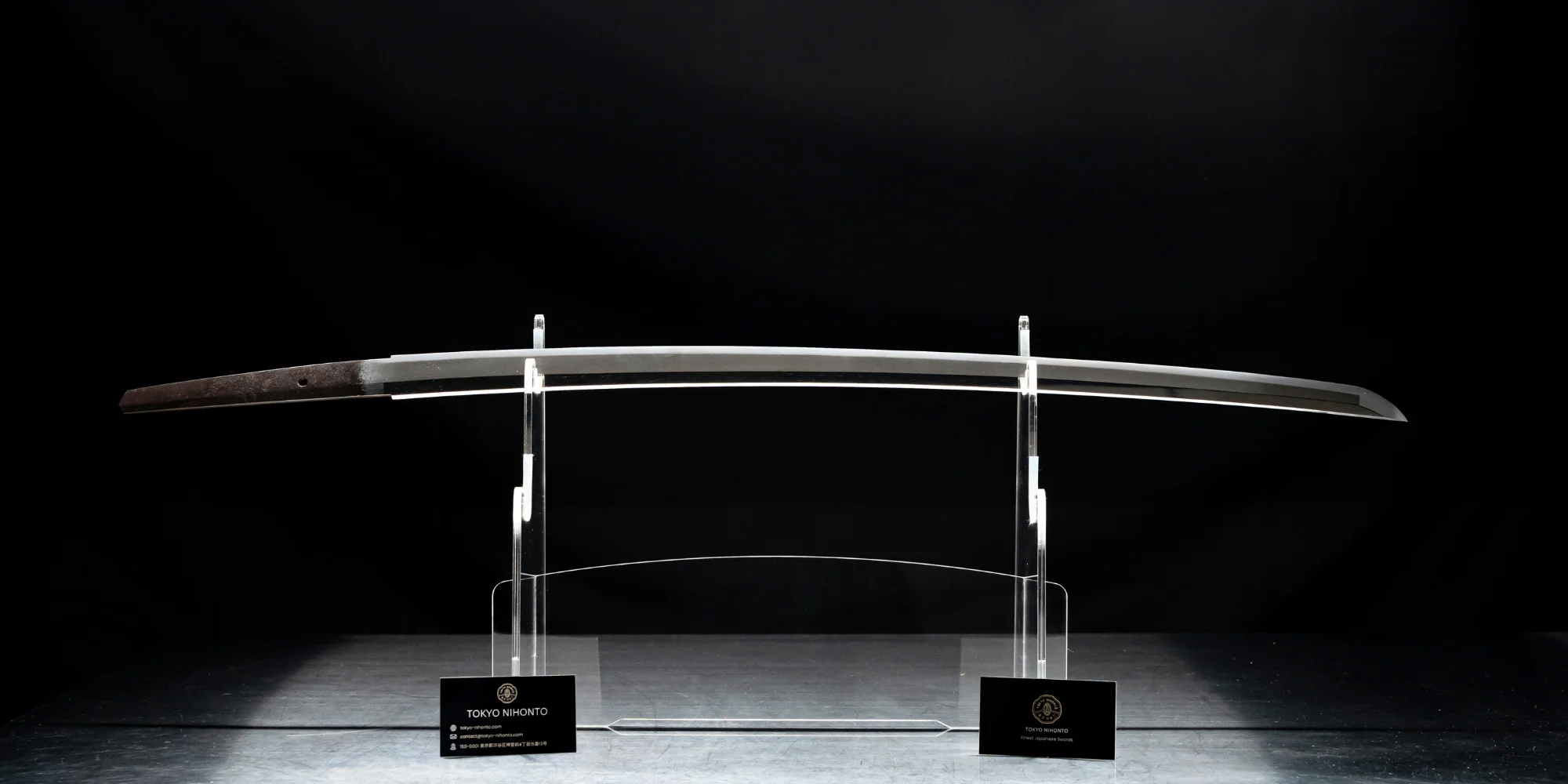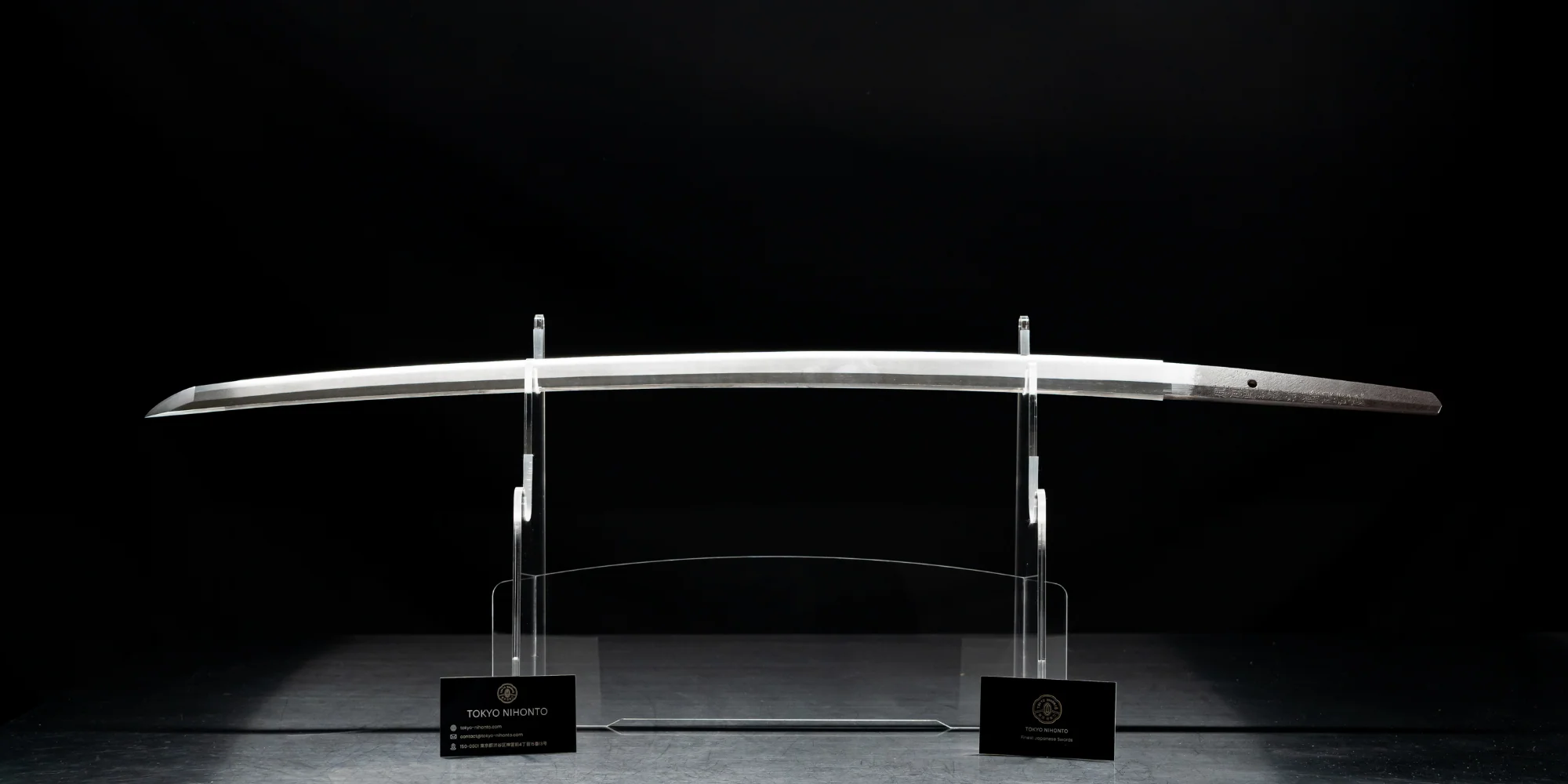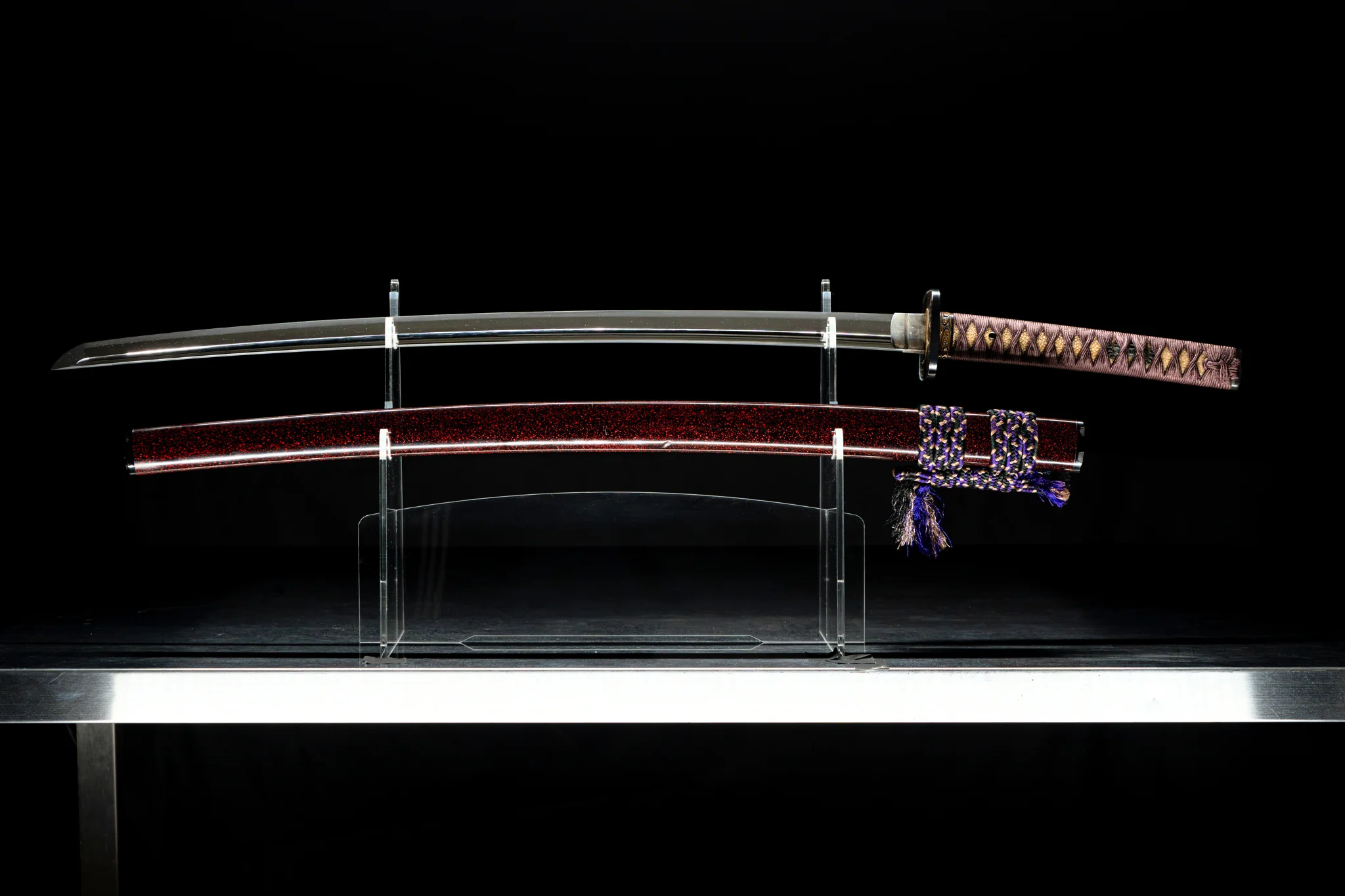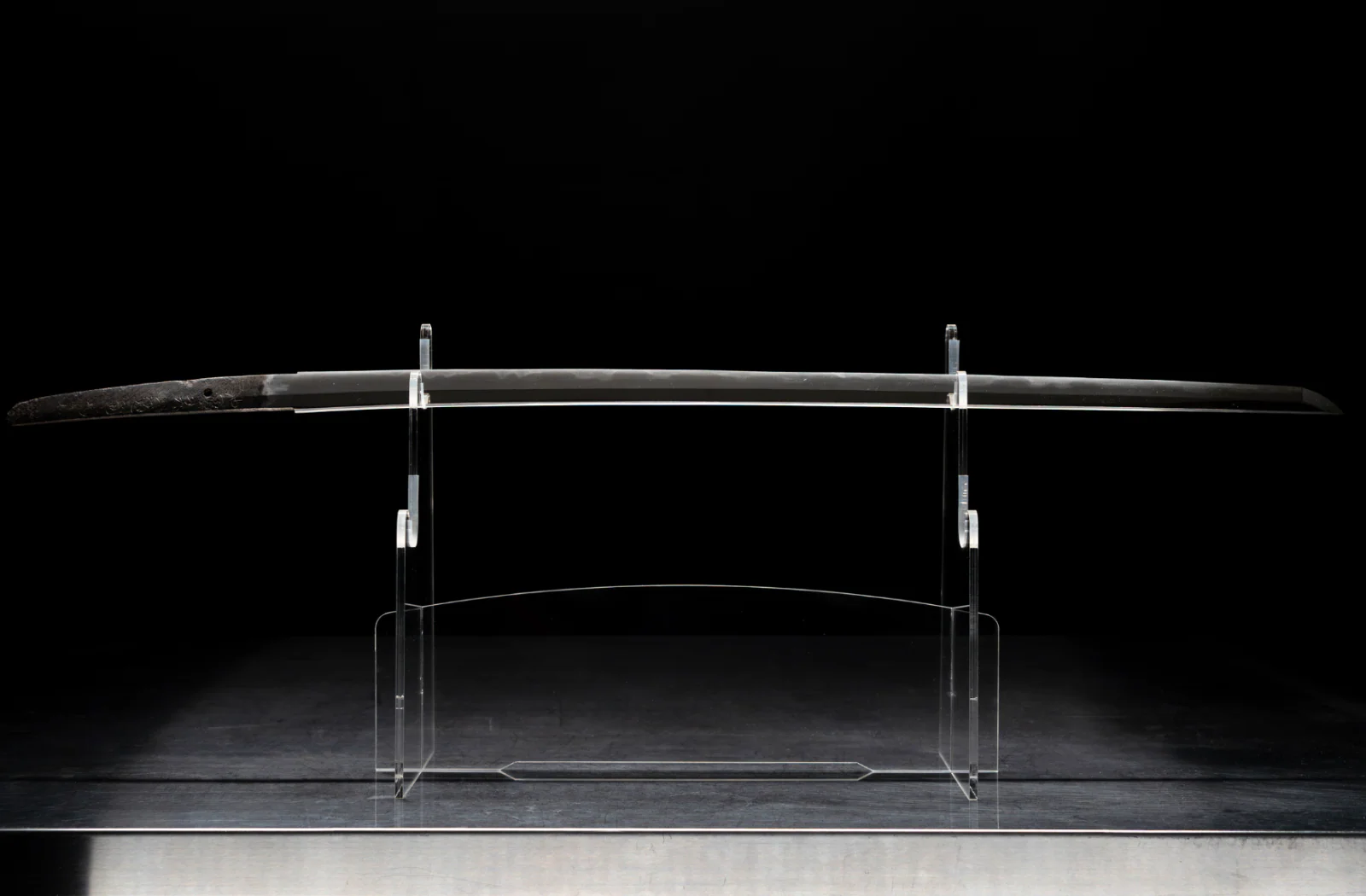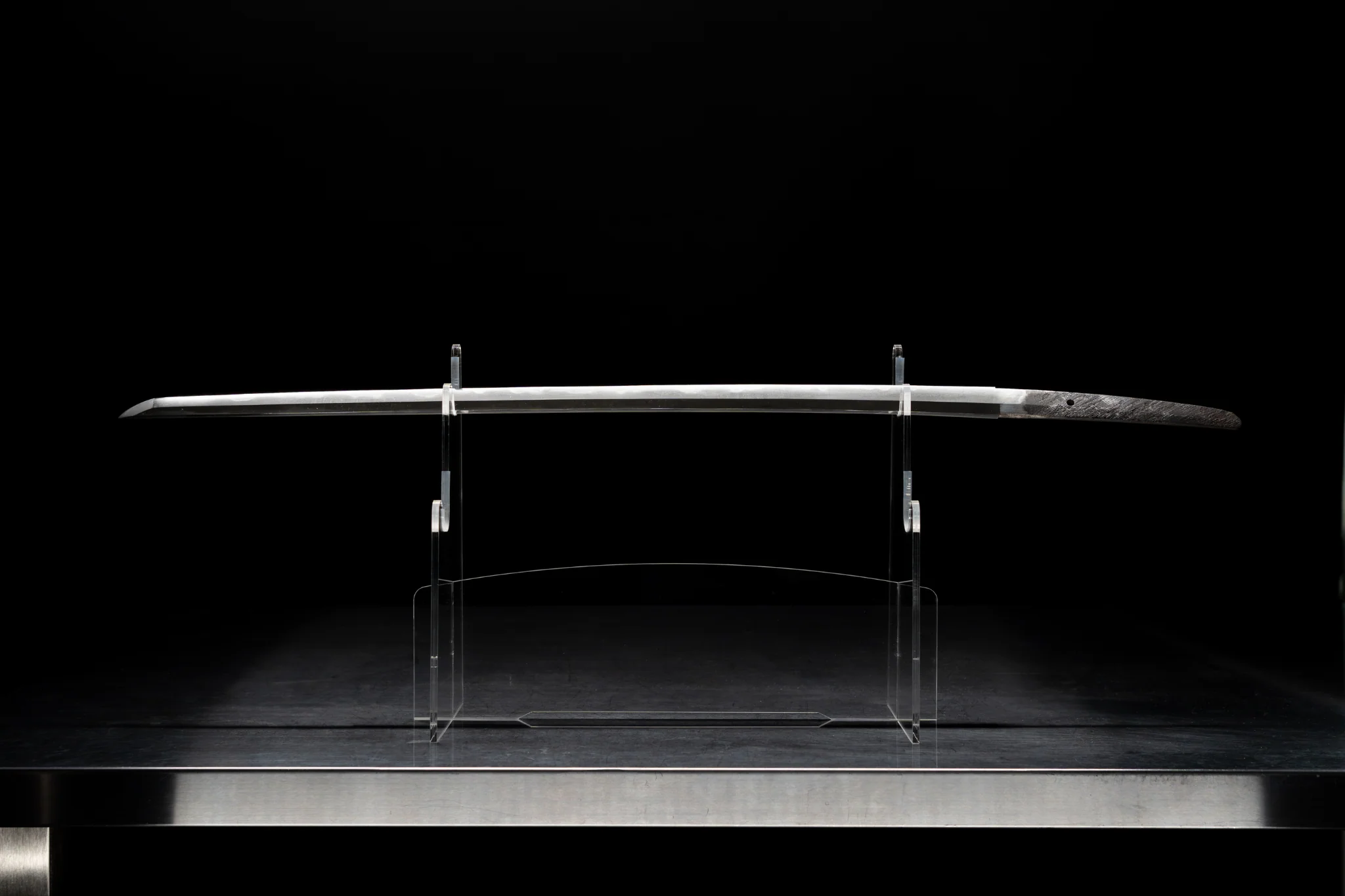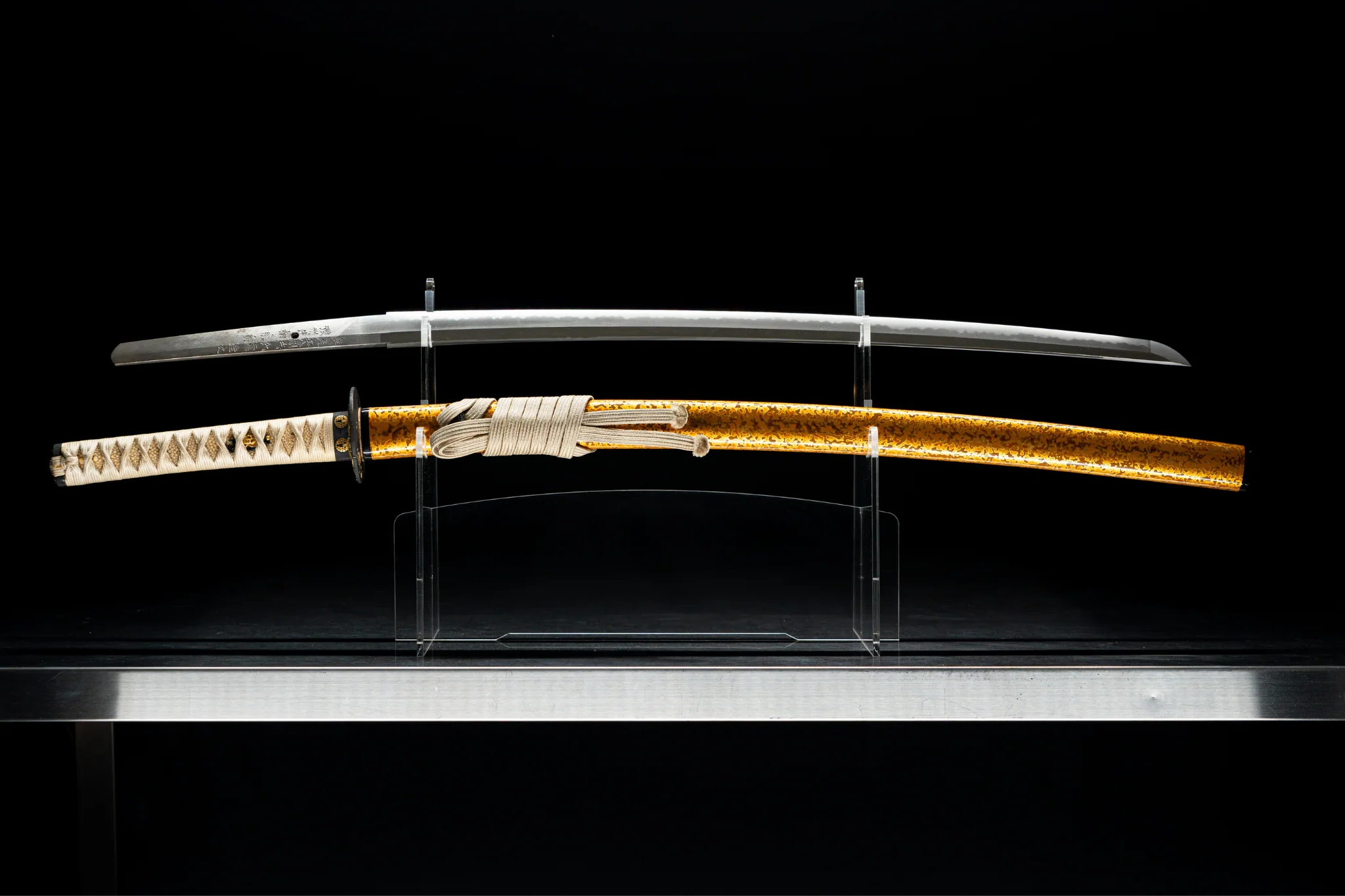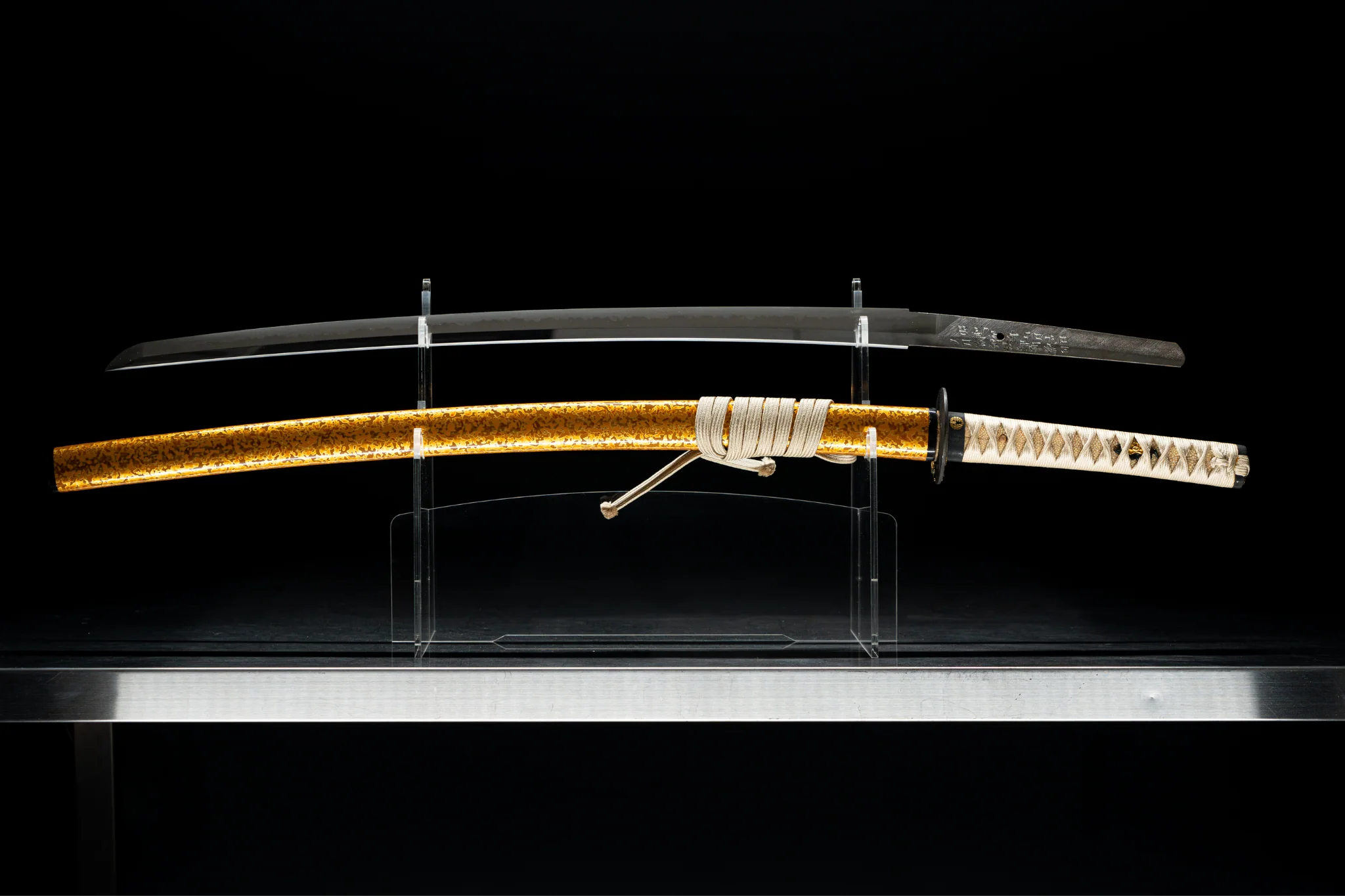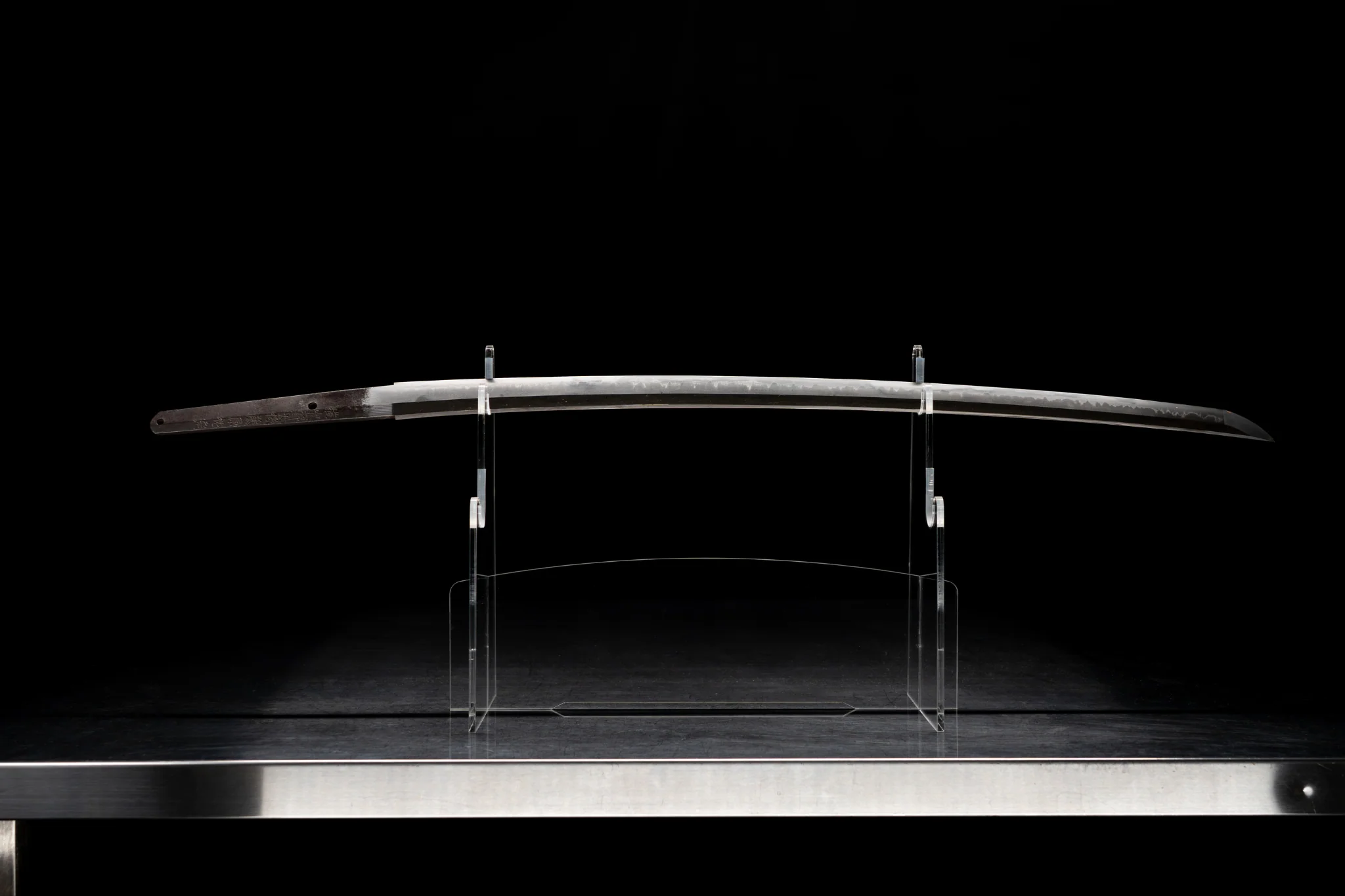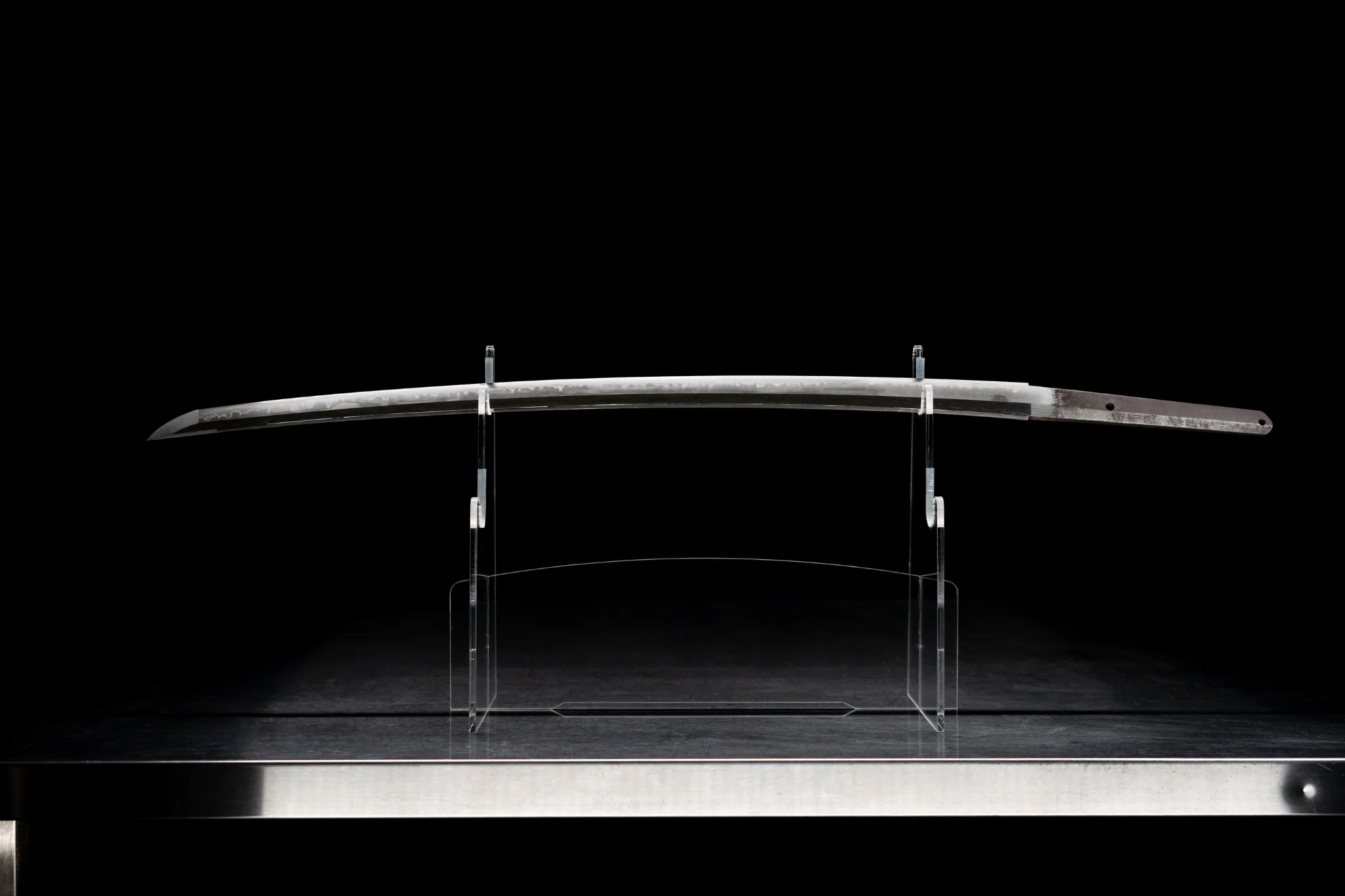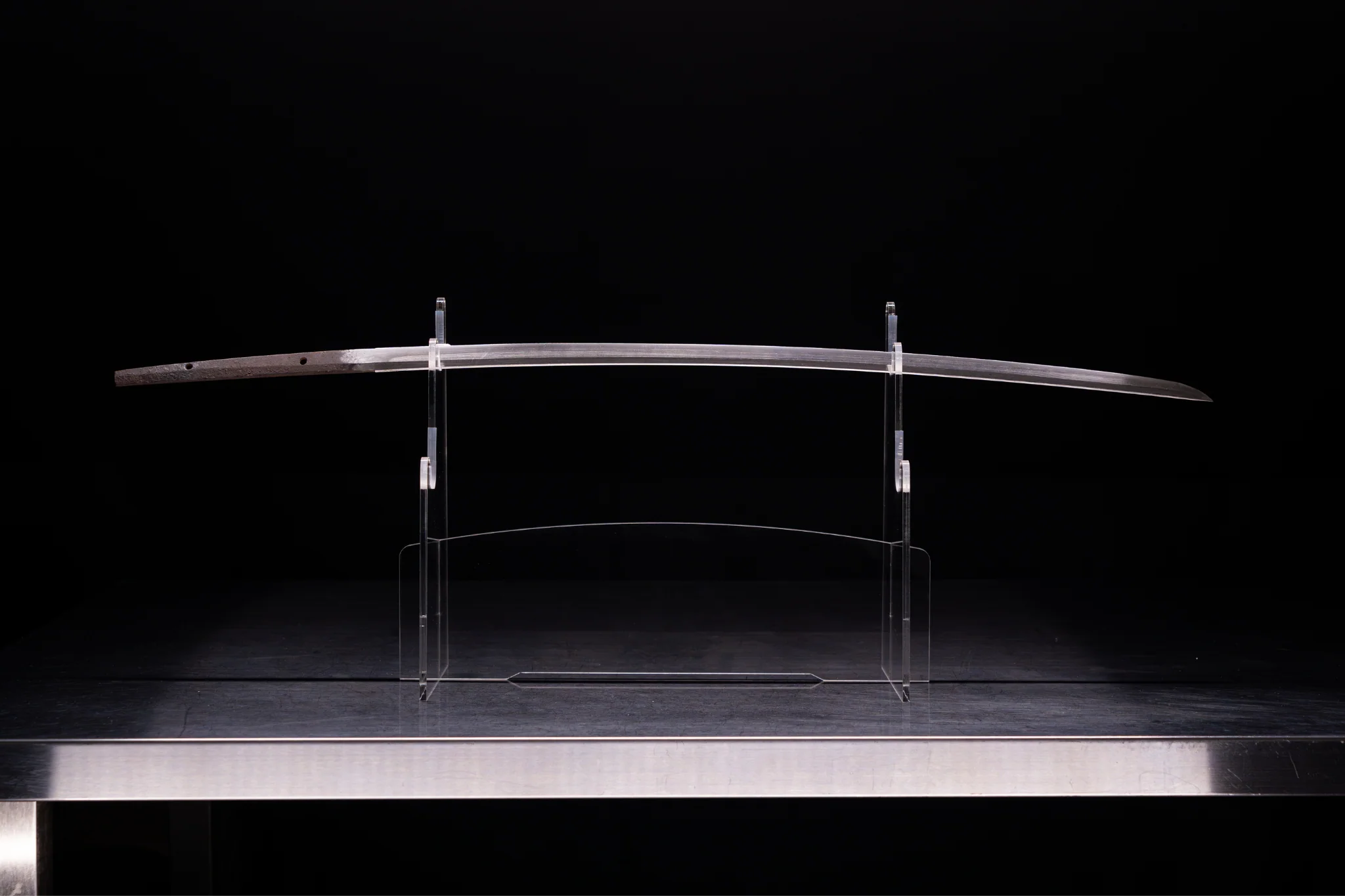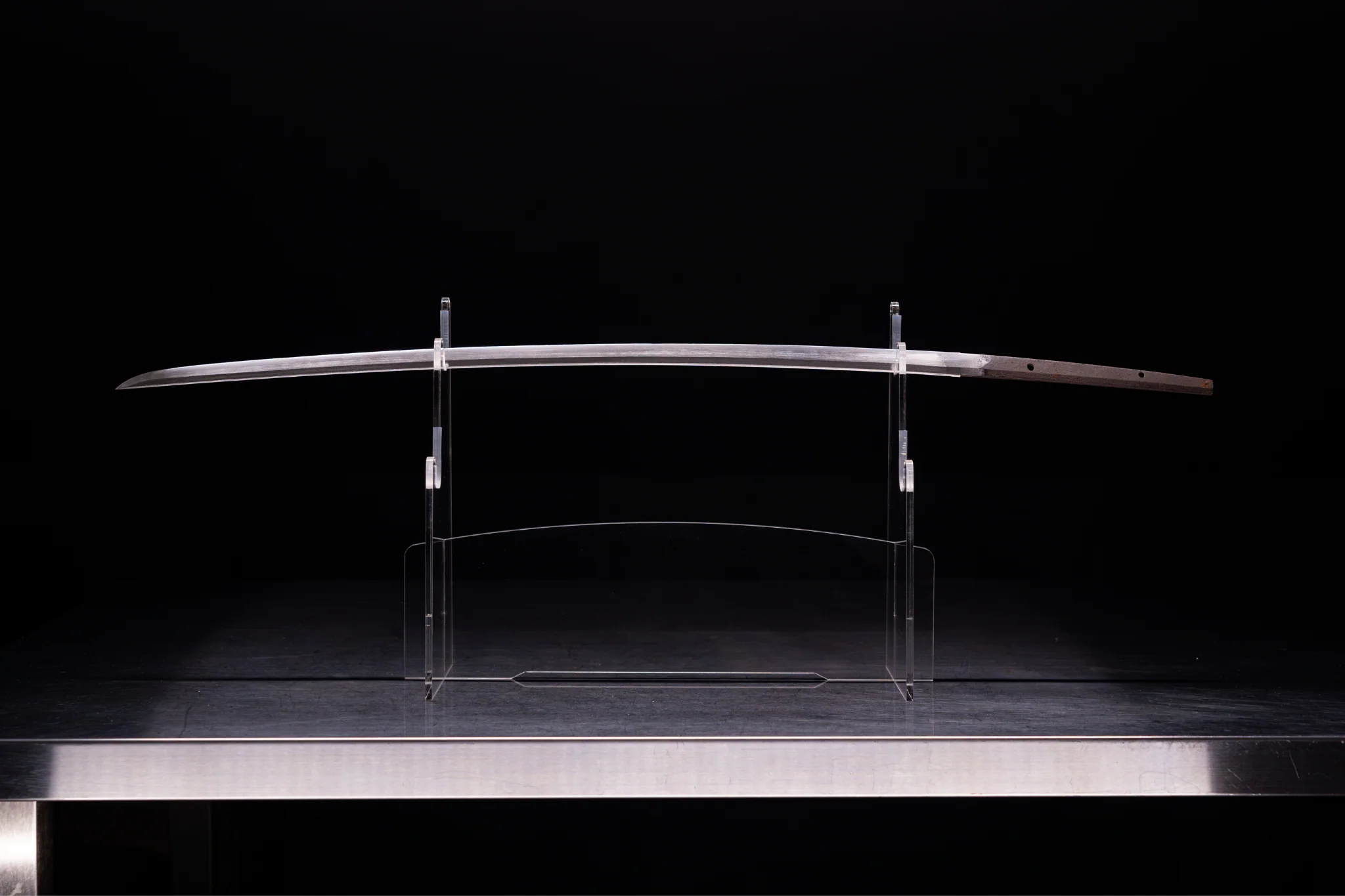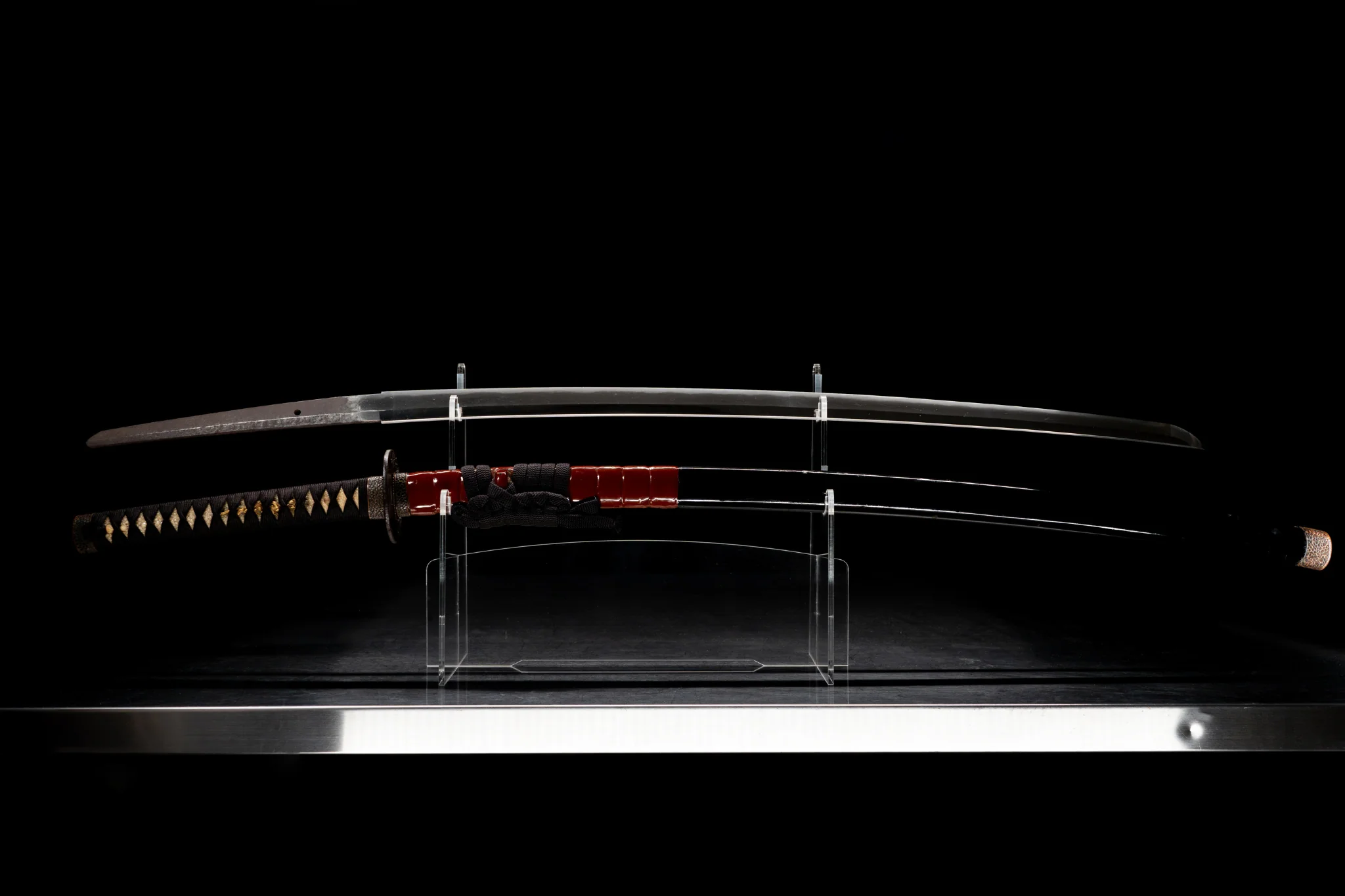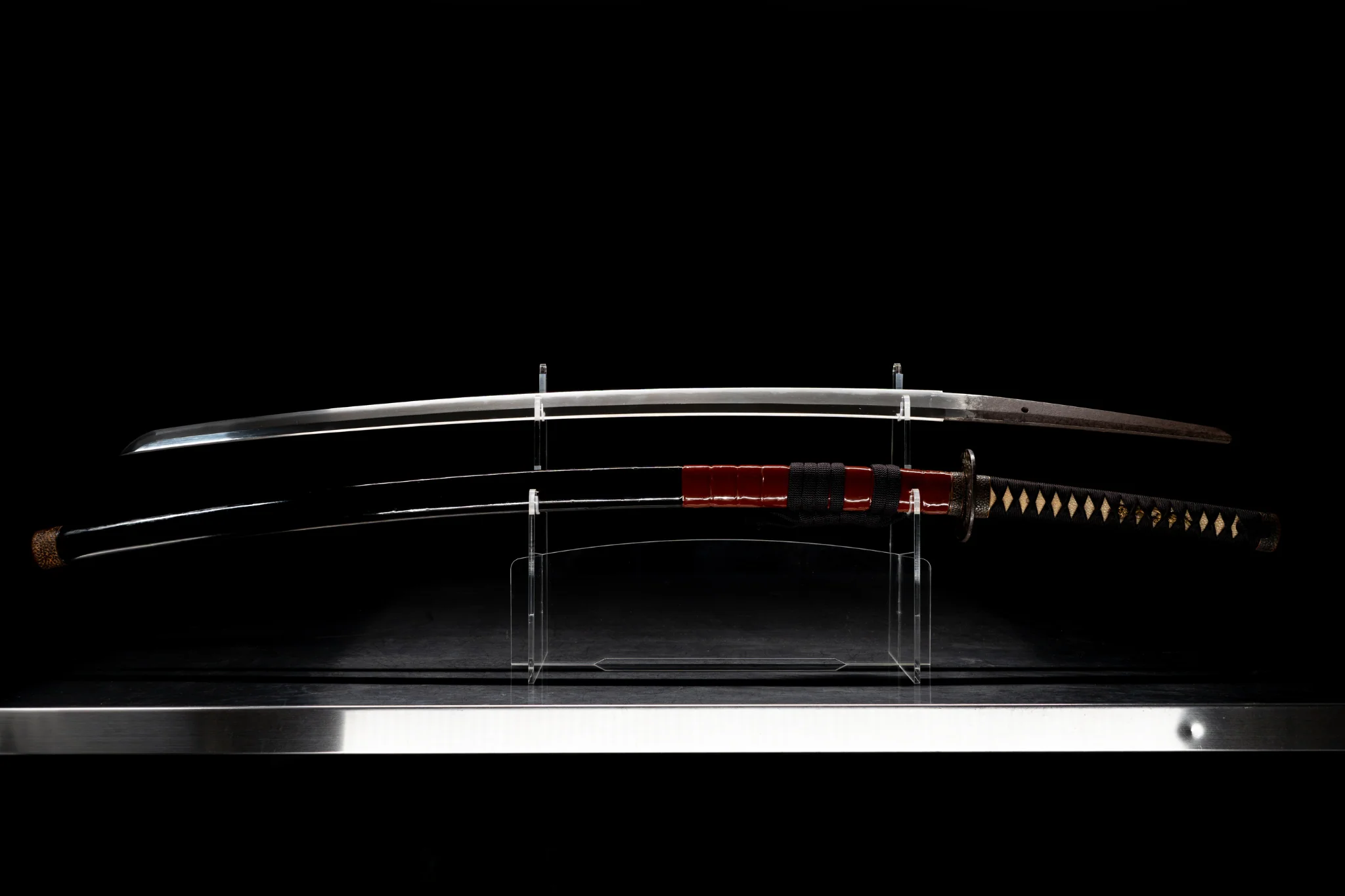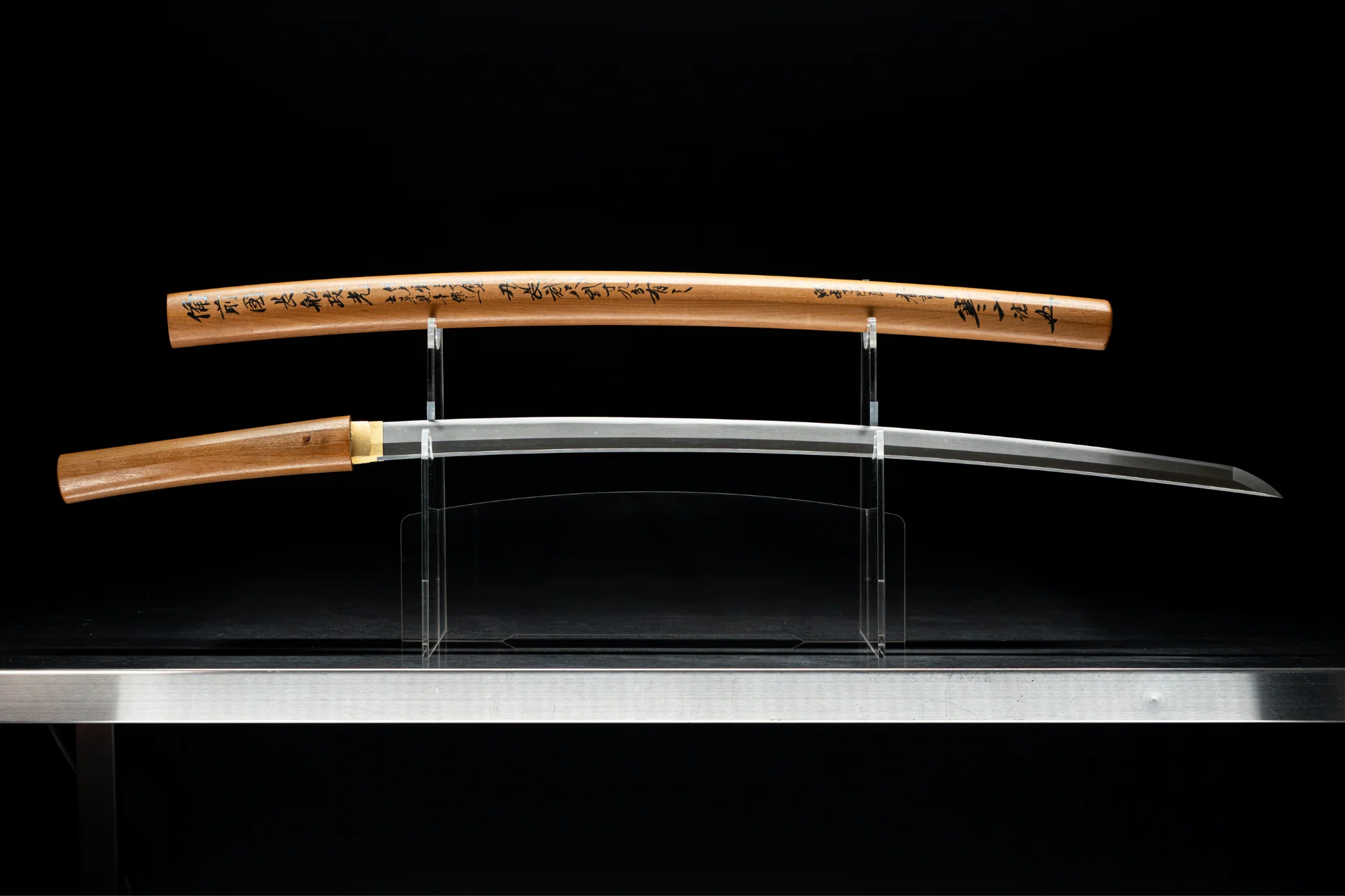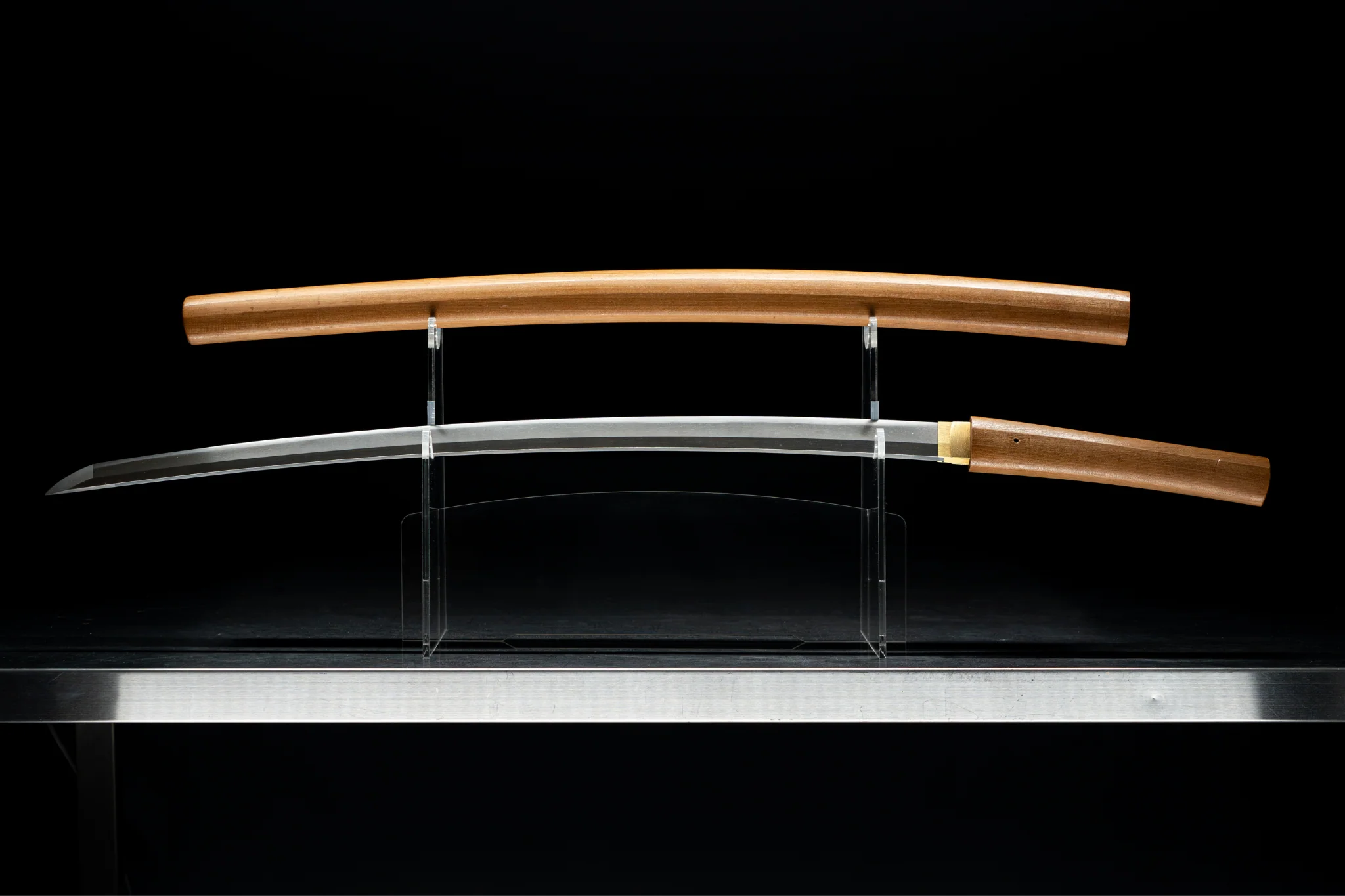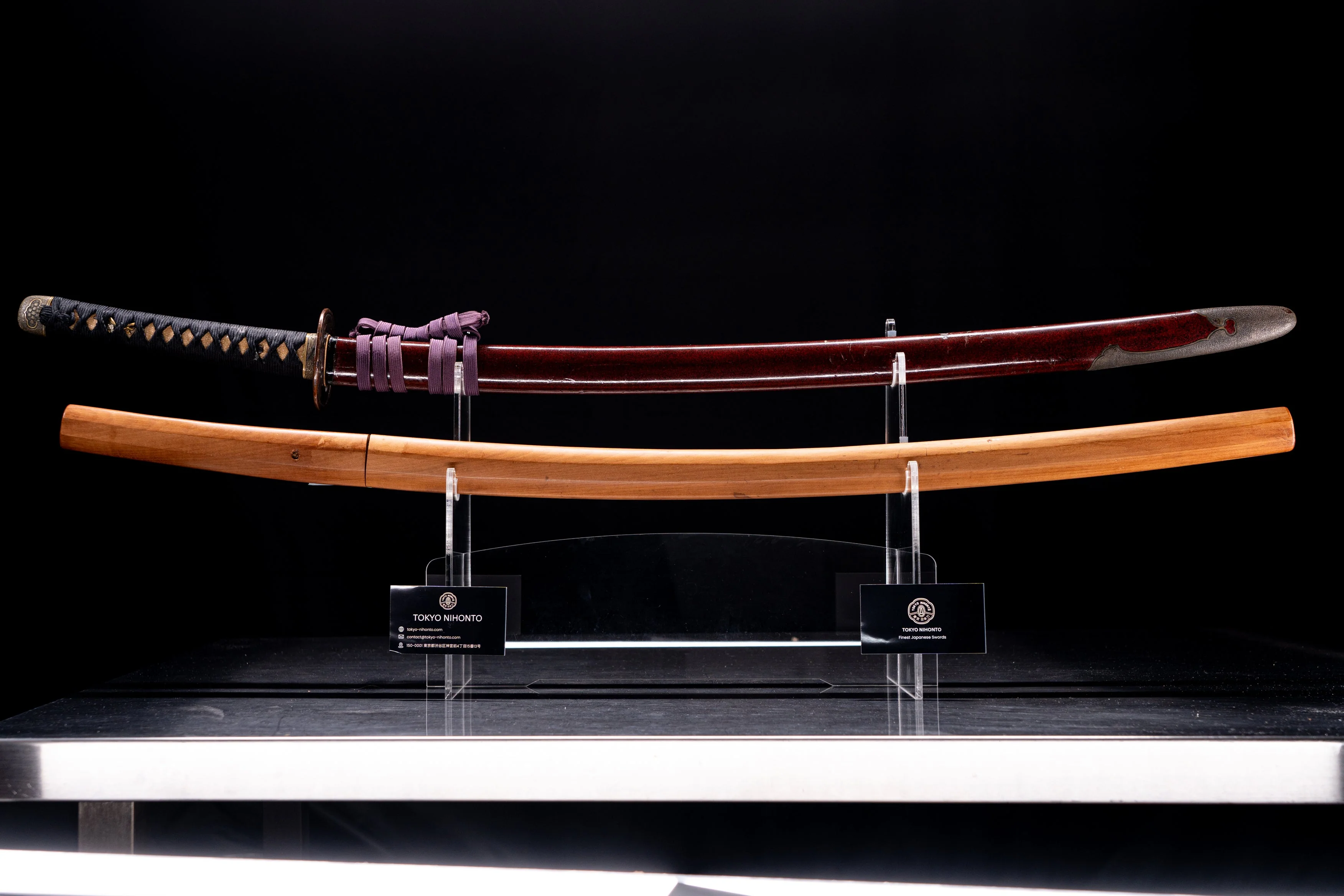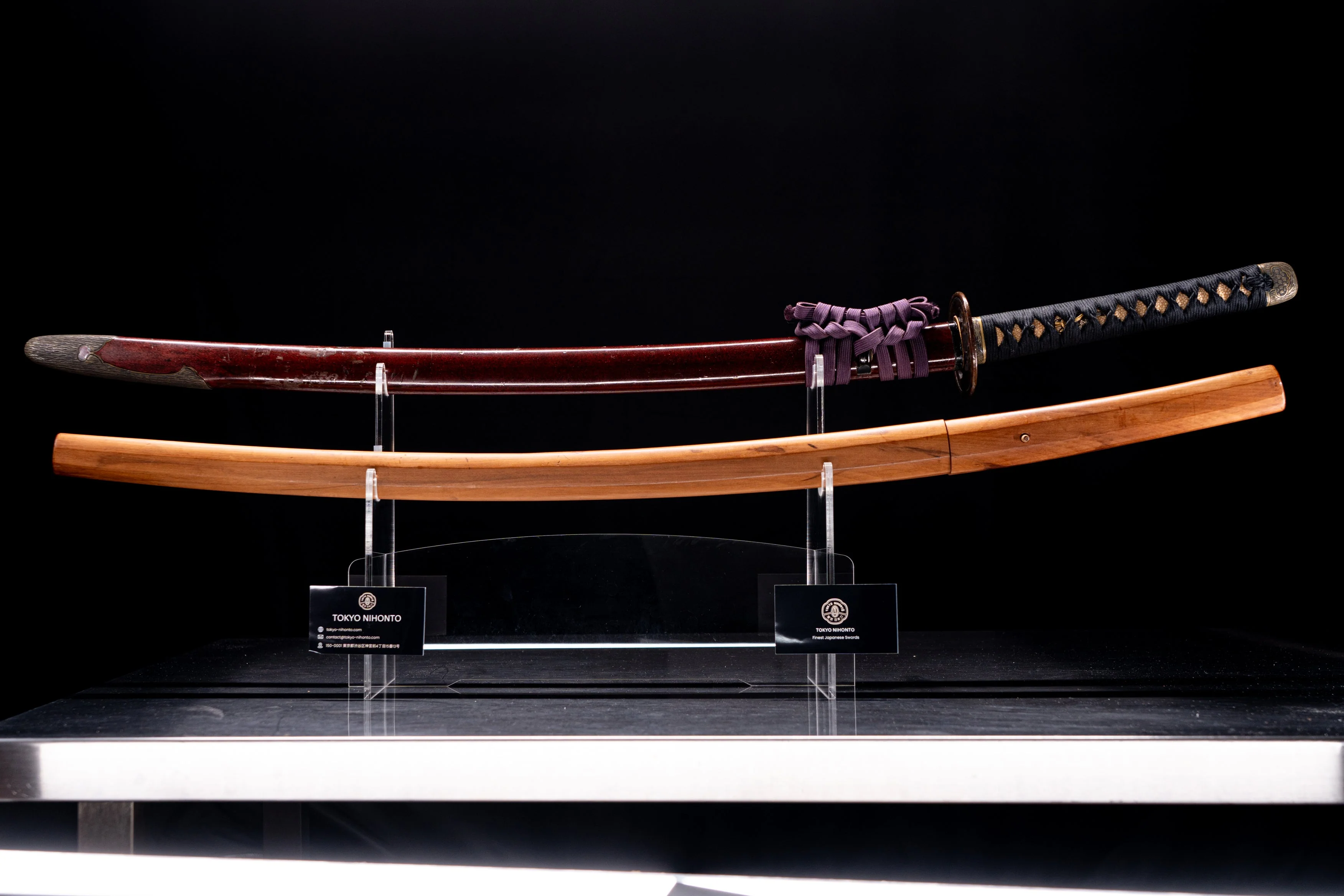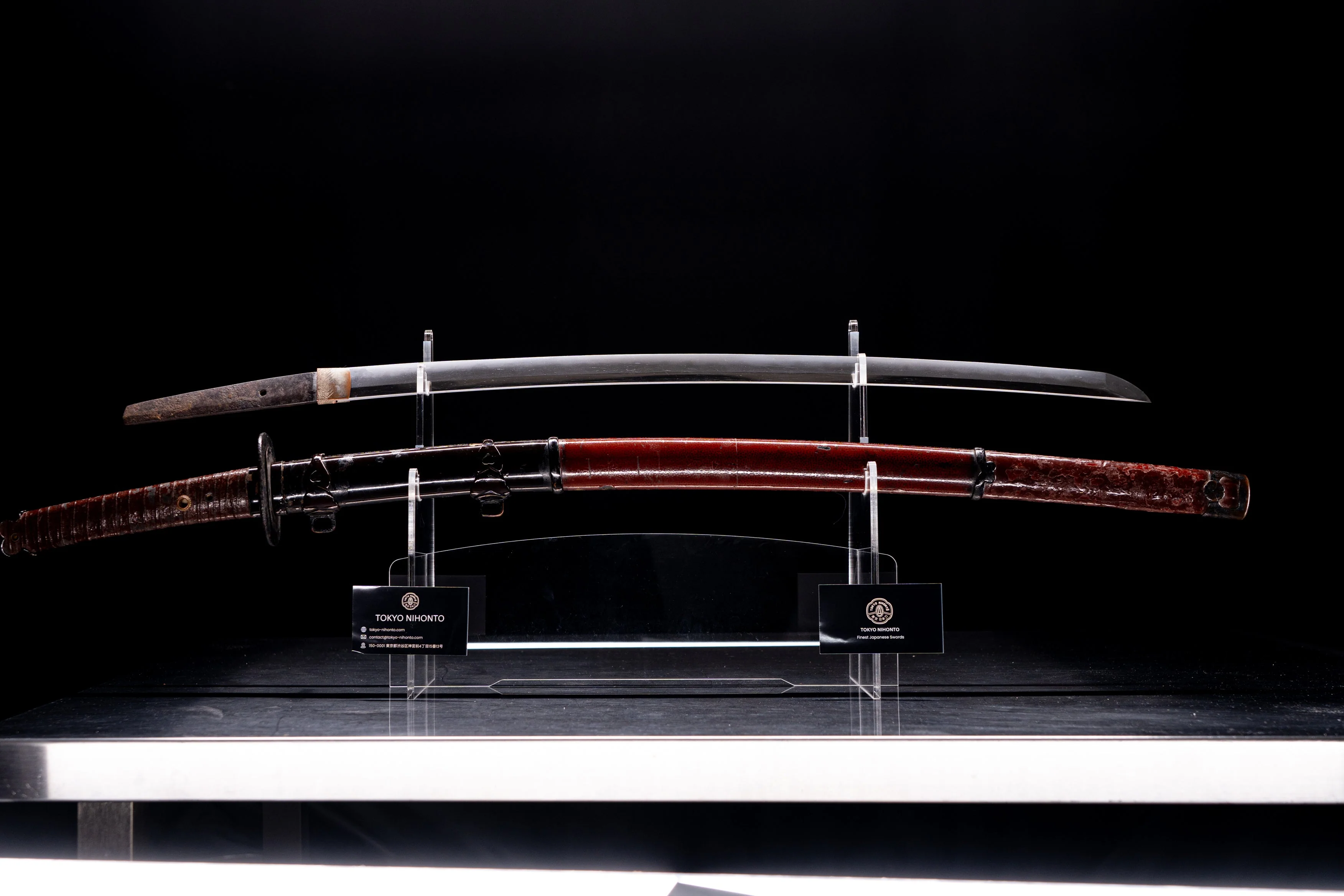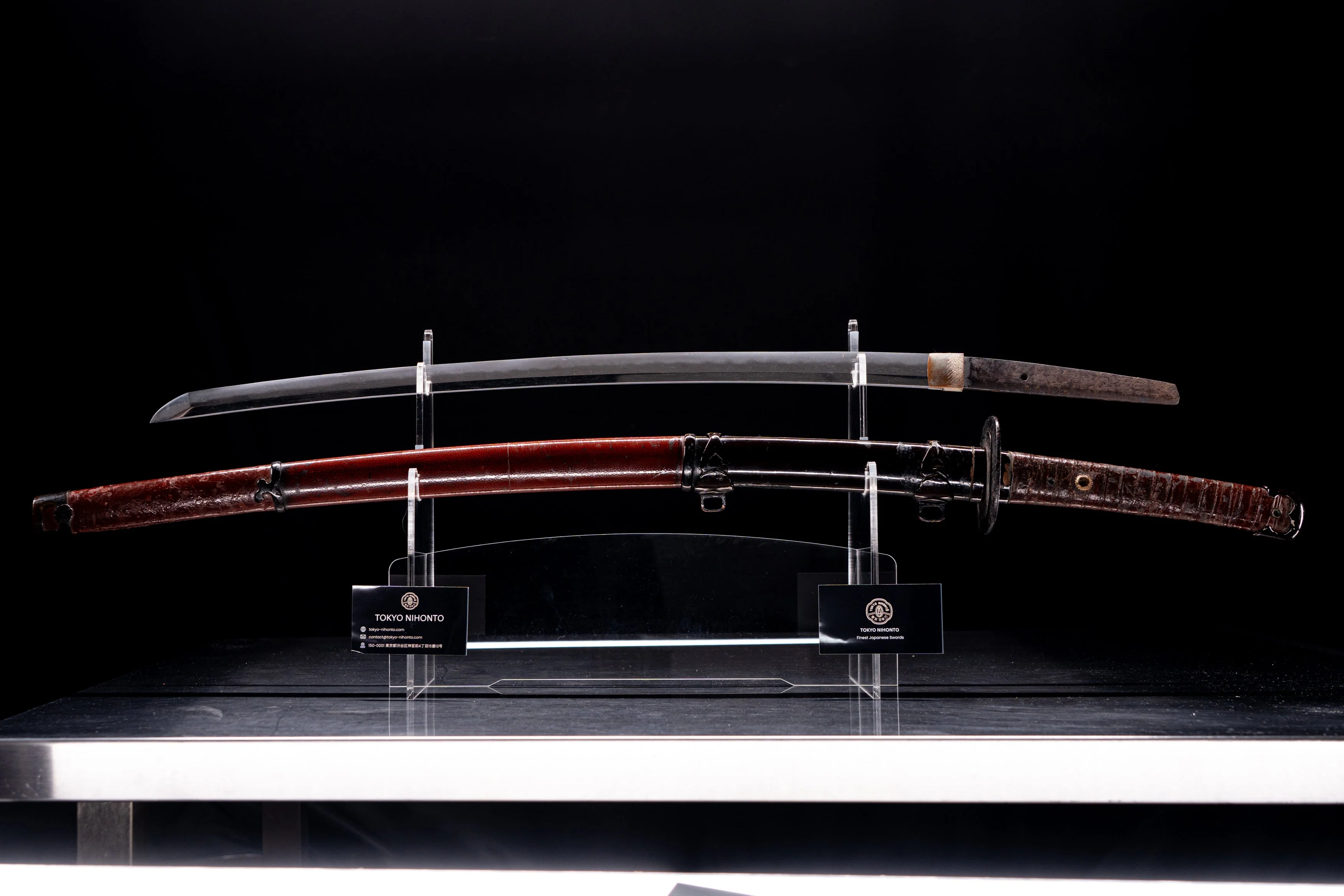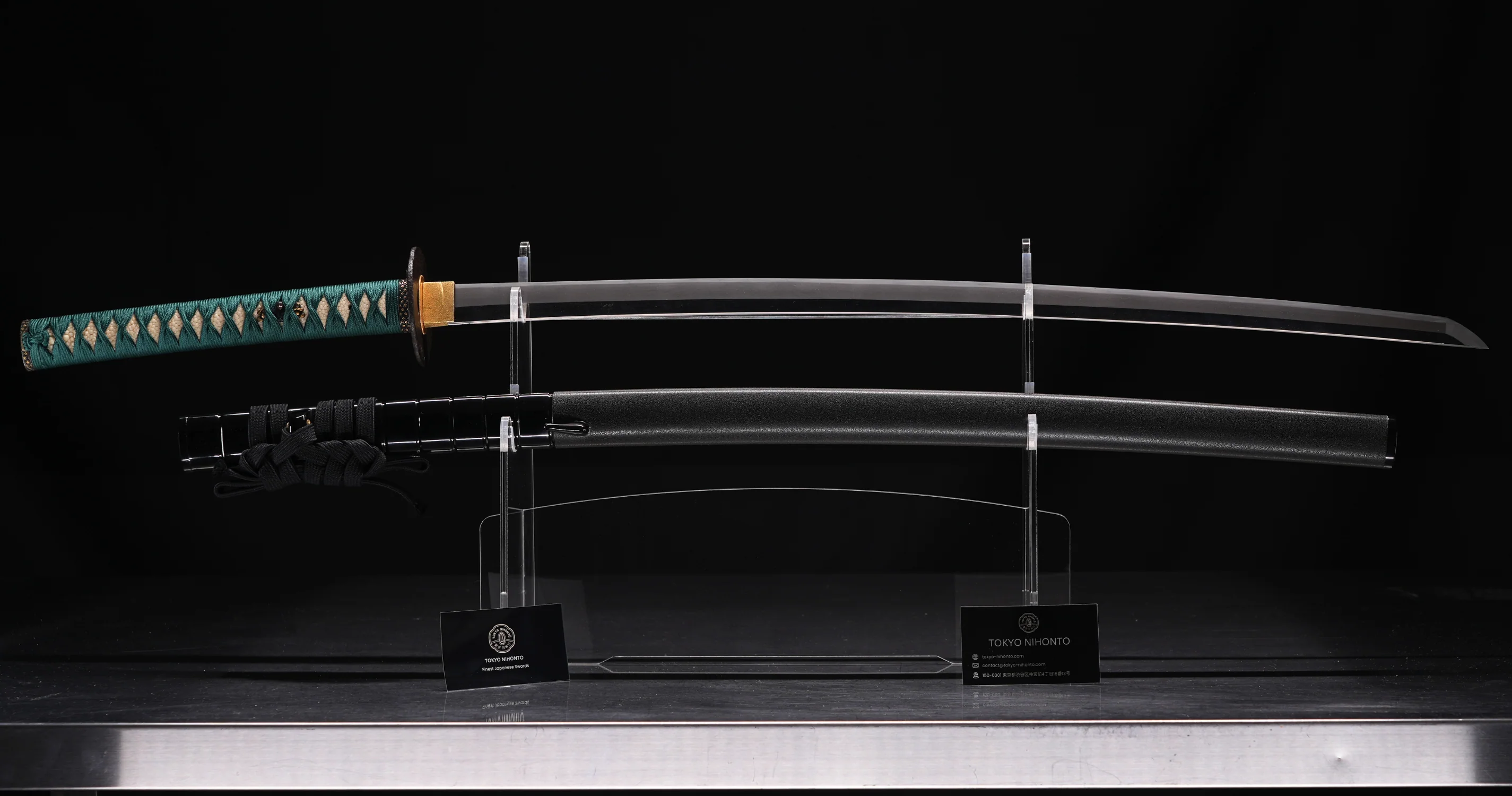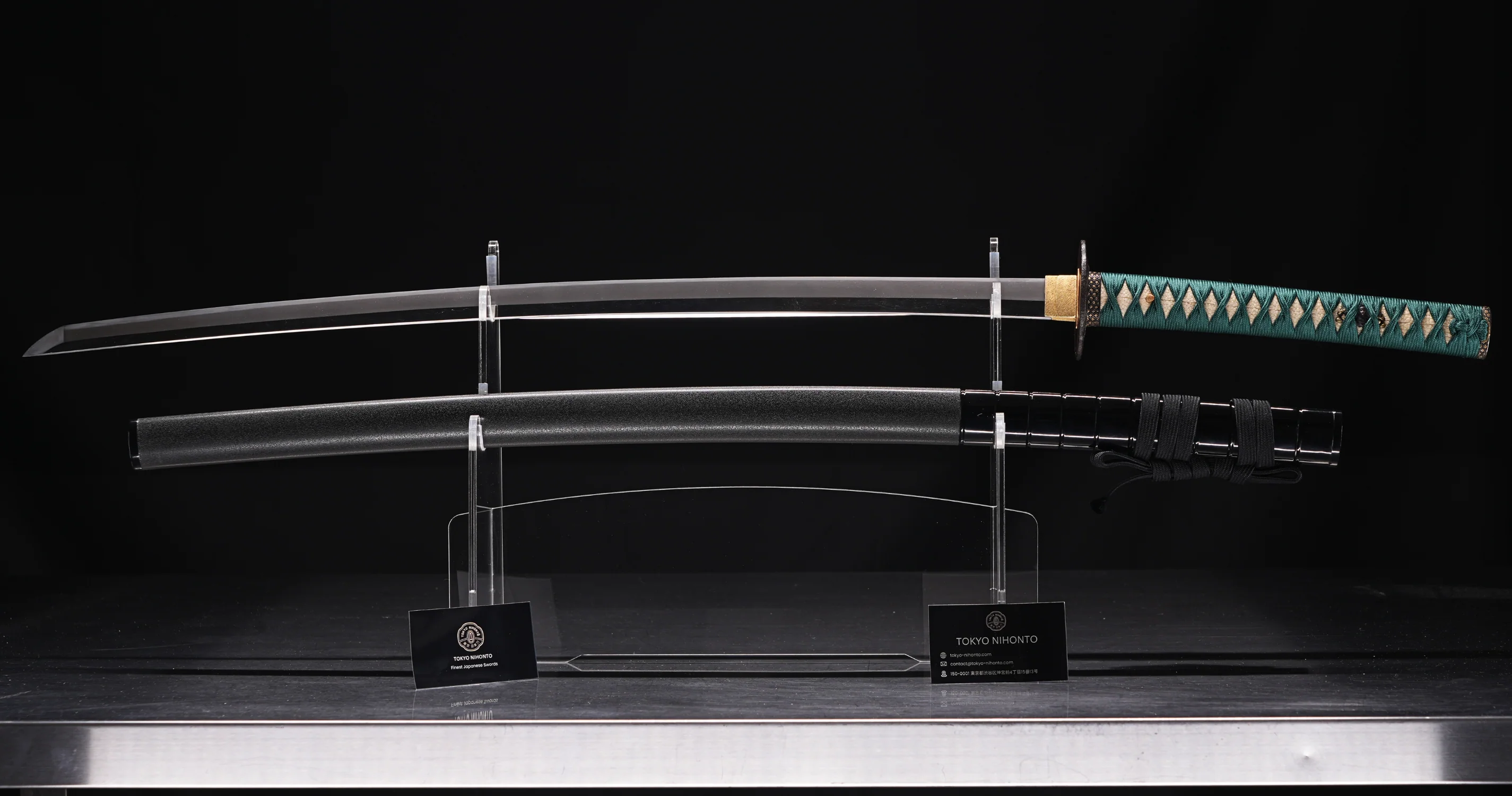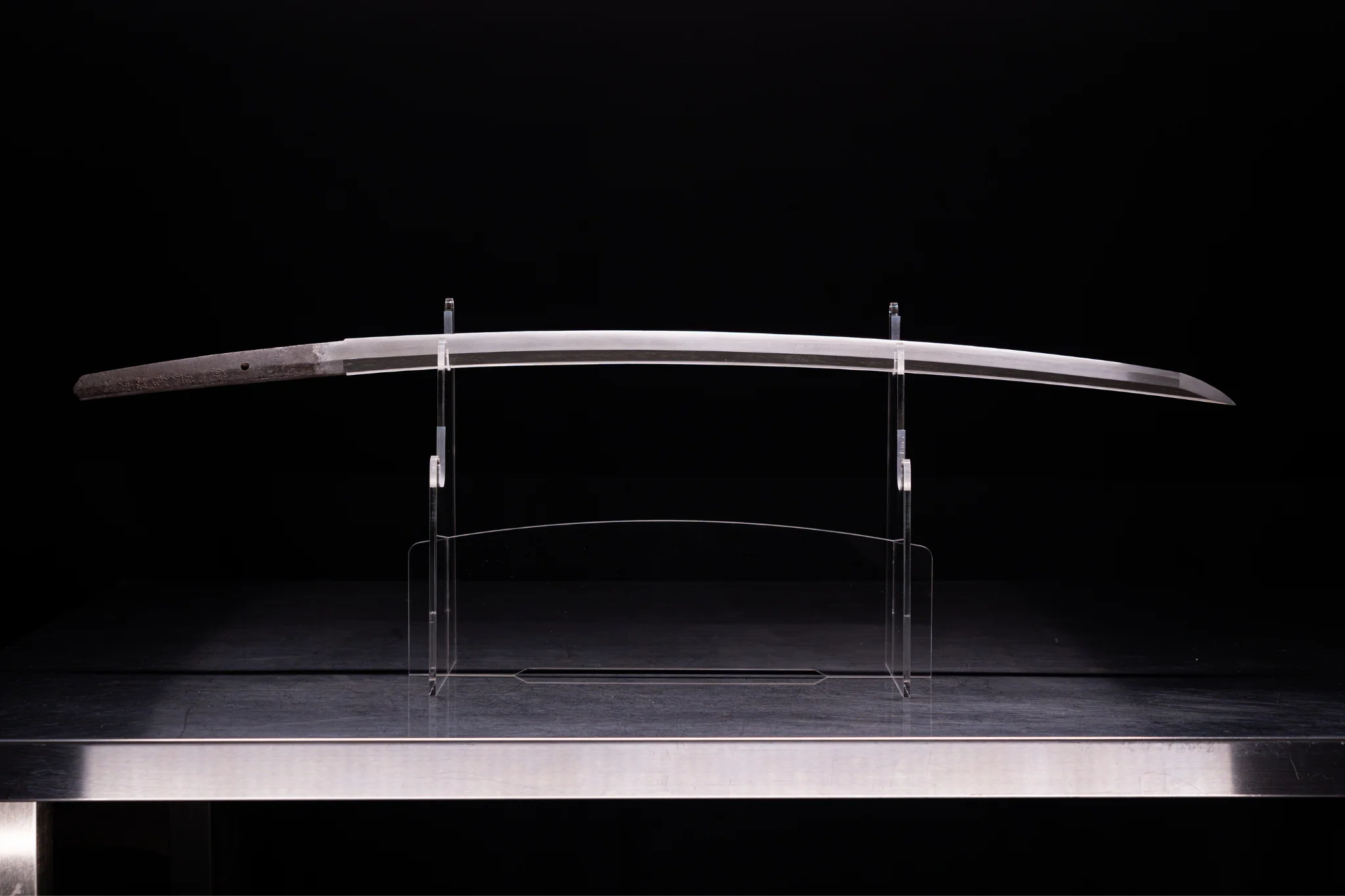
Antique Japanese Sword Katana Bishu Osafune Sukesada
Specifications :
- Type: Katana
- Period : Late Muromachi
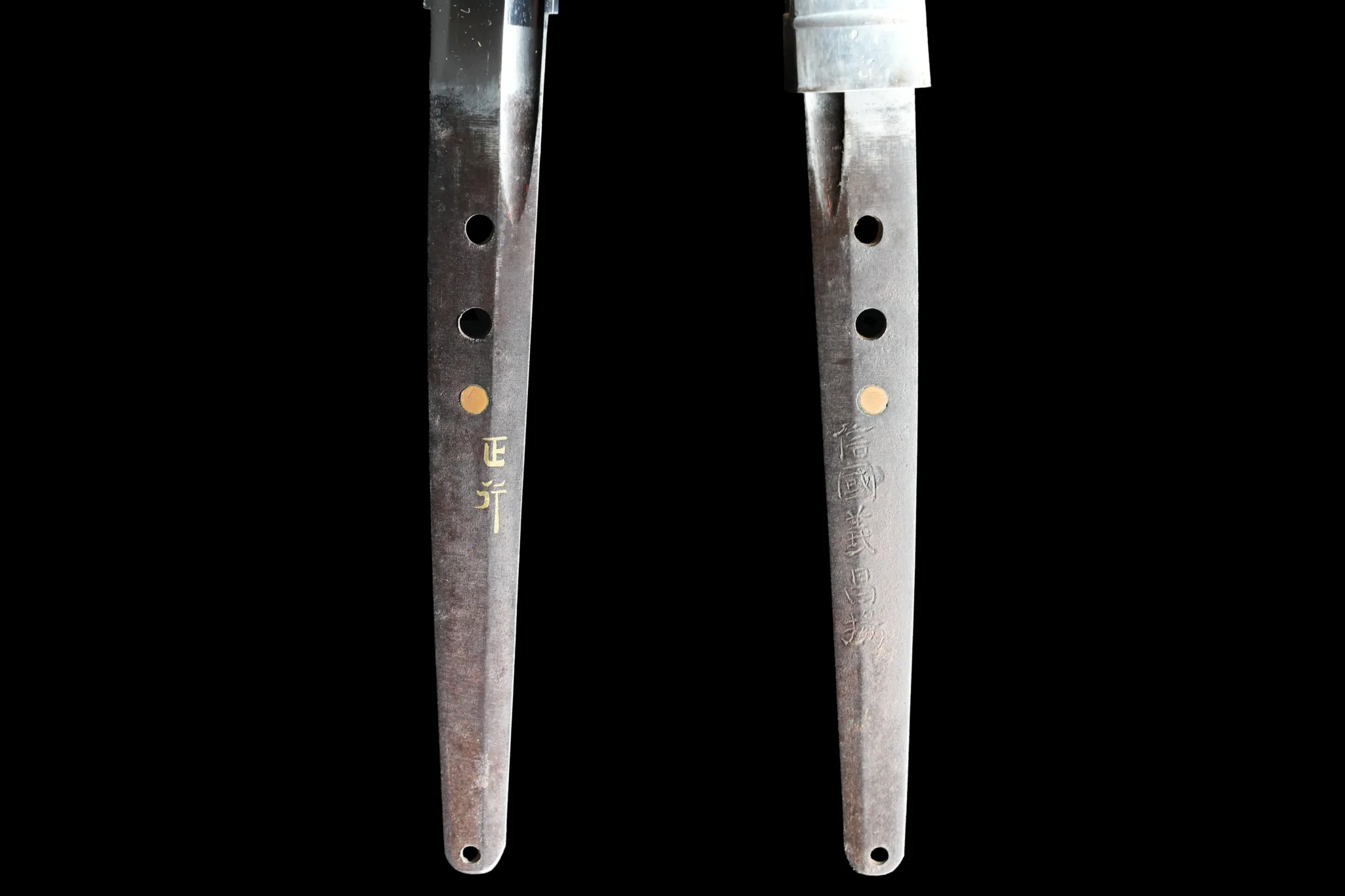
- Omote Mei: 備州長船祐定作 (Bishu Osafune Sukesada Saku)
- Ura Mei: 大永二年八月日 (August, 1522)
- Blade Length (Nagasa): 68.2 cm
- Curve (Sori): 2.0 cm
- Mekugi-ana: 1
- Registration: Nagano Prefecture, August, Heisei 25 (2013)
- Sugata: Shinogi-zukuri, iori-mune
- Dimensions: Motohaba (base width) - 3.06 cm, Motokasane (base thickness) - 0.59 cm, Sakihaba (width at yokote) - 2.26 cm, Sakikasane (thickness at yokote) - 0.49 cm
- Weight: 688g
- Habaki: Copper with silver Fuji mountain shape, single layer
- Scabbard: Shirasaya
Background:
This katana is an exquisite representation from the Osafune School, which stood as a beacon of exemplary swordsmithing, especially during the late Muromachi Period, aptly termed as the Matsu Bizen. The Osafune School, being the principal branch, carries a legacy that spanned generations, setting benchmarks in sword craftsmanship.
The name 'Sukesada' holds its weight in the annals of Samurai history. Astonishingly, around 60 swordsmiths adopted this maker’s name, each bringing their distinct touch, style, and innovation. These artisans hailed from Bizen, the cradle of the celebrated Bizen Den sword tradition. This esteemed lineage stands in league with other renowned traditions like the Yamashiro Den, Soshu Den, Mino Den, and Yamato Den.
The Muromachi period, synonymous with the tumultuous Sengoku (Warring States) era, witnessed soaring demands for swords. Bizen, strategically located, became the epicenter of this booming demand, meeting the needs of the influential feudal lords. The length and build of this particular blade suggest efficiency and maneuverability, traits highly sought after in those turbulent times.
Owning a blade like this isn't just about possessing a sword; it's about holding a piece of history. This katana stands as a testament to a period marked by power struggles and territorial rivalries among warlords. Every element, from its meticulously forged blade to its copper habaki adorned with a silver Fuji mountain motif, echoes the artistry and martial legacy of ancient Japan. Holding it, one can almost feel the echoes of the past, a time when swords were not just tools but an integral part of a samurai's soul.
Product Information
Product Information
Shipping & Returns
Shipping & Returns
Description
Specifications :
- Type: Katana
- Period : Late Muromachi
- Omote Mei: 備州長船祐定作 (Bishu Osafune Sukesada Saku)
- Ura Mei: 大永二年八月日 (August, 1522)
- Blade Length (Nagasa): 68.2 cm
- Curve (Sori): 2.0 cm
- Mekugi-ana: 1
- Registration: Nagano Prefecture, August, Heisei 25 (2013)
- Sugata: Shinogi-zukuri, iori-mune
- Dimensions: Motohaba (base width) - 3.06 cm, Motokasane (base thickness) - 0.59 cm, Sakihaba (width at yokote) - 2.26 cm, Sakikasane (thickness at yokote) - 0.49 cm
- Weight: 688g
- Habaki: Copper with silver Fuji mountain shape, single layer
- Scabbard: Shirasaya
Background:
This katana is an exquisite representation from the Osafune School, which stood as a beacon of exemplary swordsmithing, especially during the late Muromachi Period, aptly termed as the Matsu Bizen. The Osafune School, being the principal branch, carries a legacy that spanned generations, setting benchmarks in sword craftsmanship.
The name 'Sukesada' holds its weight in the annals of Samurai history. Astonishingly, around 60 swordsmiths adopted this maker’s name, each bringing their distinct touch, style, and innovation. These artisans hailed from Bizen, the cradle of the celebrated Bizen Den sword tradition. This esteemed lineage stands in league with other renowned traditions like the Yamashiro Den, Soshu Den, Mino Den, and Yamato Den.
The Muromachi period, synonymous with the tumultuous Sengoku (Warring States) era, witnessed soaring demands for swords. Bizen, strategically located, became the epicenter of this booming demand, meeting the needs of the influential feudal lords. The length and build of this particular blade suggest efficiency and maneuverability, traits highly sought after in those turbulent times.
Owning a blade like this isn't just about possessing a sword; it's about holding a piece of history. This katana stands as a testament to a period marked by power struggles and territorial rivalries among warlords. Every element, from its meticulously forged blade to its copper habaki adorned with a silver Fuji mountain motif, echoes the artistry and martial legacy of ancient Japan. Holding it, one can almost feel the echoes of the past, a time when swords were not just tools but an integral part of a samurai's soul.