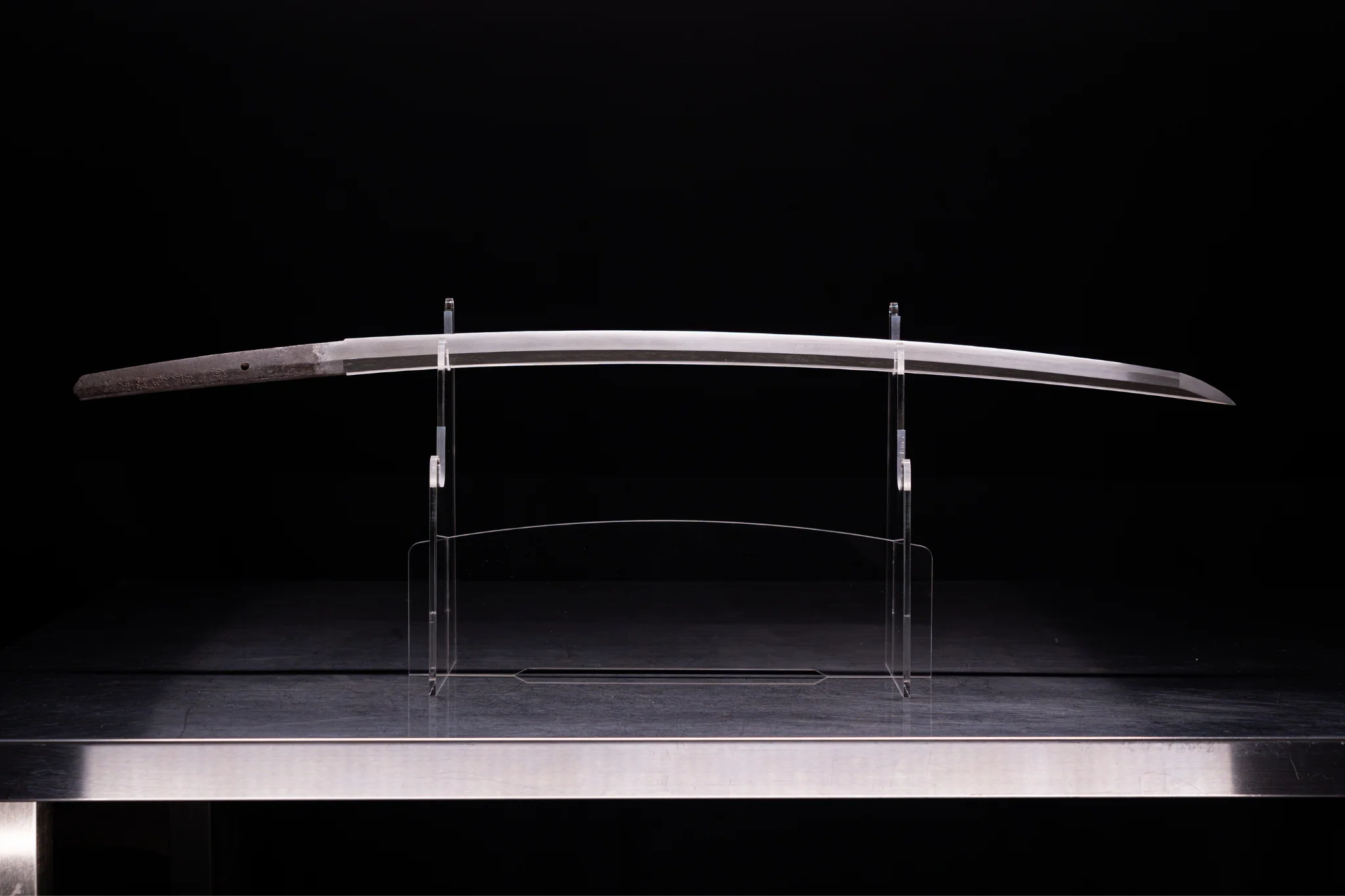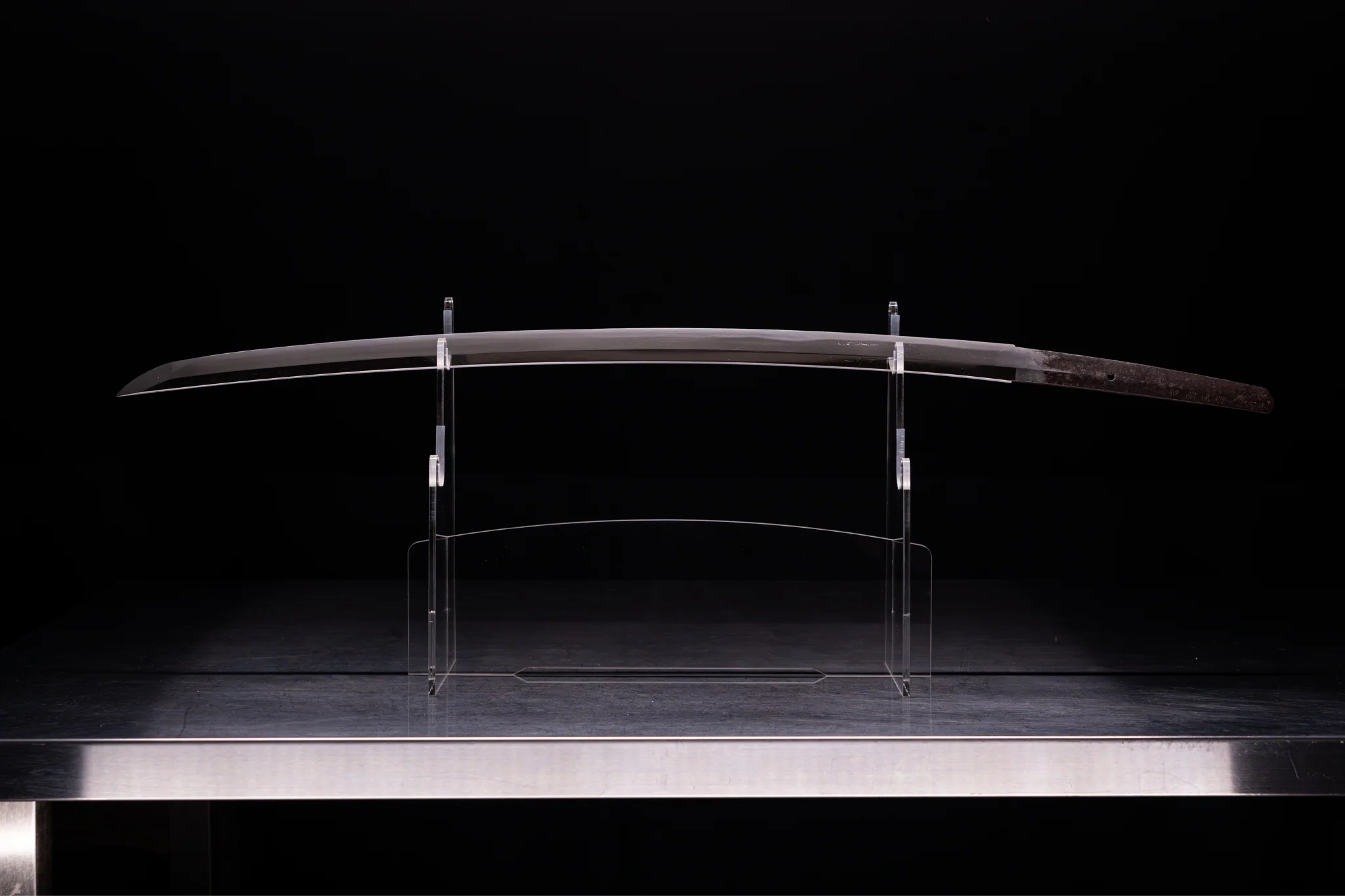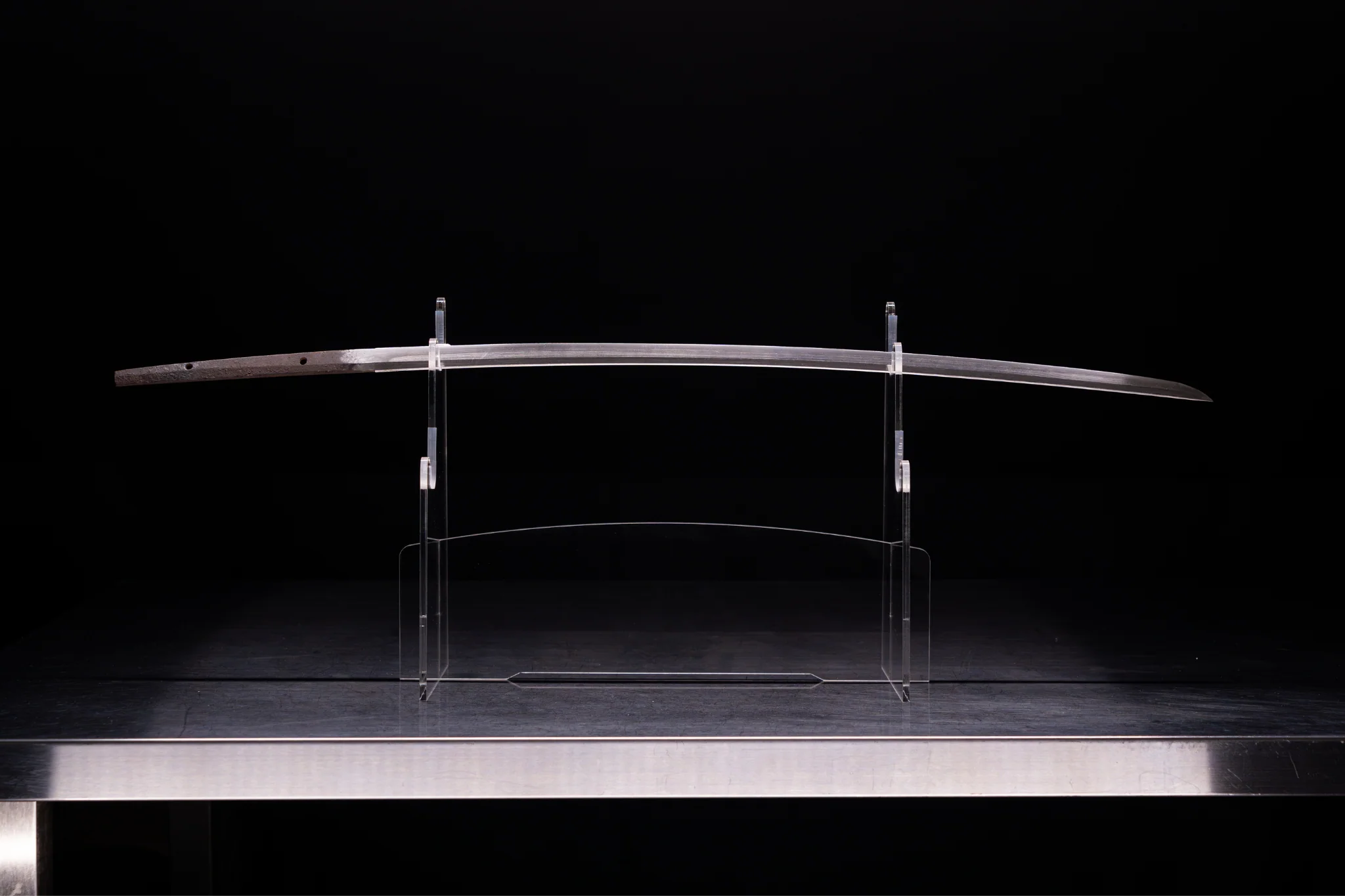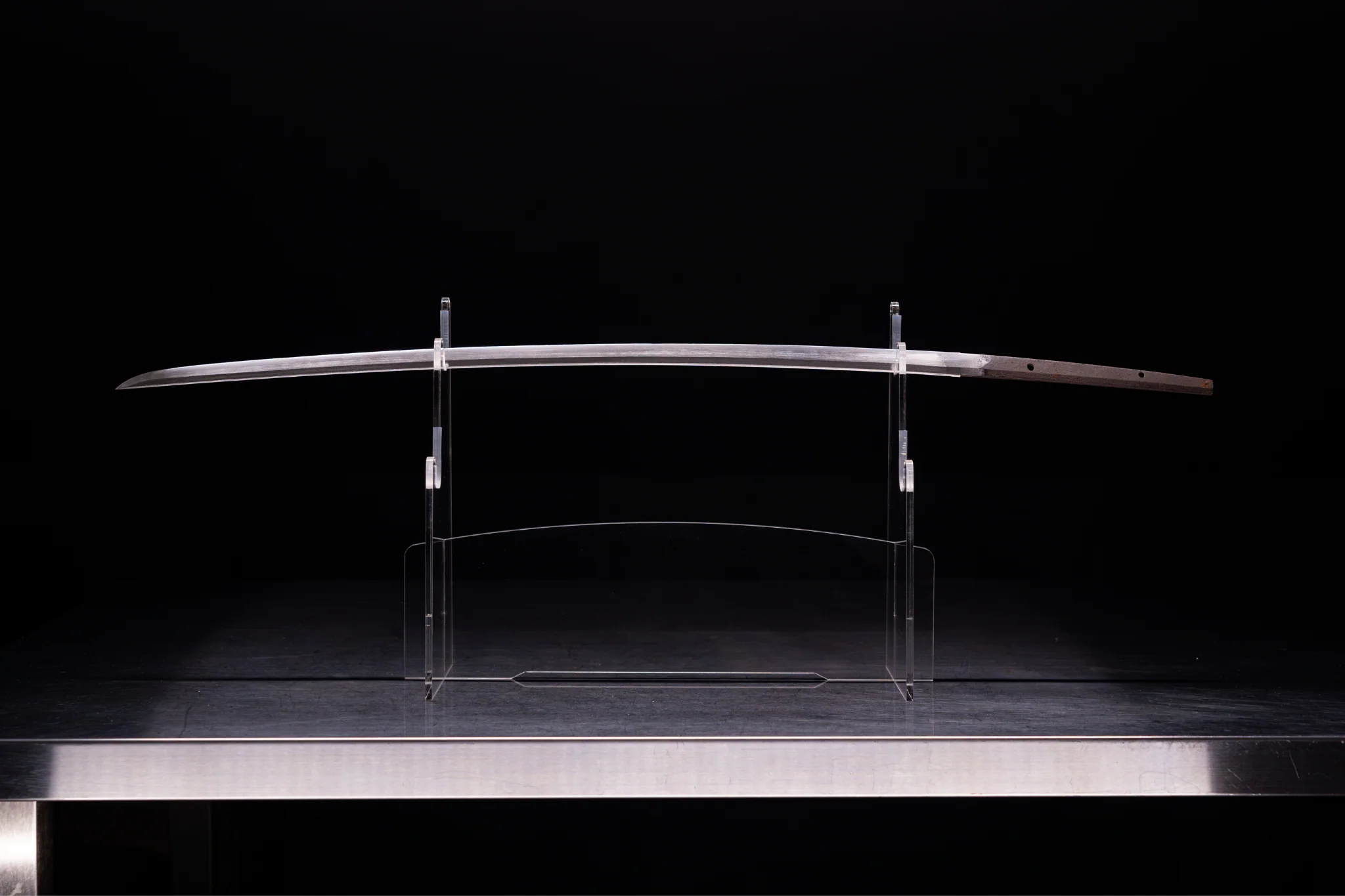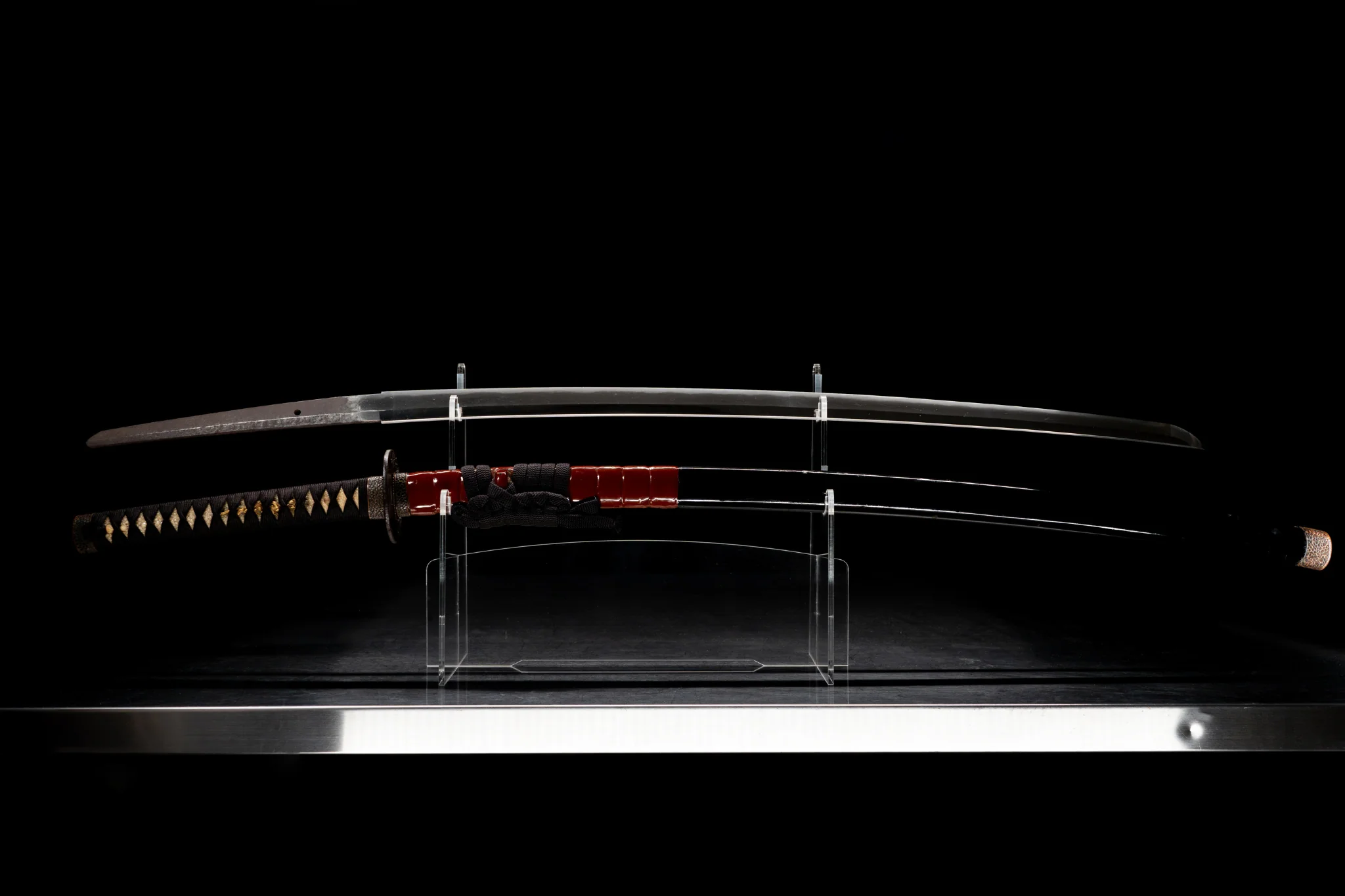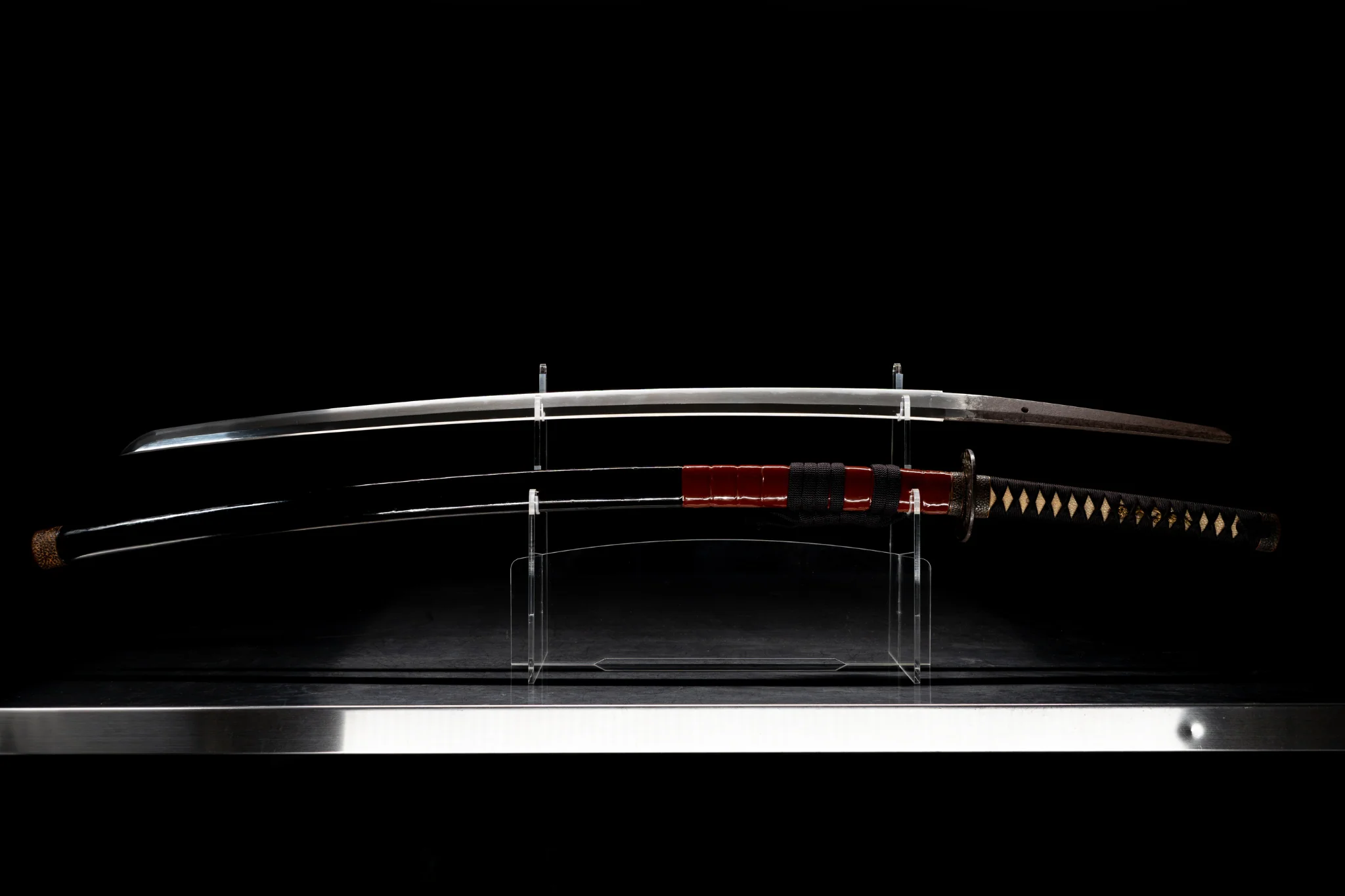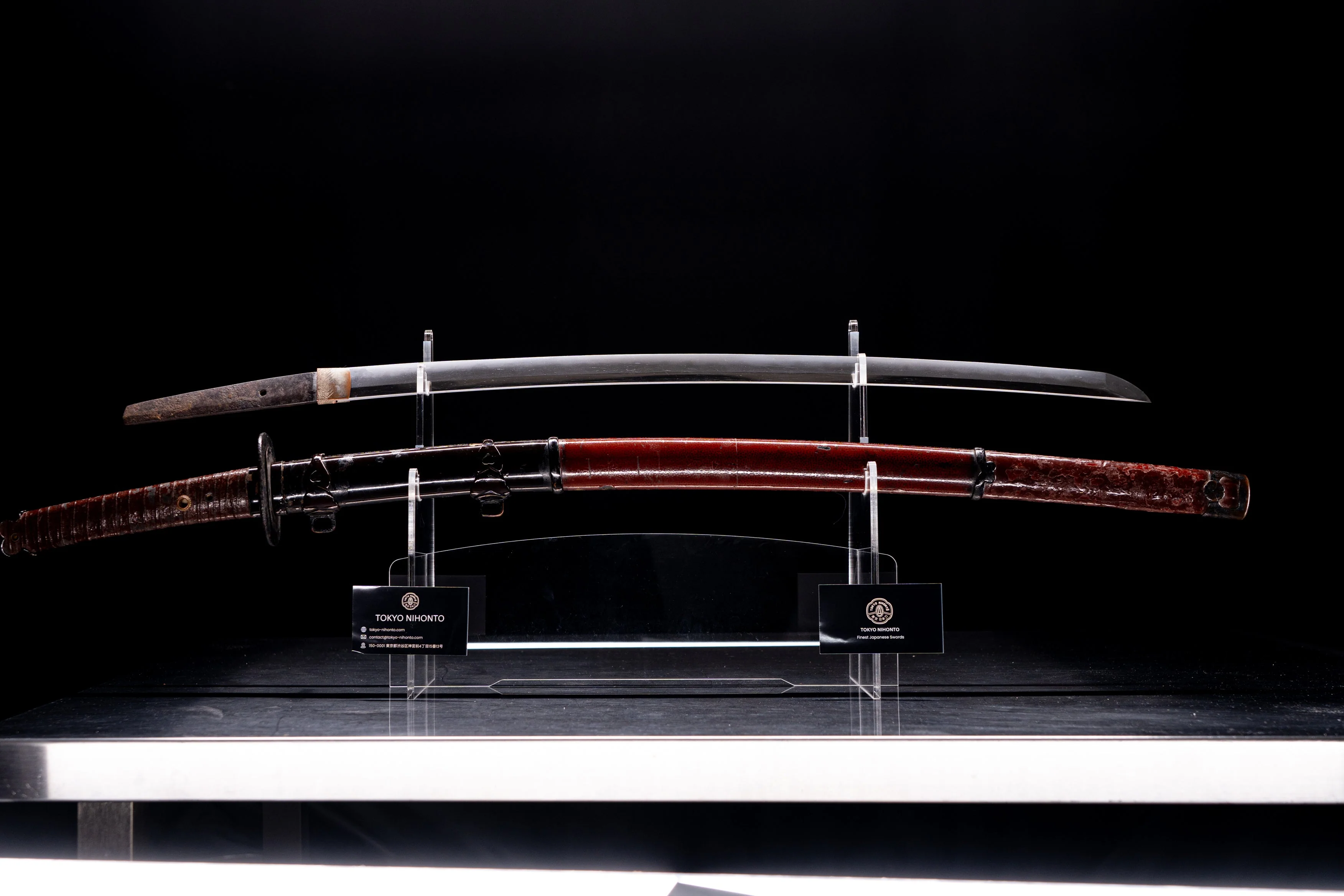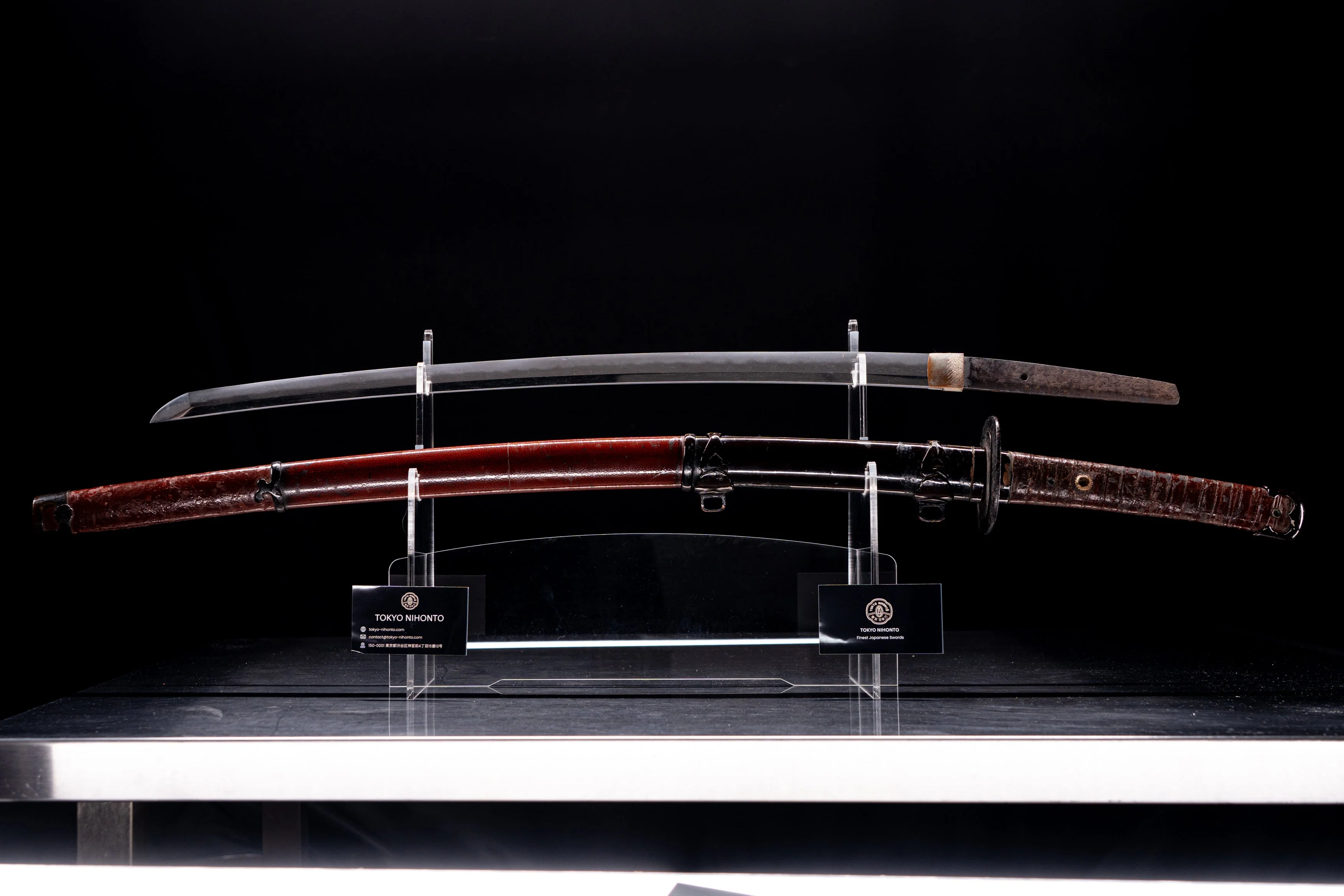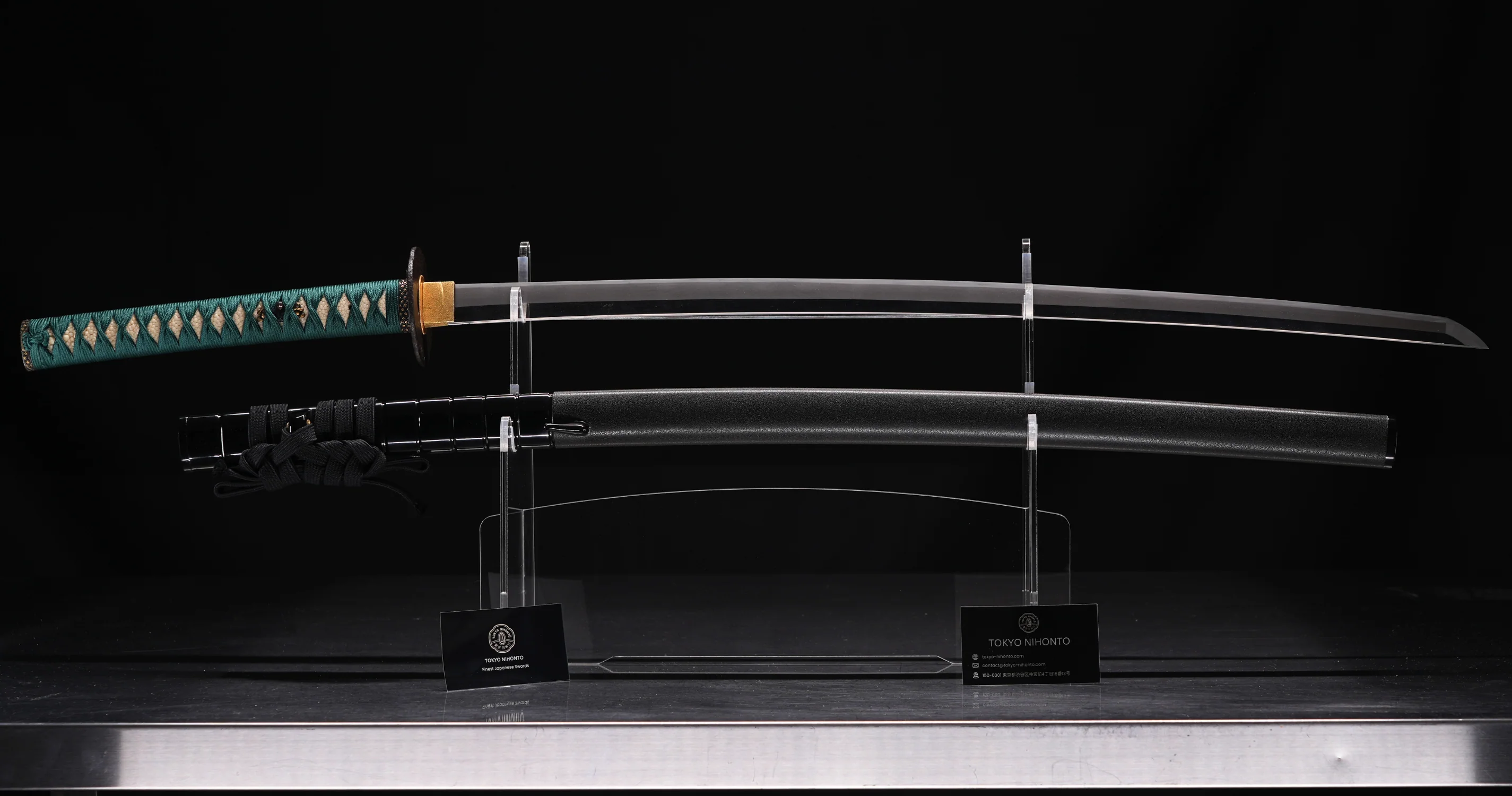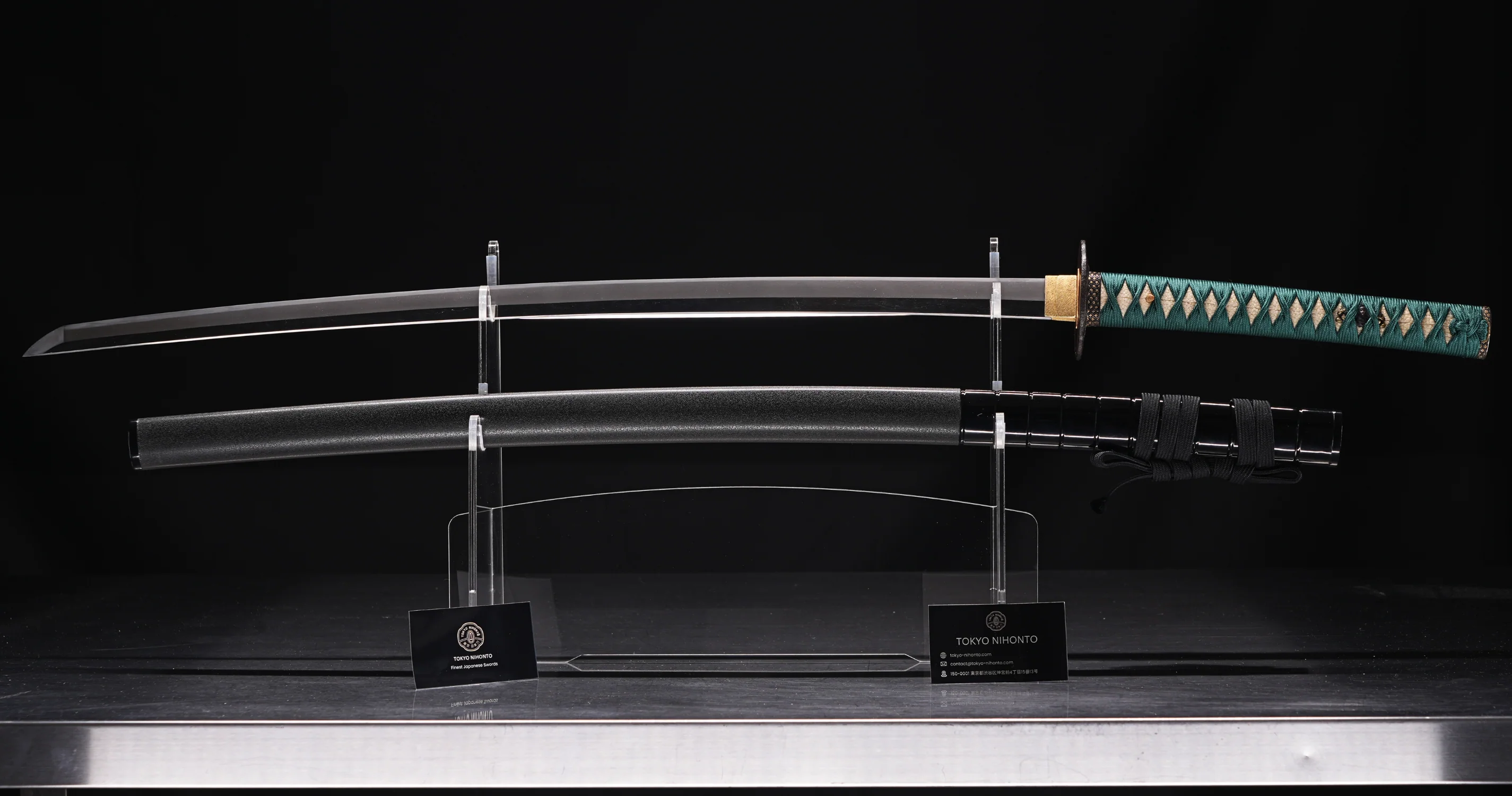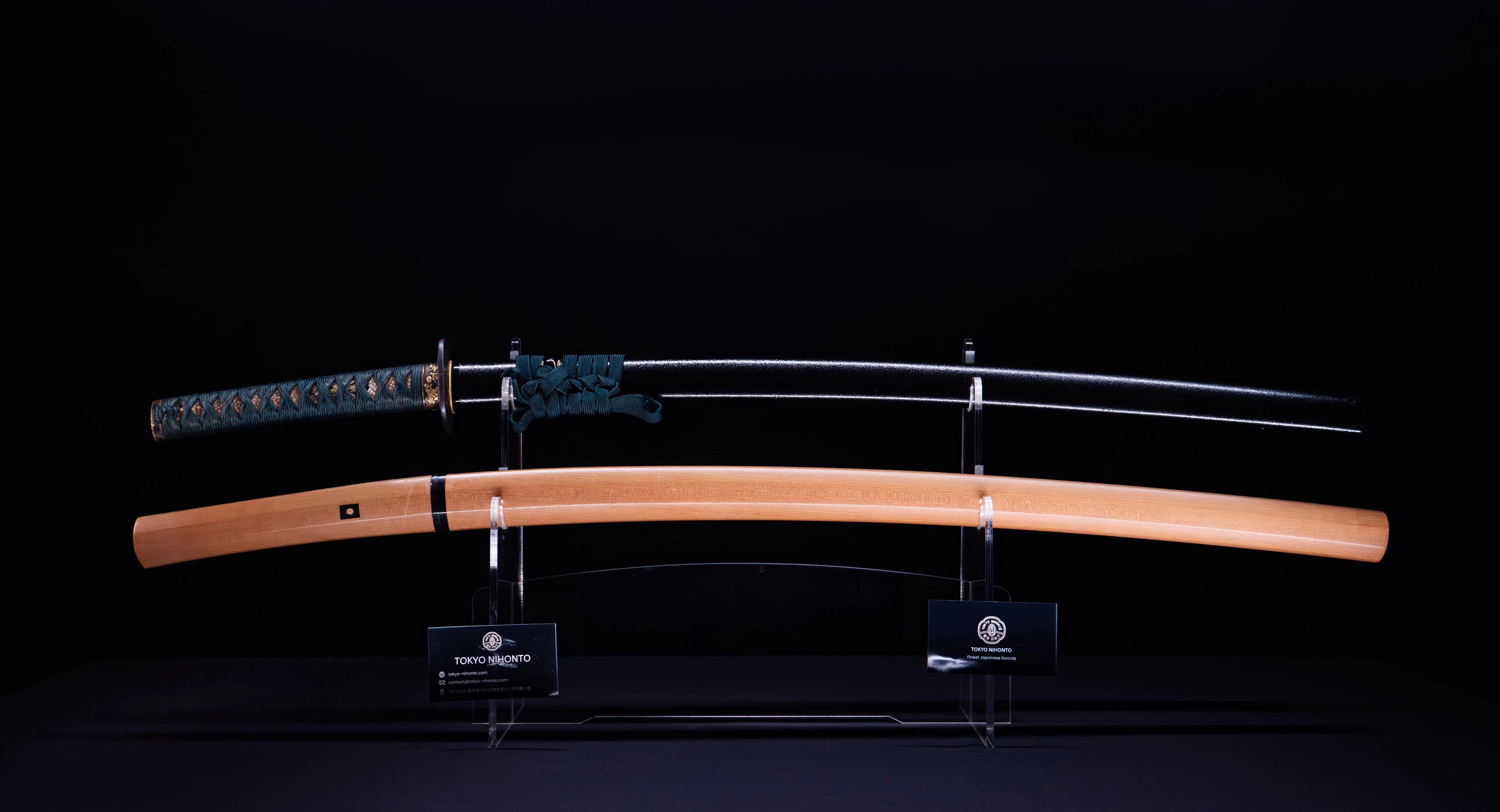
Antique Japanese Katana Rounded Kakugata Tsuba - Late Muromachi
- Signature (Mei): Mumei — Late Muromachi work
- Period / Province: Late Muromachi period (c. 1550–1600) — Likely Bizen or Mino influence
- Certification: —
- Blade Length (Nagasa): 61.1 cm
- Curvature (Sori): 1.4 cm, gentle tori-zori
- Mekugi-ana: 2
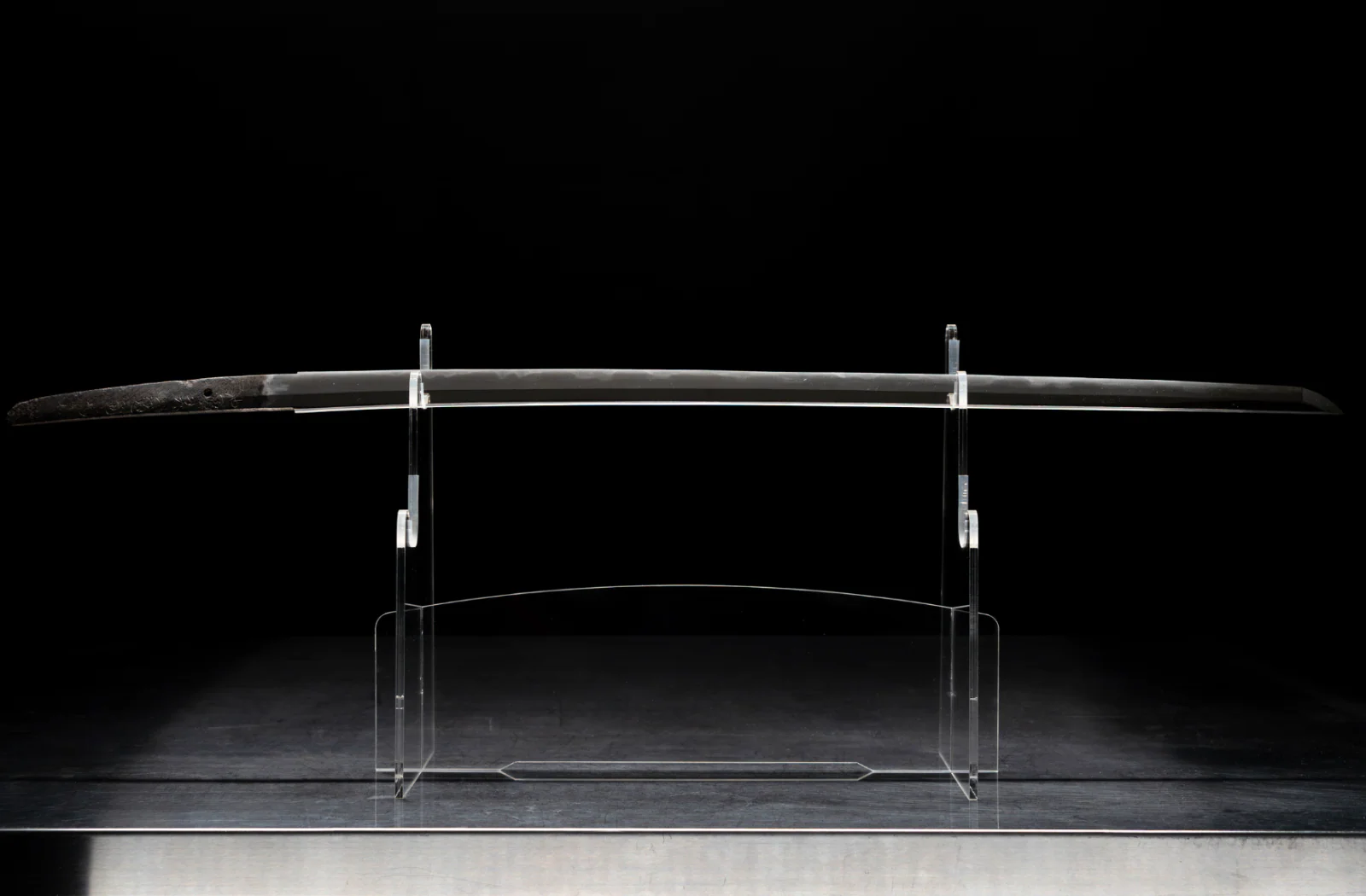
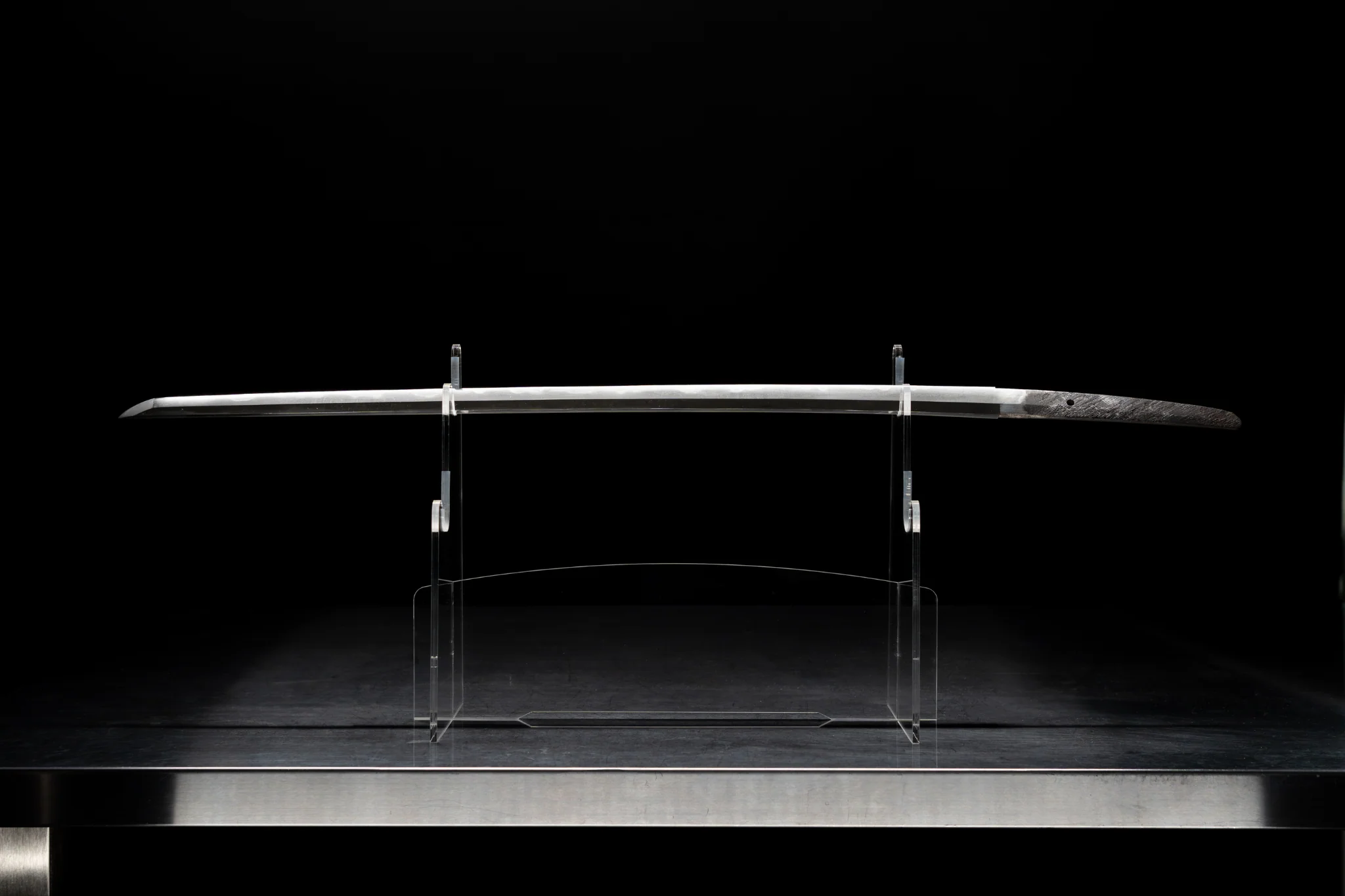
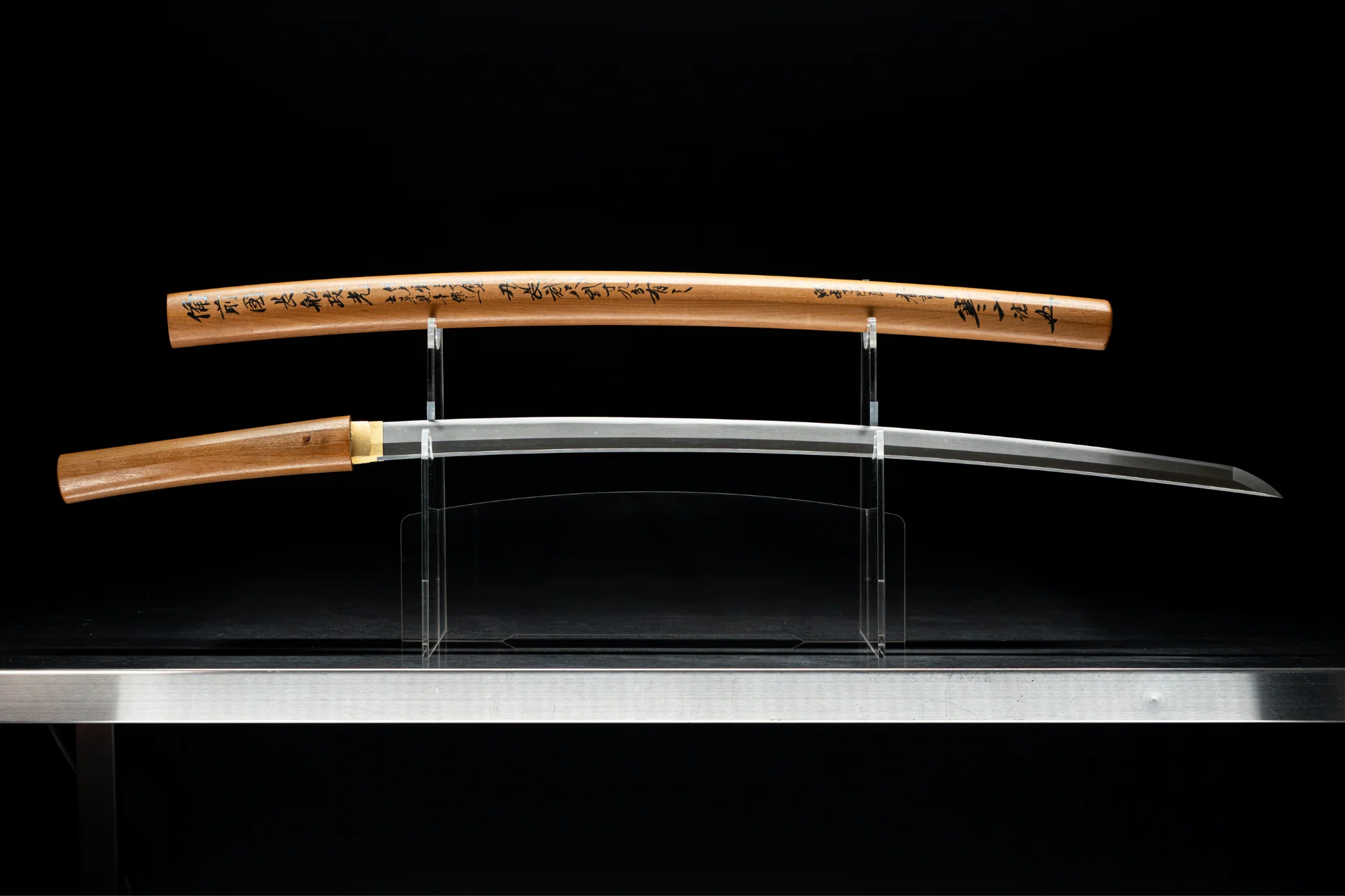
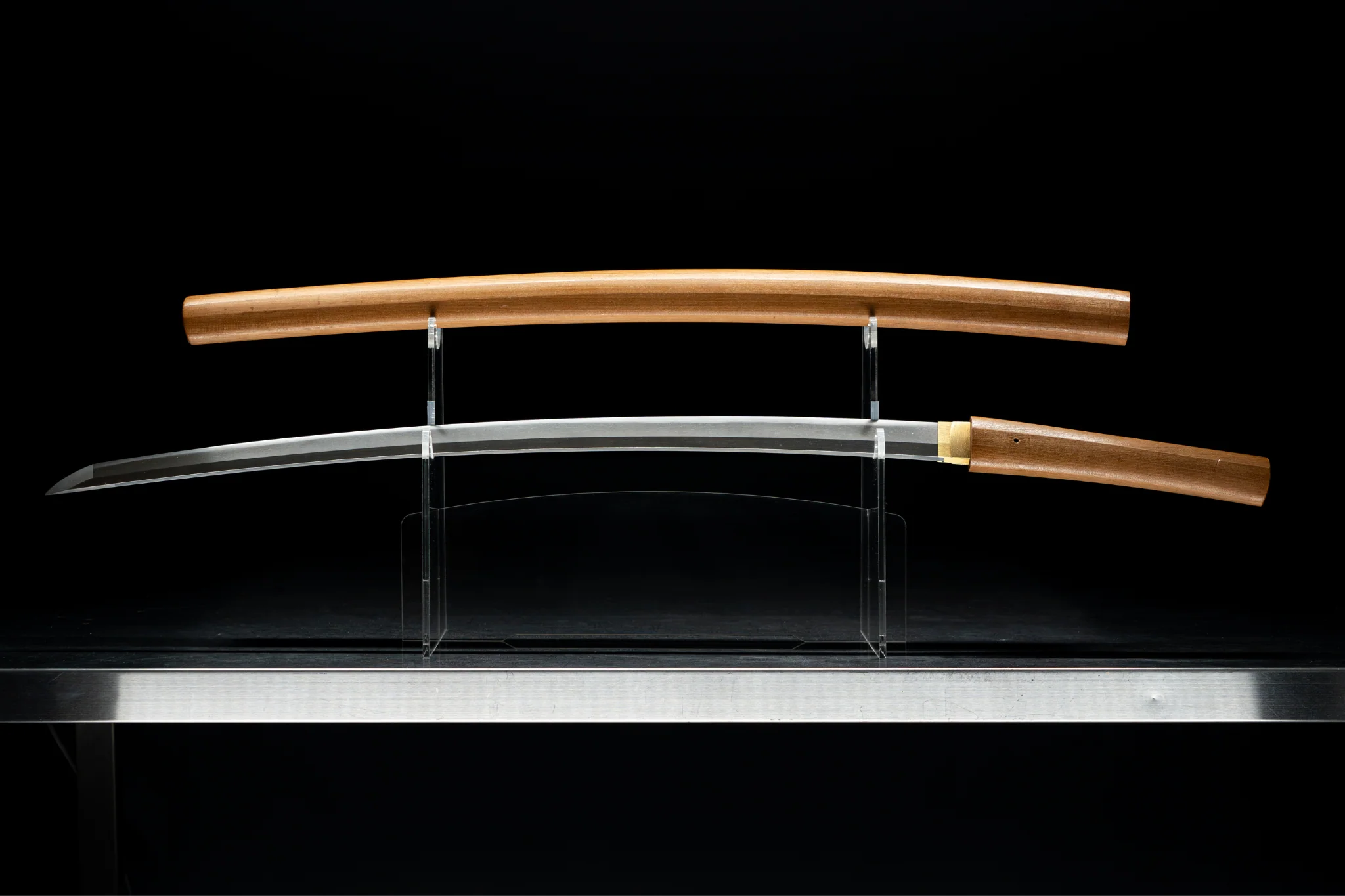
- Shape (Sugata): Shinogi-zukuri with harmonious curvature typical of battlefield swords
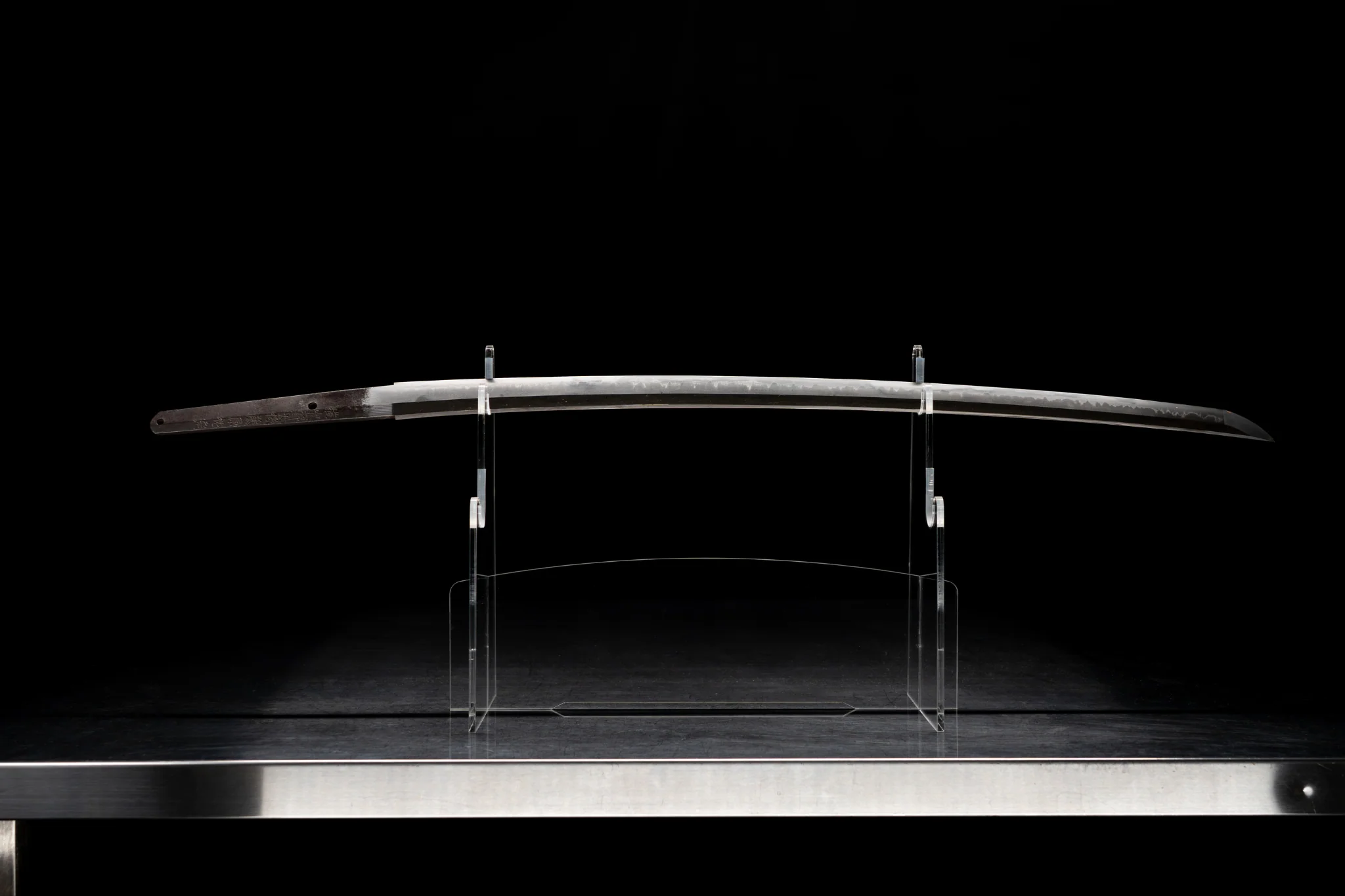
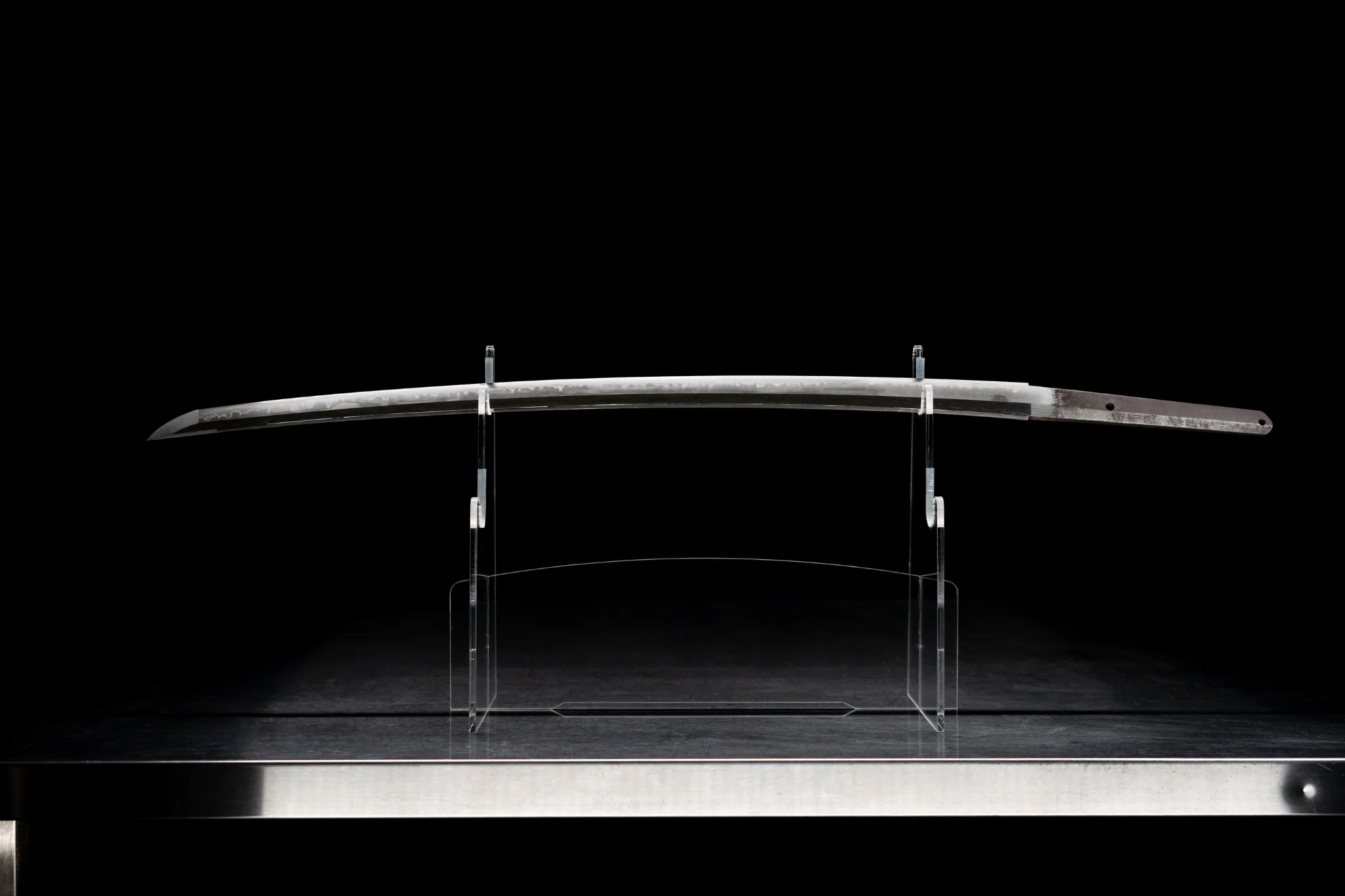
- Hamon: Notare-midare — soft undulating wave pattern with a bright nioi-guchi
- Jihada: Ko-itame with subtle hada activity visible under proper lighting
- Kissaki: Chū-kissaki (medium point)
- Polish: Traditional Japanese polish enhancing the flowing hamon and refined ji
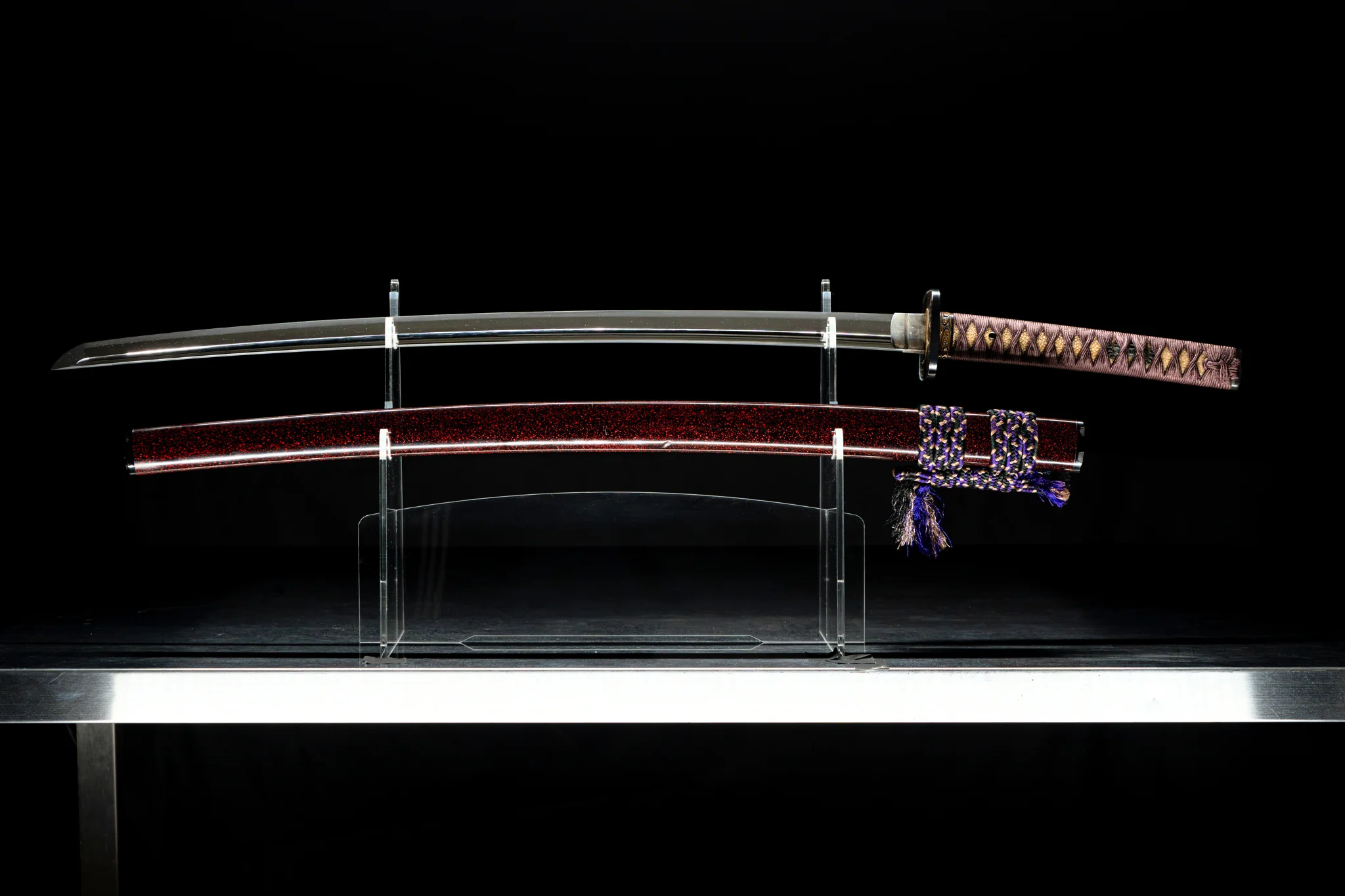
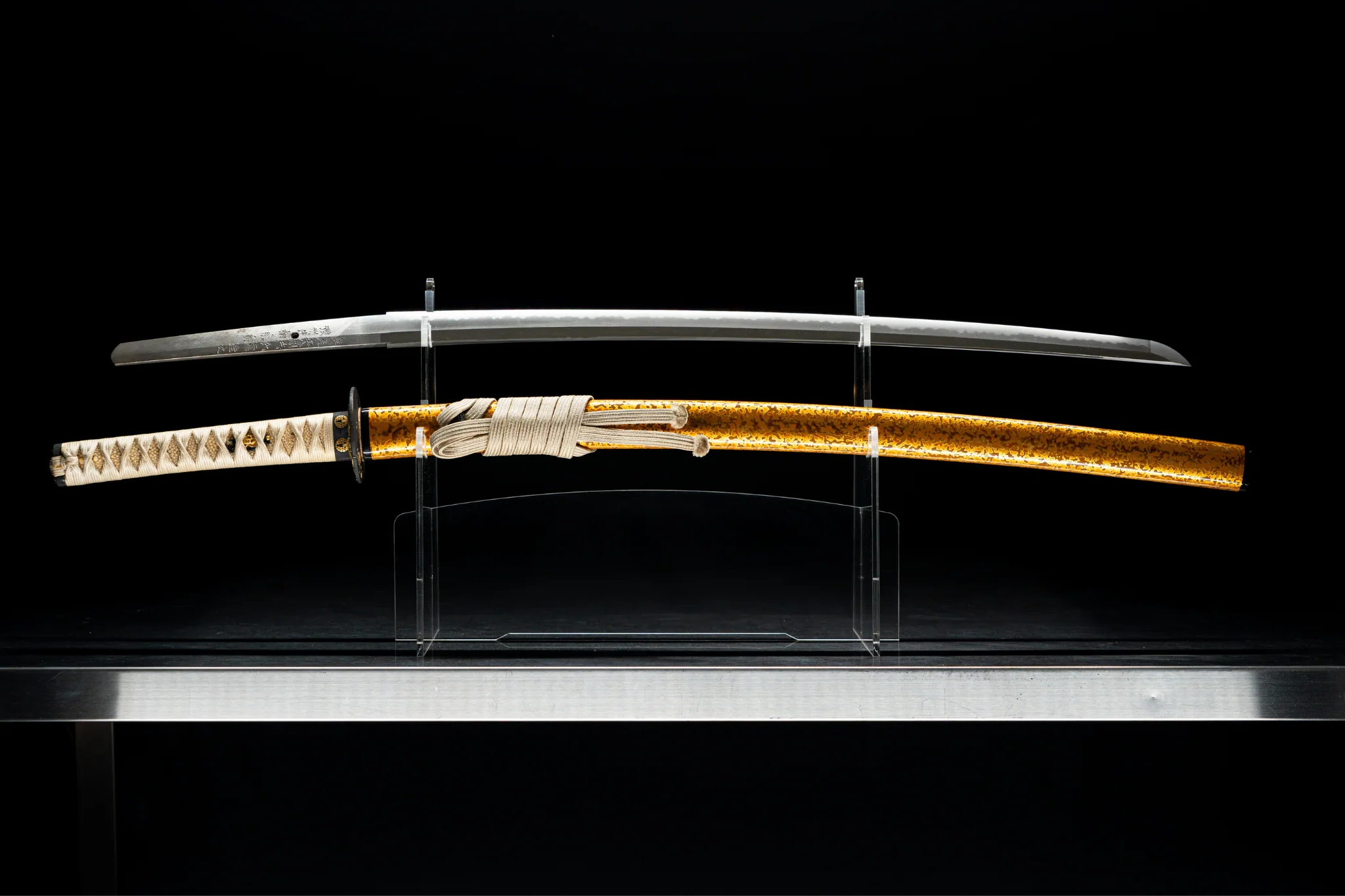
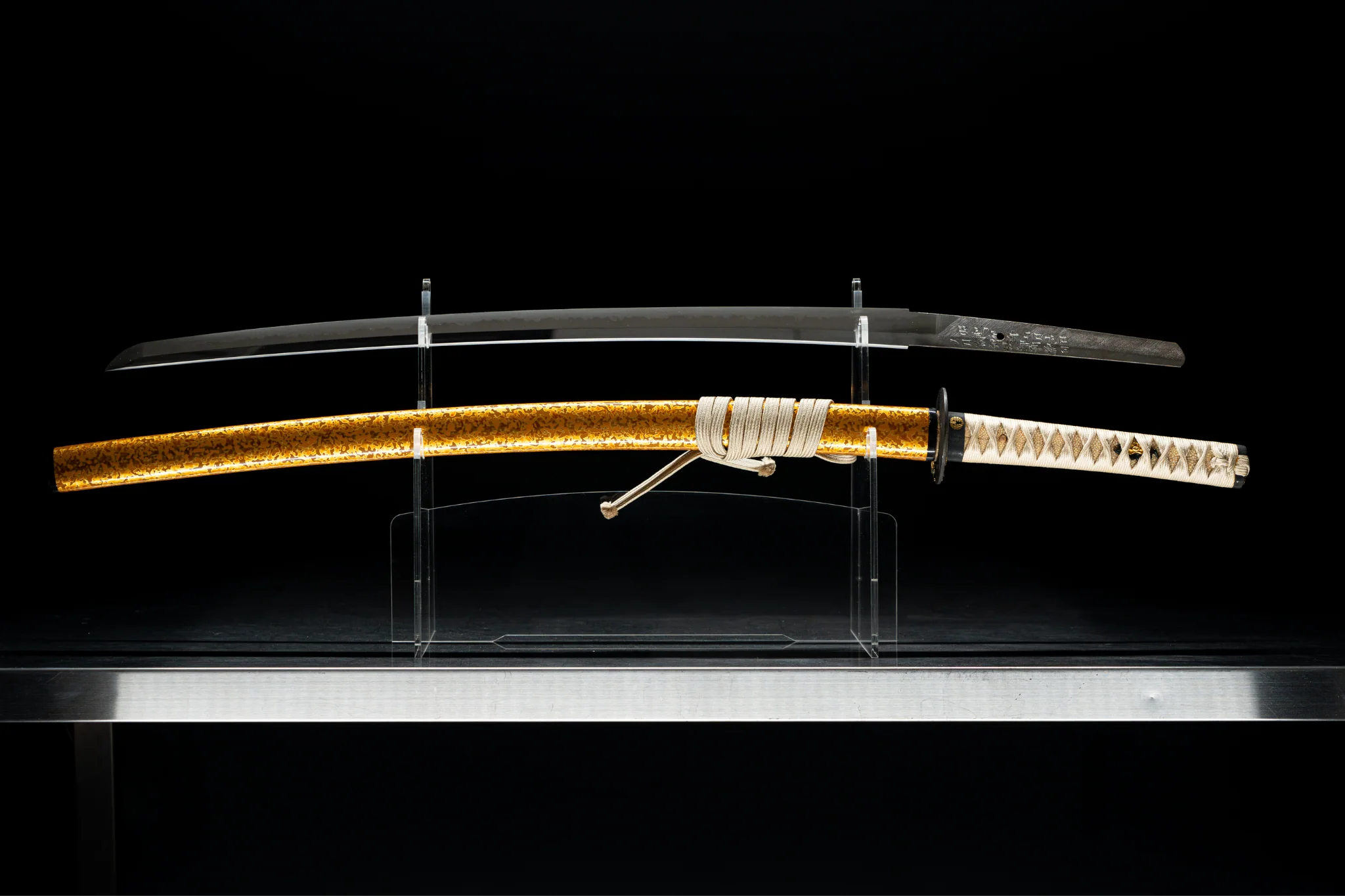
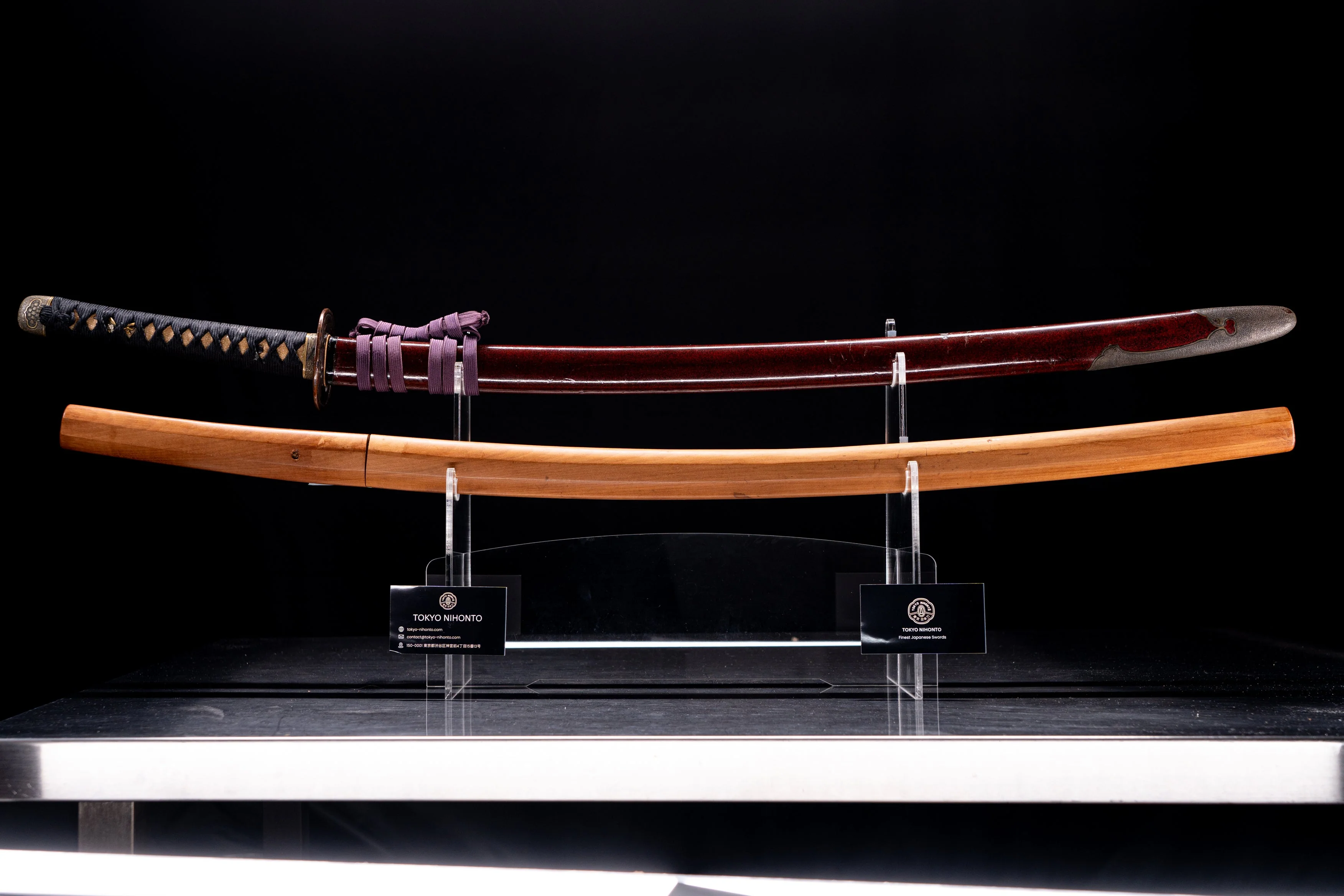
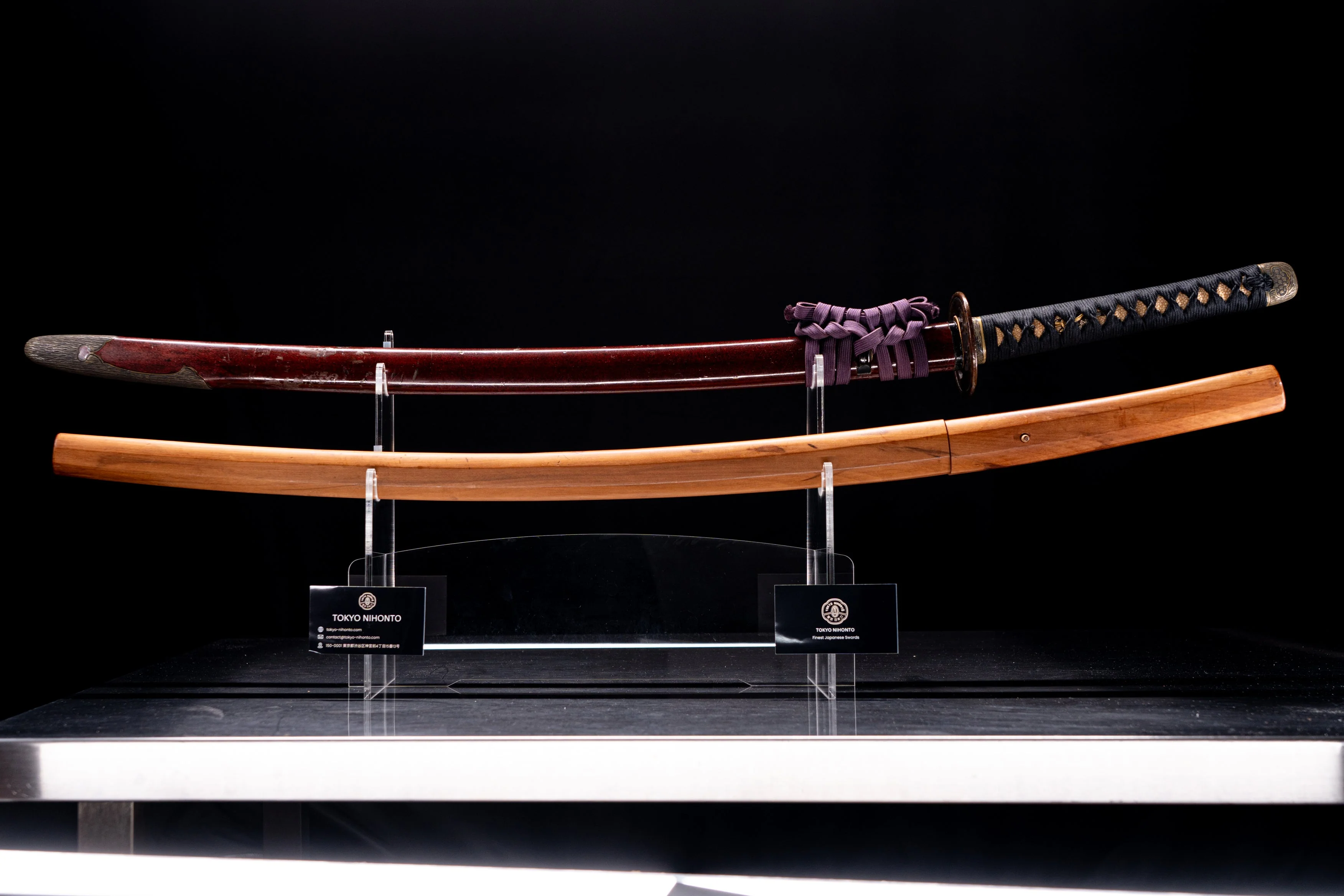
- Mounting (Koshirae): Edo-period style — lacquered saya, iron tsuba, gold-decorated fuchi-kashira, dark green tsuka-ito over samegawa
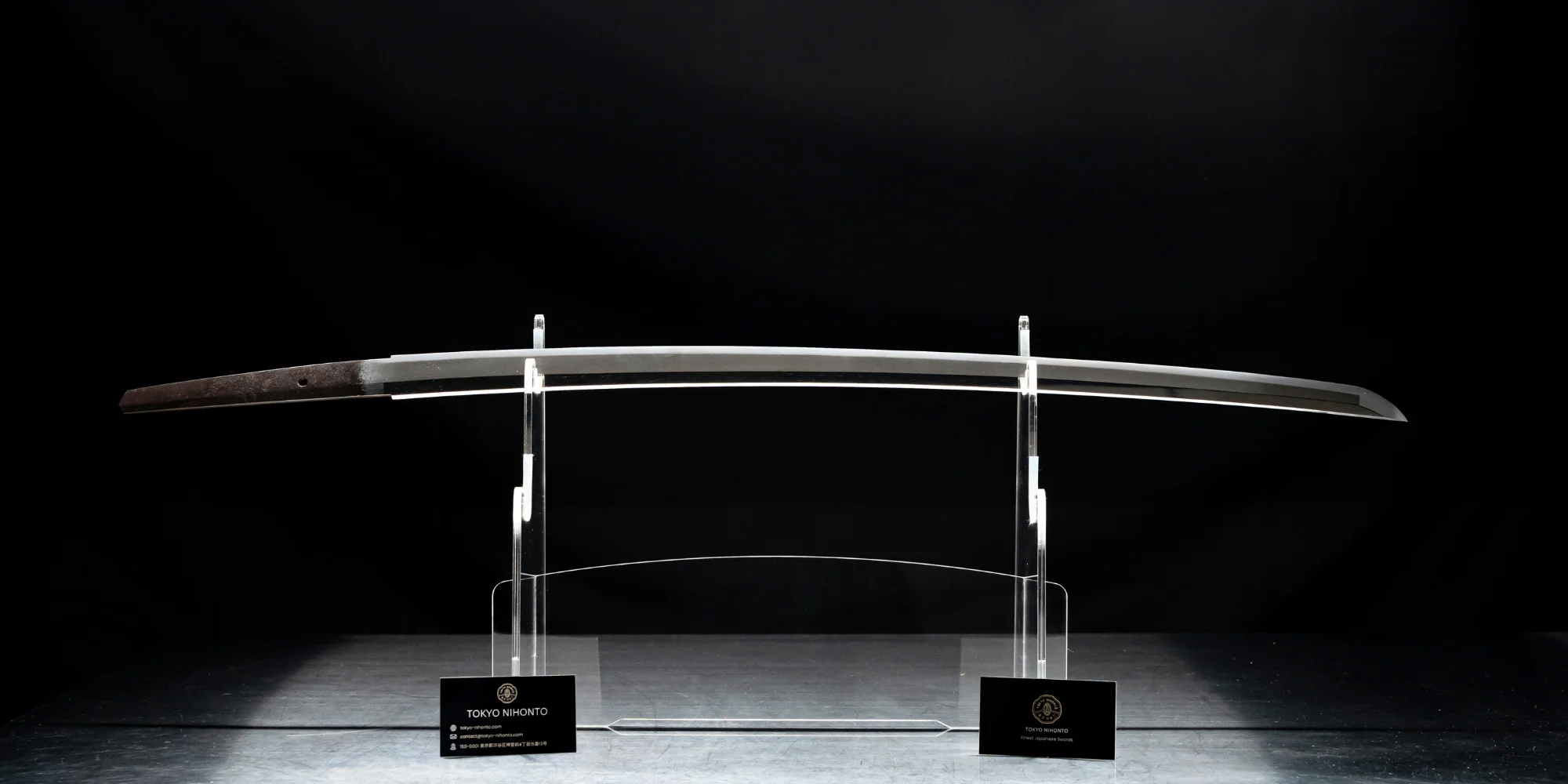
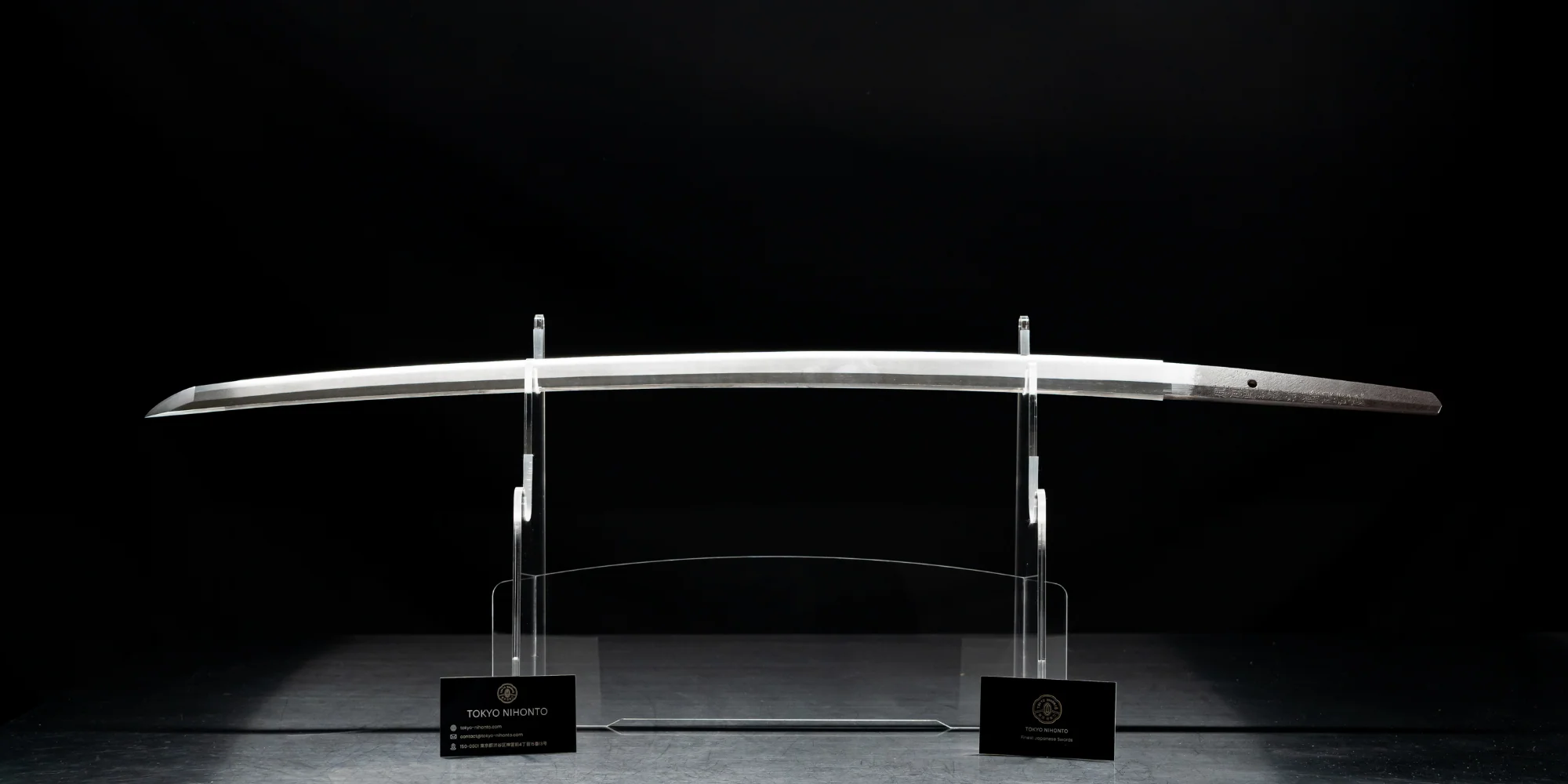
This elegant katana dates to the late Muromachi period (c. 1550–1600), a time of continual warfare when swords were forged for practical battlefield use yet still retained artistic refinement. The blade is mumei, as is typical for many Sengoku-era swords, but its form and workmanship clearly reflect high-quality regional traditions.
The sword features a graceful shinogi-zukuri shape with a gentle tori-zori curvature, offering both cutting efficiency and balanced handling. Its defining characteristic is the flowing notare-midare hamon, composed of soft, wave-like undulations and a bright, active nioi-guchi. This style is commonly associated with strong Bizen and Mino influences during the period.
The ko-itame jihada displays a tight grain that becomes visible as the light moves across the polished surface. Together with the controlled heat treatment, it reflects the skill of late-Muromachi smiths who balanced durability with aesthetic appeal.
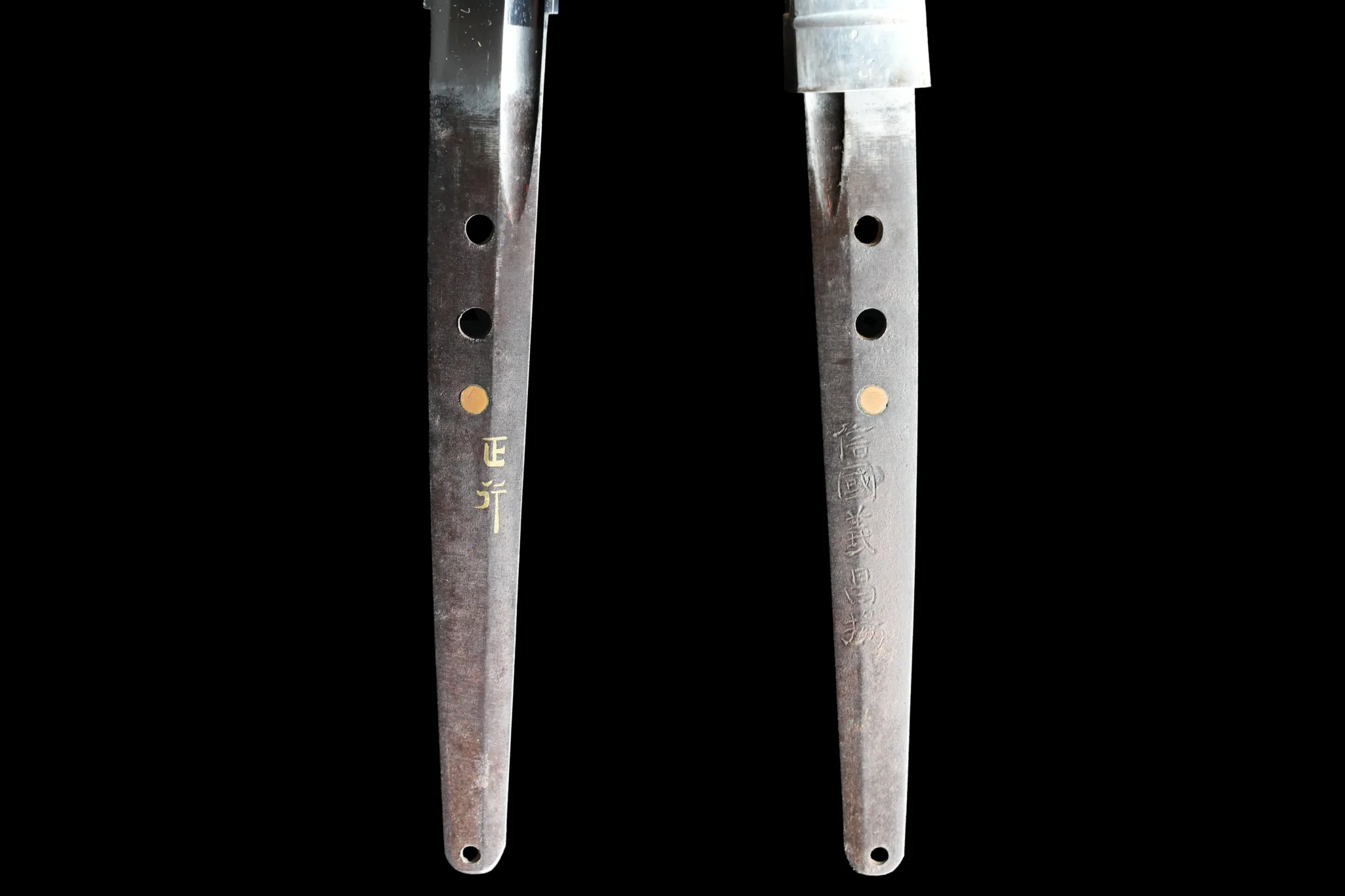
The tang (nakago) has two mekugi-ana, suggesting the sword saw service and was remounted during its long life — a hallmark of authentic Sengoku-era blades. The chū-kissaki provides a practical, well-proportioned tip suited for both cutting and thrusting.
The accompanying koshirae displays refined Edo-period styling. The iron tsuba pairs with gold-accented fuchi-kashira, while the dark green tsuka-ito wrapped over samegawa creates a dignified military presence. The lacquered saya completes the mount, offering a cohesive and traditional aesthetic.
As an authentic late-Muromachi katana with attractive hamon and period koshirae, this sword represents the warrior culture of Japan’s Sengoku age — functional, elegant, and historically significant.
Product Information
Product Information
Shipping & Returns
Shipping & Returns
Description
- Signature (Mei): Mumei — Late Muromachi work
- Period / Province: Late Muromachi period (c. 1550–1600) — Likely Bizen or Mino influence
- Certification: —
- Blade Length (Nagasa): 61.1 cm
- Curvature (Sori): 1.4 cm, gentle tori-zori
- Mekugi-ana: 2
- Shape (Sugata): Shinogi-zukuri with harmonious curvature typical of battlefield swords
- Hamon: Notare-midare — soft undulating wave pattern with a bright nioi-guchi
- Jihada: Ko-itame with subtle hada activity visible under proper lighting
- Kissaki: Chū-kissaki (medium point)
- Polish: Traditional Japanese polish enhancing the flowing hamon and refined ji
- Mounting (Koshirae): Edo-period style — lacquered saya, iron tsuba, gold-decorated fuchi-kashira, dark green tsuka-ito over samegawa
This elegant katana dates to the late Muromachi period (c. 1550–1600), a time of continual warfare when swords were forged for practical battlefield use yet still retained artistic refinement. The blade is mumei, as is typical for many Sengoku-era swords, but its form and workmanship clearly reflect high-quality regional traditions.
The sword features a graceful shinogi-zukuri shape with a gentle tori-zori curvature, offering both cutting efficiency and balanced handling. Its defining characteristic is the flowing notare-midare hamon, composed of soft, wave-like undulations and a bright, active nioi-guchi. This style is commonly associated with strong Bizen and Mino influences during the period.
The ko-itame jihada displays a tight grain that becomes visible as the light moves across the polished surface. Together with the controlled heat treatment, it reflects the skill of late-Muromachi smiths who balanced durability with aesthetic appeal.
The tang (nakago) has two mekugi-ana, suggesting the sword saw service and was remounted during its long life — a hallmark of authentic Sengoku-era blades. The chū-kissaki provides a practical, well-proportioned tip suited for both cutting and thrusting.
The accompanying koshirae displays refined Edo-period styling. The iron tsuba pairs with gold-accented fuchi-kashira, while the dark green tsuka-ito wrapped over samegawa creates a dignified military presence. The lacquered saya completes the mount, offering a cohesive and traditional aesthetic.
As an authentic late-Muromachi katana with attractive hamon and period koshirae, this sword represents the warrior culture of Japan’s Sengoku age — functional, elegant, and historically significant.