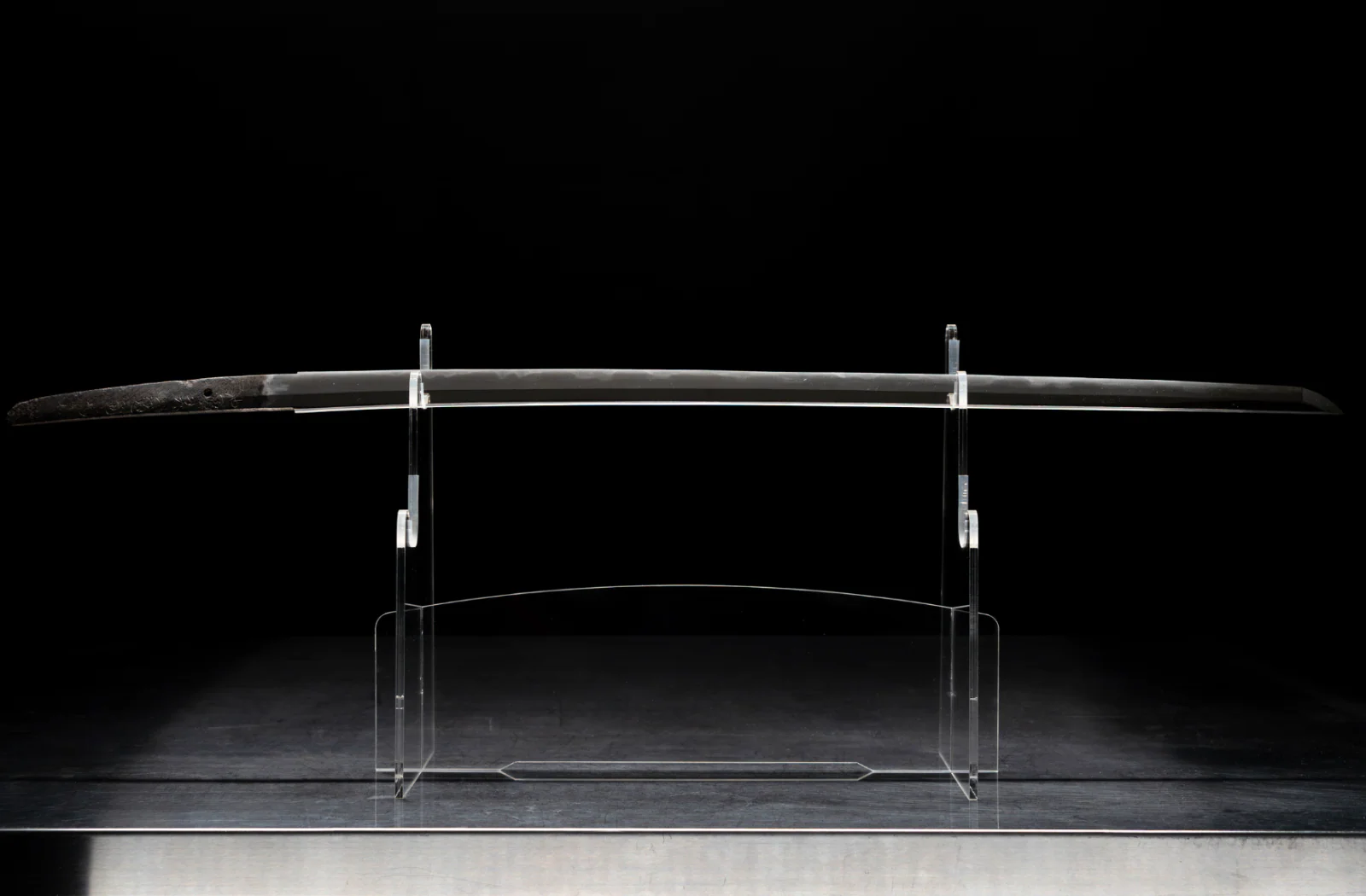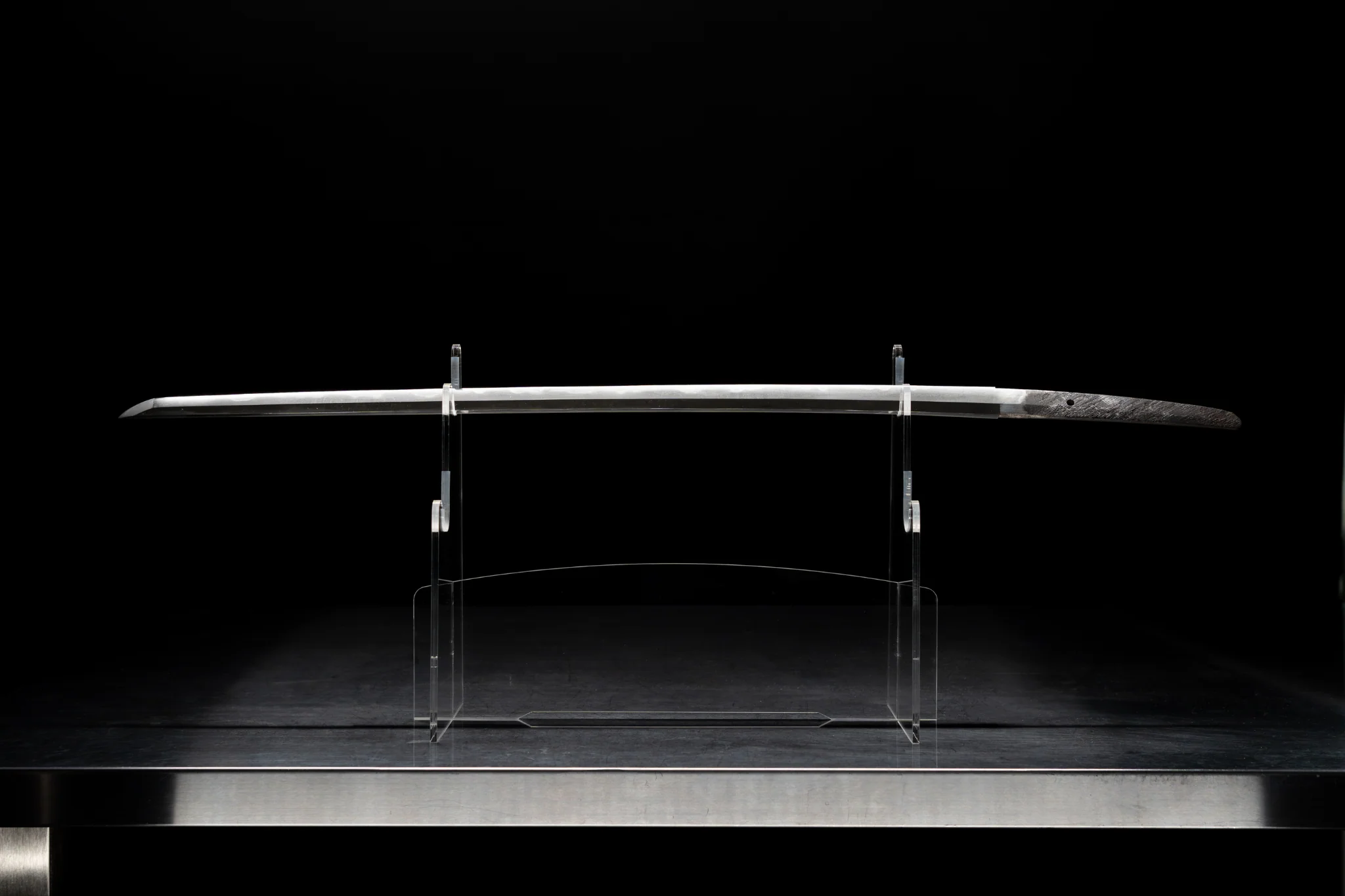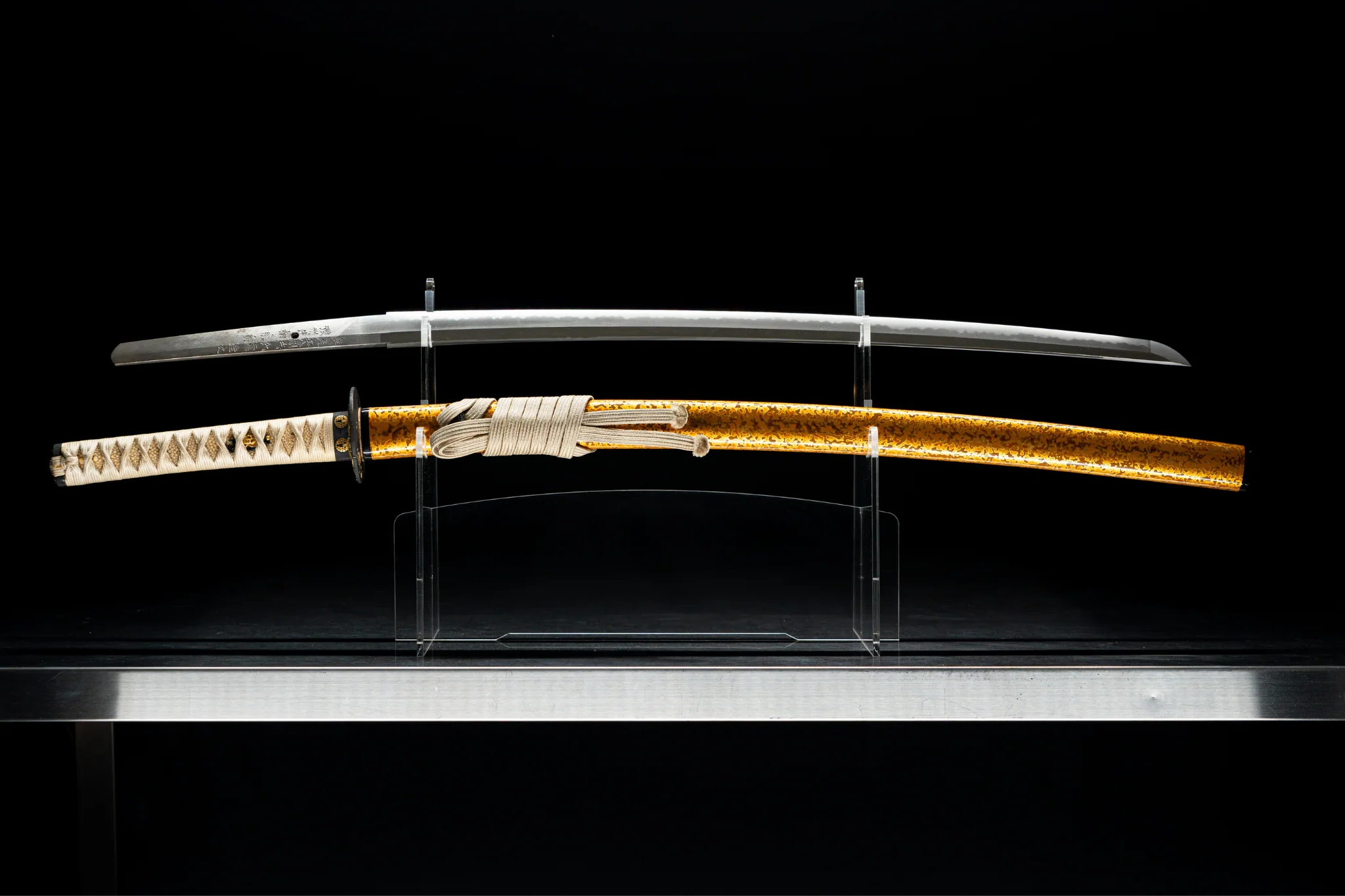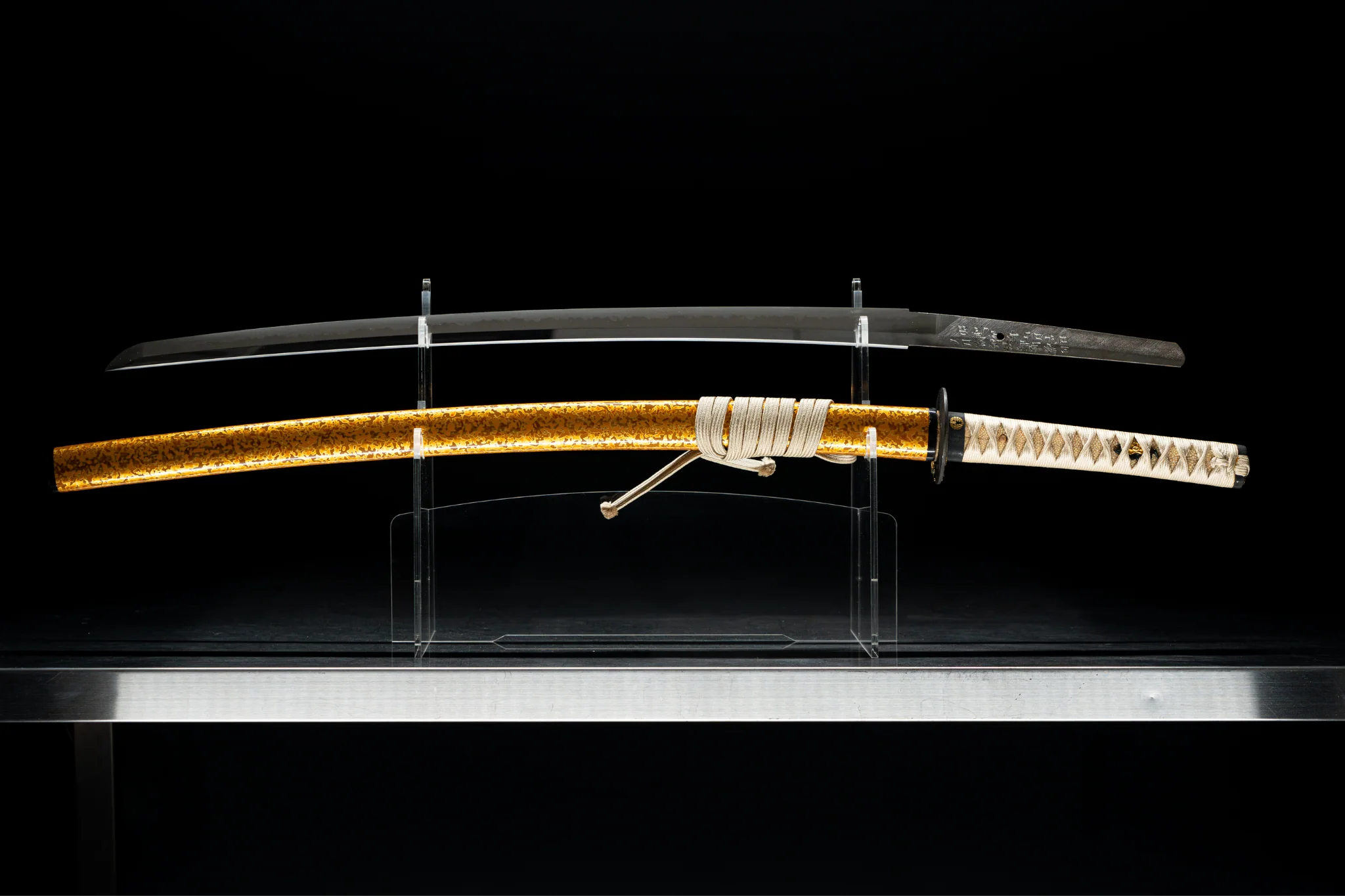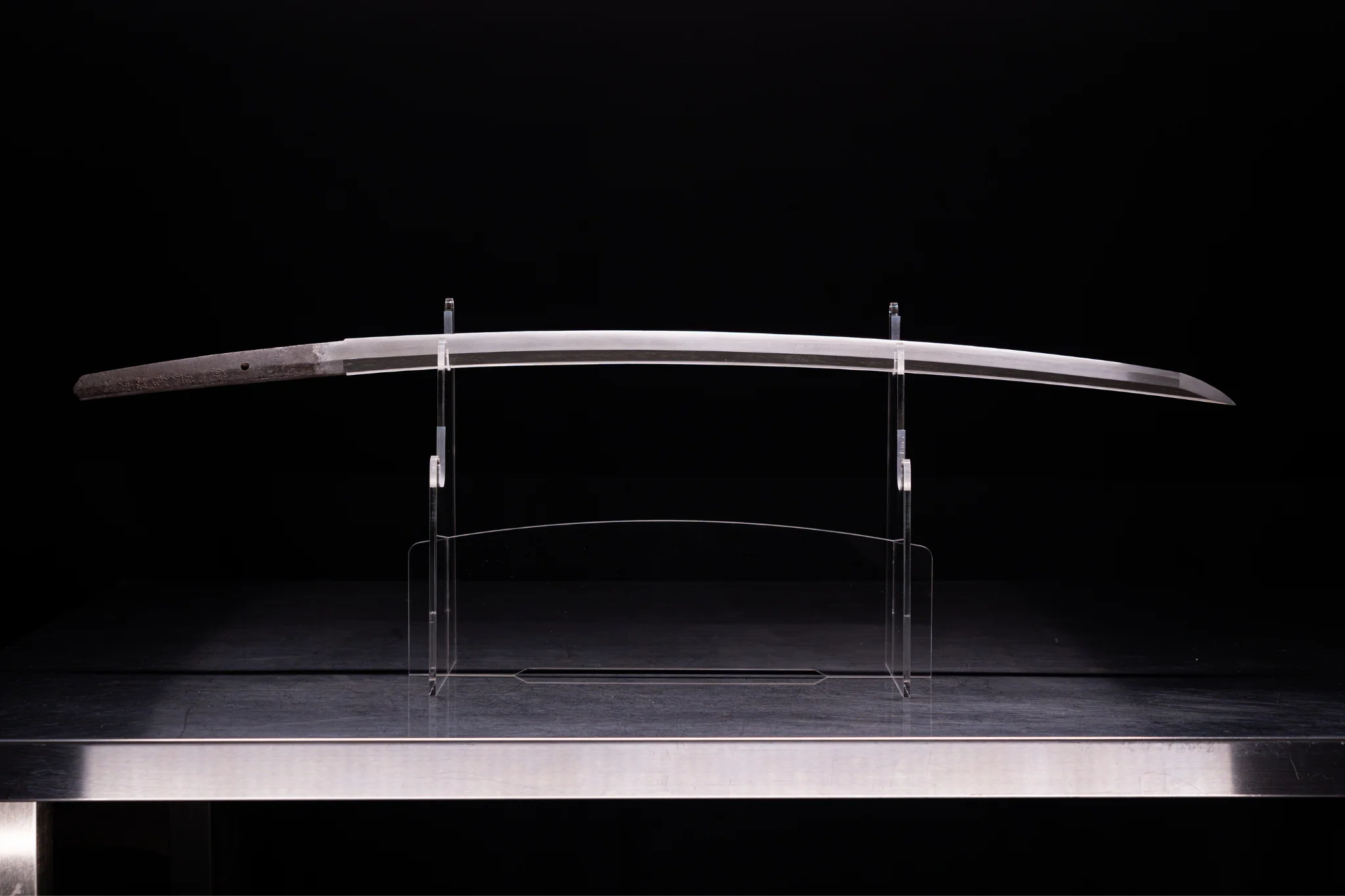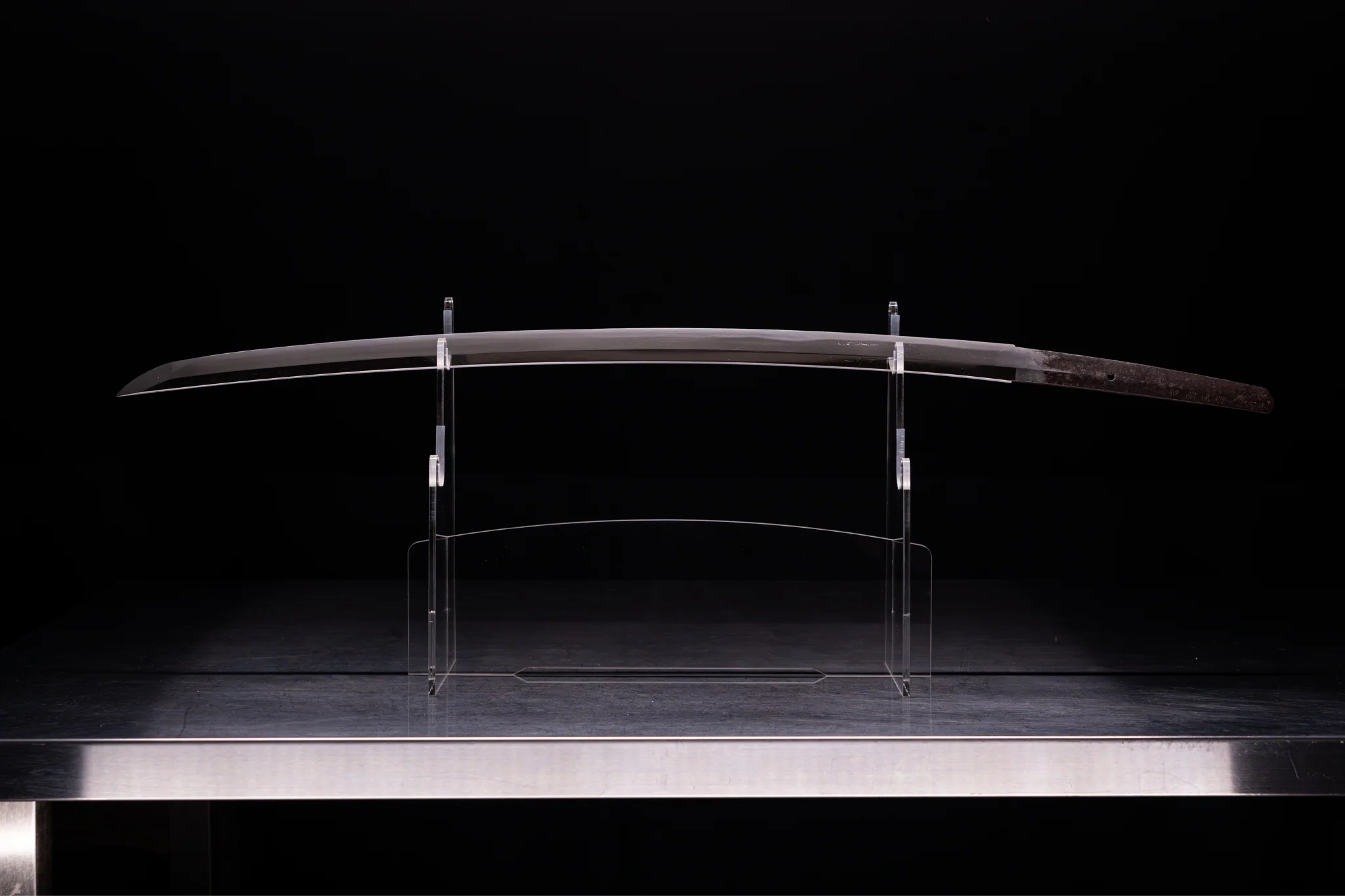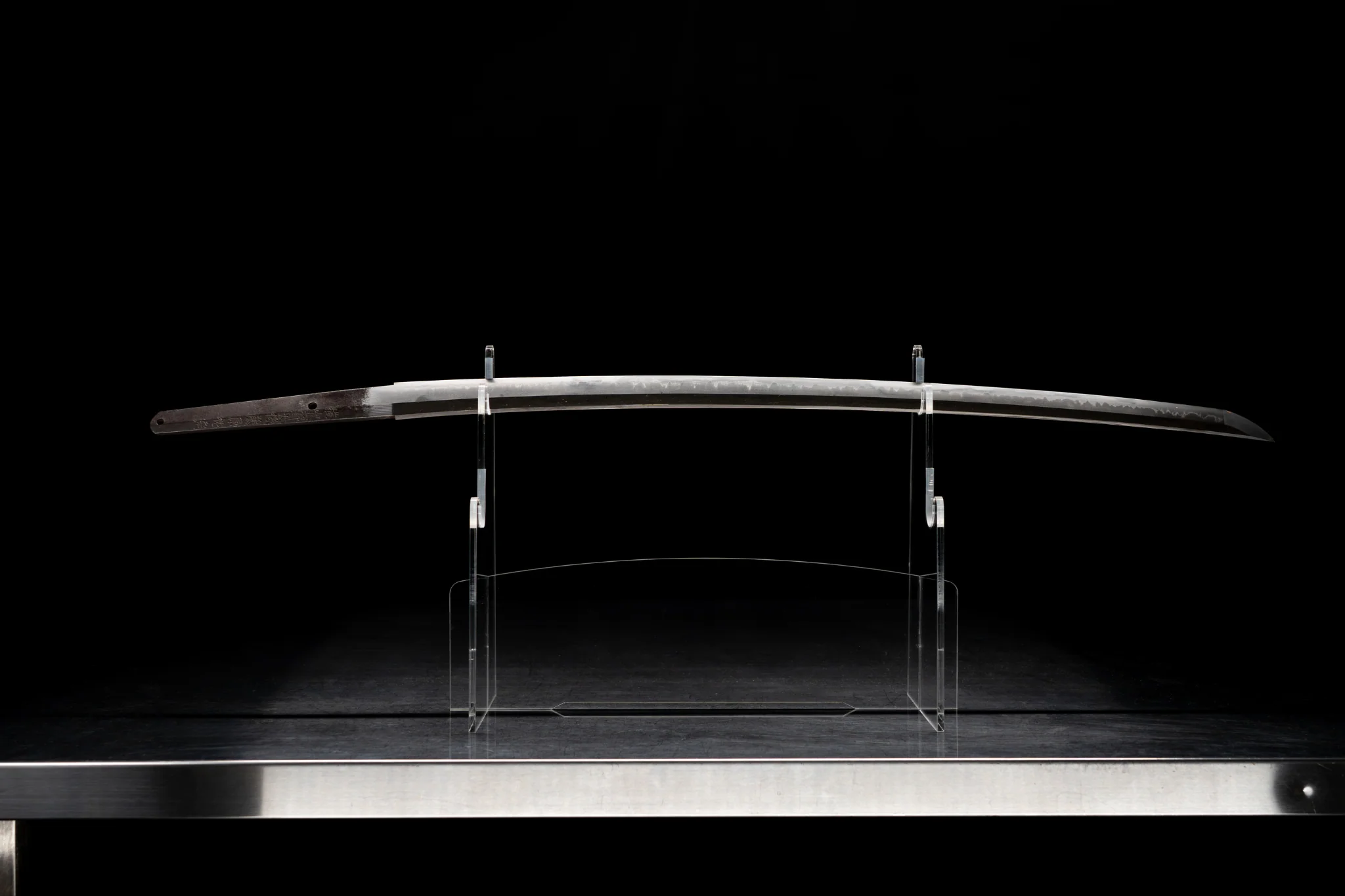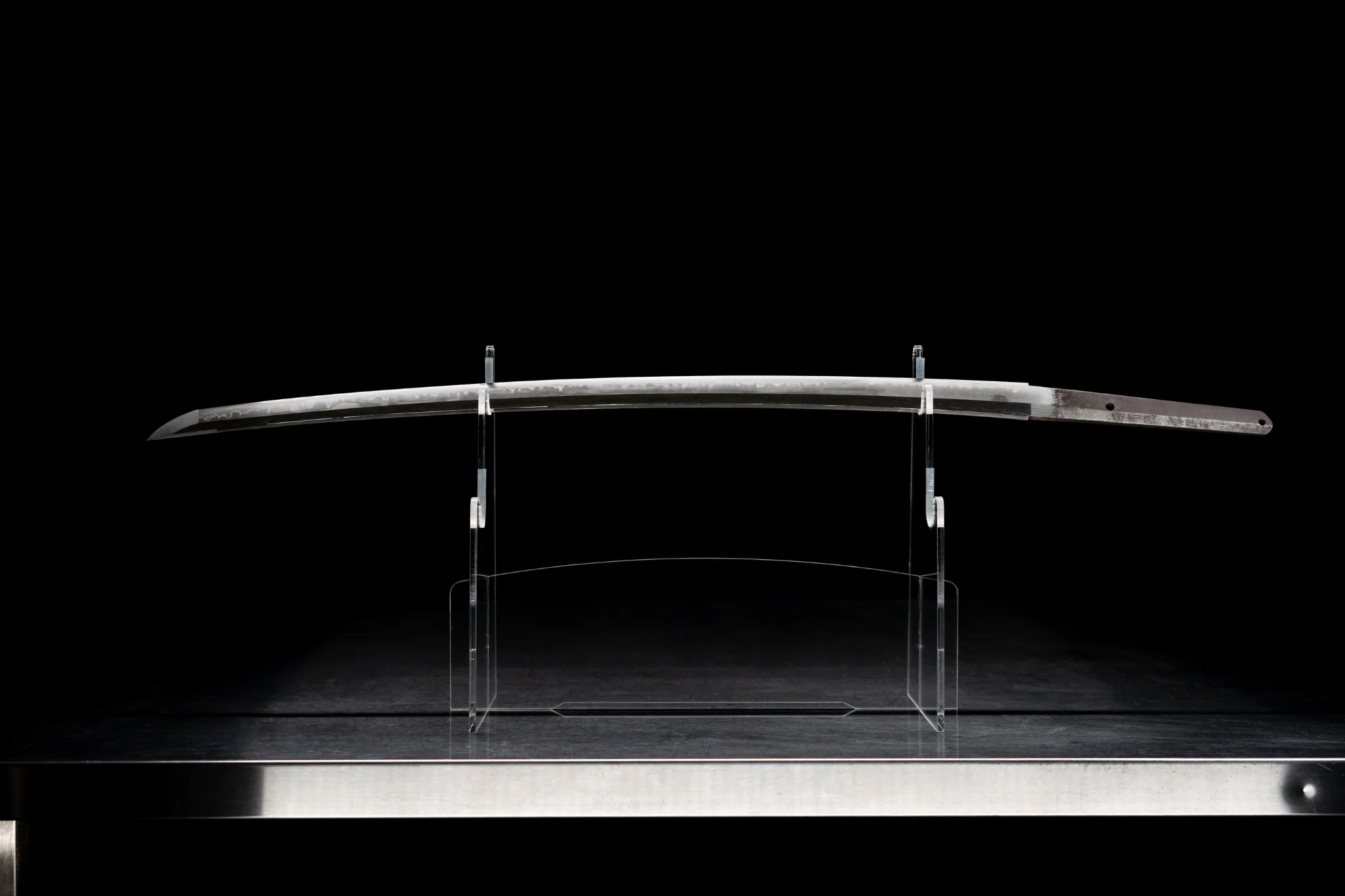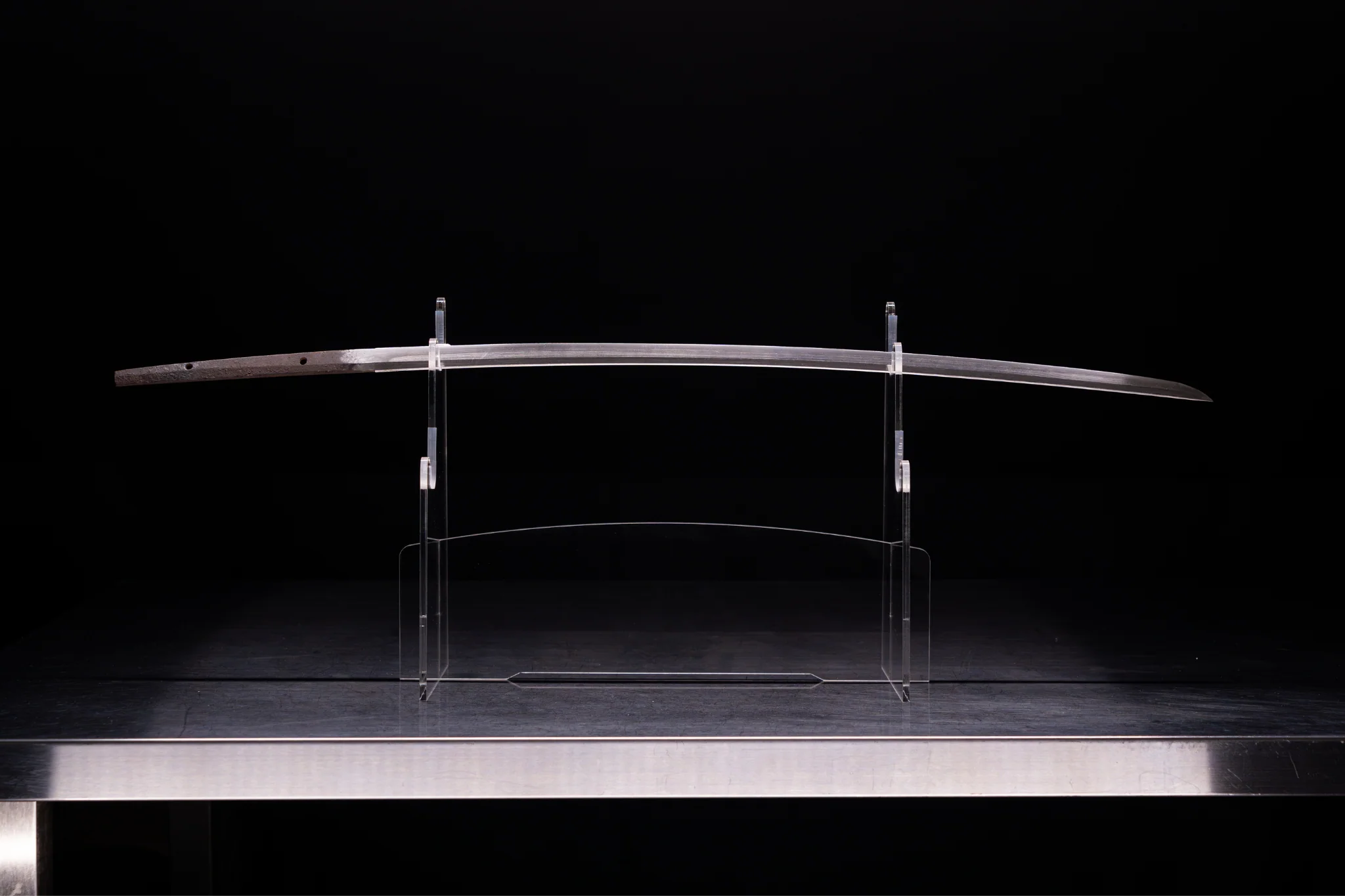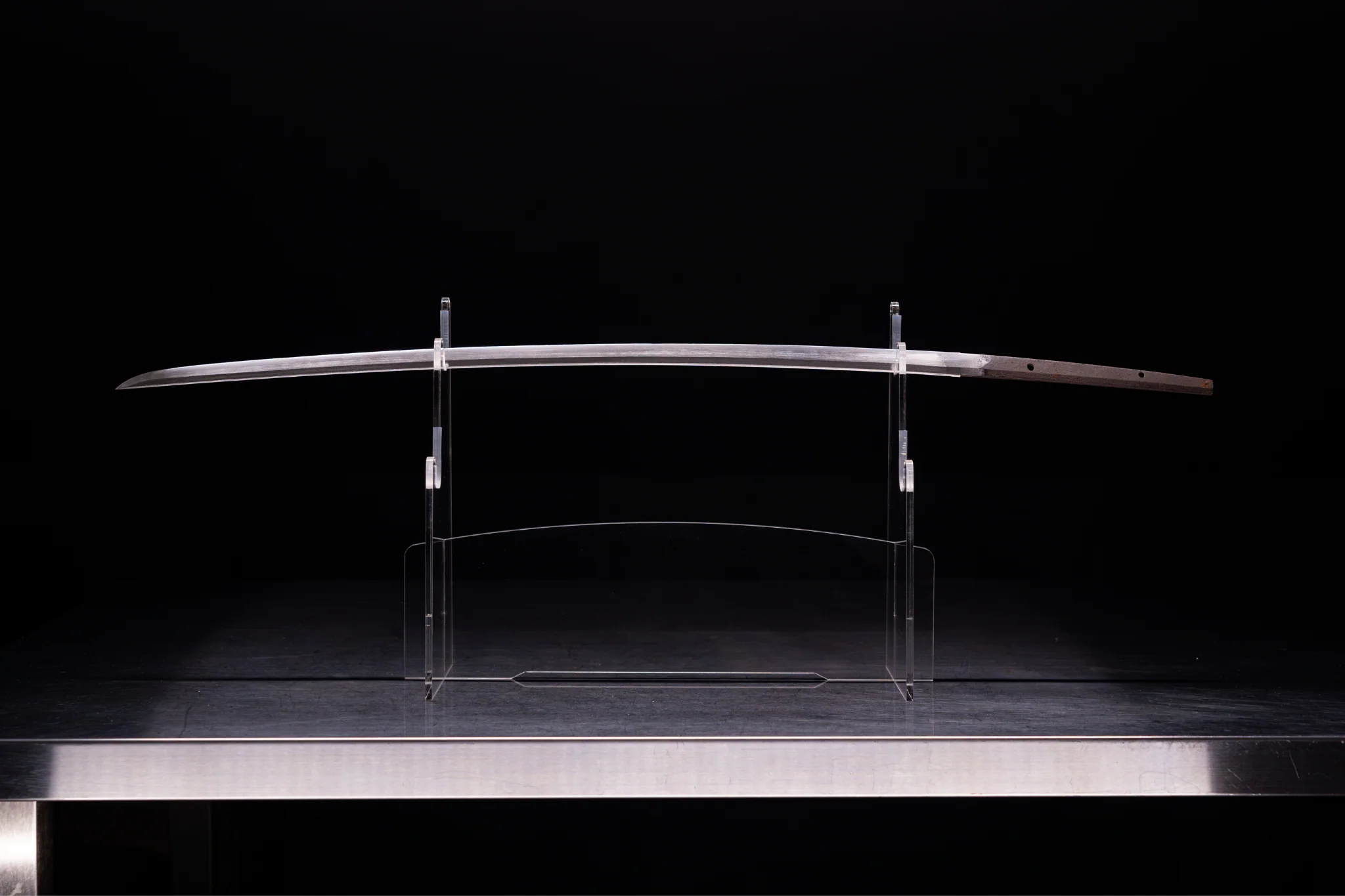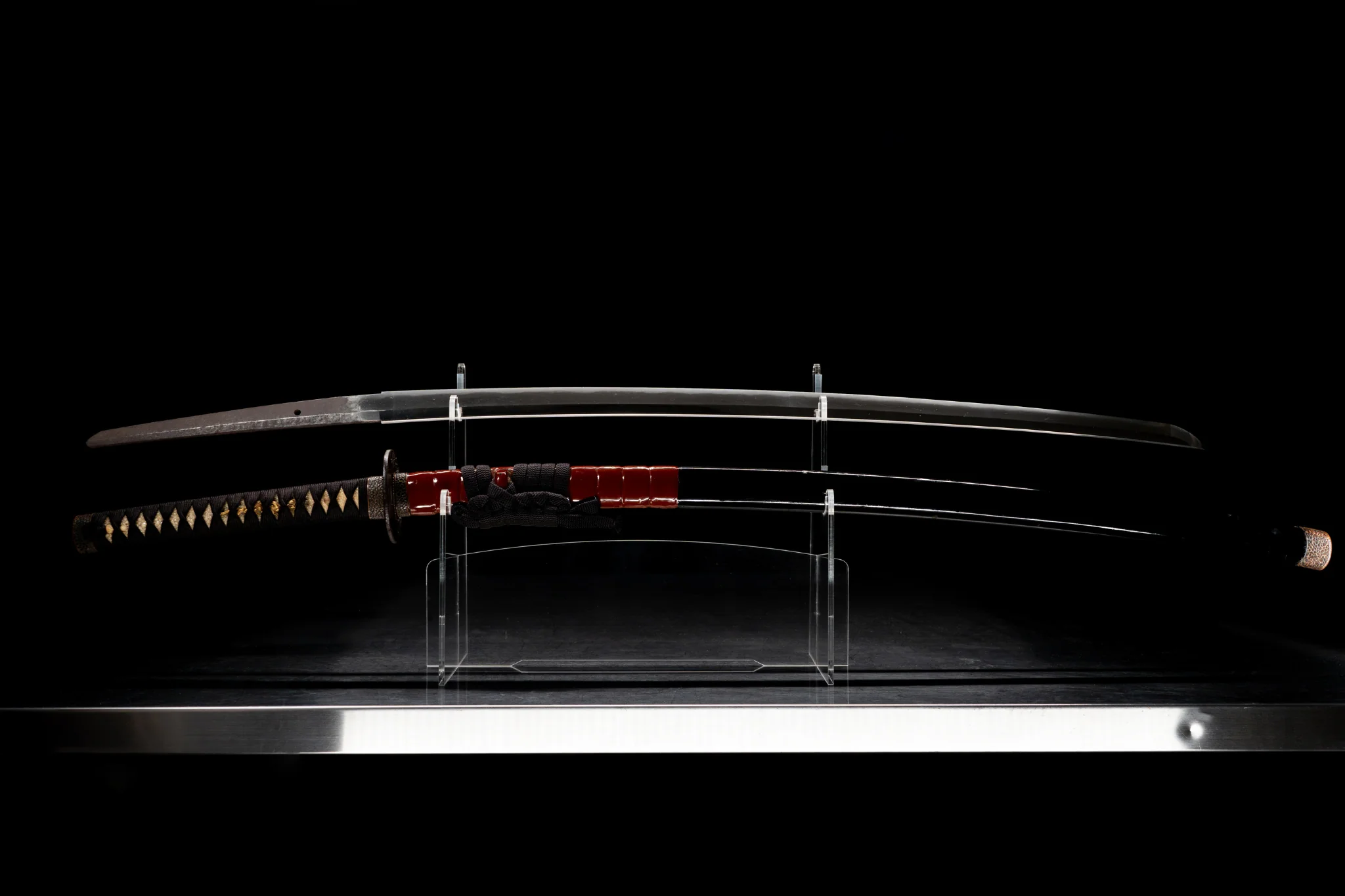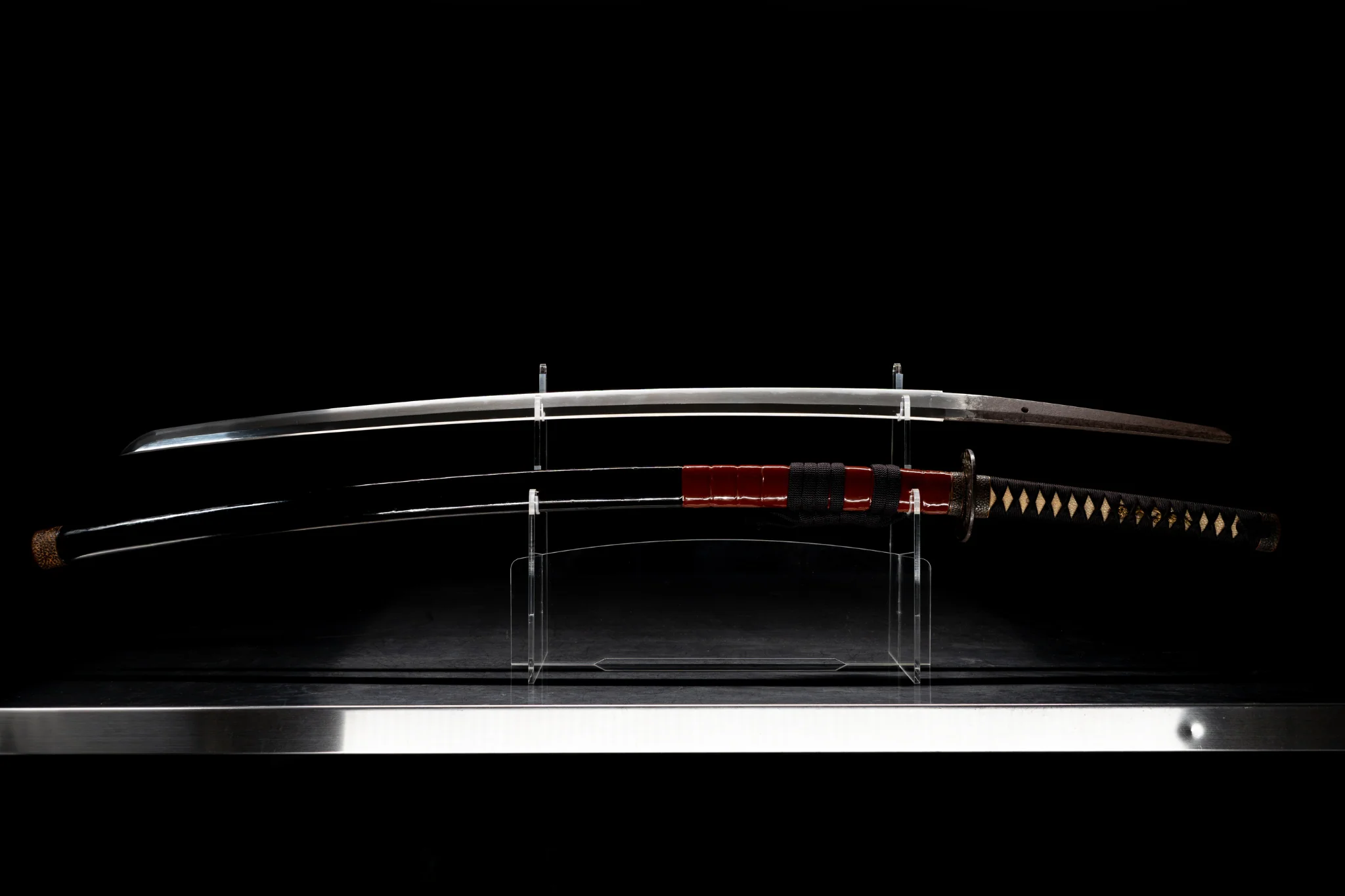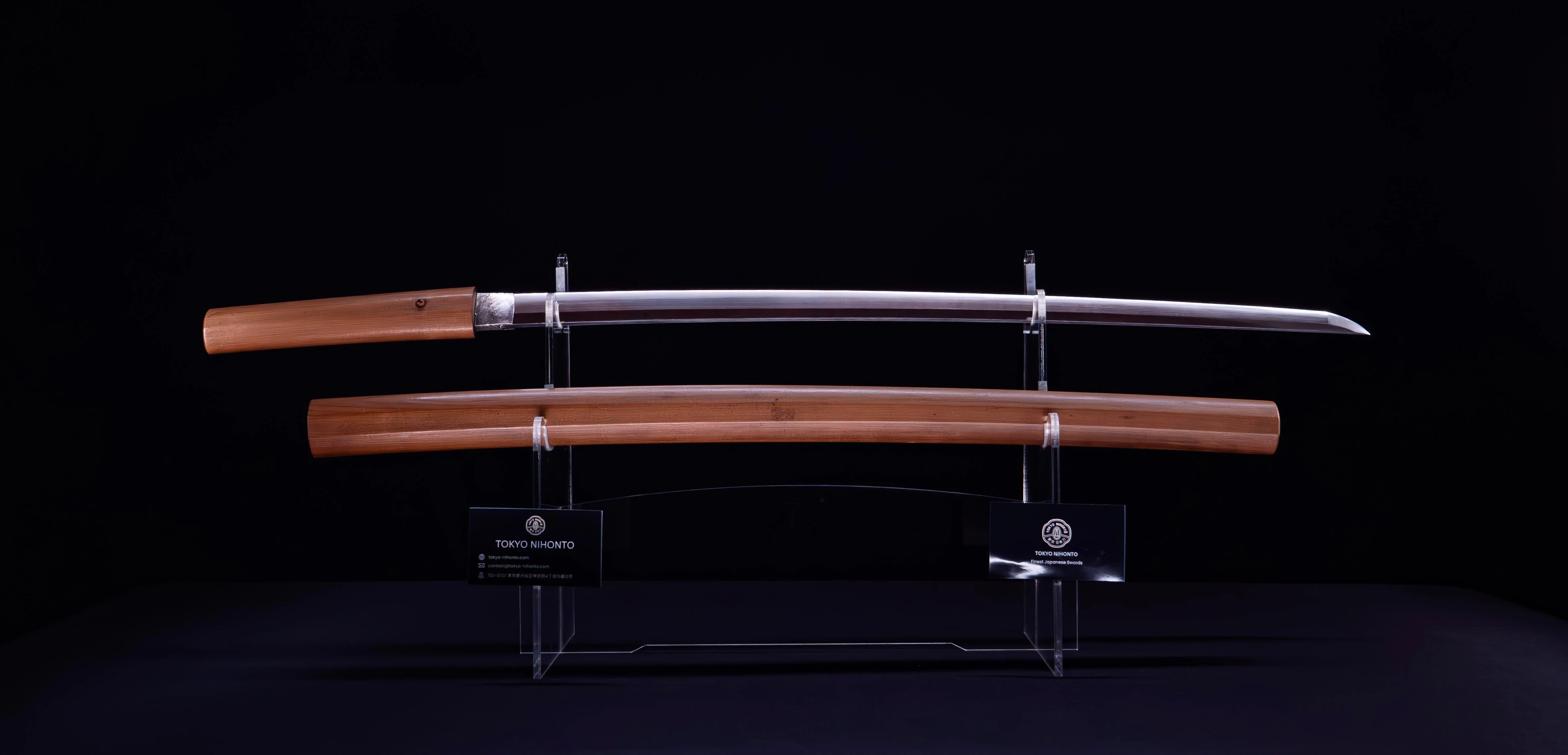
Antique Japanese Katana Sword by Shitahara - NBTHK Hozon
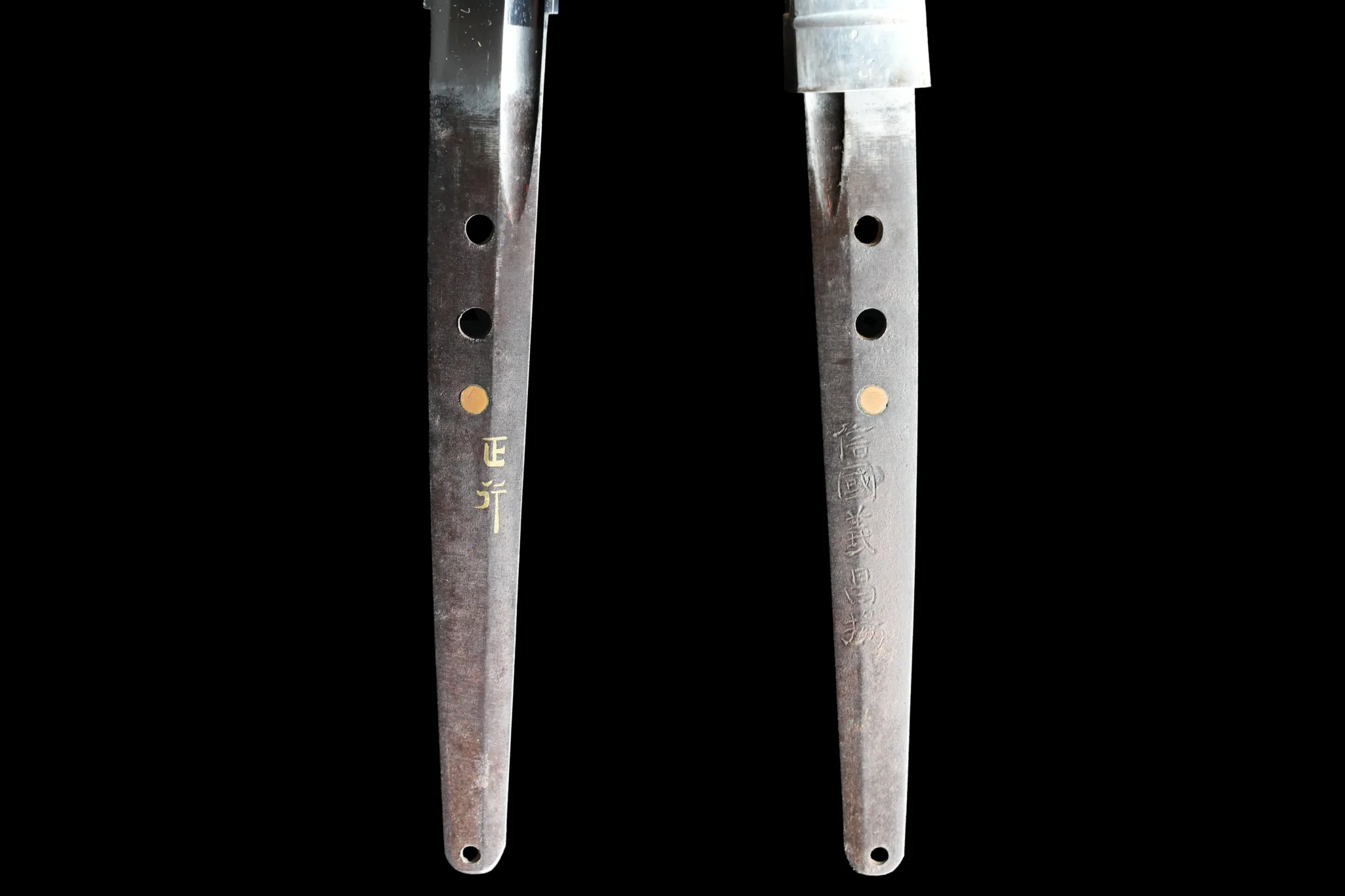
- Signature (Mei): Mumei
- Swordsmith: Attributed to the 下原(Shitahara)group
- School / Tradition: Shitahara school (Bushu / Musashi); Sōshū–Mino influenced workmanship
- Period / Province: Muromachi period / Bushu (present-day Hachiōji, Tokyo)
- Certificate: NBTHK Hozon(保存刀剣)
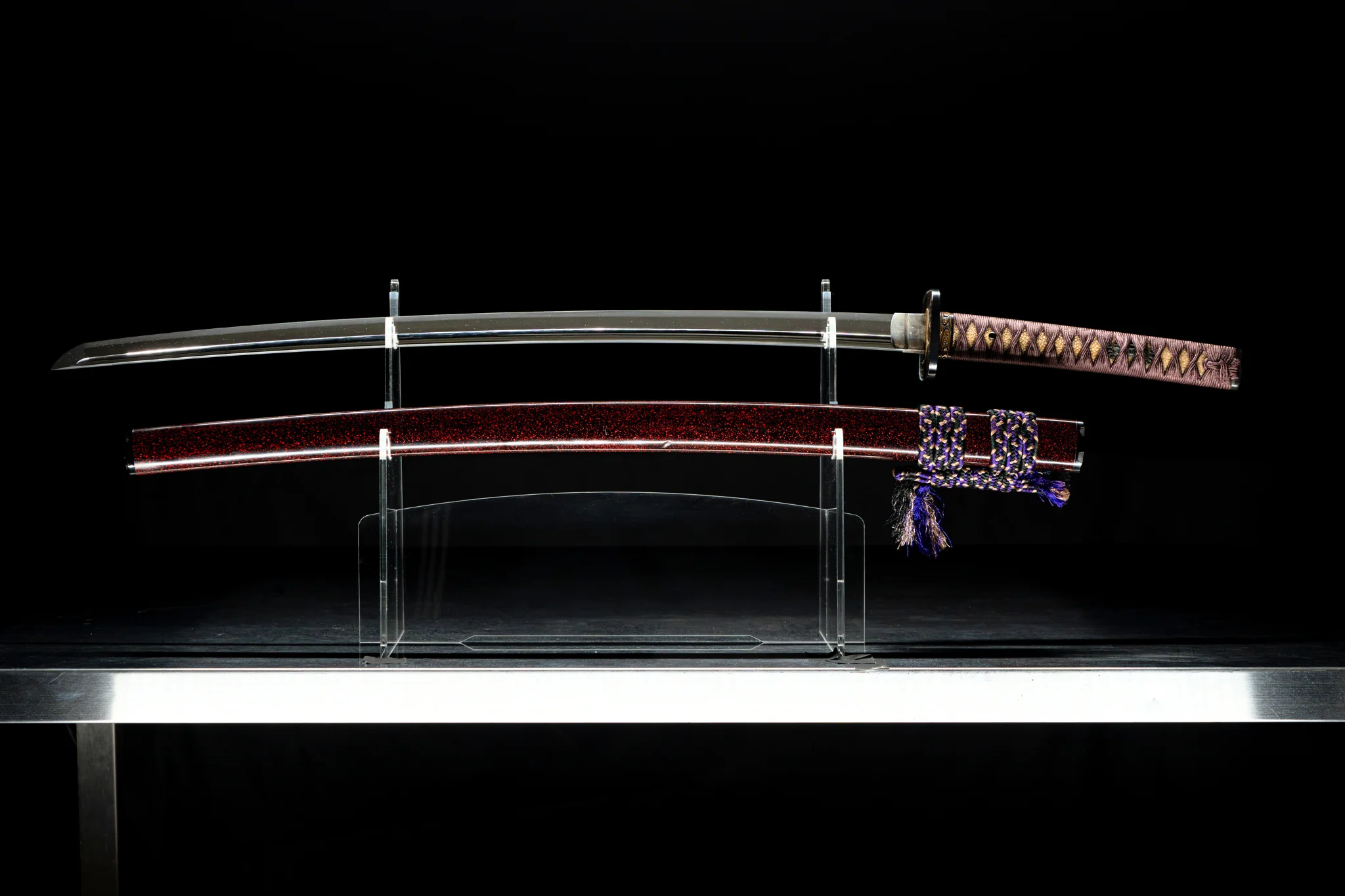
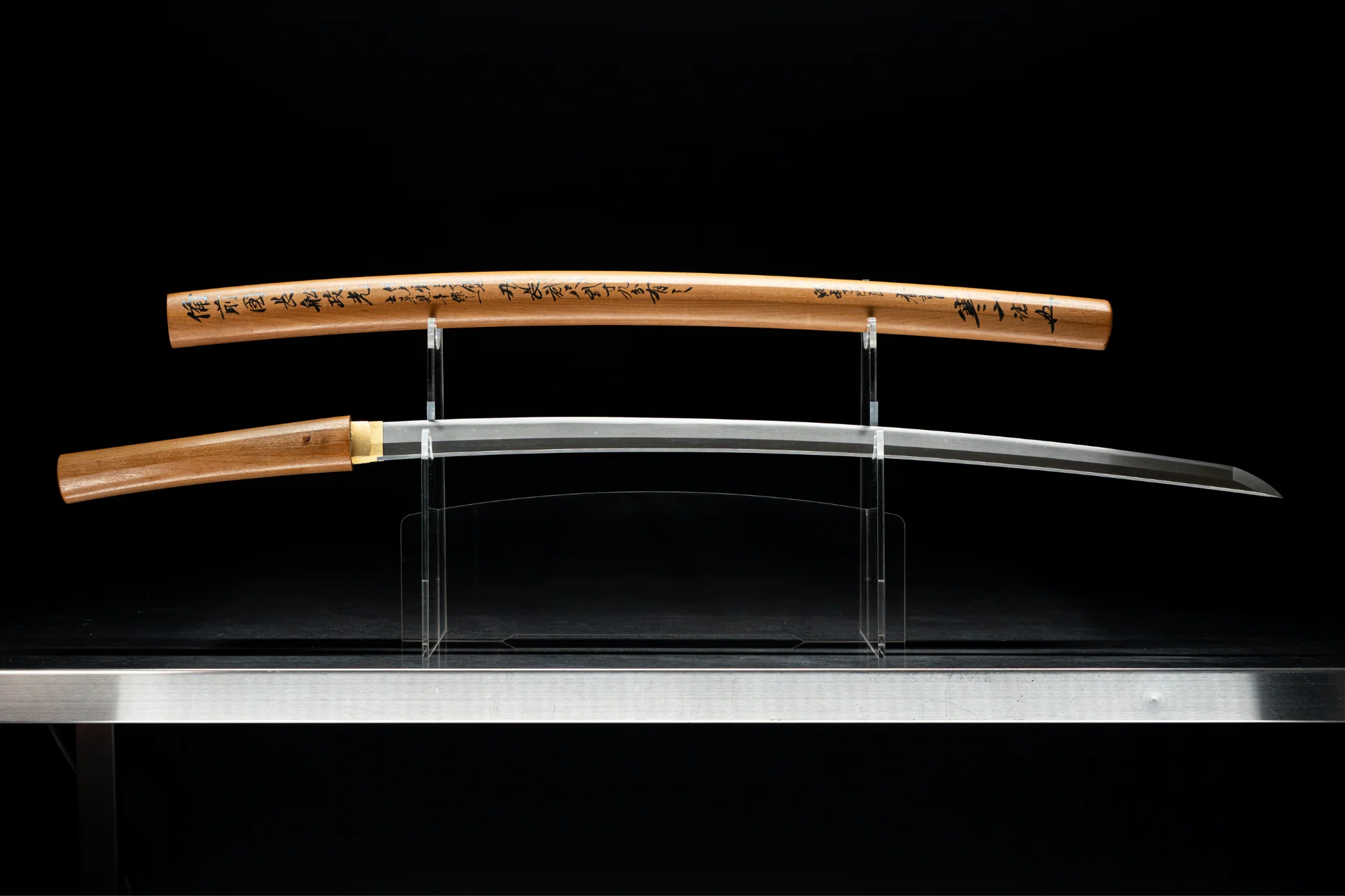
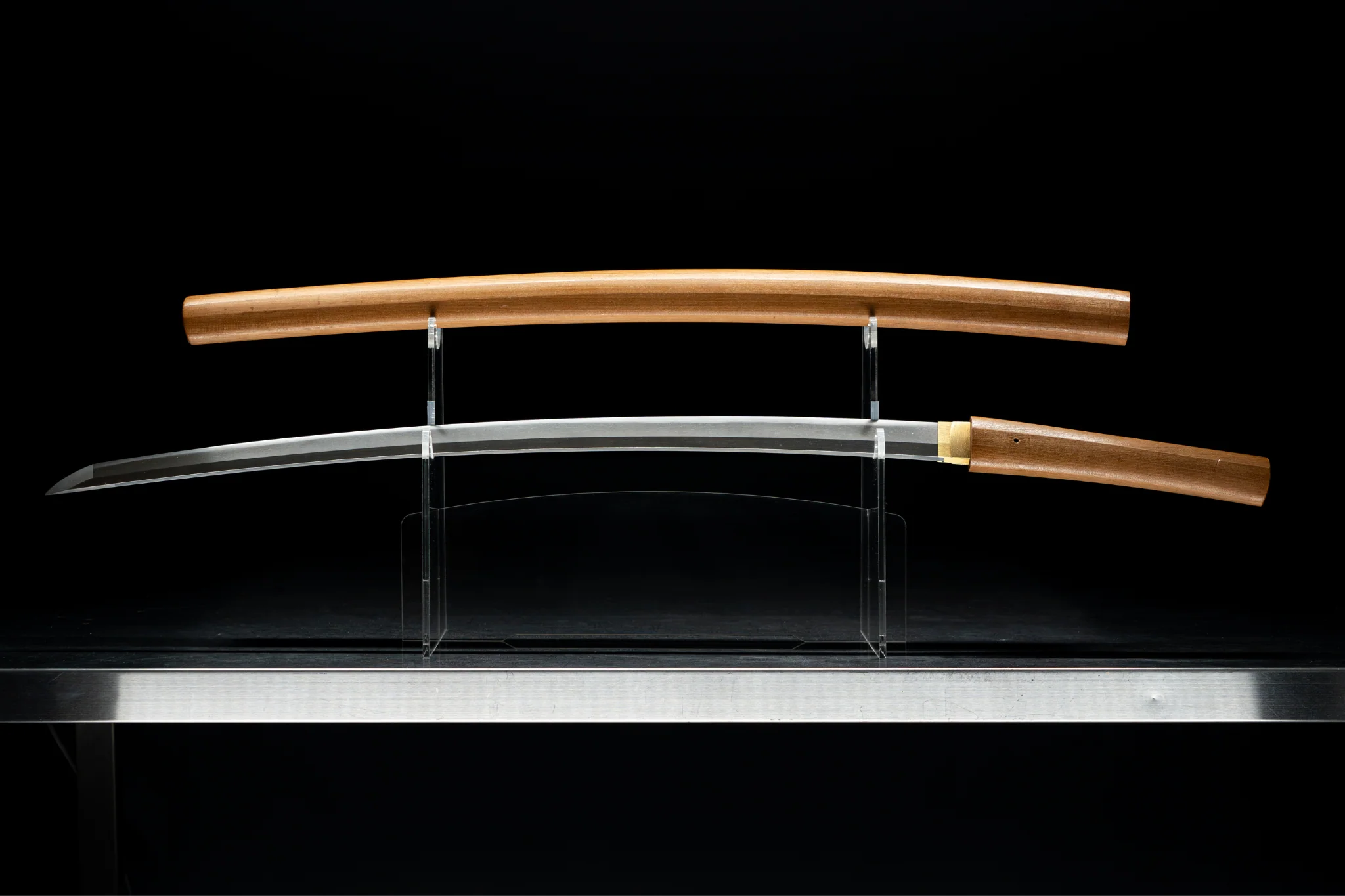
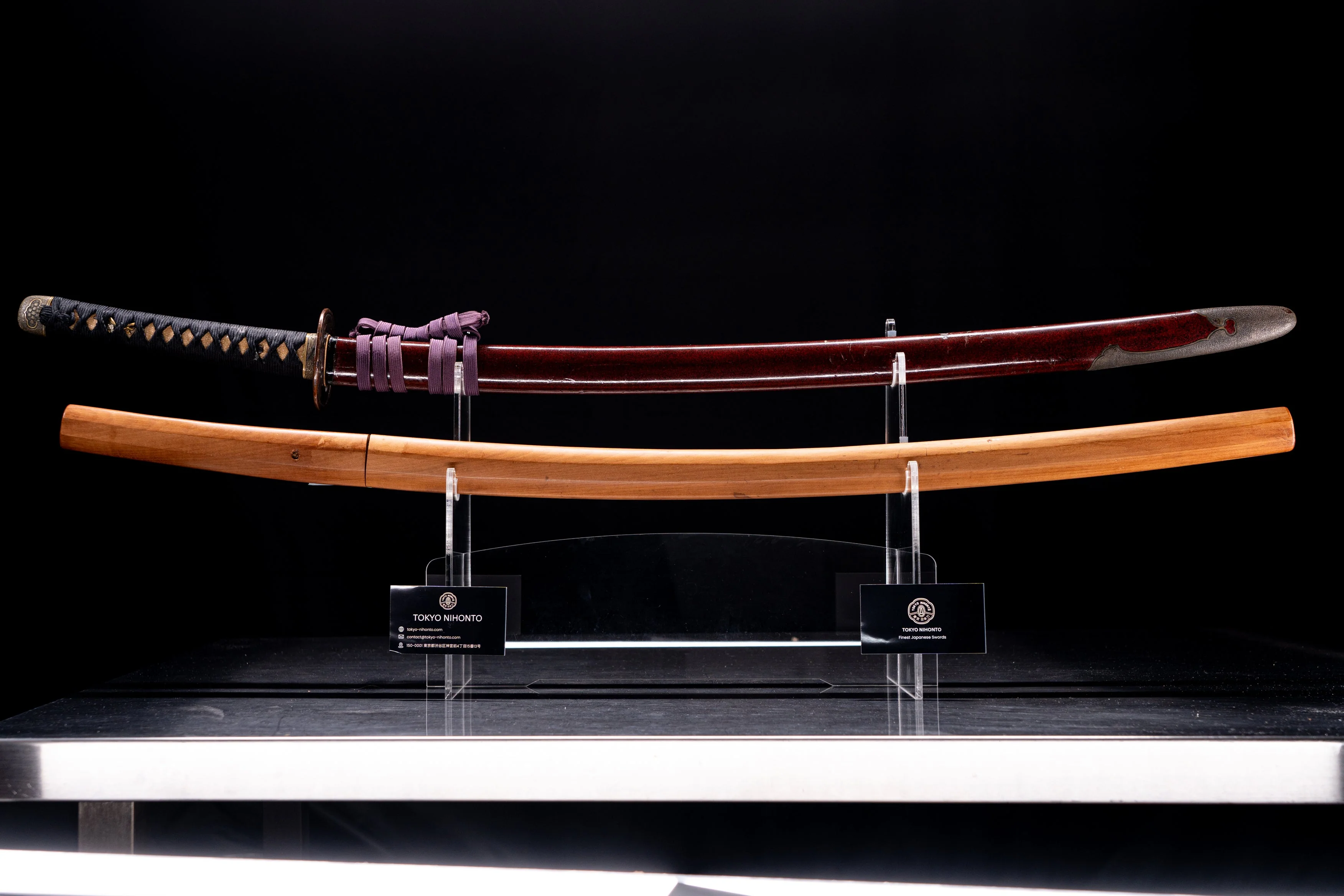
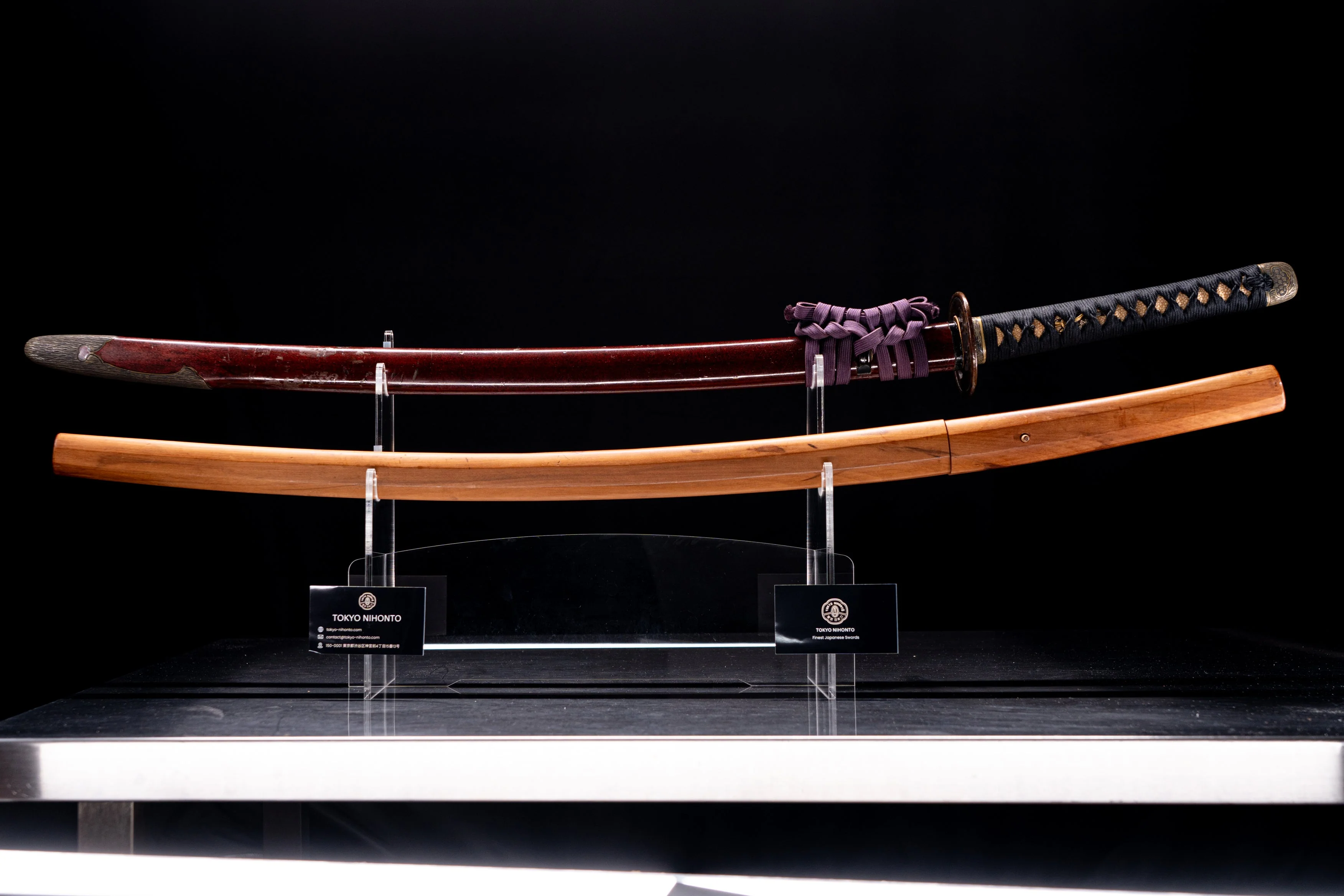
- Mounting: Shirasaya; metal habaki, 22.9 g
- Blade Length (Nagasa): 62.27 cm
- Curvature (Sori): 0.76 cm
- Mekugi-ana: 3
- Shape: Shinogi-zukuri
- Jihada: Fine koto jihada with Shitahara traits; look for jorinmoku (如輪杢) whirlpool figure in places
- Blade Weight: 545.1 g (blade only)
- Habaki Weight: 22.9 g
- Saya Overall Length: 85.4 cm
- Motohaba / Motokasane: 2.816 cm / 0.728 cm
- Sakihaba / Sakikasane: 1.782 cm / 0.388 cm
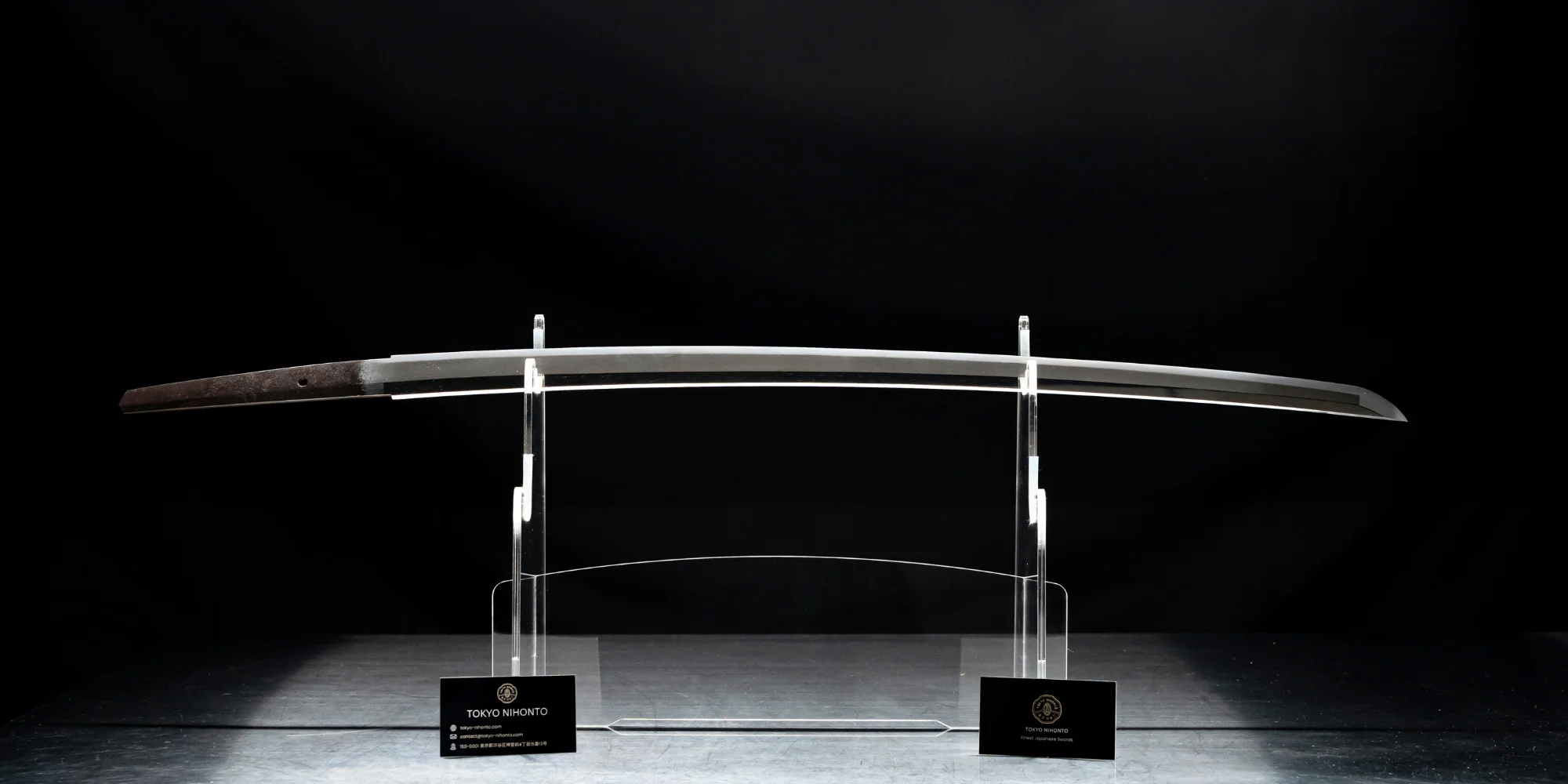
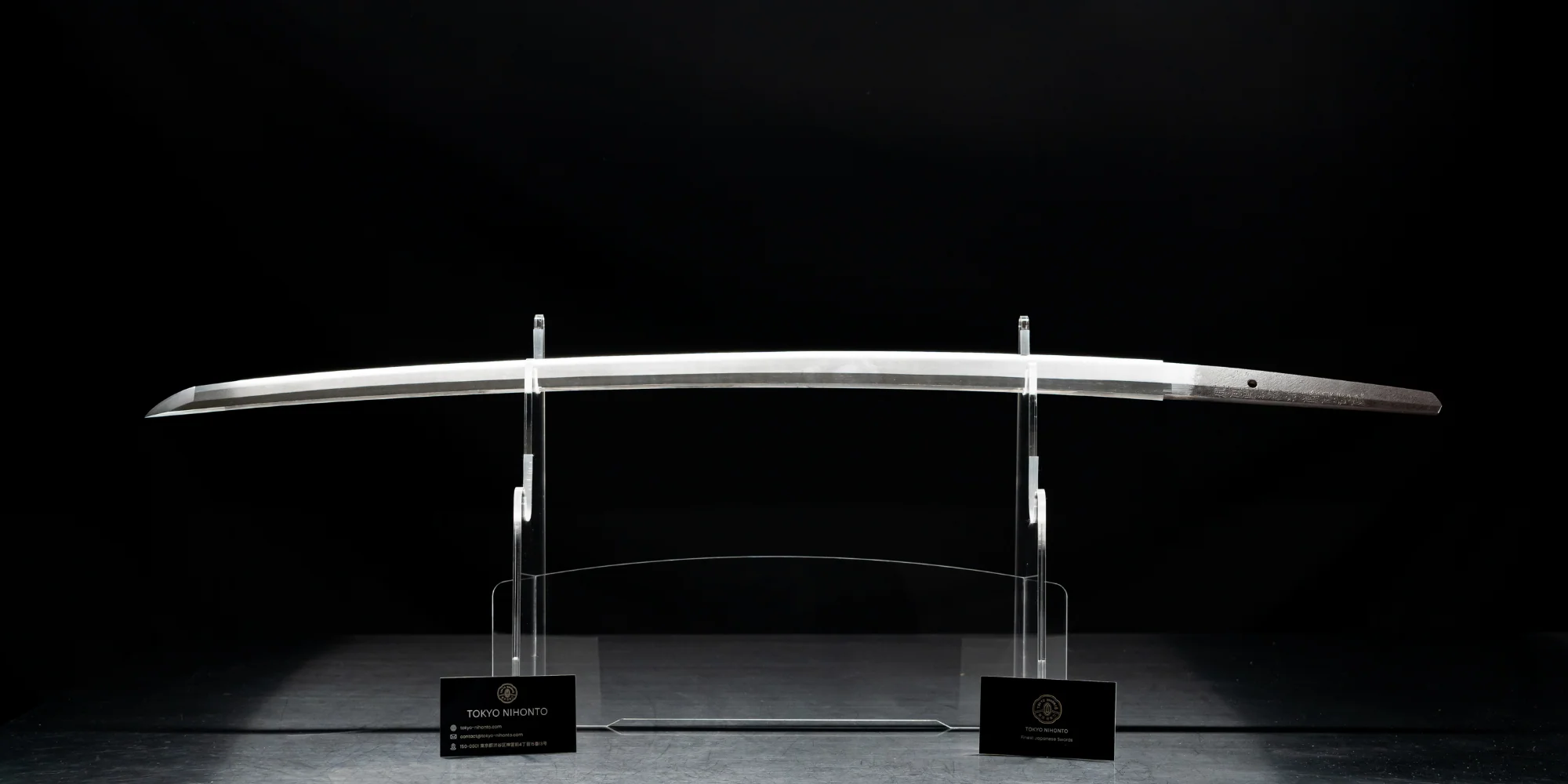
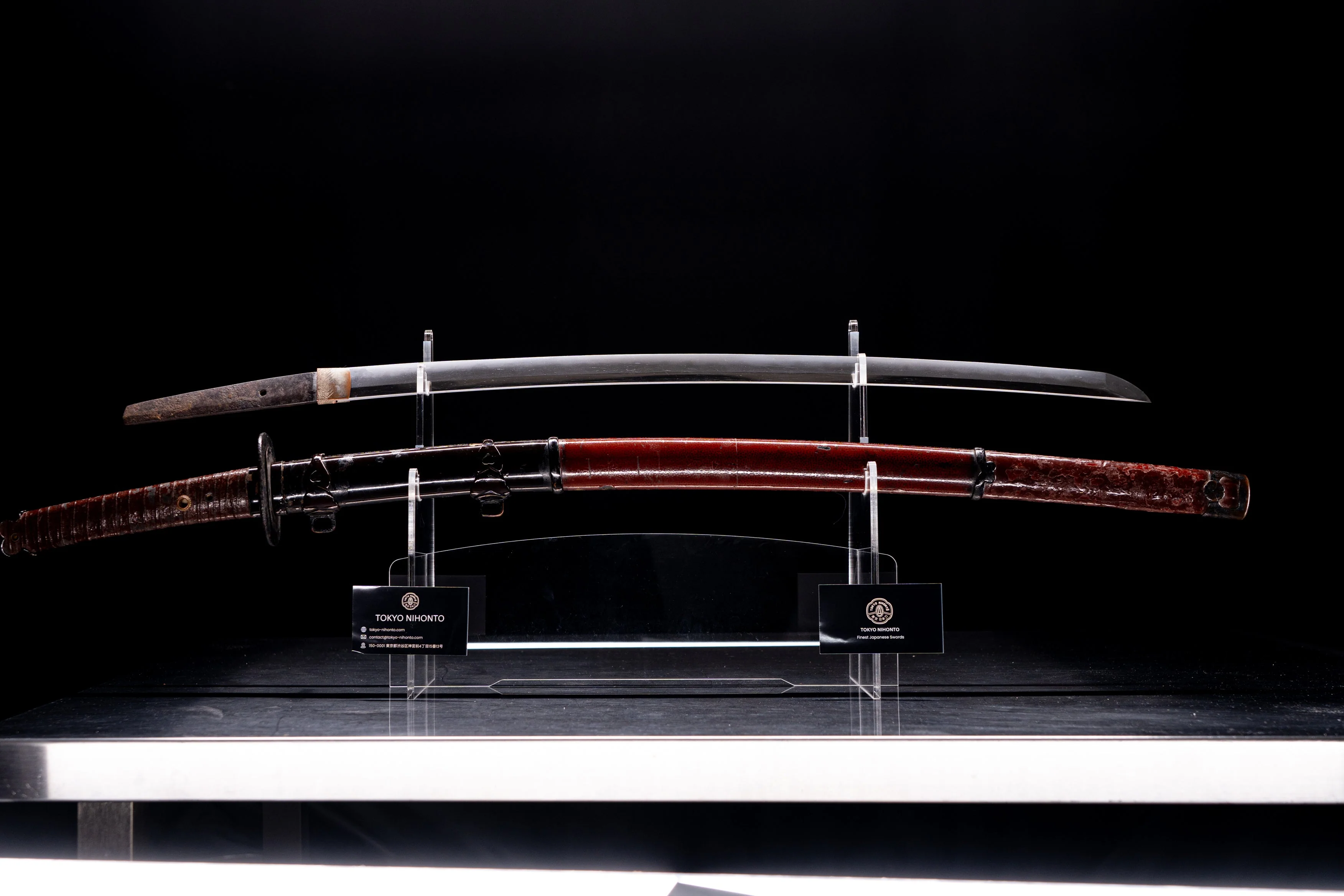
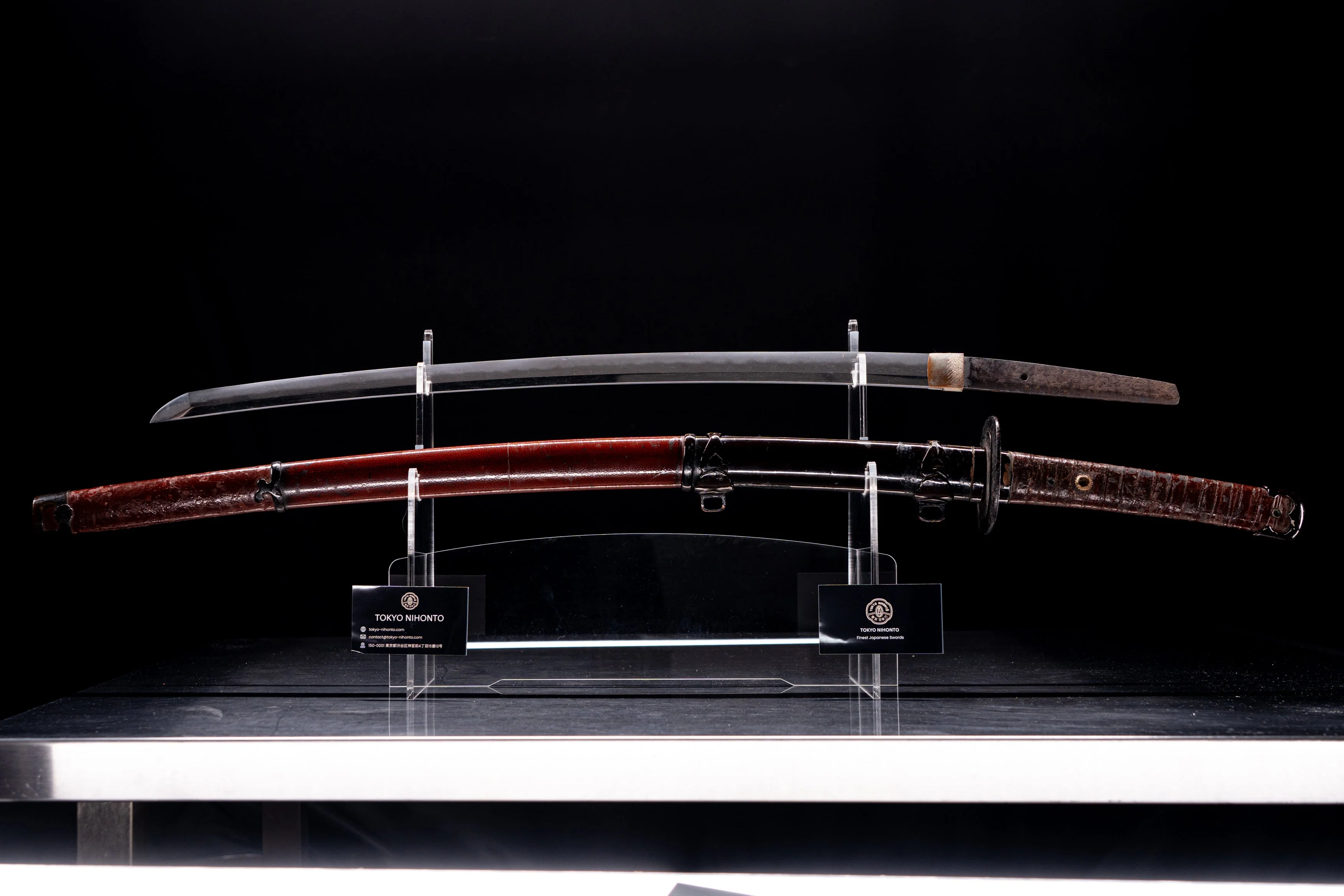
A koto katana certified NBTHK Hozon and attributed to the Shitahara group of Bushu (Musashi). Measuring 62.27 cm in nagasa with a gentle 0.76 cm sori, the blade presents a dignified shinogi-zukuri profile and a well-forged jihada praised in the listing. Three mekugi-ana reflect remounting over a long service life while maintaining healthy proportions.
Shitahara blades often show steady forging with Sōshū–Mino influences. A hallmark to watch for is jorinmoku(如輪杢)—small whirlpool-like figures in the steel surface—seen on representative works by Shitahara smiths.
Swordsmith Background
Shitahara is the historical smithing area in today’s Hachiōji City (Tokyo). The school is said to have been founded by Yamamoto Norishige and prospered from the end of the Muromachi period into late Edo (late 16th–19th centuries). Shitahara smiths—known as Shitahara Kaji—first worked under the Hōjō clan. The celebrated Yasushige line begins with the first generation, originally signing Chikashige; he adopted the character 「康」 (Yasu) from Hōjō Ujiyasu, changing his name to Yasushige.
After the Hōjō were defeated by the Toyotomi during the Azuchi–Momoyama period, the Shitahara group served the Tokugawa as okakae kaji—official smiths retained by the feudal house—and continued forging through the Edo period. Many Shitahara smiths bore the family name Yamamoto; among them, Yasushige is especially renowned.
School History
As the only smithing tradition within the modern Tokyo area to produce koto-period blades, the Shitahara school is significant both historically and regionally. Typical features include practical, resilient shapes; calm temper lines influenced by Sōshū/Mino; and distinctive jorinmoku activity in the jihada. This Hozon-certified example represents the group’s robust, field-ready character in a well-preserved Muromachi aesthetic.
Original: $3,300.00
-65%$3,300.00
$1,155.00Product Information
Product Information
Shipping & Returns
Shipping & Returns
Description
- Signature (Mei): Mumei
- Swordsmith: Attributed to the 下原(Shitahara)group
- School / Tradition: Shitahara school (Bushu / Musashi); Sōshū–Mino influenced workmanship
- Period / Province: Muromachi period / Bushu (present-day Hachiōji, Tokyo)
- Certificate: NBTHK Hozon(保存刀剣)
- Mounting: Shirasaya; metal habaki, 22.9 g
- Blade Length (Nagasa): 62.27 cm
- Curvature (Sori): 0.76 cm
- Mekugi-ana: 3
- Shape: Shinogi-zukuri
- Jihada: Fine koto jihada with Shitahara traits; look for jorinmoku (如輪杢) whirlpool figure in places
- Blade Weight: 545.1 g (blade only)
- Habaki Weight: 22.9 g
- Saya Overall Length: 85.4 cm
- Motohaba / Motokasane: 2.816 cm / 0.728 cm
- Sakihaba / Sakikasane: 1.782 cm / 0.388 cm
A koto katana certified NBTHK Hozon and attributed to the Shitahara group of Bushu (Musashi). Measuring 62.27 cm in nagasa with a gentle 0.76 cm sori, the blade presents a dignified shinogi-zukuri profile and a well-forged jihada praised in the listing. Three mekugi-ana reflect remounting over a long service life while maintaining healthy proportions.
Shitahara blades often show steady forging with Sōshū–Mino influences. A hallmark to watch for is jorinmoku(如輪杢)—small whirlpool-like figures in the steel surface—seen on representative works by Shitahara smiths.
Swordsmith Background
Shitahara is the historical smithing area in today’s Hachiōji City (Tokyo). The school is said to have been founded by Yamamoto Norishige and prospered from the end of the Muromachi period into late Edo (late 16th–19th centuries). Shitahara smiths—known as Shitahara Kaji—first worked under the Hōjō clan. The celebrated Yasushige line begins with the first generation, originally signing Chikashige; he adopted the character 「康」 (Yasu) from Hōjō Ujiyasu, changing his name to Yasushige.
After the Hōjō were defeated by the Toyotomi during the Azuchi–Momoyama period, the Shitahara group served the Tokugawa as okakae kaji—official smiths retained by the feudal house—and continued forging through the Edo period. Many Shitahara smiths bore the family name Yamamoto; among them, Yasushige is especially renowned.
School History
As the only smithing tradition within the modern Tokyo area to produce koto-period blades, the Shitahara school is significant both historically and regionally. Typical features include practical, resilient shapes; calm temper lines influenced by Sōshū/Mino; and distinctive jorinmoku activity in the jihada. This Hozon-certified example represents the group’s robust, field-ready character in a well-preserved Muromachi aesthetic.