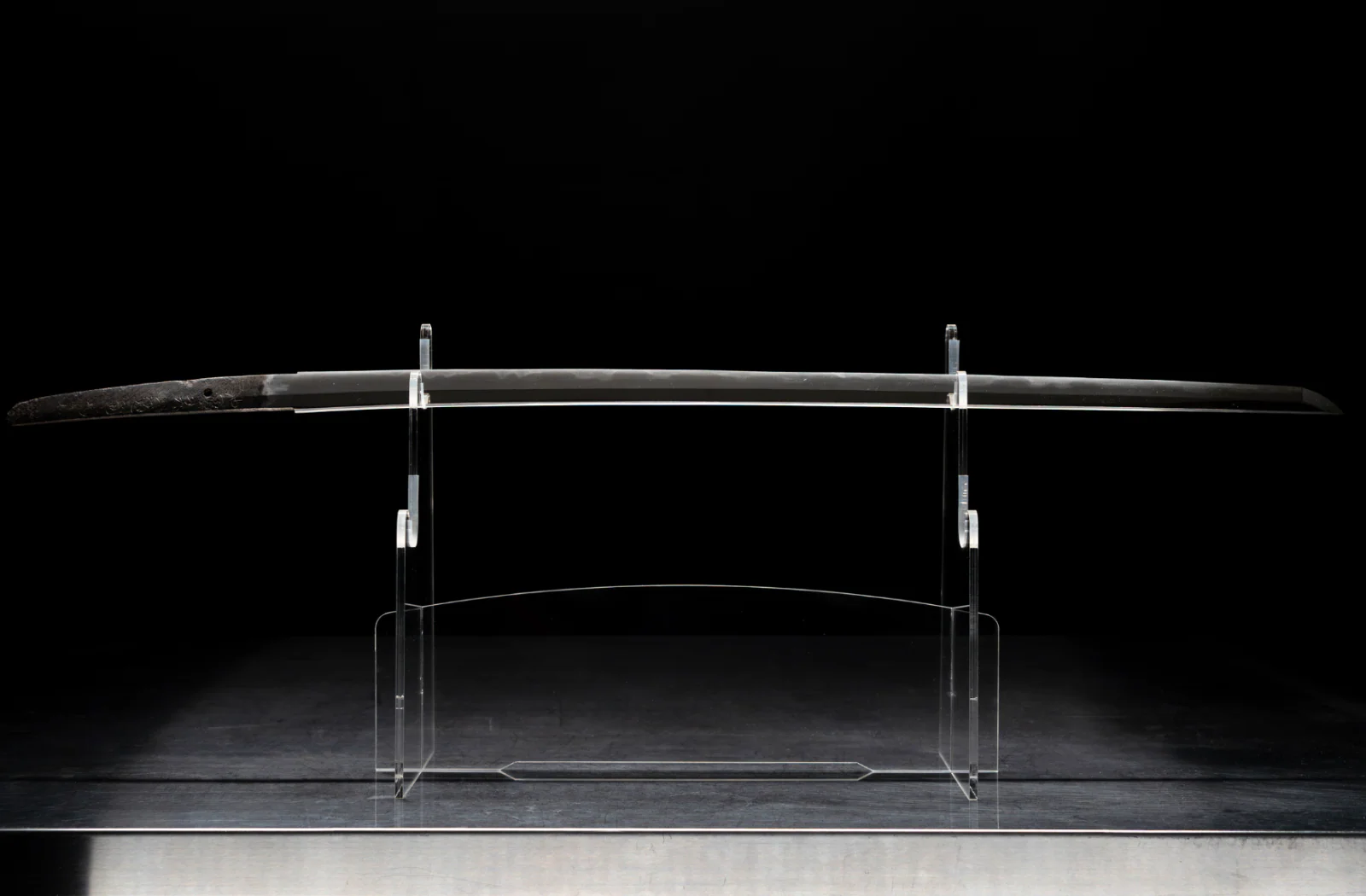
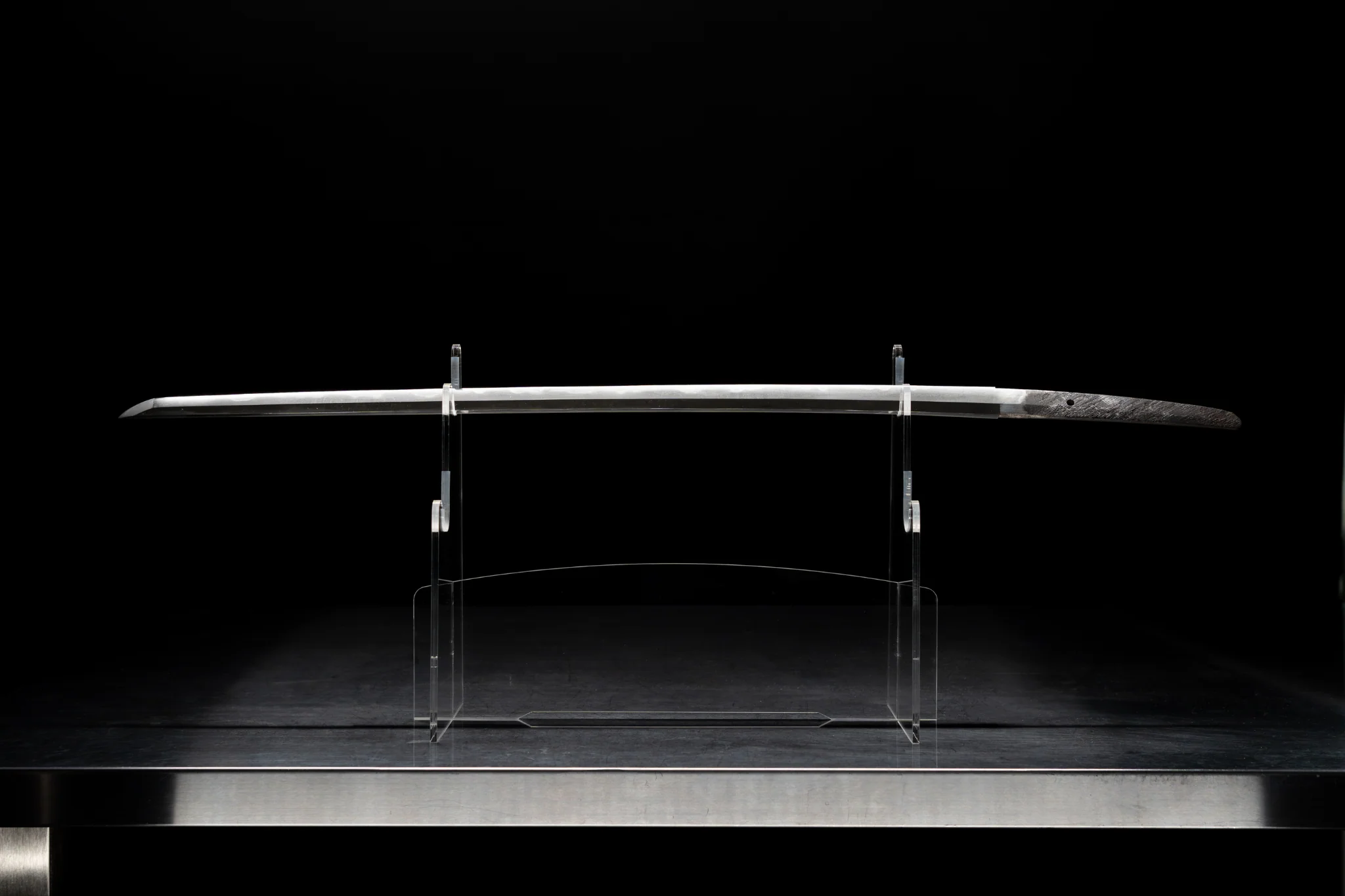
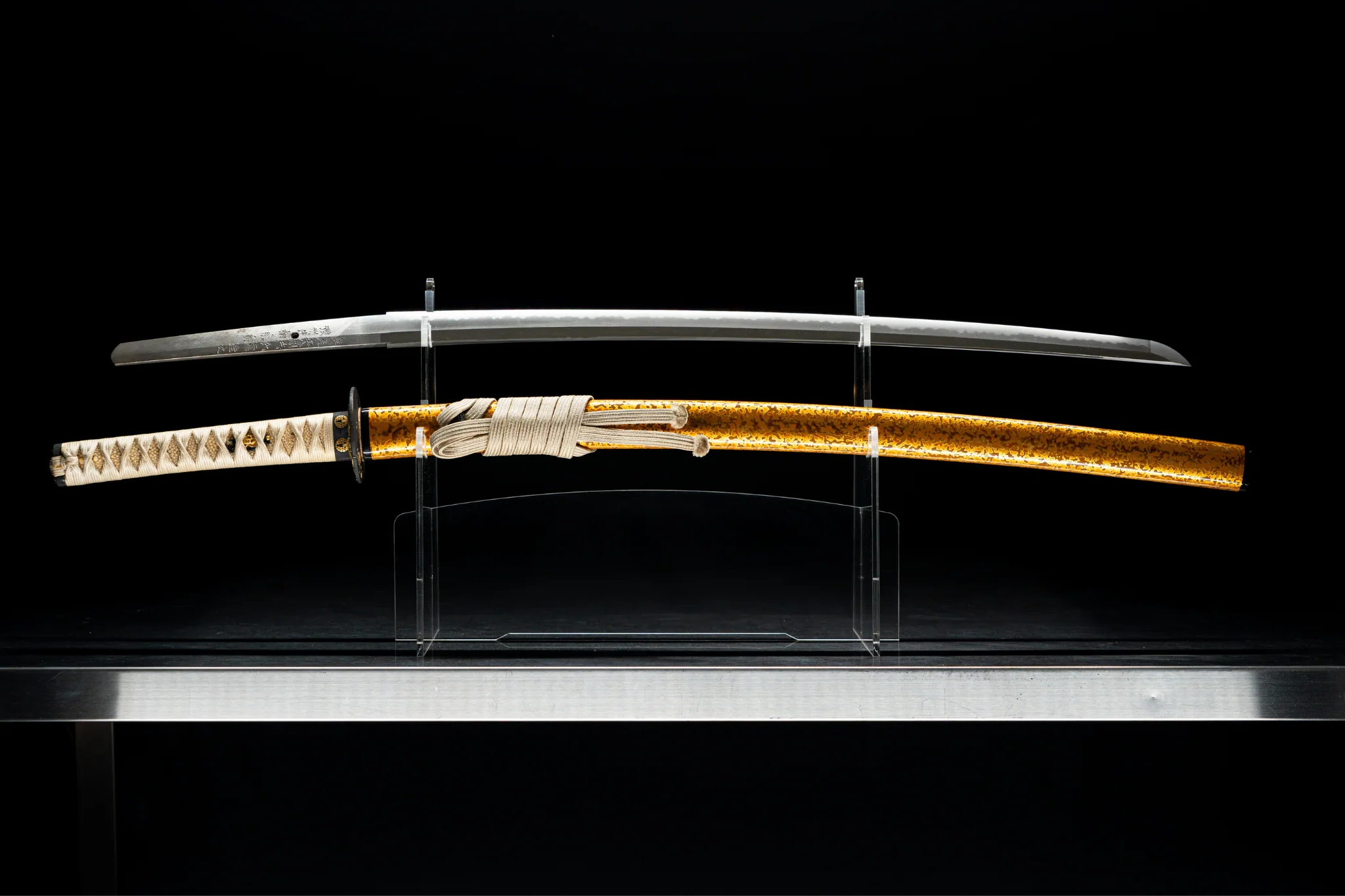
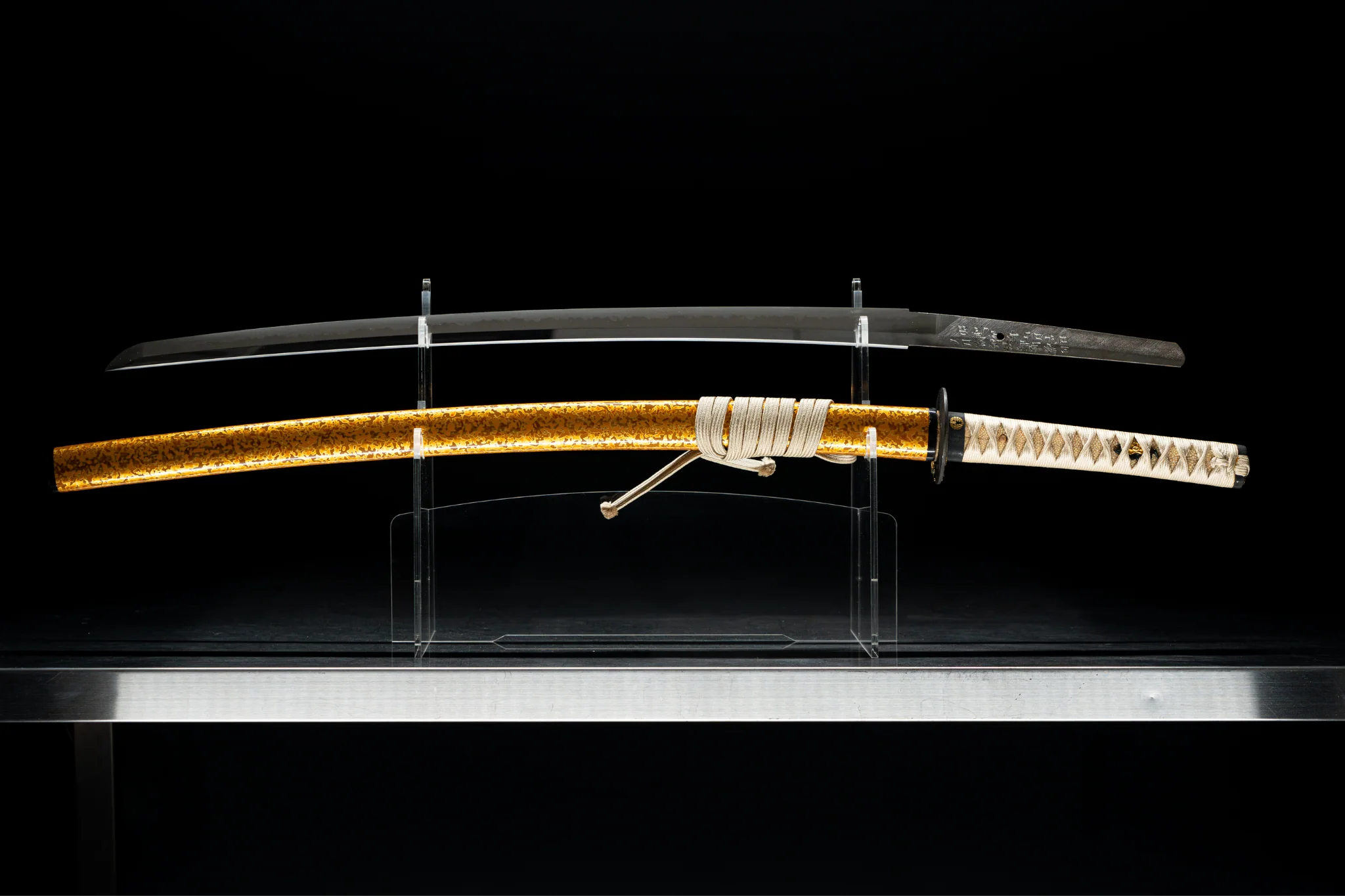
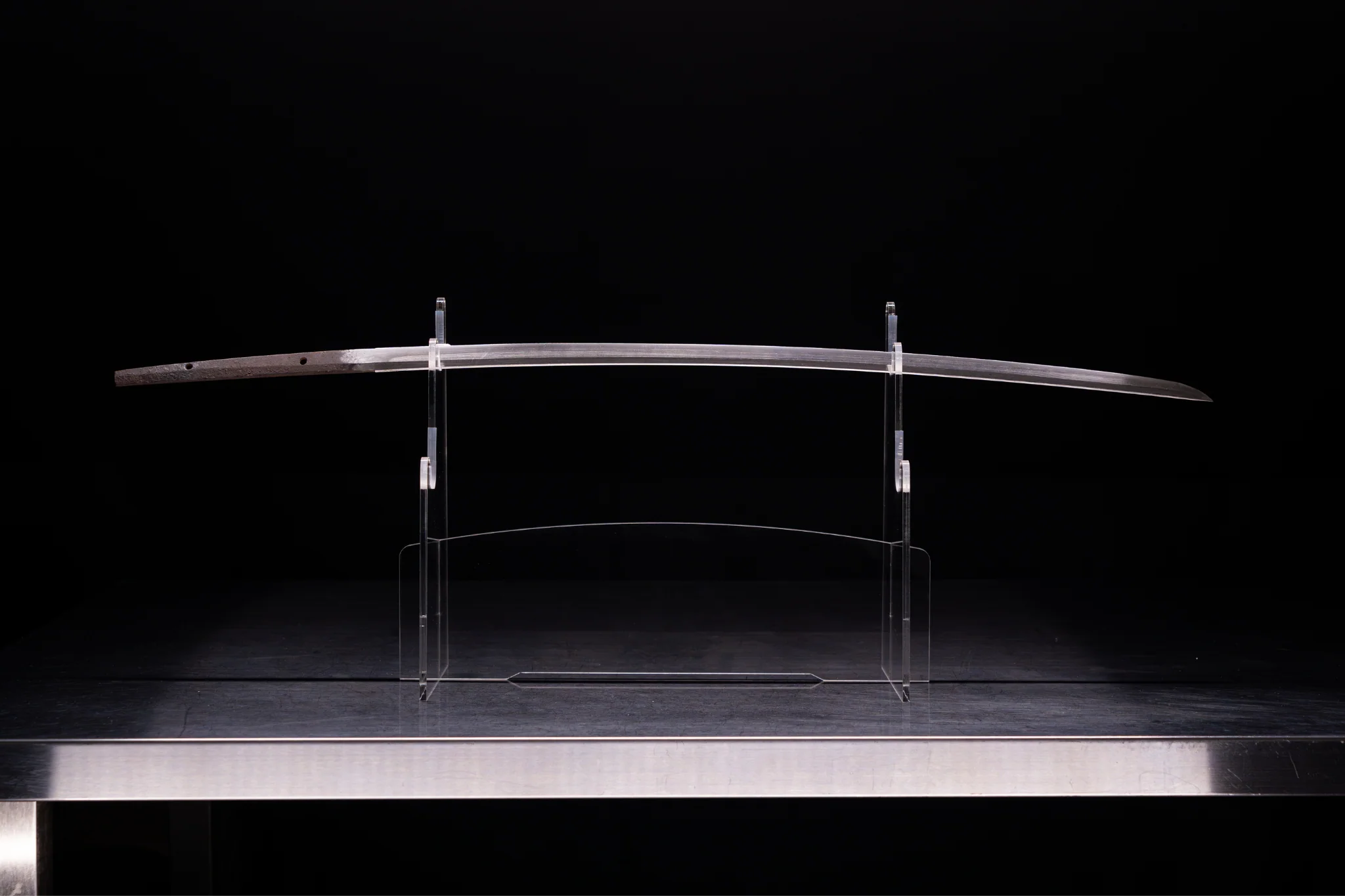
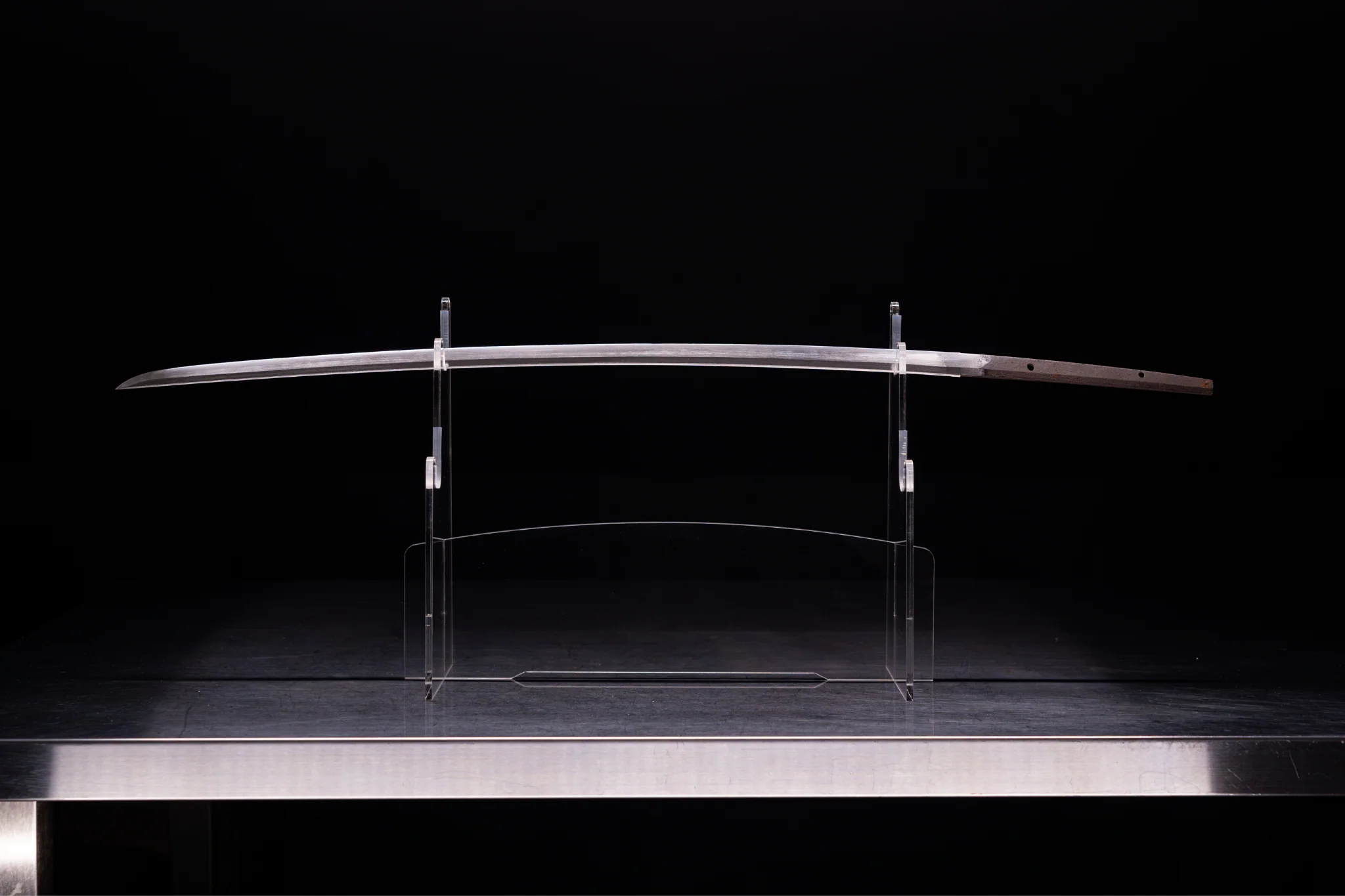
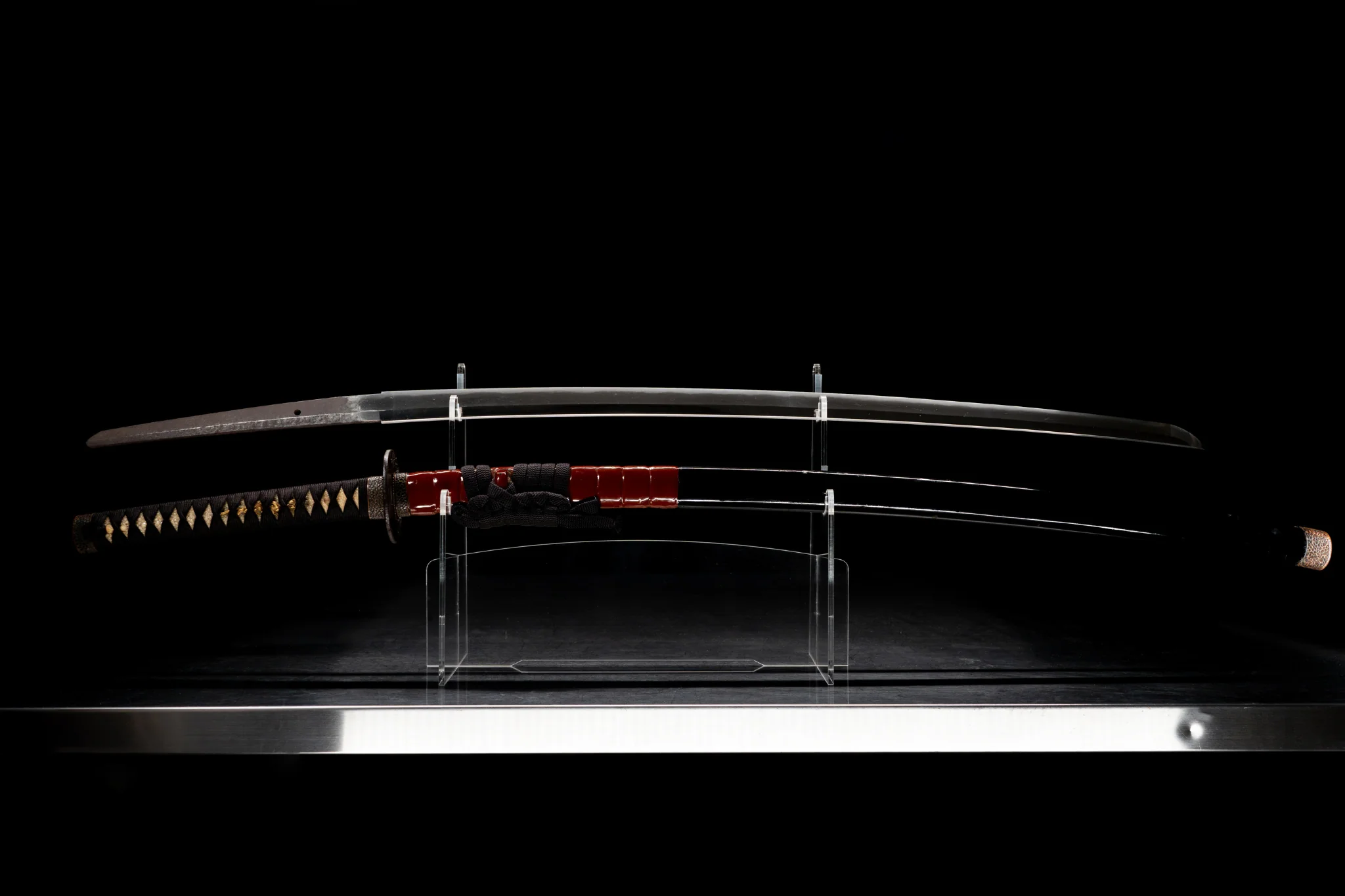
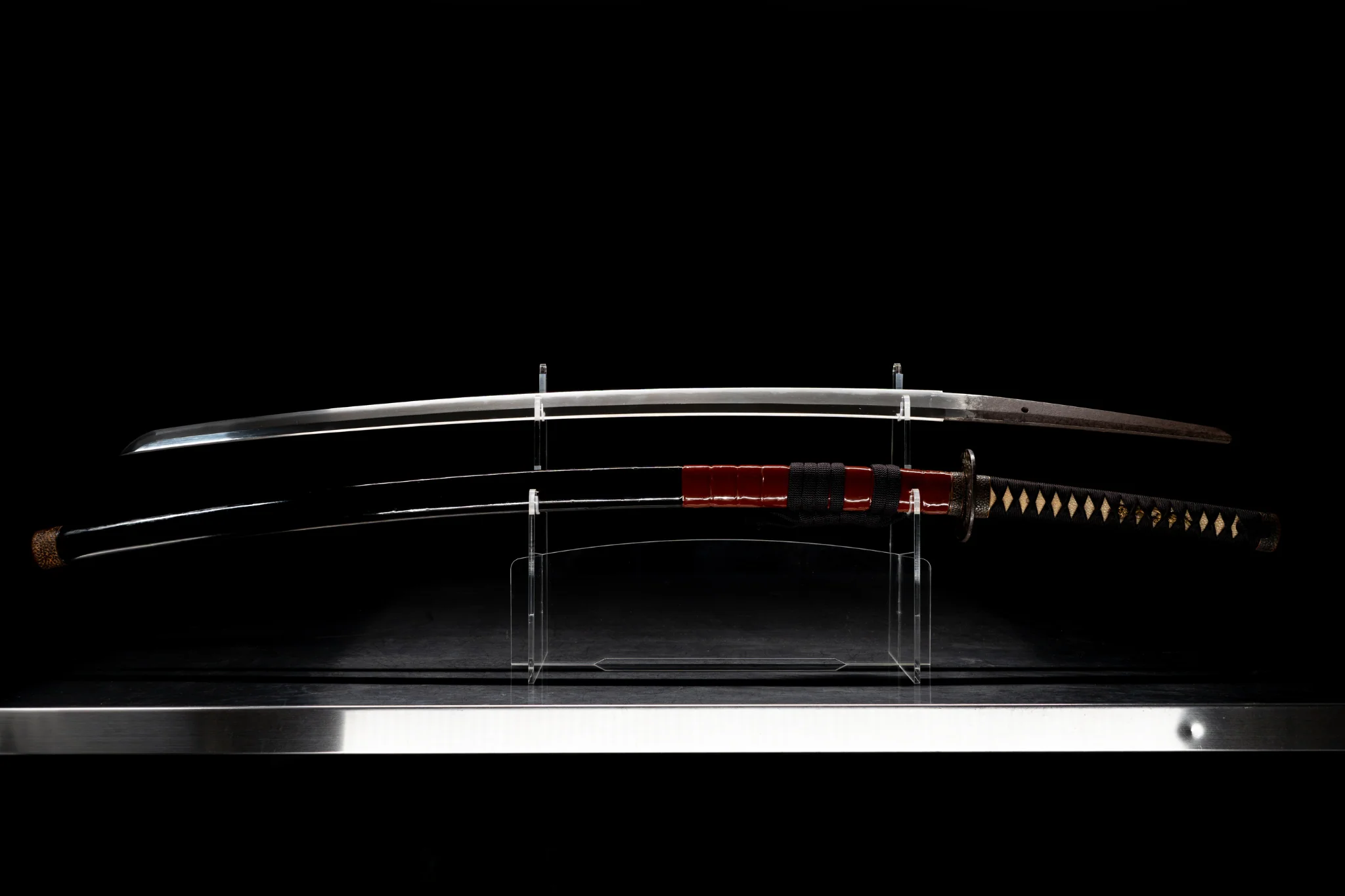
Antique Japanese Katana Sword from Late Muromachi, 66.6 cm
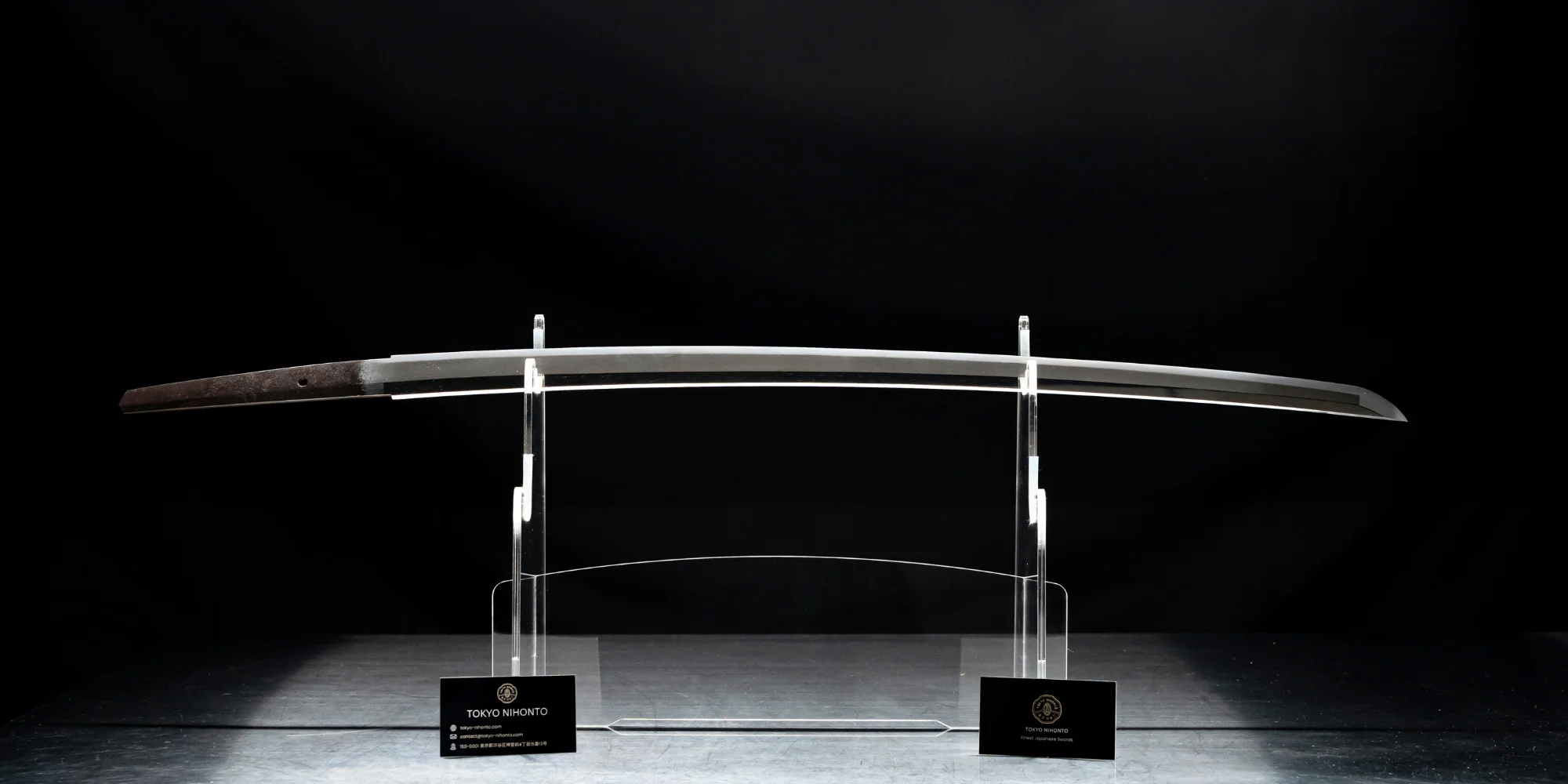
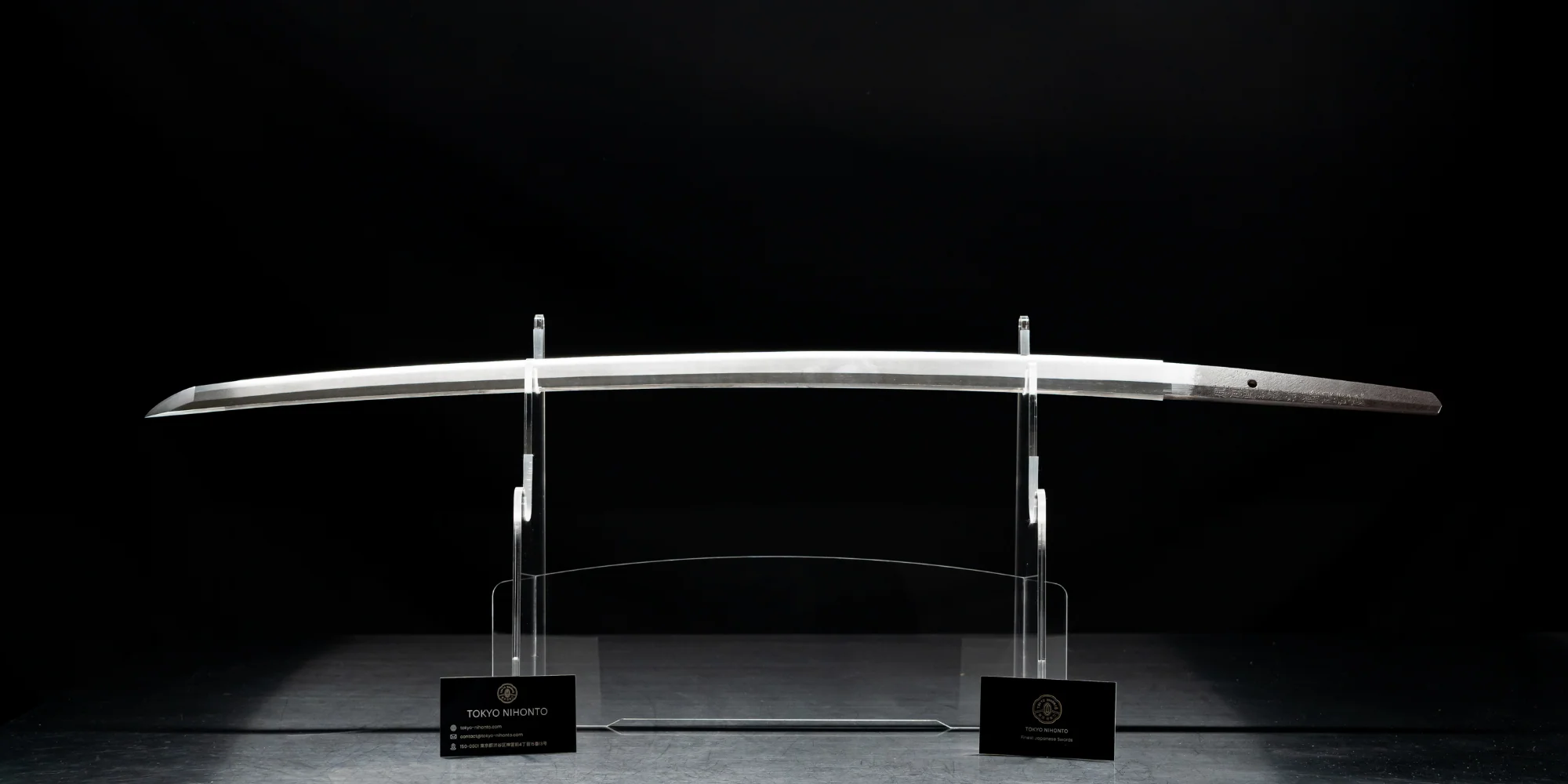
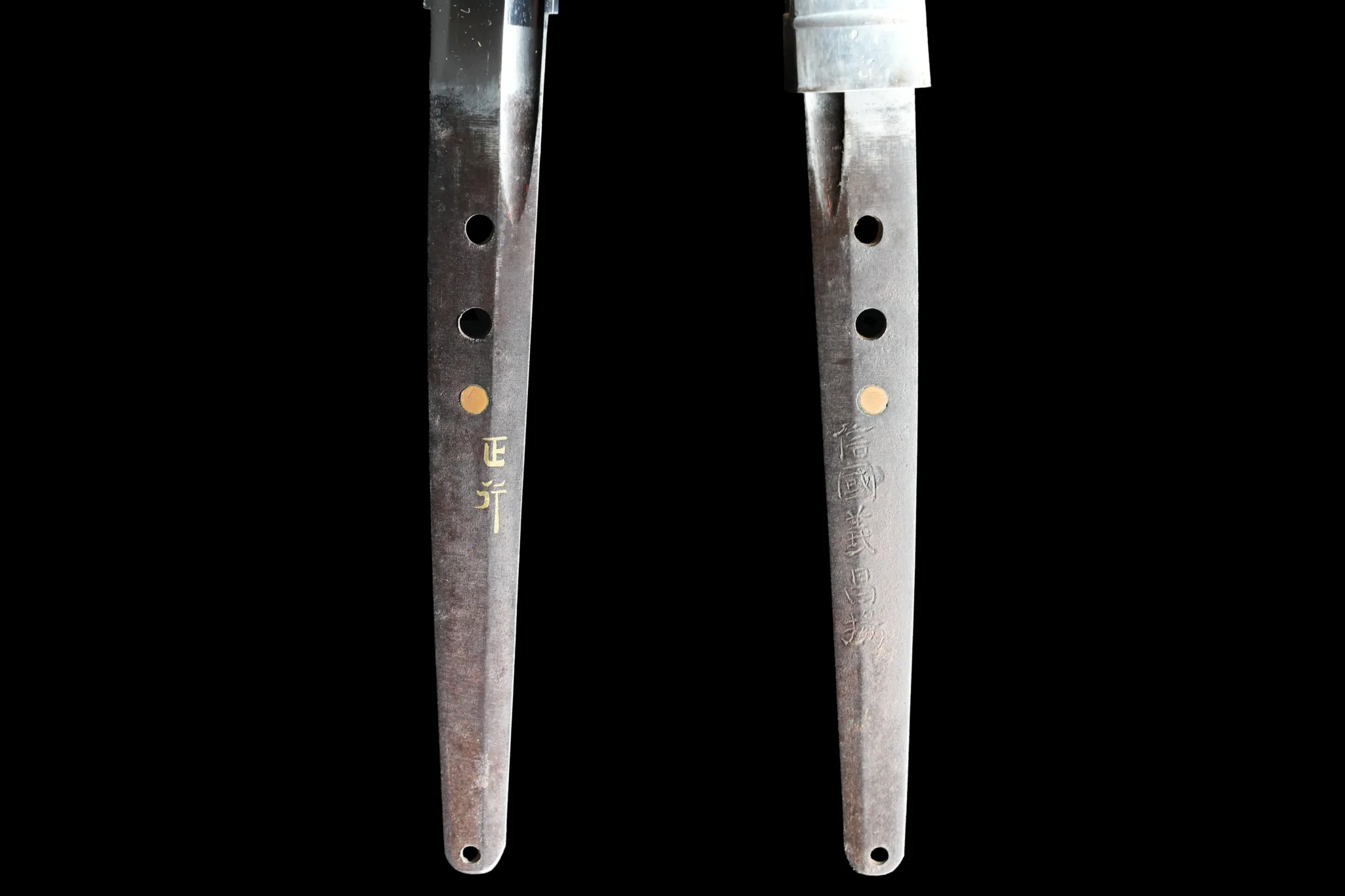
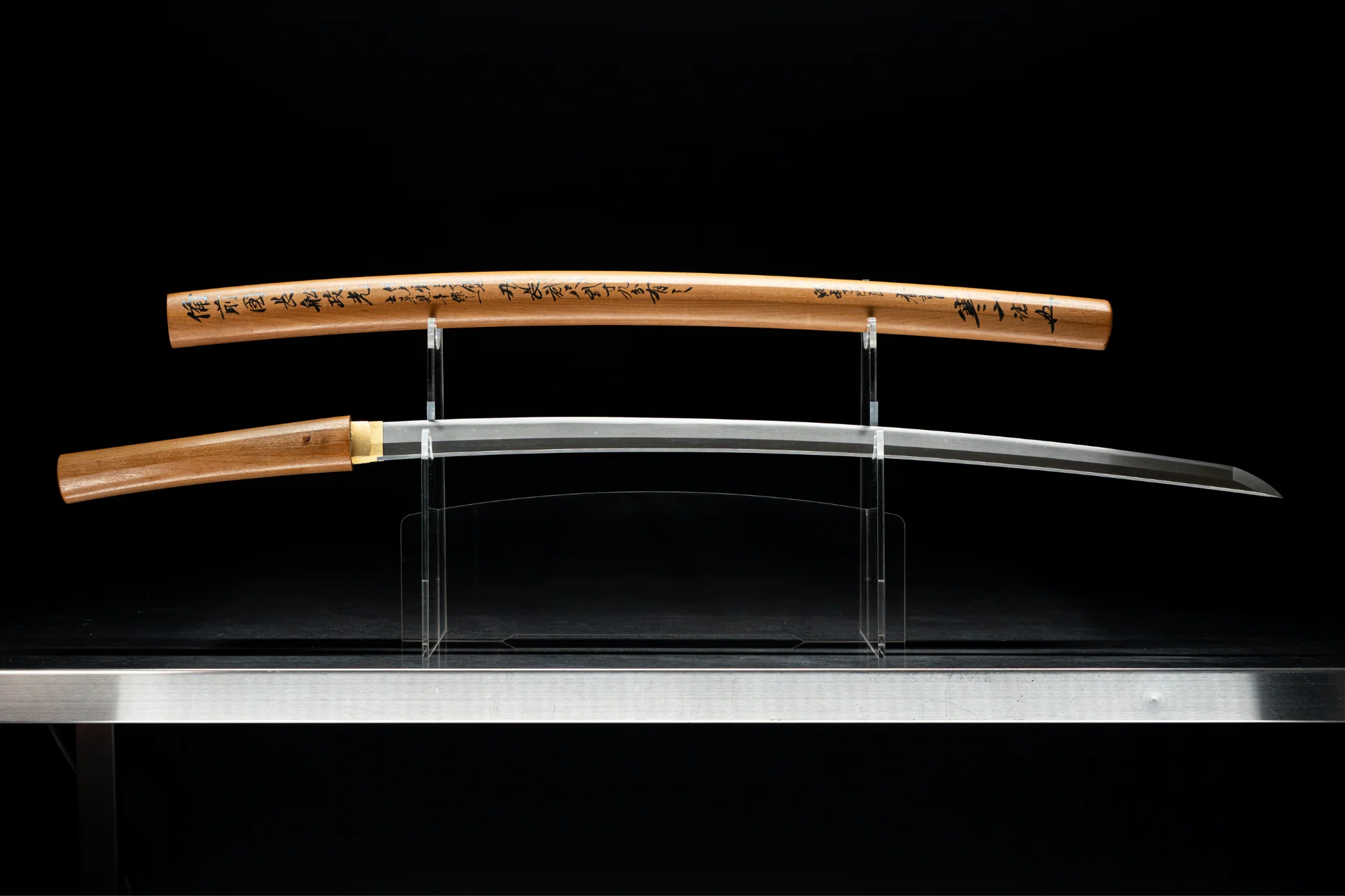
- Signature (Mei): 無銘 Mumei (Unsigned)
- Period / Province: Late Muromachi to Early Edo Period (c. 1570–1620)
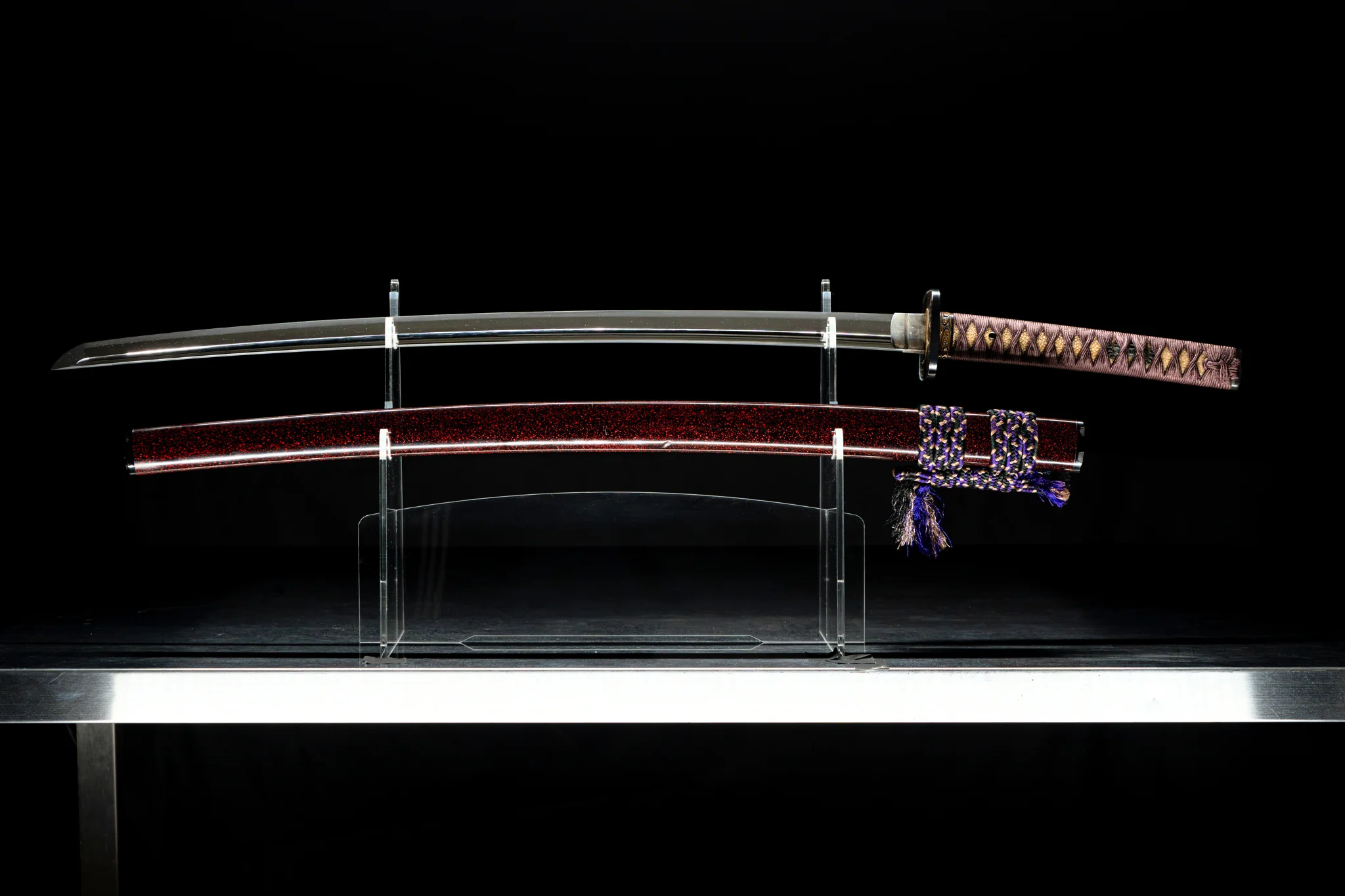
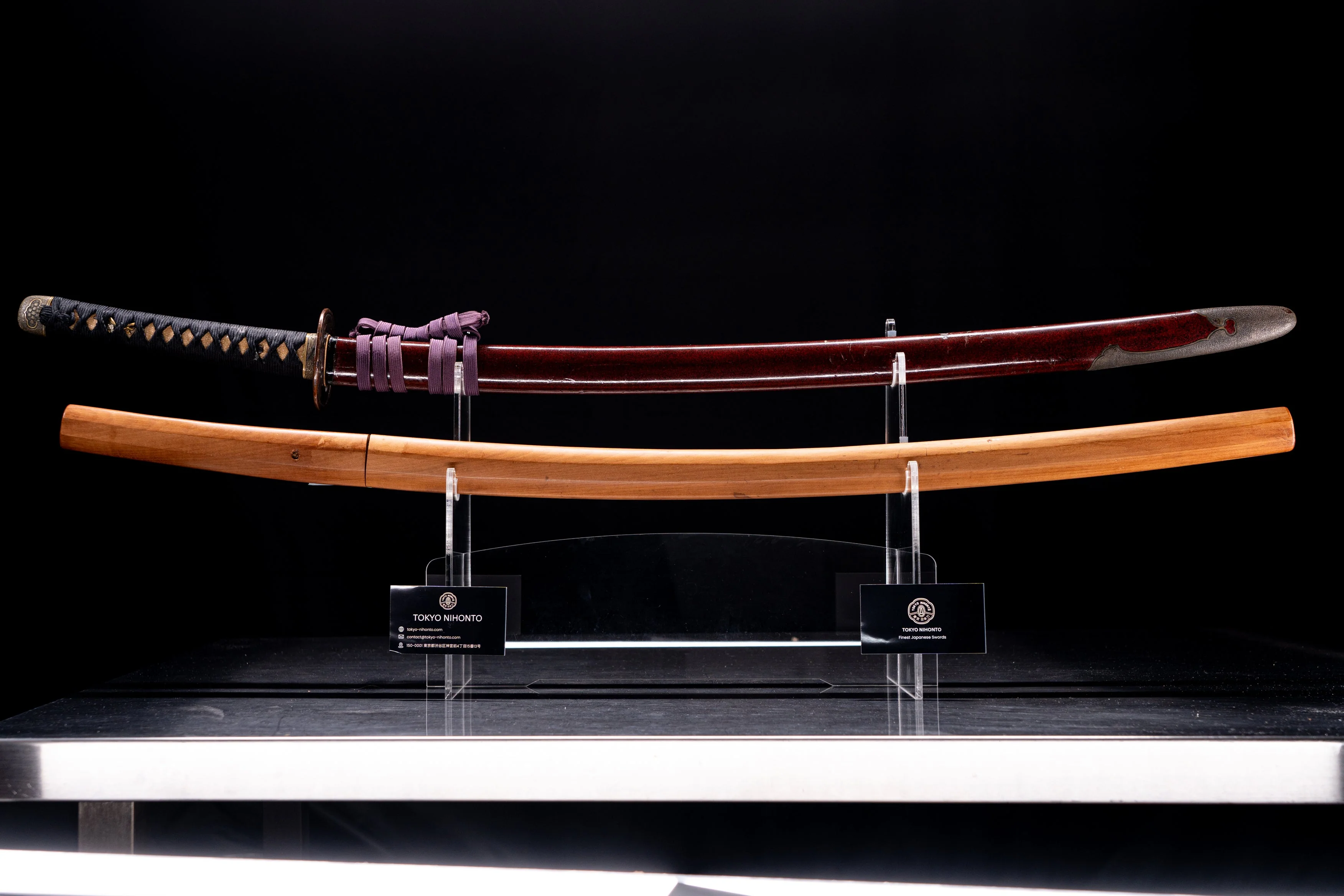
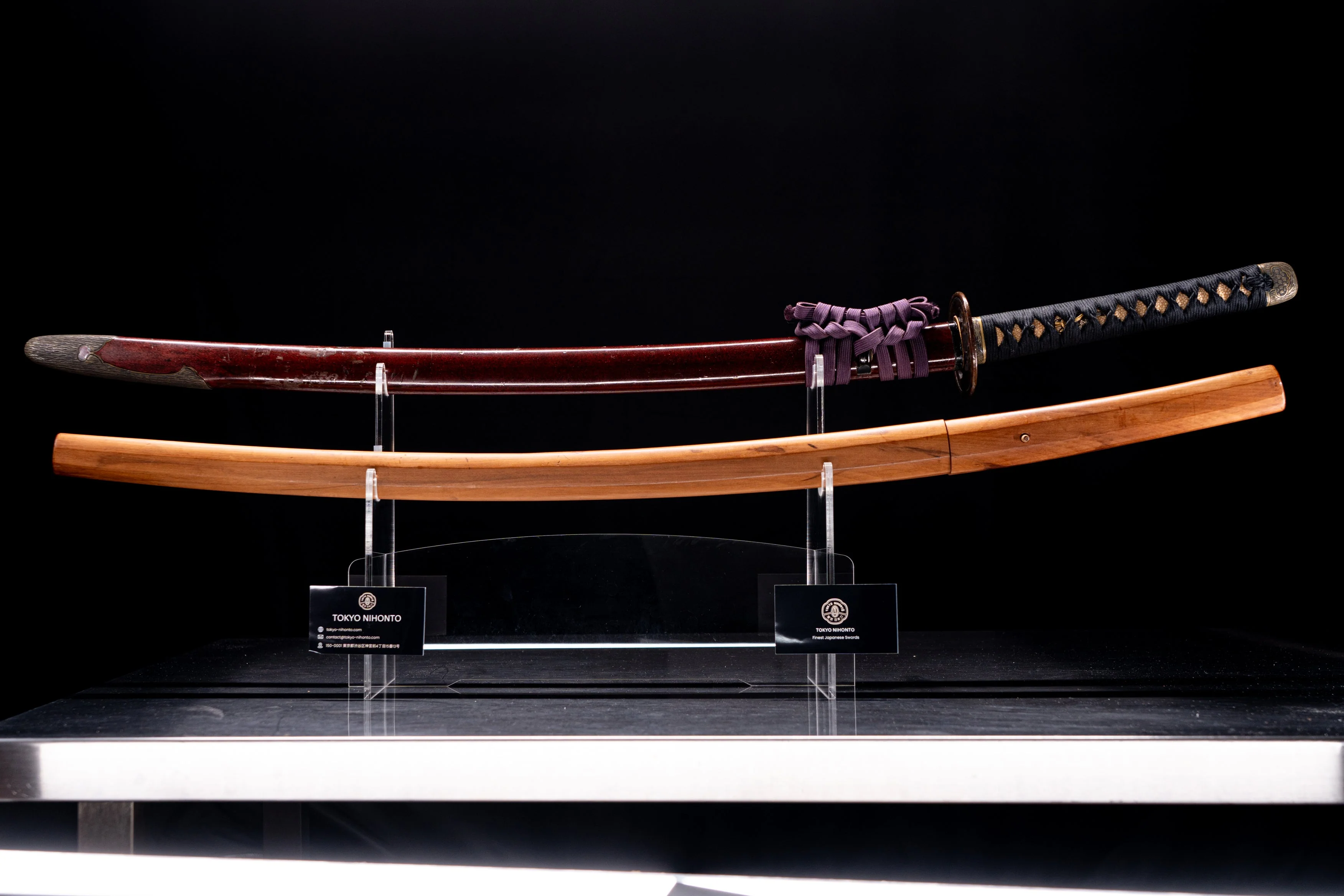
- Mounting: Ornate Samurai Koshirae and Shirasaya
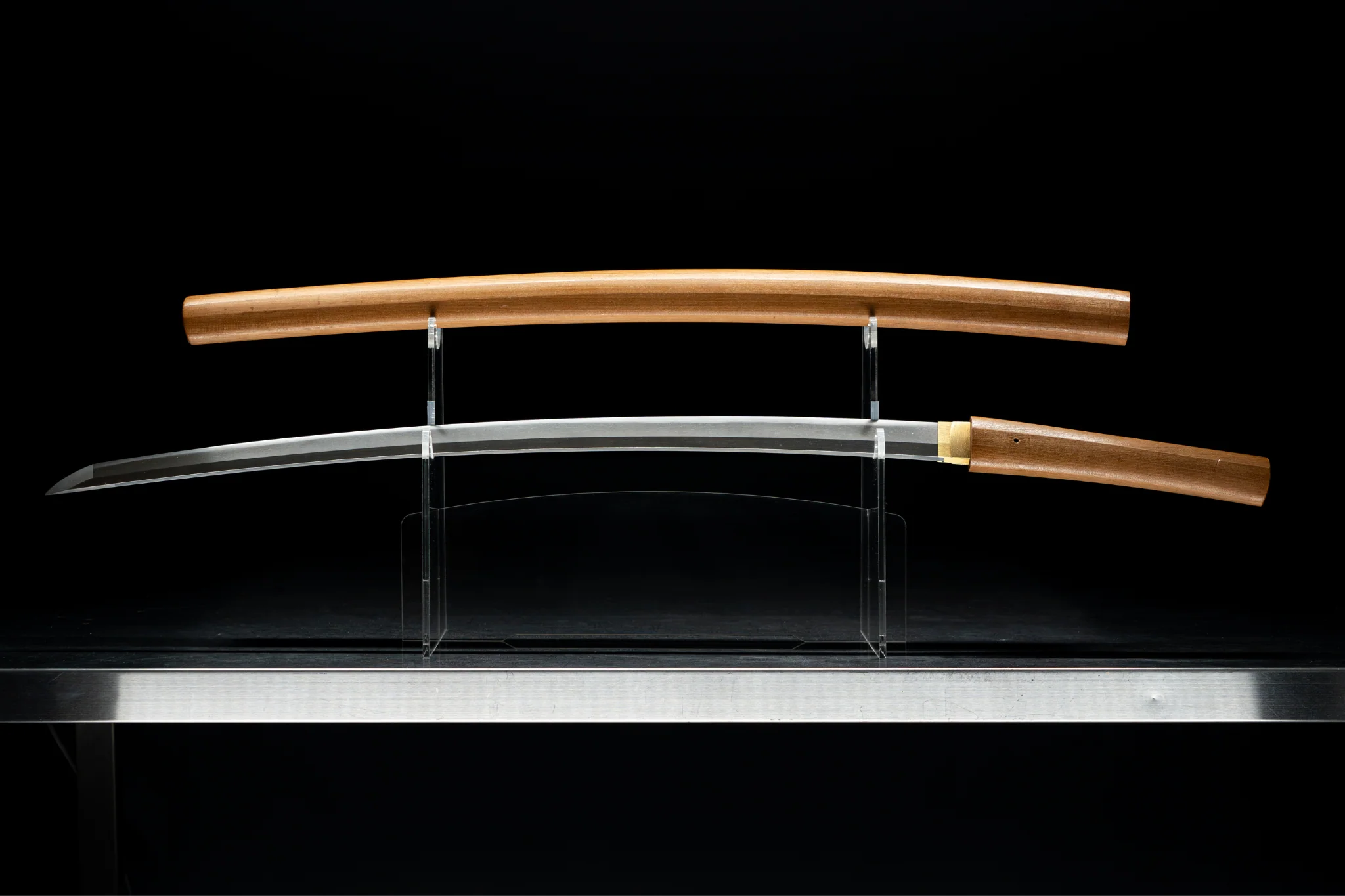
- Blade Length (Nagasa): 66.6 cm
- Curvature (Sori): 1.7 cm
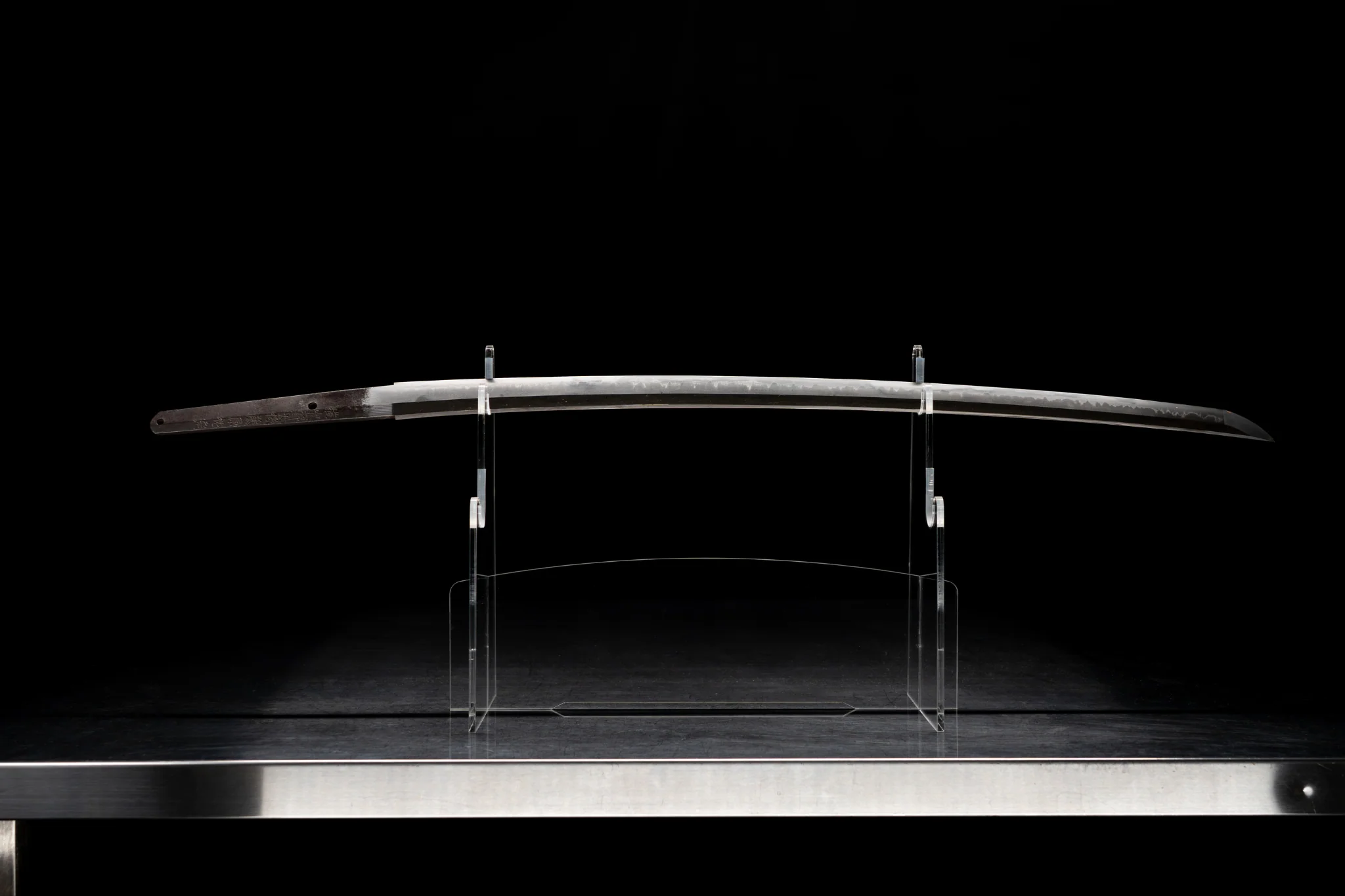
- Mekugi-ana: 2
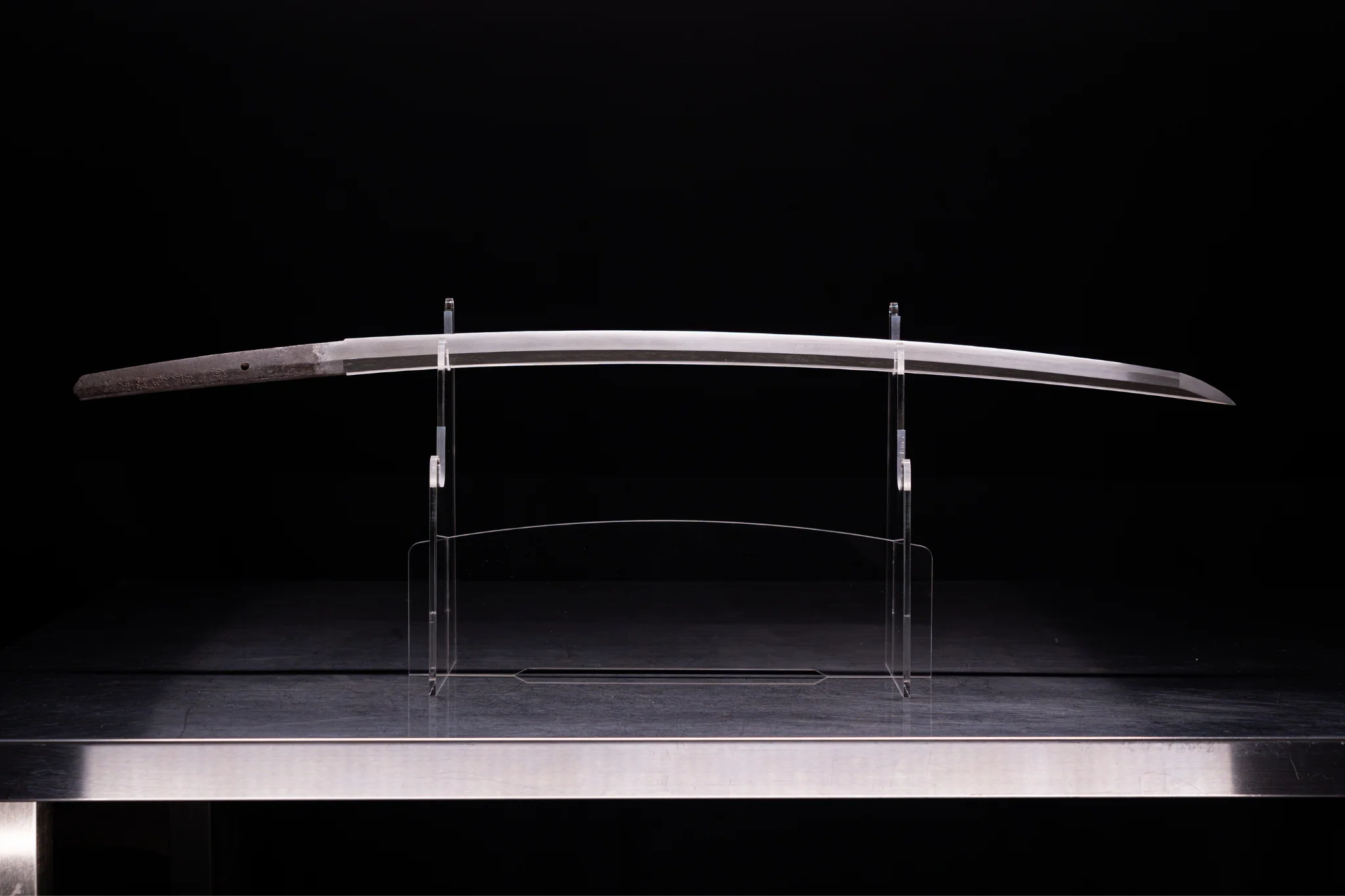
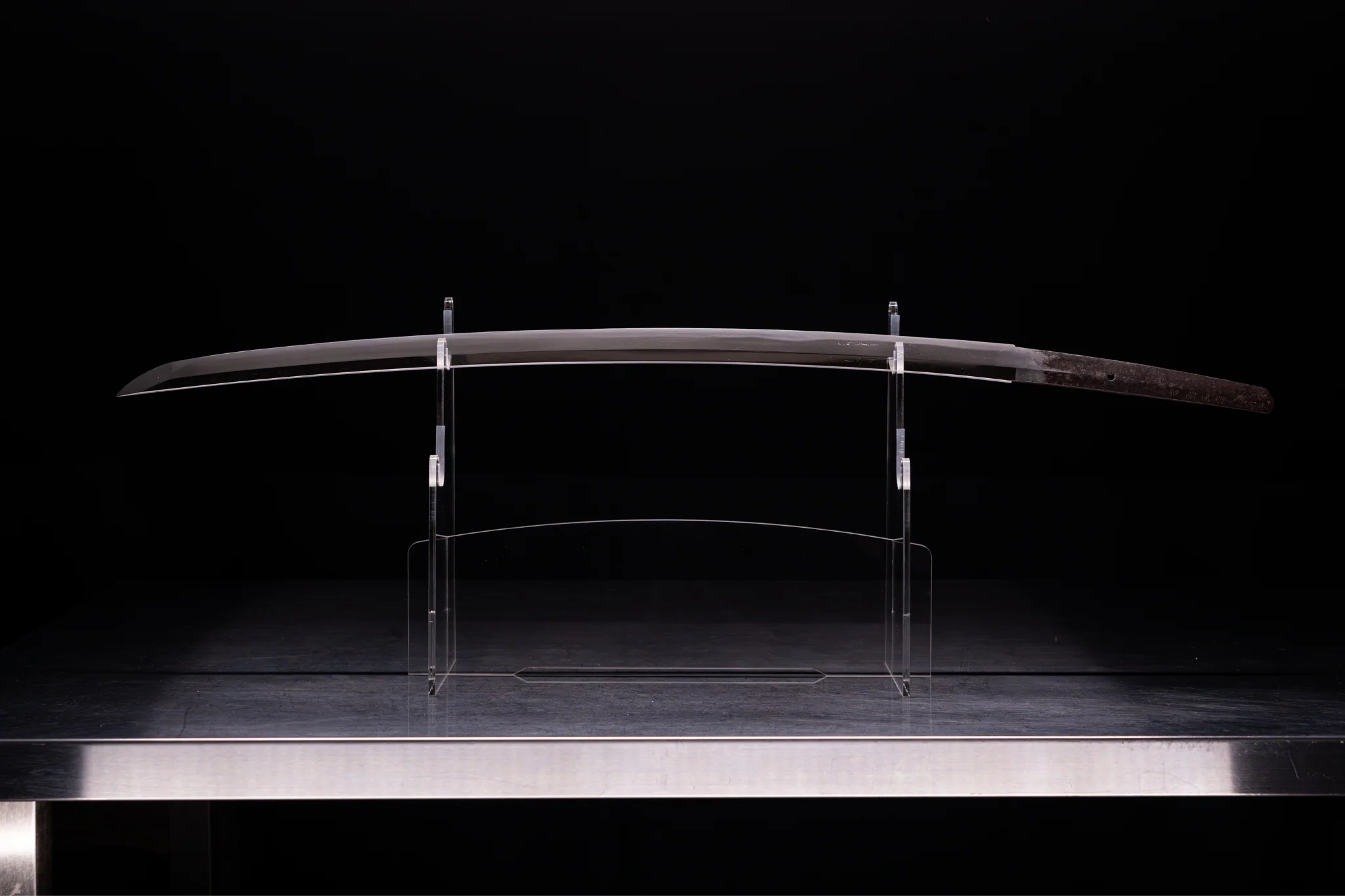
- Shape: Shinogi-zukuri with a standard Mihaba and Chu-kissaki
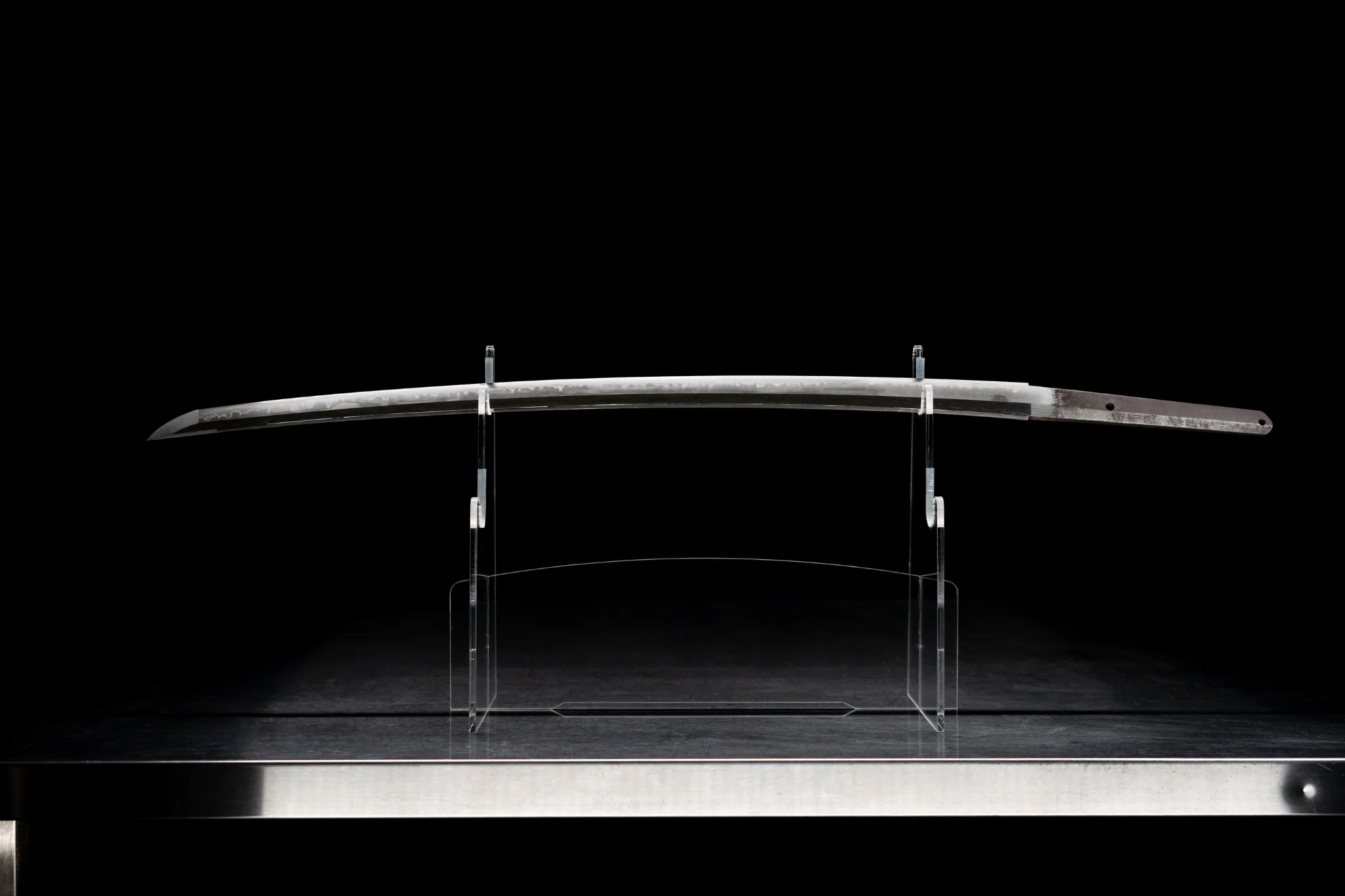
- Jihada: Itame-hada mixed with Mokume; visible grain structure
- Hamon: Distinct Gunome-midare with Sunagashi and a clear Nie-line
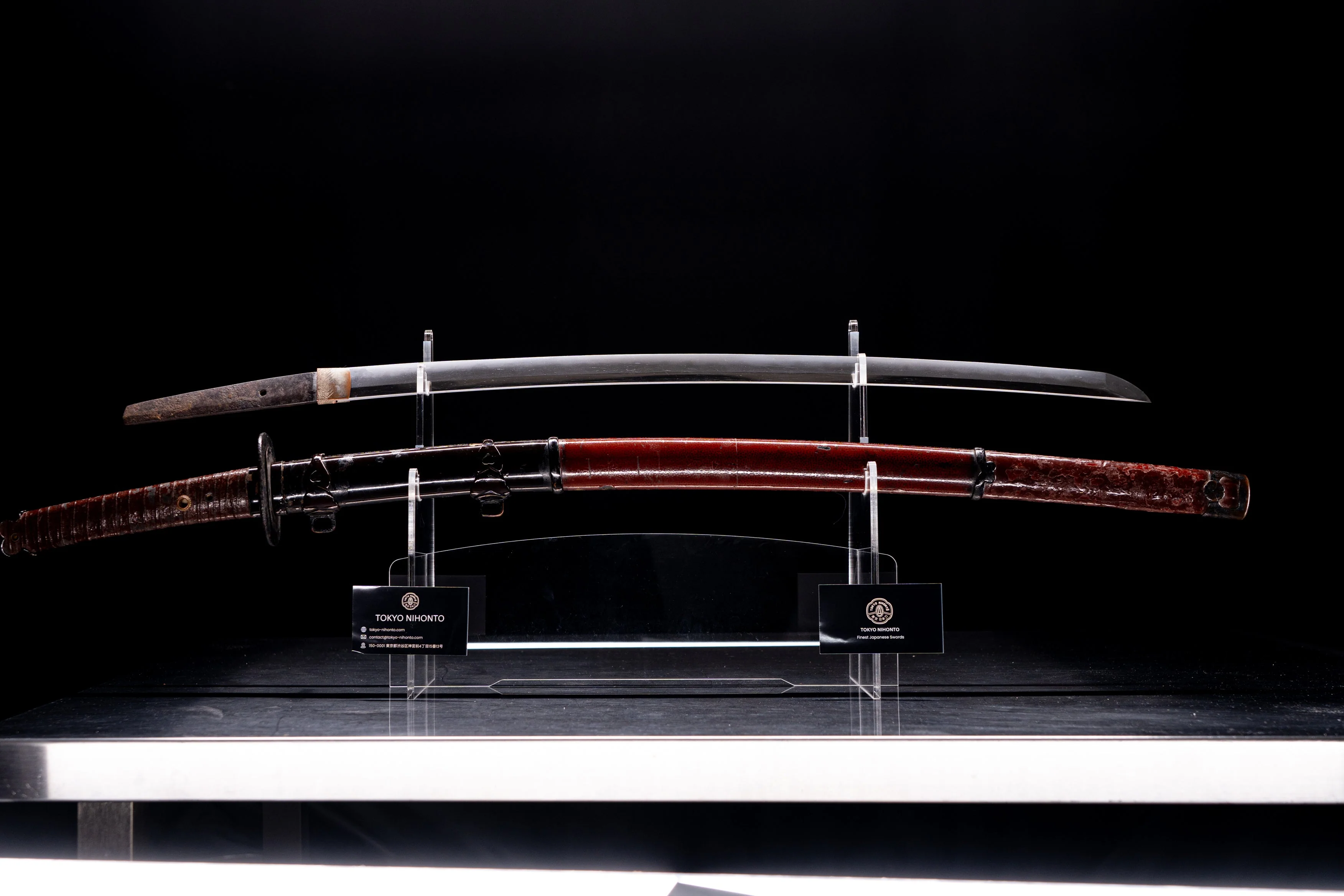
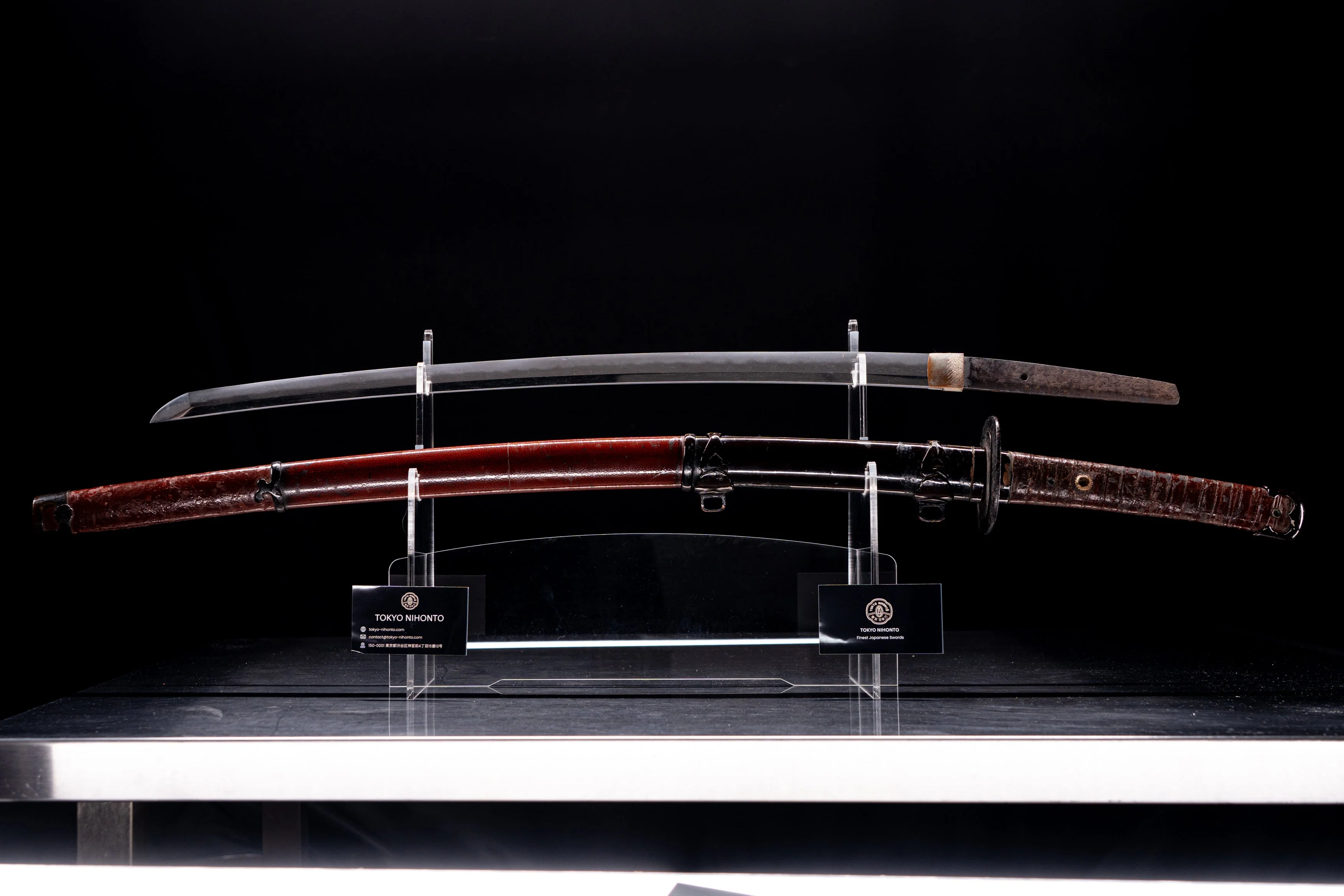
This striking Katana dates to the pivotal transition between the late Muromachi and early Edo periods. Measuring 66.6 cm in nagasa with a graceful 1.7 cm sori, the blade exhibits the robust and functional geometry required during the final eras of large-scale samurai warfare. Though Mumei (unsigned), the quality of the steel and the sophisticated heat treatment point toward a highly capable smith working in the Bizen or Mino tradition.
The hamon is an active gunome-midare, featuring undulating peaks that showcase excellent technical control. The jihada (surface grain) presents a well-defined itame pattern, reflecting the dense, resilient forging characteristic of blades intended for practical use by the bushi class during the turn of the 17th century.
Koshirae Details
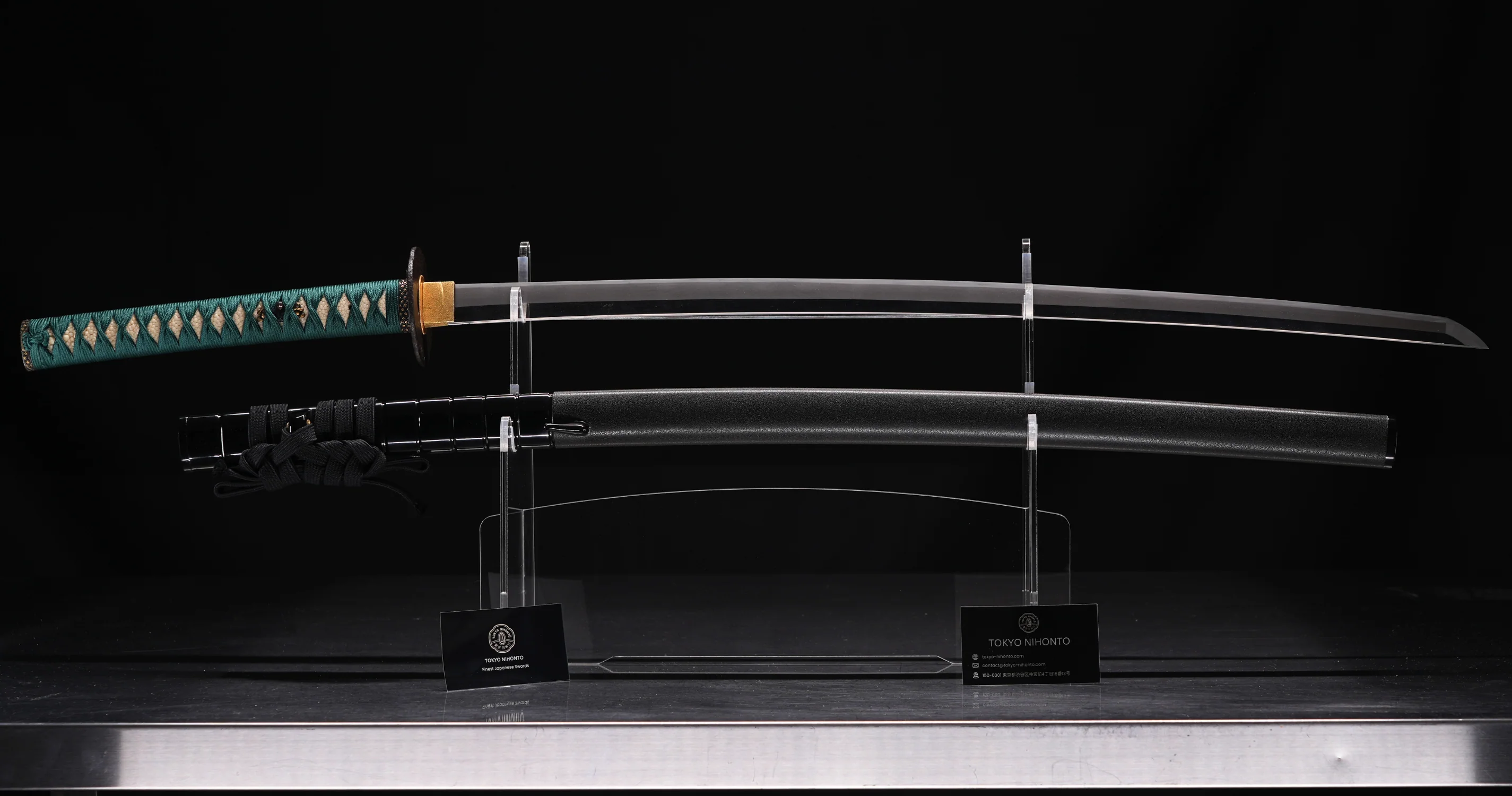
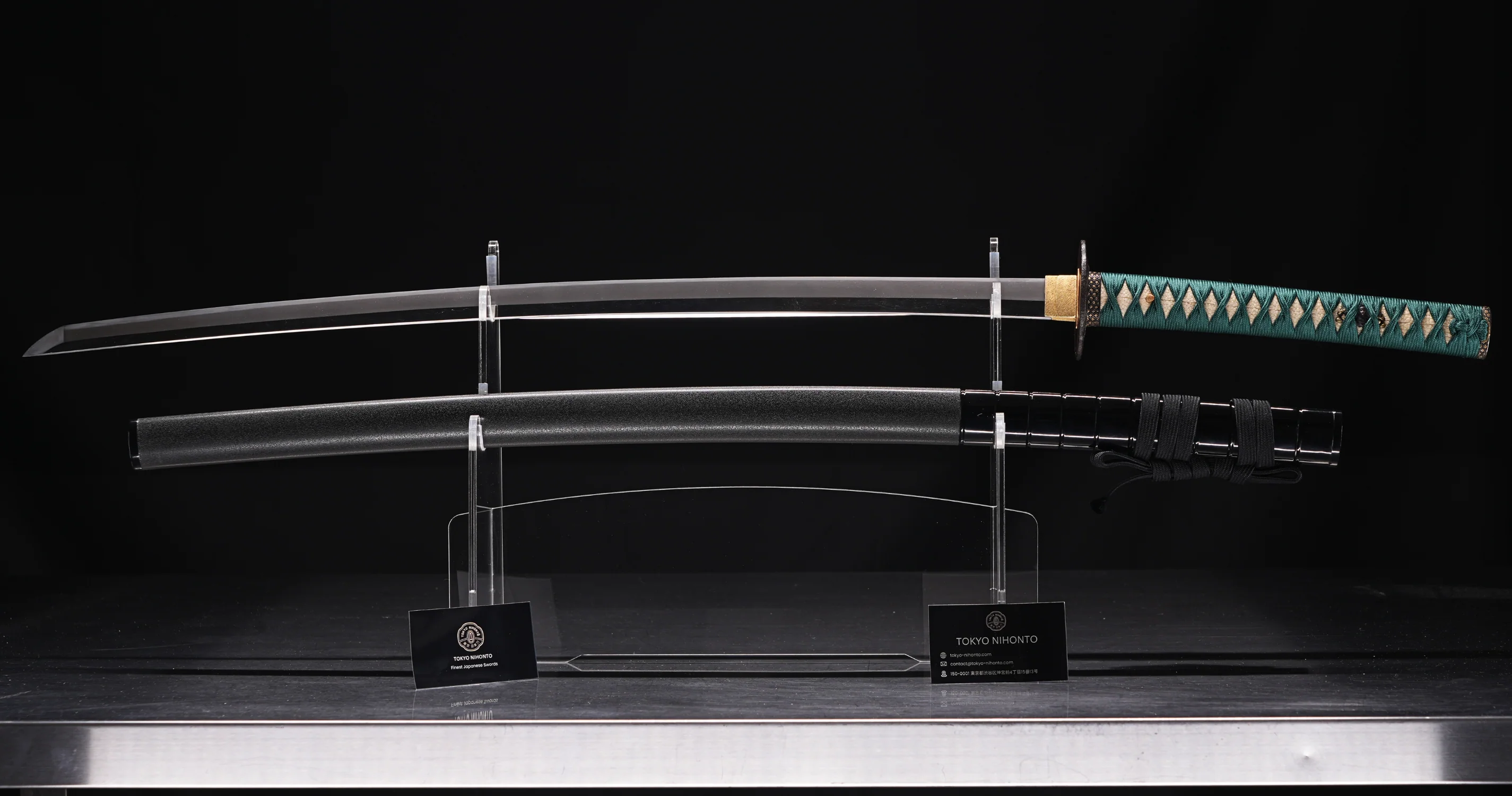
This sword is outfitted in a high-status mounting that emphasizes both artistry and durability. The saya features a unique textured Ishime-ji finish, providing a non-slip grip and a rugged, matte aesthetic. The tsuka is wrapped in a traditional dark silk ito over genuine white rayskin (samegawa), accented by gold-detailed menuki depicting floral or seasonal motifs.
The tsuba is a masterful iron work in the Sukashi (openwork) style, likely representing a stylized crane or wheel, symbolizing longevity and the turning of fate. The fuchi-kashira are finely crafted with gold nunome-zogan, depicting traditional Japanese landscape or botanical scenes, which elevates the sword from a simple weapon to a piece of wearable art.
Background
Blades from the Late Muromachi to Early Edo period are often referred to as Keicho-shinto precursors. During this time, the chaotic "Age of Warring States" (Sengoku Jidai) was giving way to the stability of the Tokugawa Shogunate. Smiths adapted their styles to create swords that were slightly thicker and more durable than their predecessors. The attribution to this era suggests a blade that was forged for a samurai who lived through the transition from constant battle to a life of disciplined administrative and ceremonial duties.
Original: $2,900.00
-65%$2,900.00
$1,015.00Product Information
Product Information
Shipping & Returns
Shipping & Returns
Description
- Signature (Mei): 無銘 Mumei (Unsigned)
- Period / Province: Late Muromachi to Early Edo Period (c. 1570–1620)
- Mounting: Ornate Samurai Koshirae and Shirasaya
- Blade Length (Nagasa): 66.6 cm
- Curvature (Sori): 1.7 cm
- Mekugi-ana: 2
- Shape: Shinogi-zukuri with a standard Mihaba and Chu-kissaki
- Jihada: Itame-hada mixed with Mokume; visible grain structure
- Hamon: Distinct Gunome-midare with Sunagashi and a clear Nie-line
This striking Katana dates to the pivotal transition between the late Muromachi and early Edo periods. Measuring 66.6 cm in nagasa with a graceful 1.7 cm sori, the blade exhibits the robust and functional geometry required during the final eras of large-scale samurai warfare. Though Mumei (unsigned), the quality of the steel and the sophisticated heat treatment point toward a highly capable smith working in the Bizen or Mino tradition.
The hamon is an active gunome-midare, featuring undulating peaks that showcase excellent technical control. The jihada (surface grain) presents a well-defined itame pattern, reflecting the dense, resilient forging characteristic of blades intended for practical use by the bushi class during the turn of the 17th century.
Koshirae Details
This sword is outfitted in a high-status mounting that emphasizes both artistry and durability. The saya features a unique textured Ishime-ji finish, providing a non-slip grip and a rugged, matte aesthetic. The tsuka is wrapped in a traditional dark silk ito over genuine white rayskin (samegawa), accented by gold-detailed menuki depicting floral or seasonal motifs.
The tsuba is a masterful iron work in the Sukashi (openwork) style, likely representing a stylized crane or wheel, symbolizing longevity and the turning of fate. The fuchi-kashira are finely crafted with gold nunome-zogan, depicting traditional Japanese landscape or botanical scenes, which elevates the sword from a simple weapon to a piece of wearable art.
Background
Blades from the Late Muromachi to Early Edo period are often referred to as Keicho-shinto precursors. During this time, the chaotic "Age of Warring States" (Sengoku Jidai) was giving way to the stability of the Tokugawa Shogunate. Smiths adapted their styles to create swords that were slightly thicker and more durable than their predecessors. The attribution to this era suggests a blade that was forged for a samurai who lived through the transition from constant battle to a life of disciplined administrative and ceremonial duties.