Antique Japanese Katana Sword Ryokai Shigeyoshi - Hozon
- Signature (Mei): Ryōkai Shigeyoshi
- School / Tradition: Tsukushi Ryōkai / Yamashiro-den lineage (Rai group)
- Period / Province: Mid–Muromachi (Chōroku era, 1457–1460) / Bungo (Ōita)
- Certificate: NBTHK Hozon (保存刀剣)
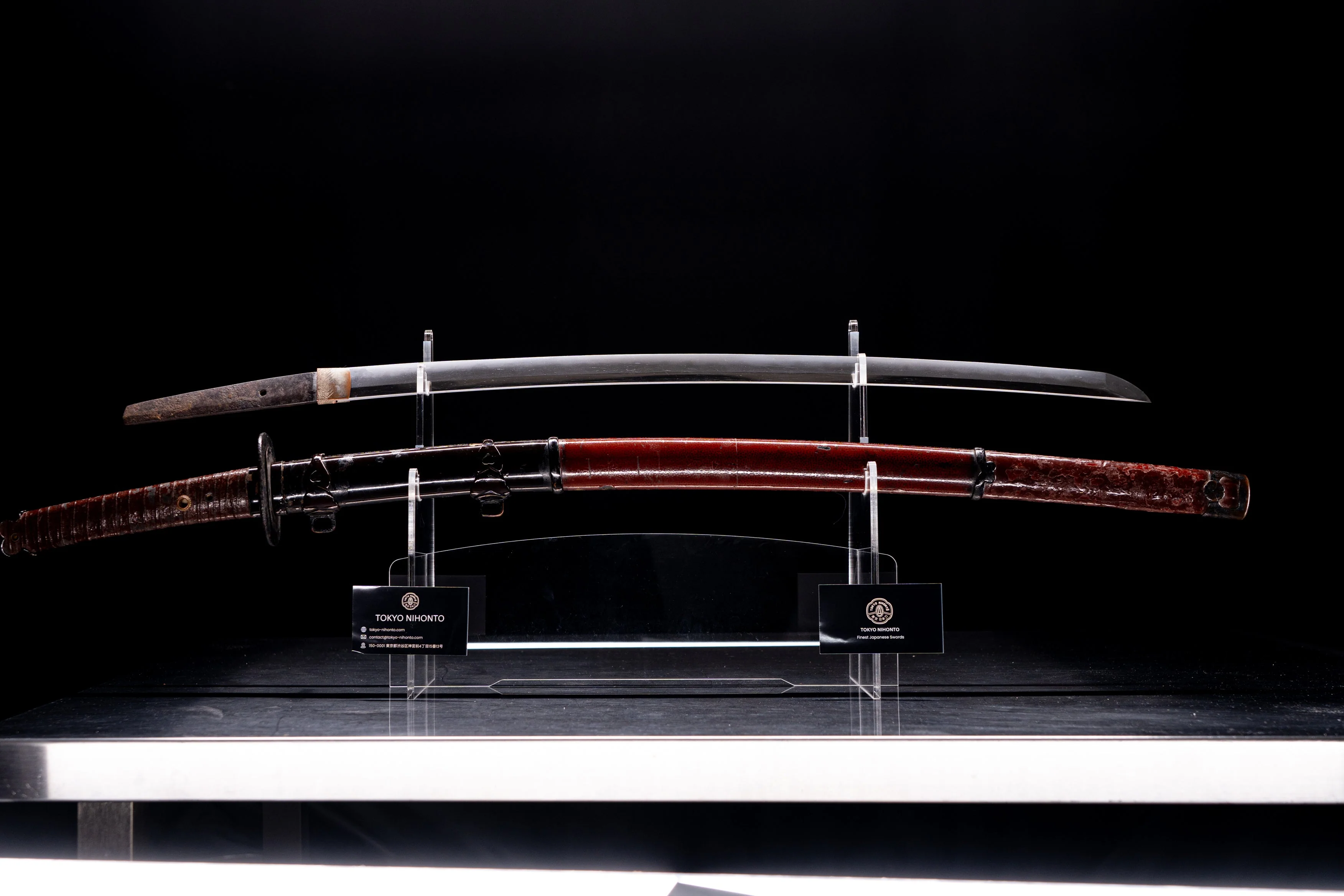
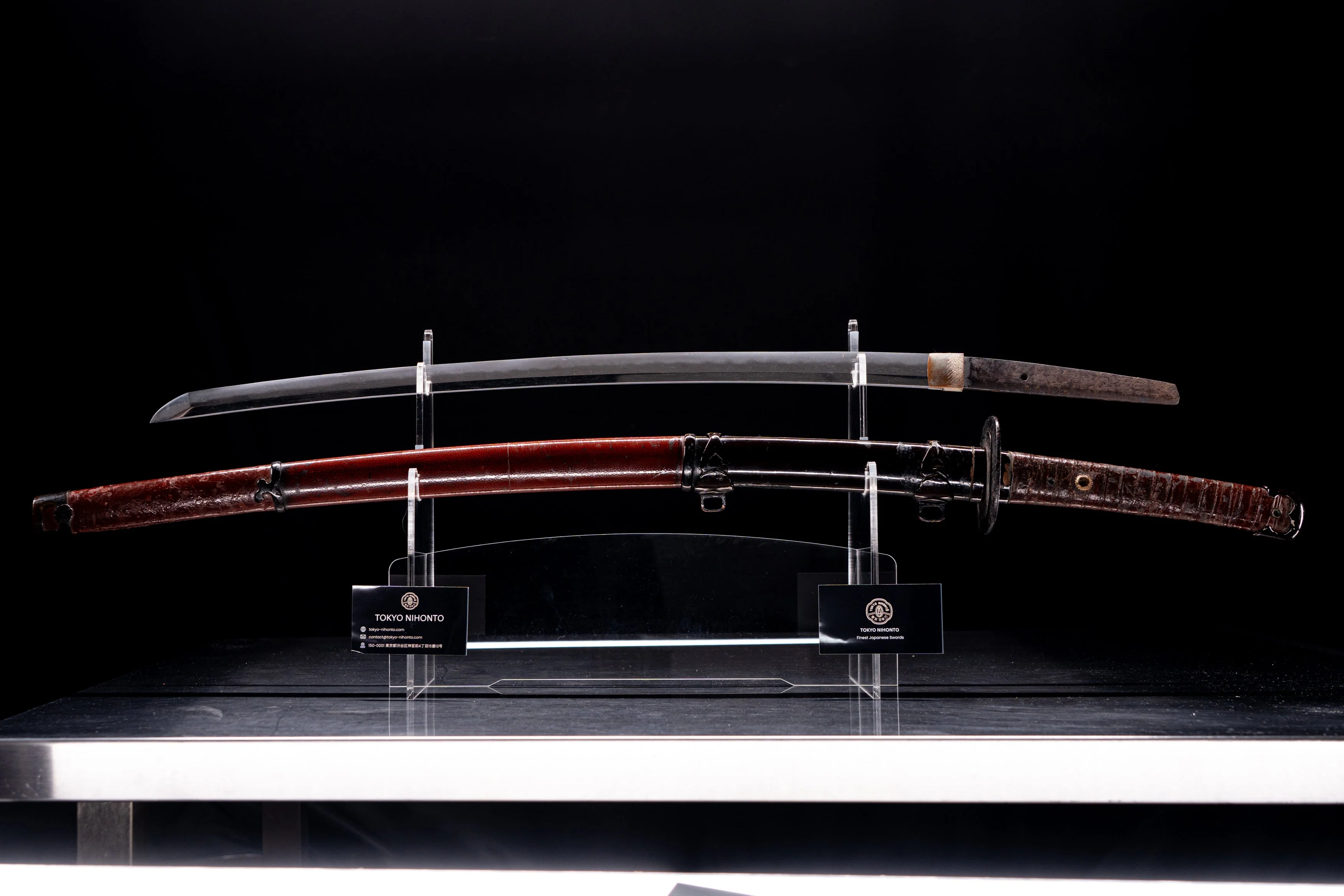
- Mounting: Handachi-style koshirae; gold-foil (kin-kise) habaki
- Blade Length (Nagasa): 72.7 cm
- Curvature (Sori): 2.1 cm
- Width at Base (Motohaba): 30.9 mm
- Thickness at Base (Motokasane): 7.4 mm
- Width at Tip (Sakihaba): 19.8 mm
- Thickness at Tip (Sakikasane): 4.9 mm
- Mekugi-ana: 2
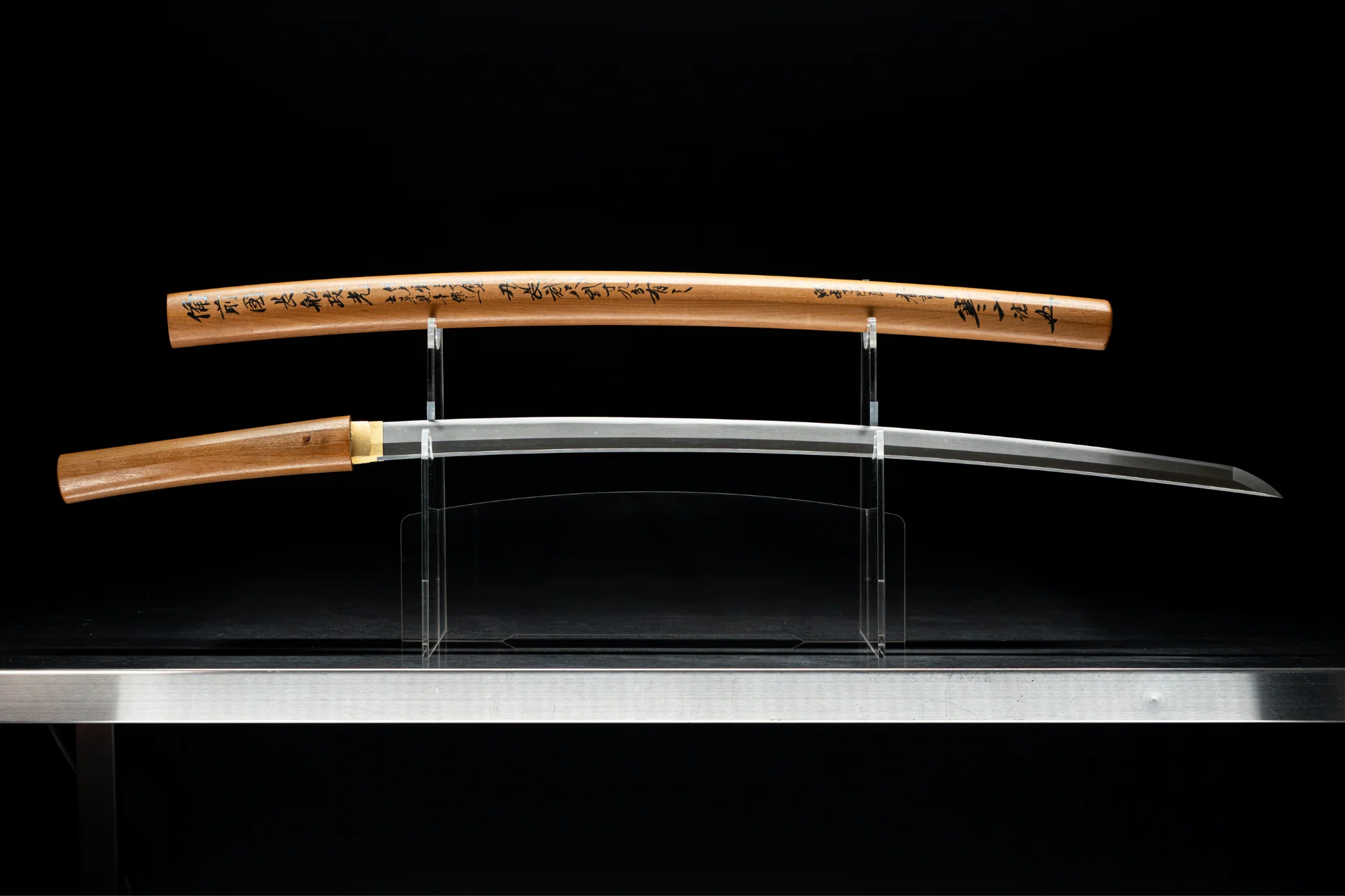
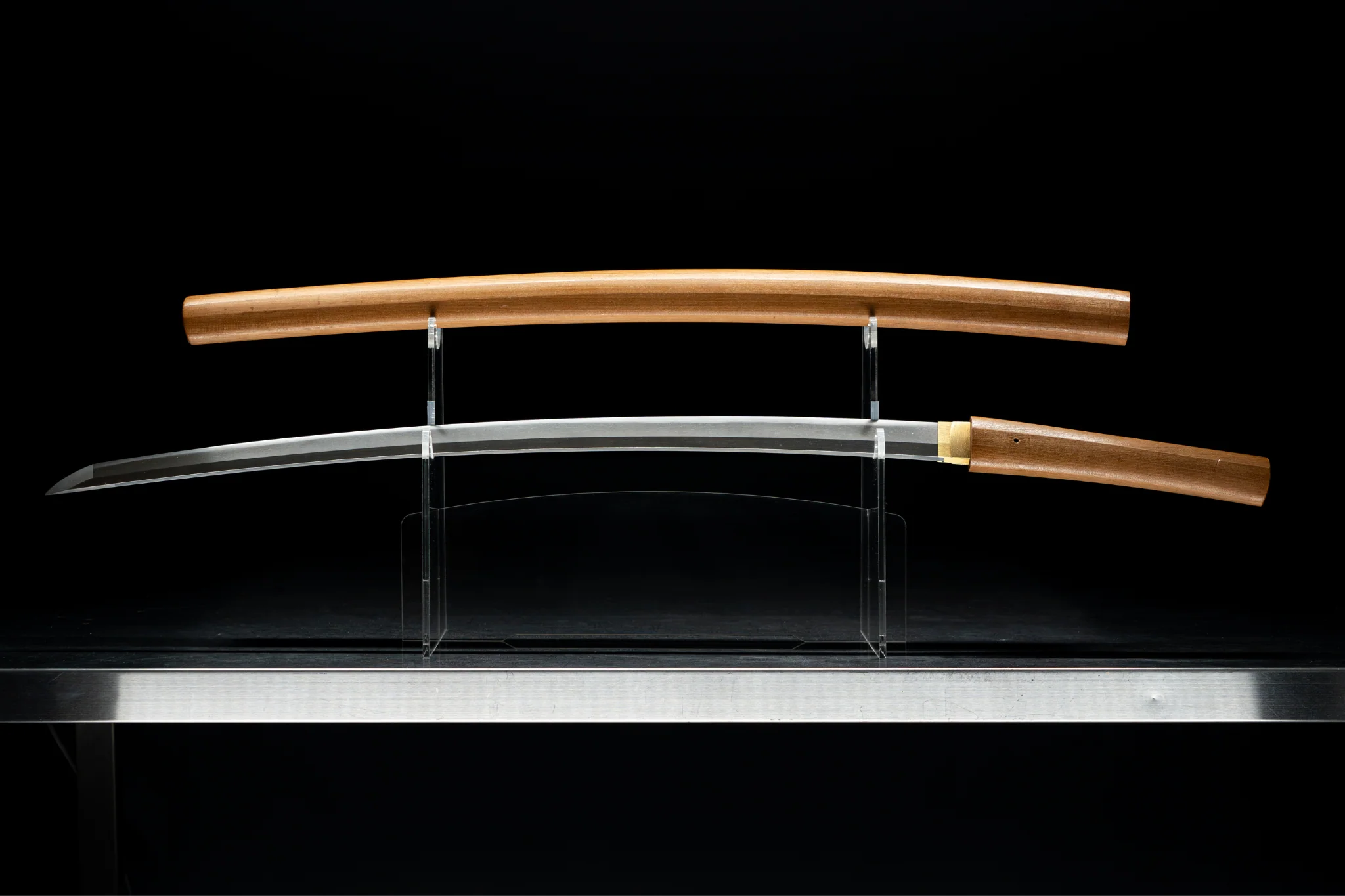
- Shape: Shinogi-zukuri
- Shirasaya: Not newly made, relatively recent
- Condition: Very good; minor scratches visible in raking light
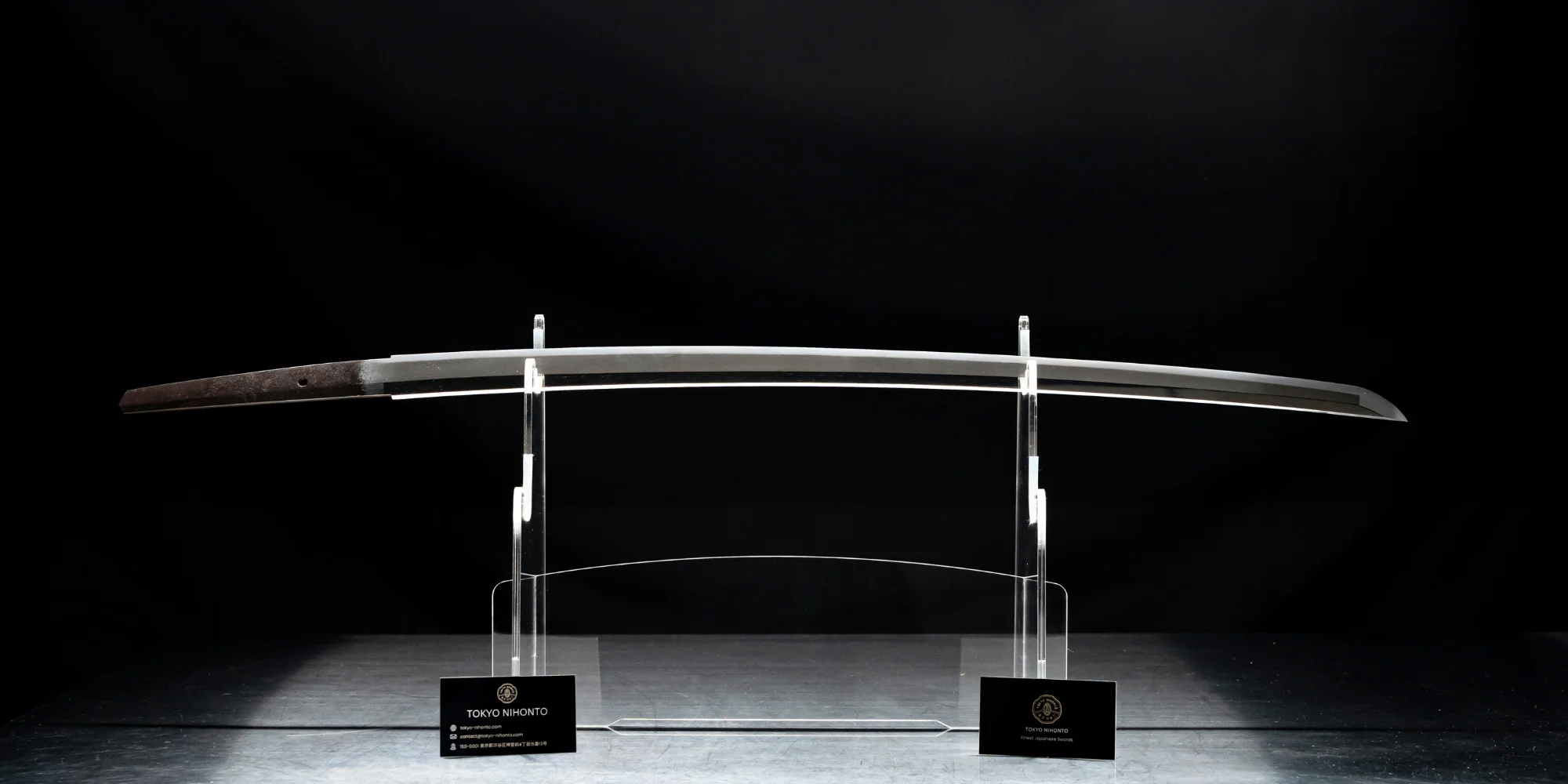
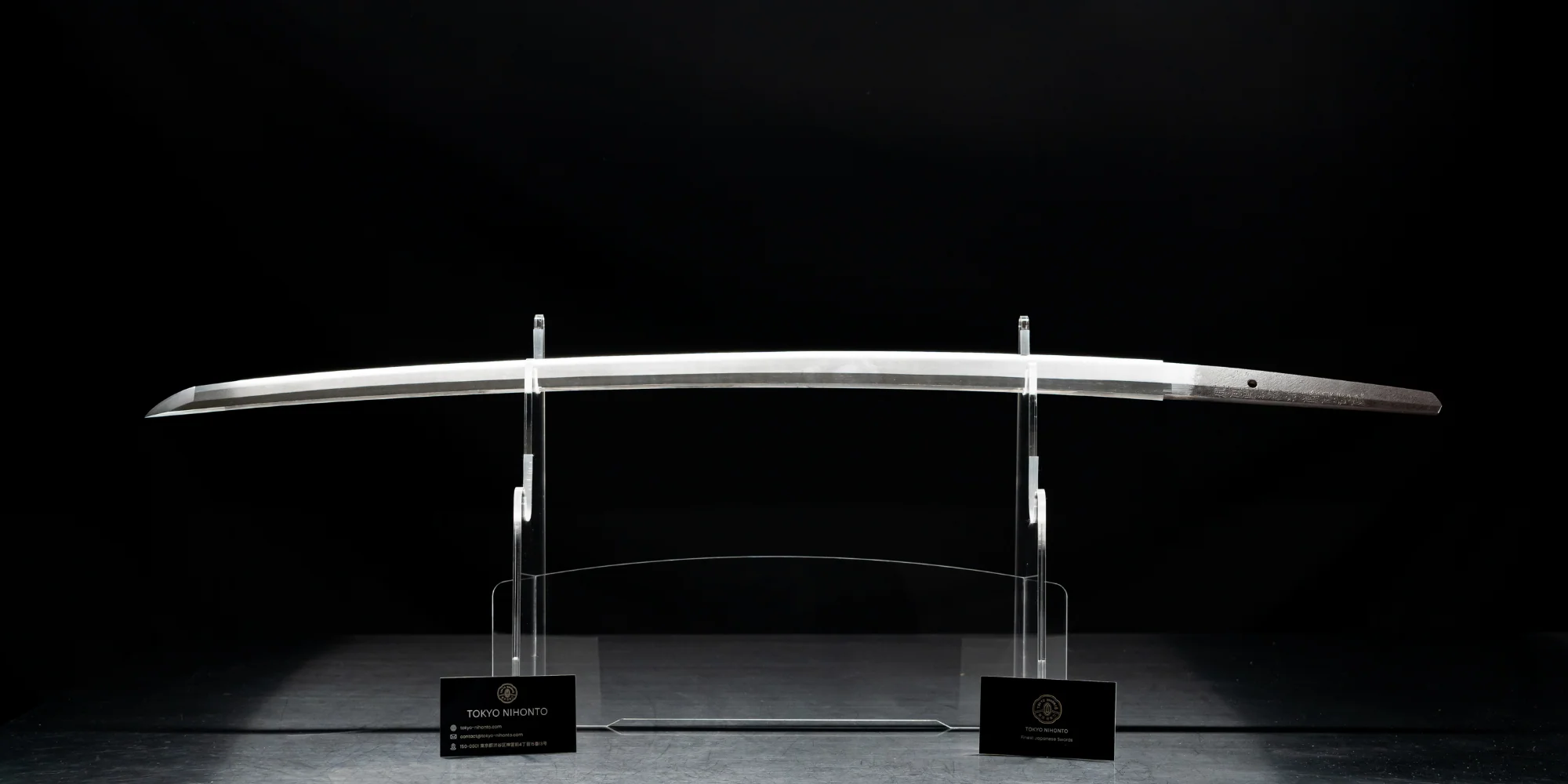
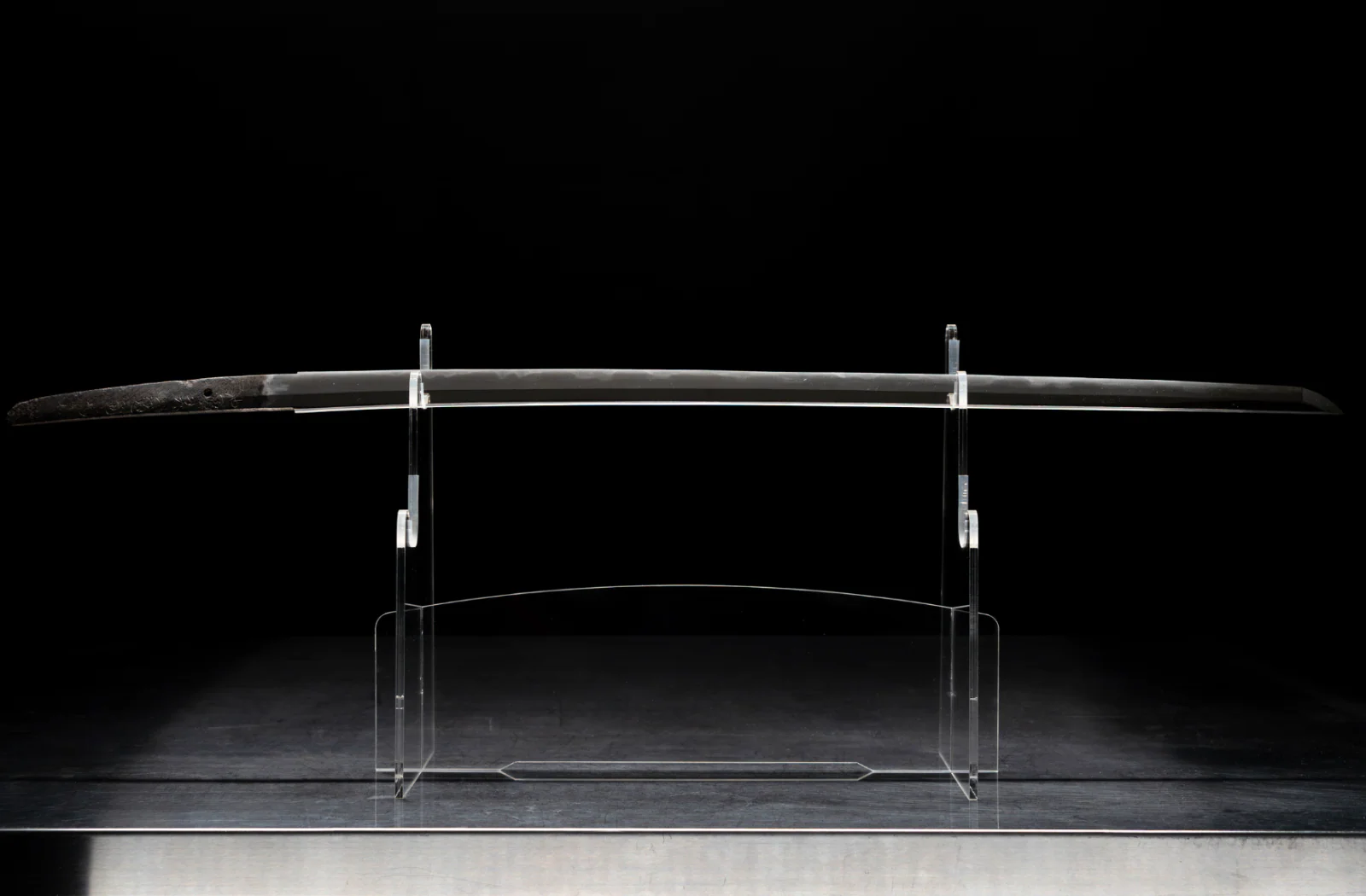
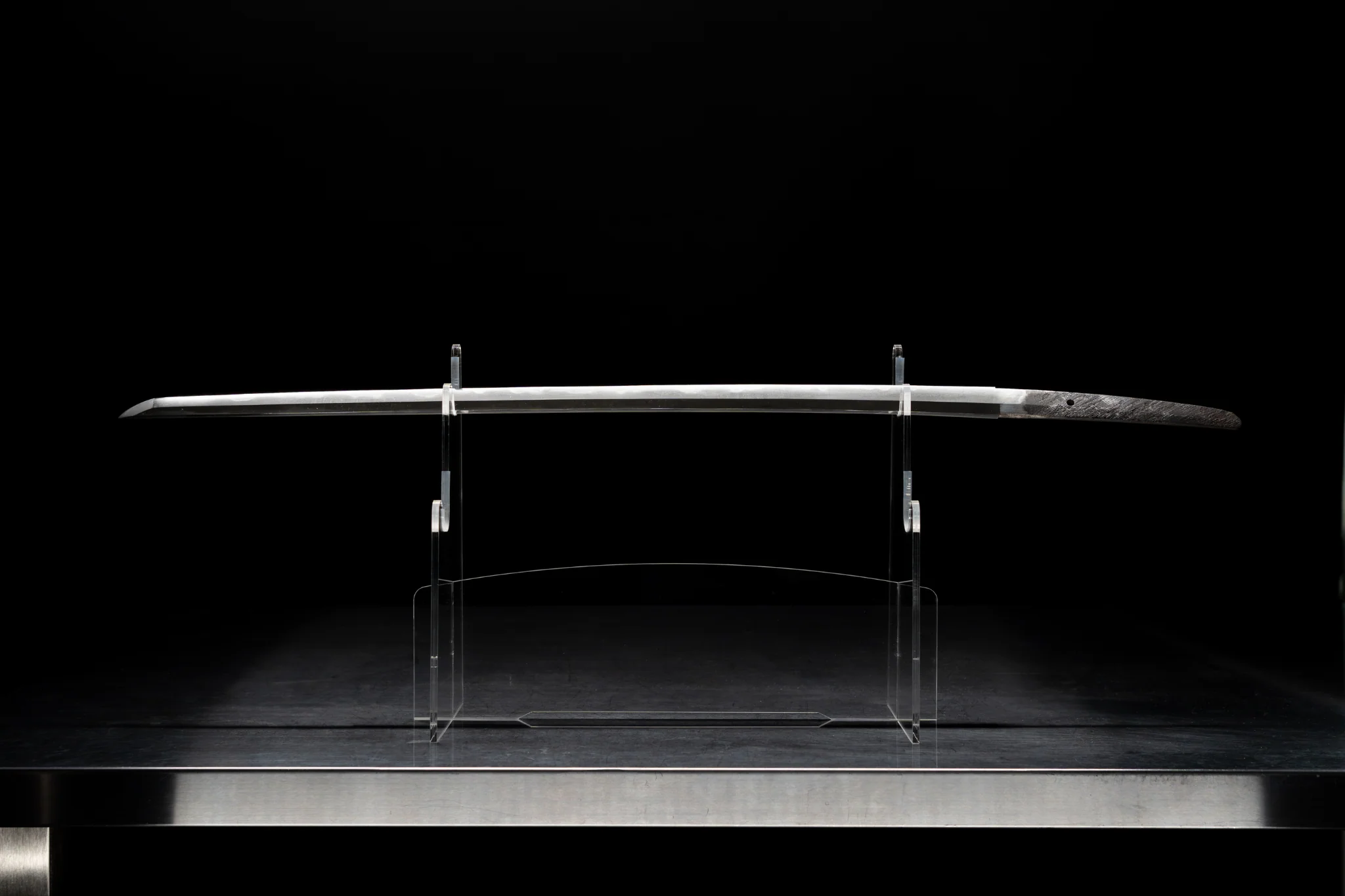
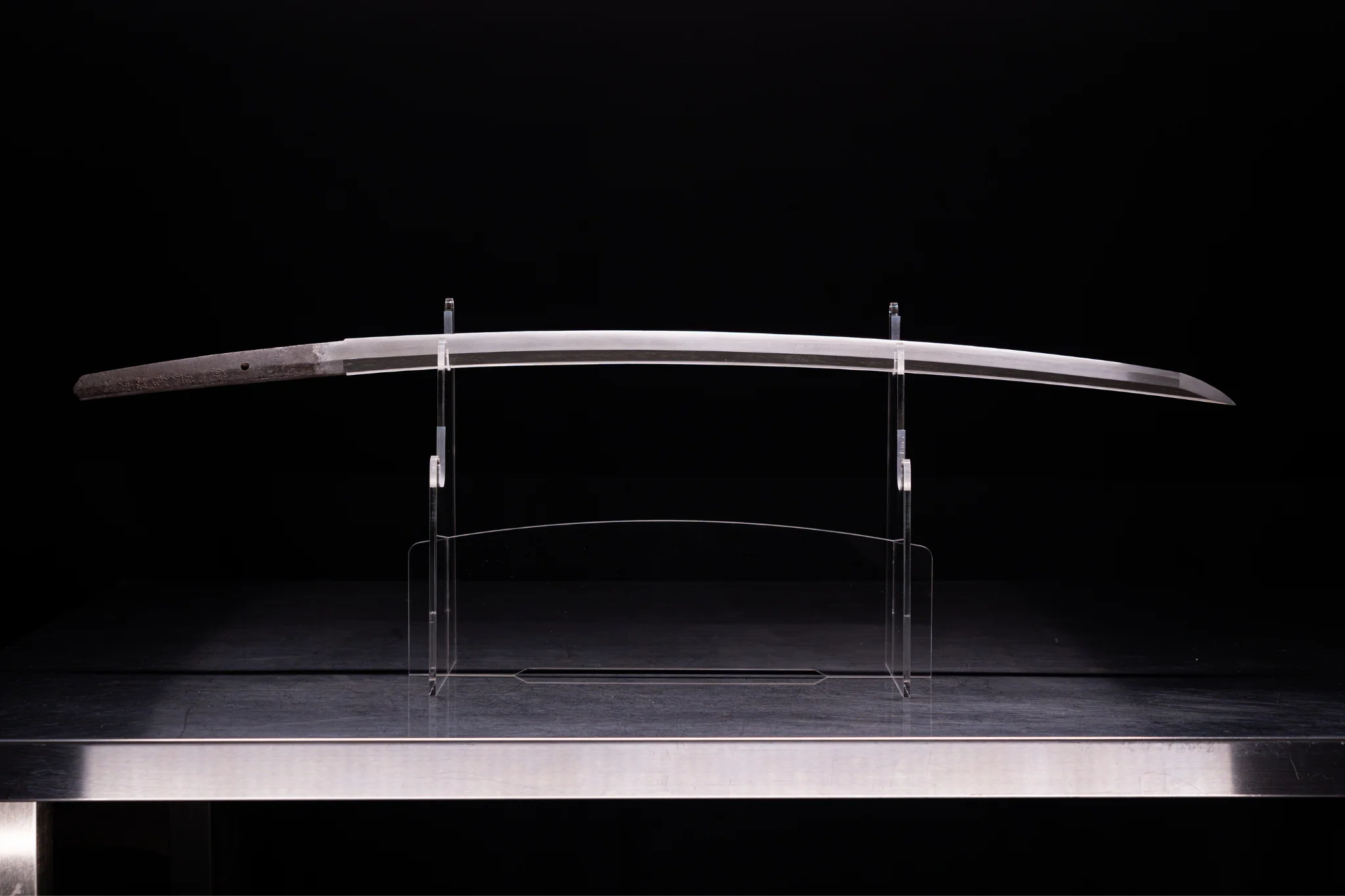
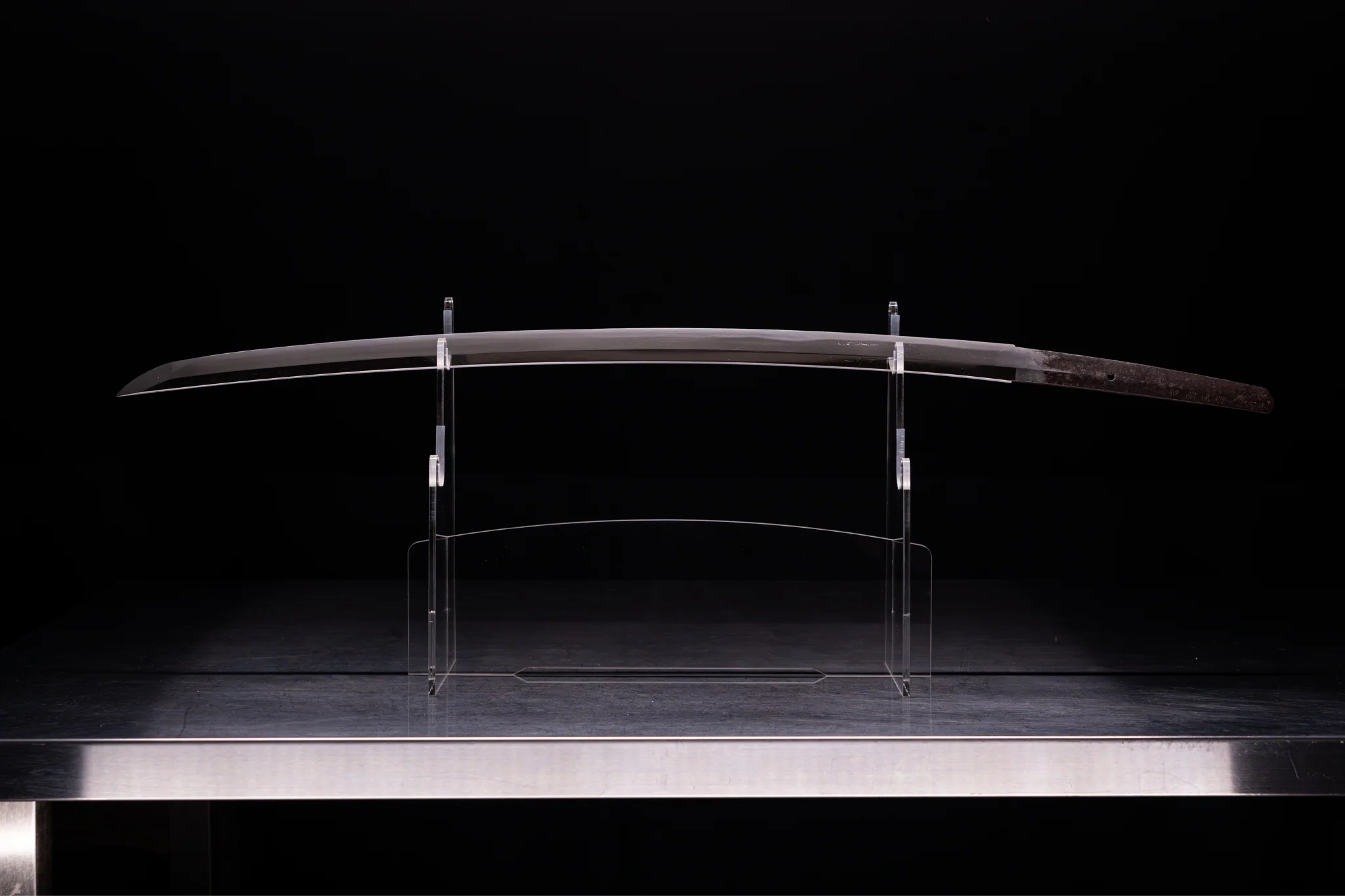
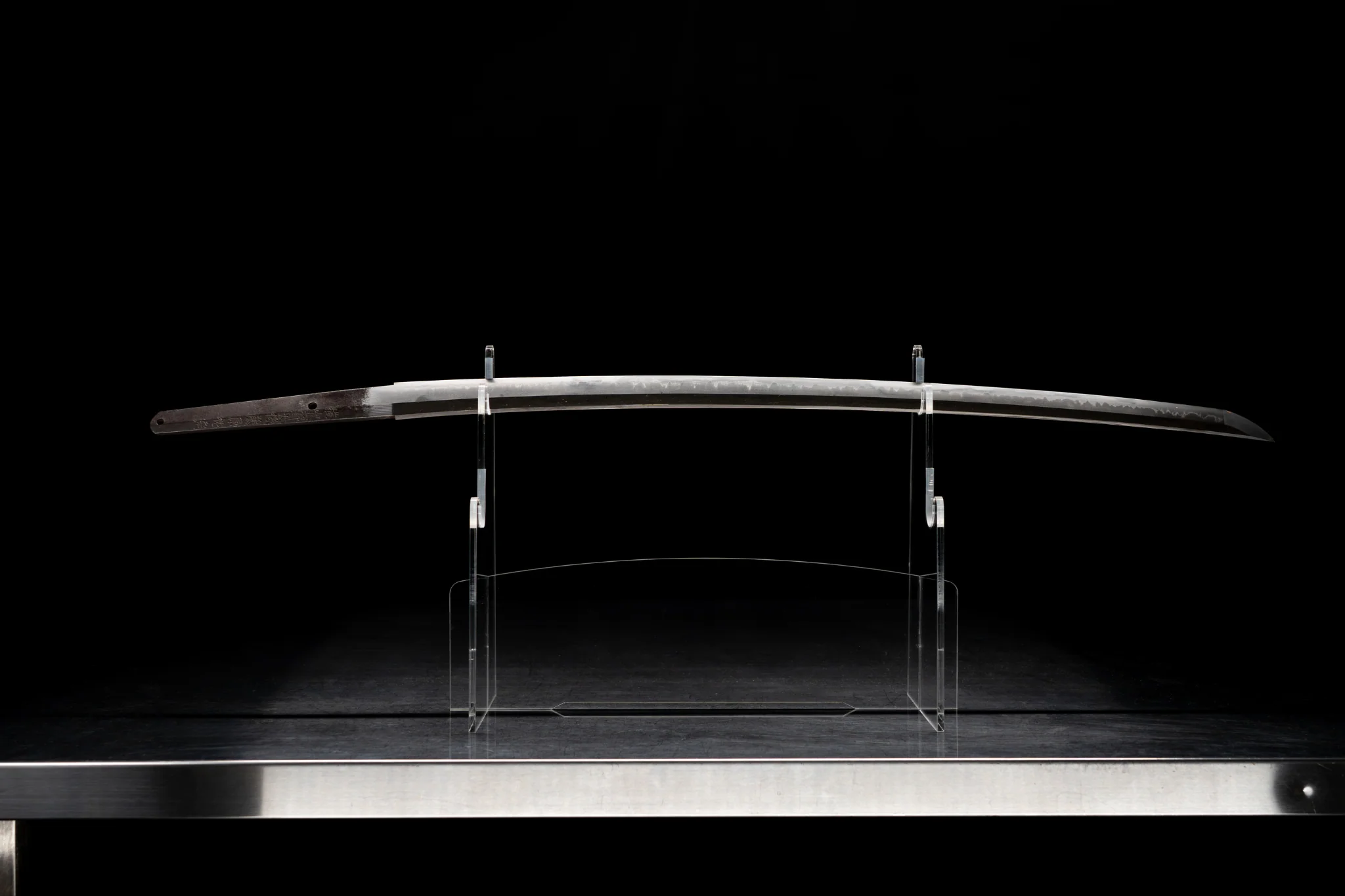
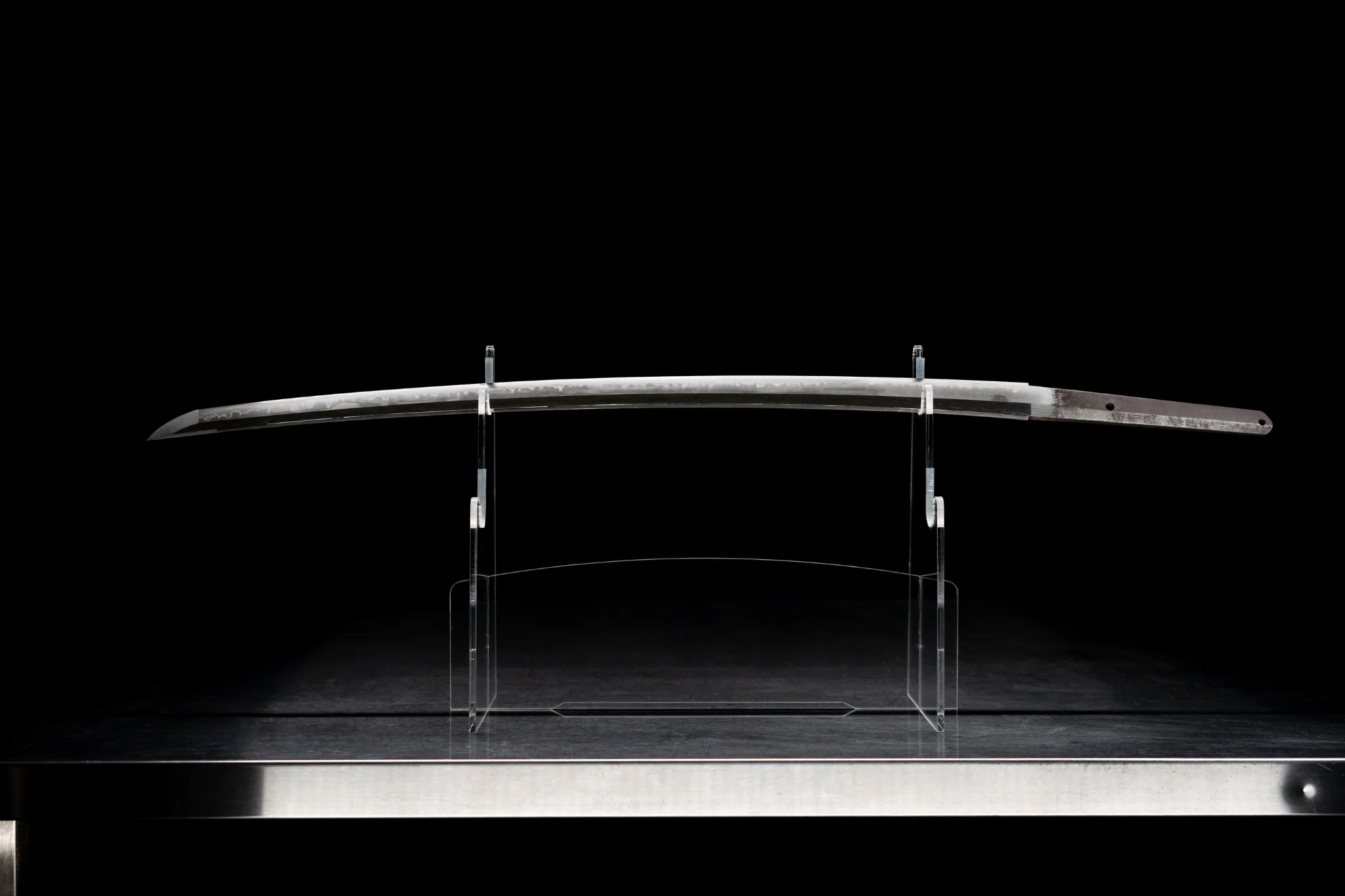
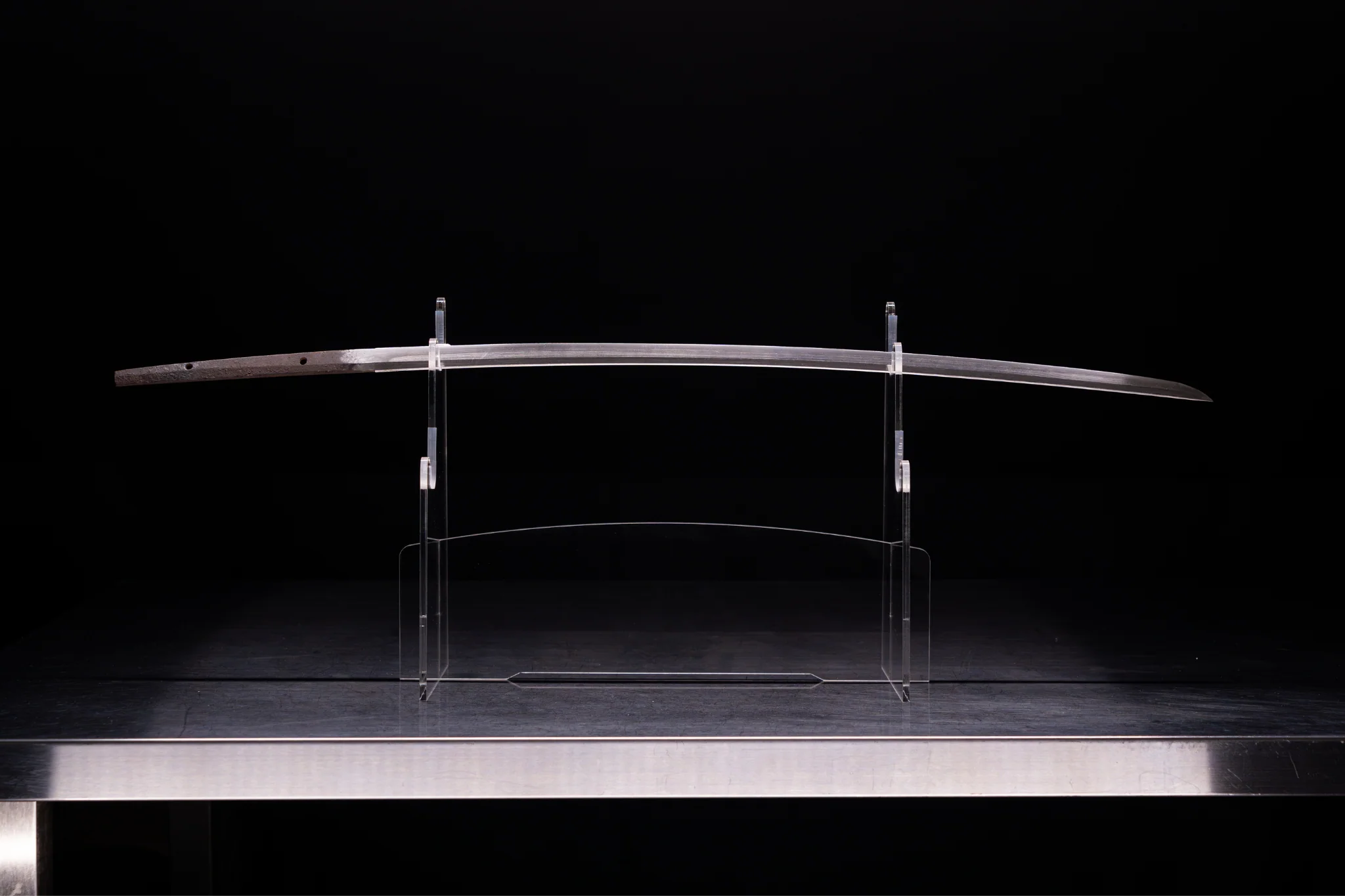
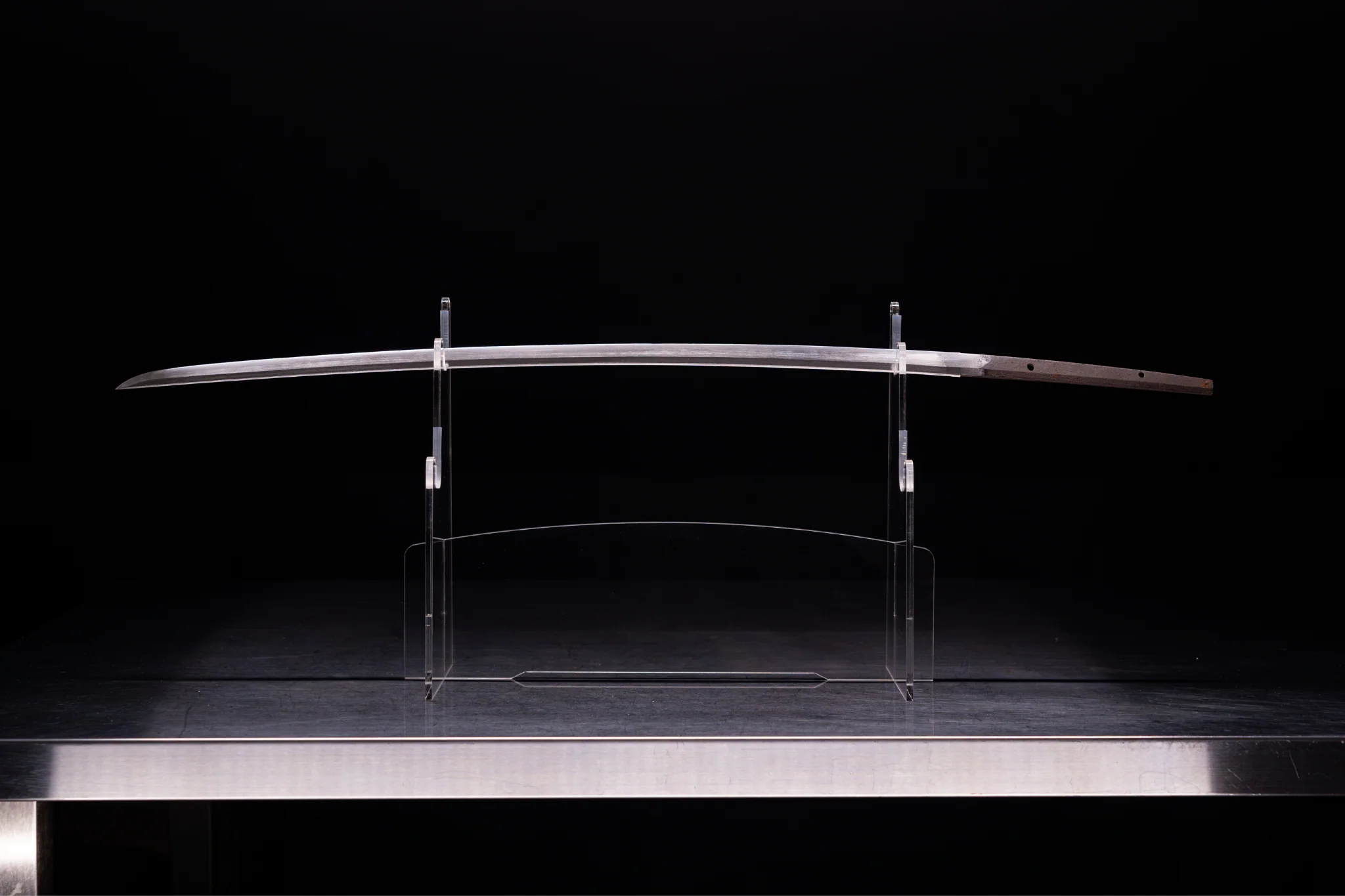
A refined katana signed by Ryōkai Shigeyoshi, a notable master of the Tsukushi Ryōkai school. The blade presents an elegant shinogi-zukuri form with lively curvature and a soft utsuri rising across the ji—hallmarks of the Yamashiro-den taste inherited from the Rai lineage. It is accompanied by NBTHK Hozon papers attesting to authenticity, preservation, and artistic value.
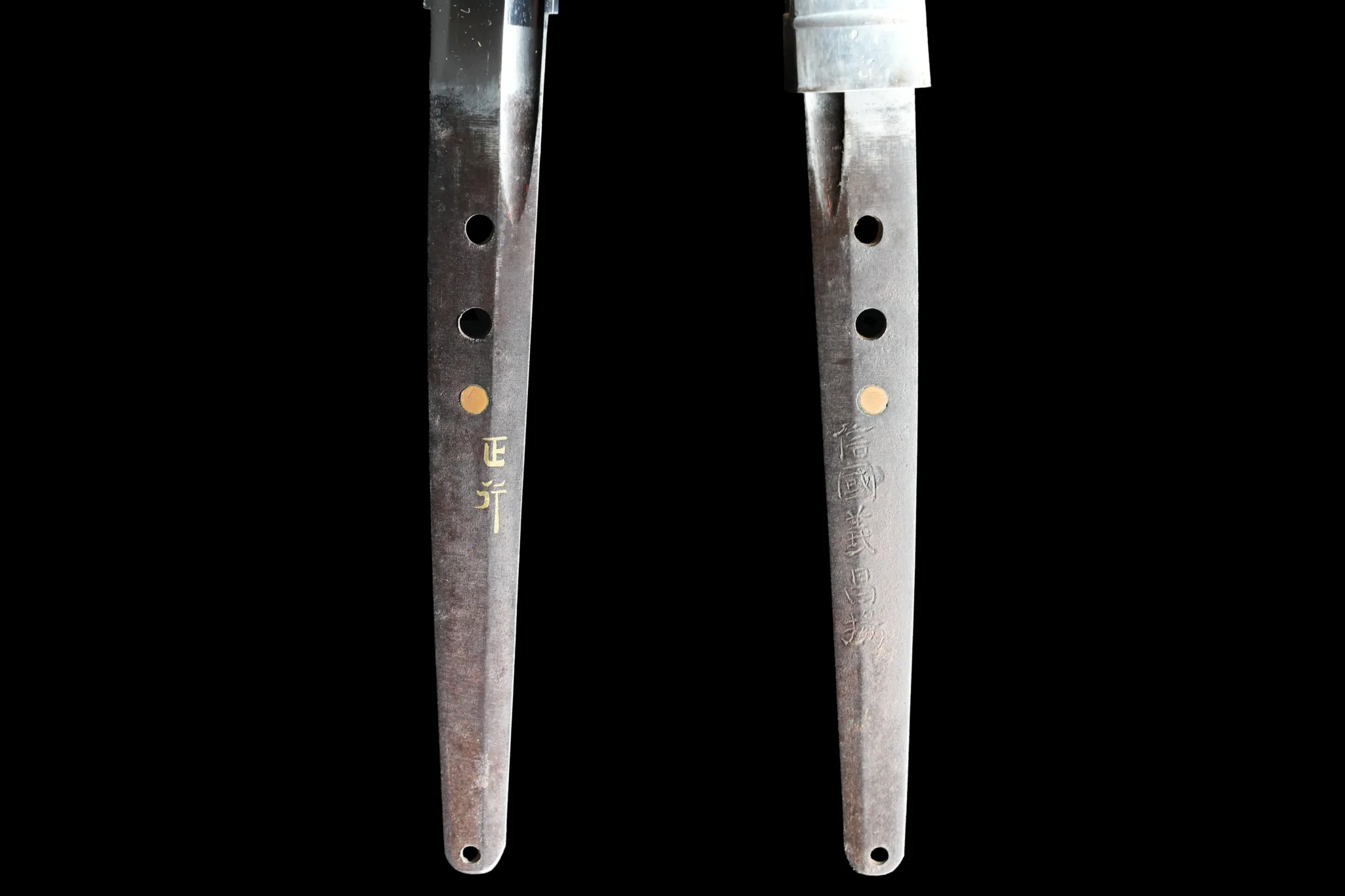
Geometry is healthy and proportions are well-balanced for a dignified, classical look. The nakago bears a clear inscription, and overall the blade remains in very good condition.
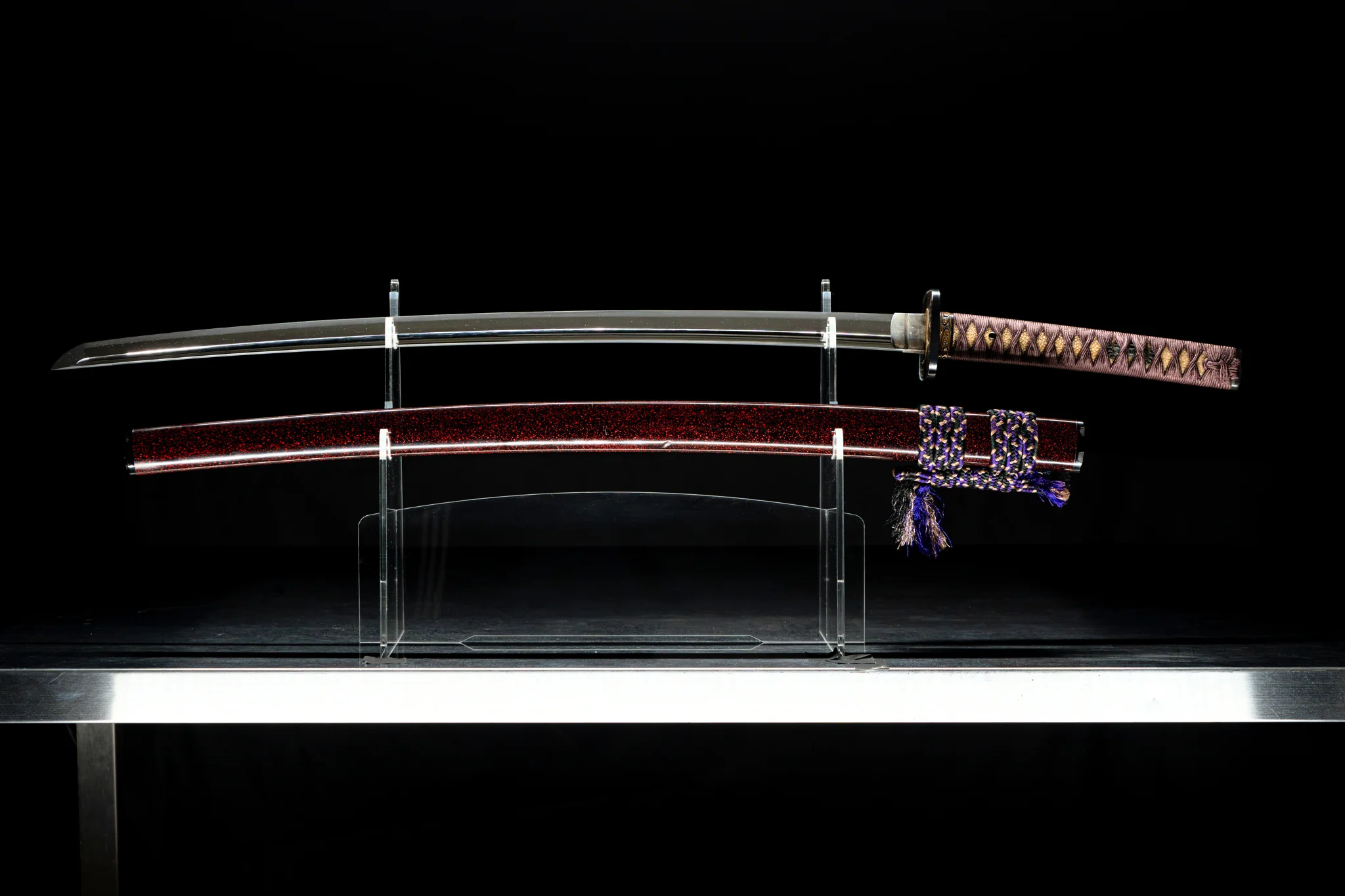
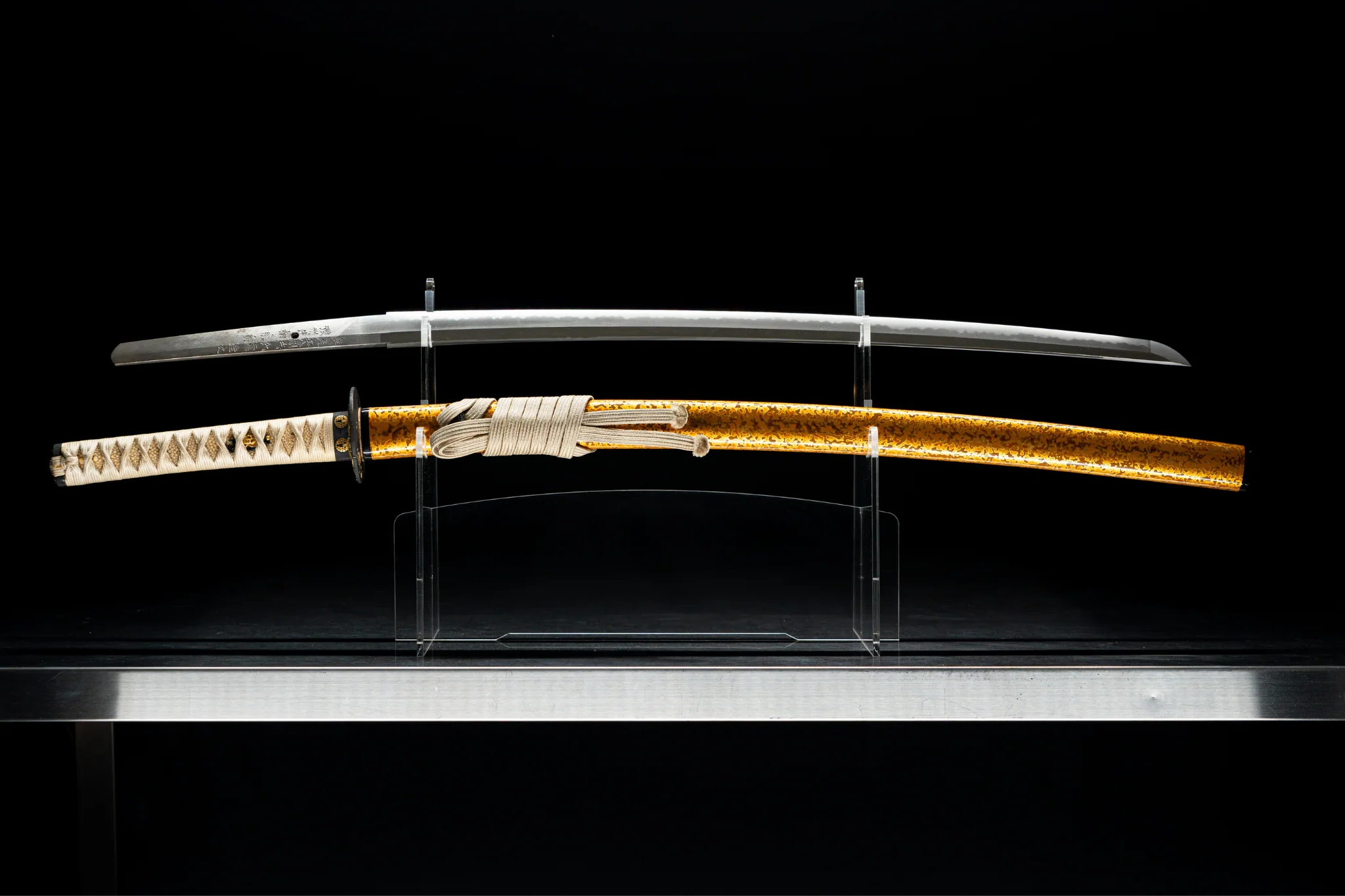
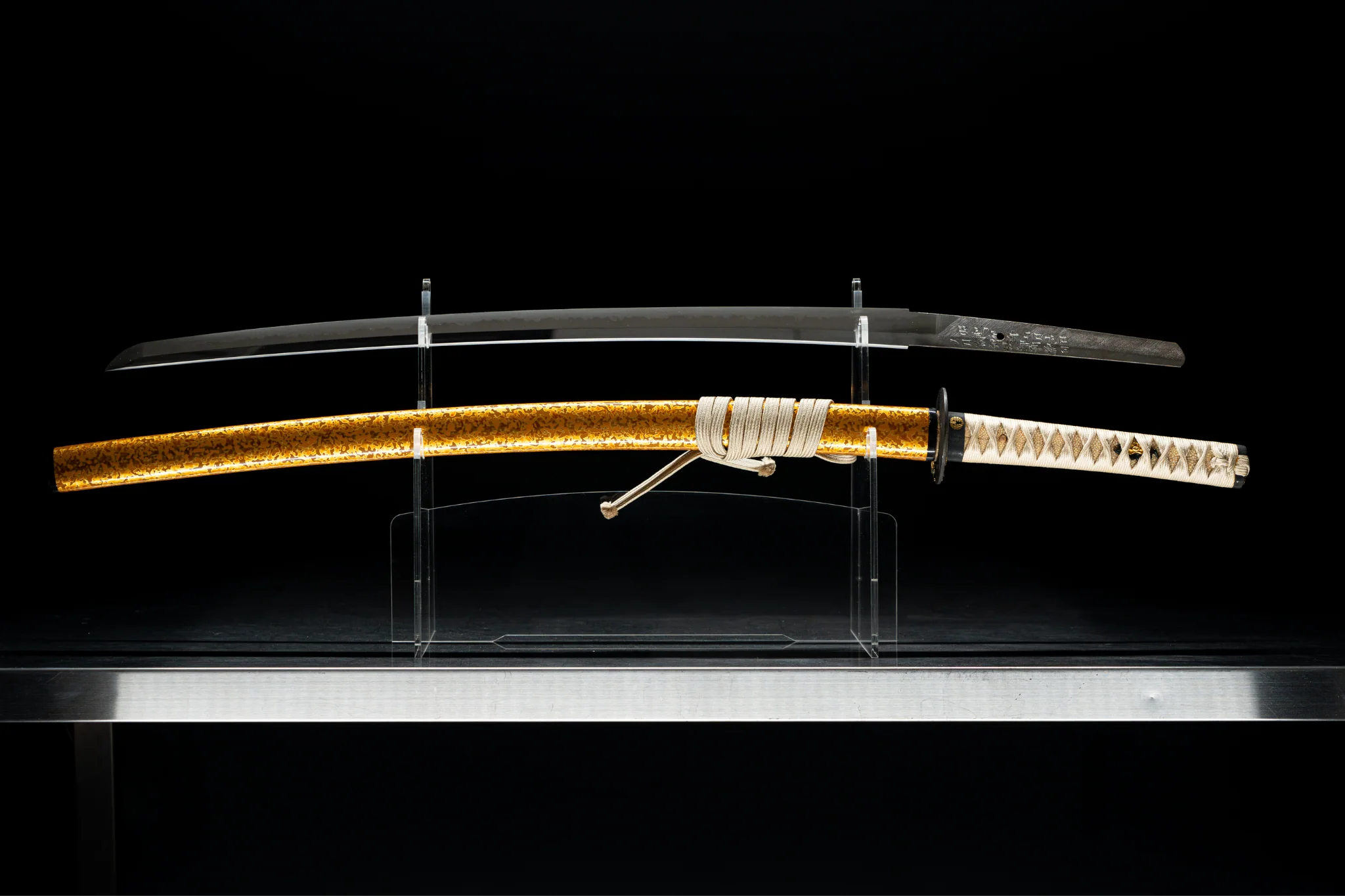
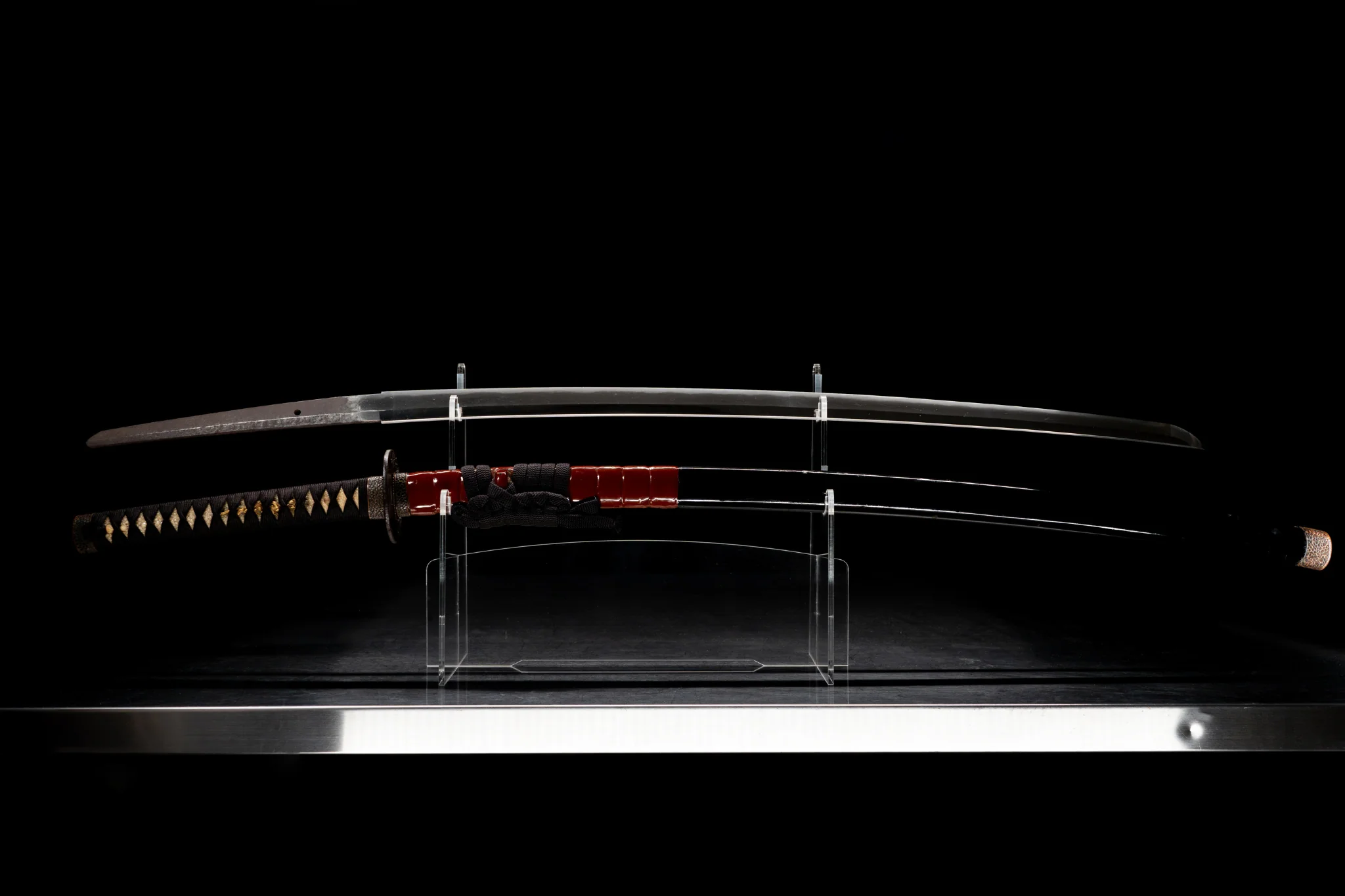
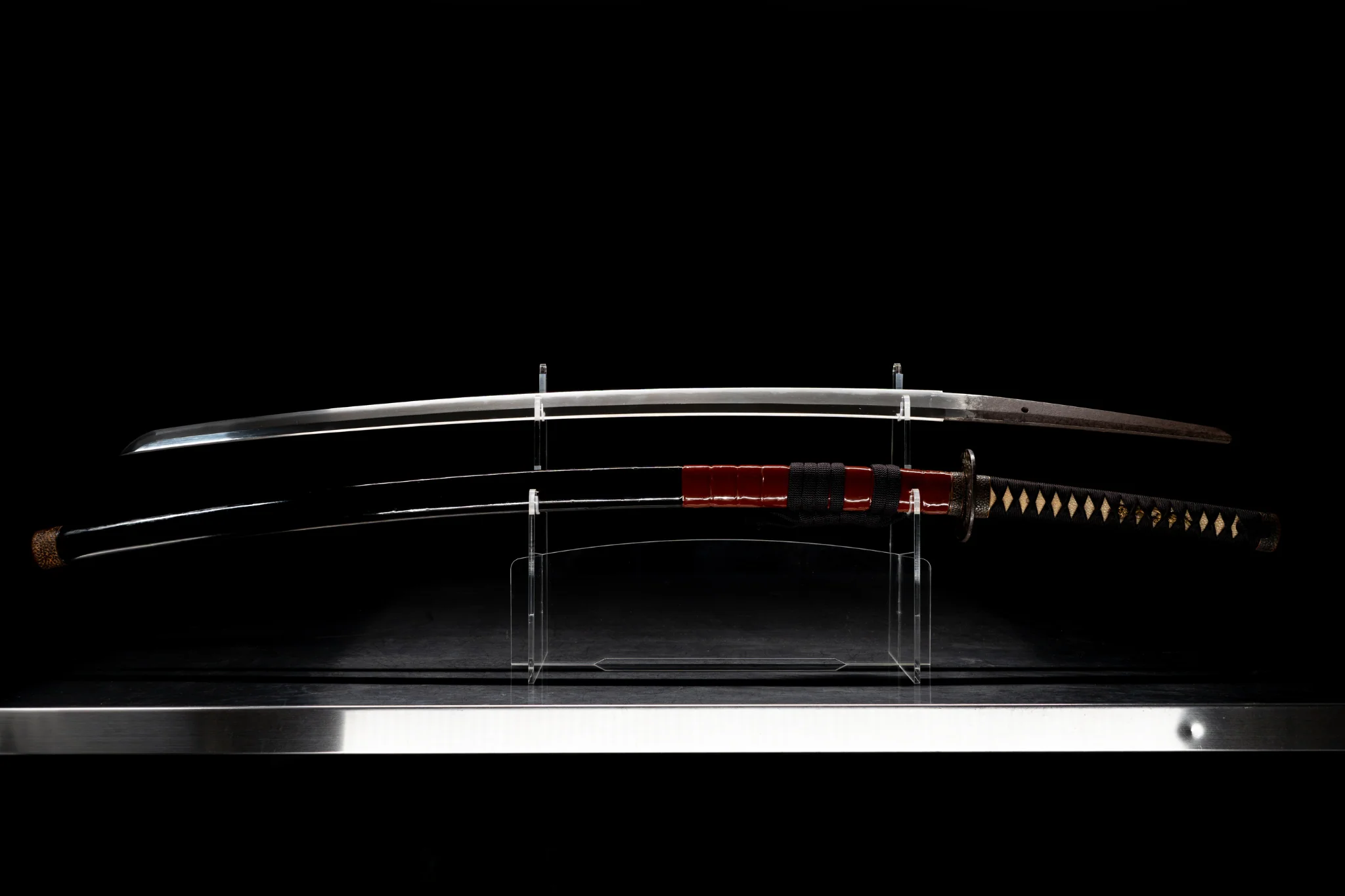
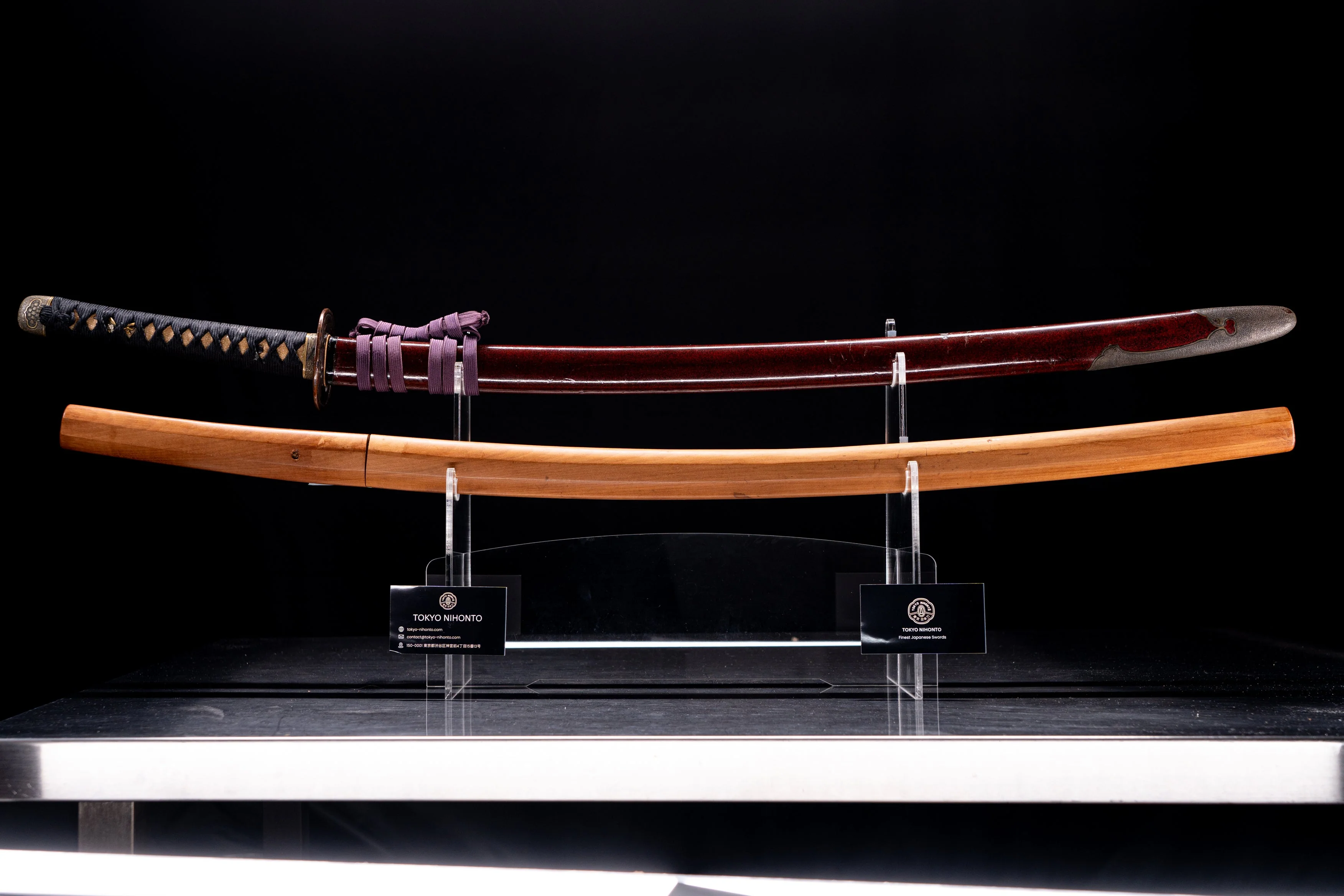
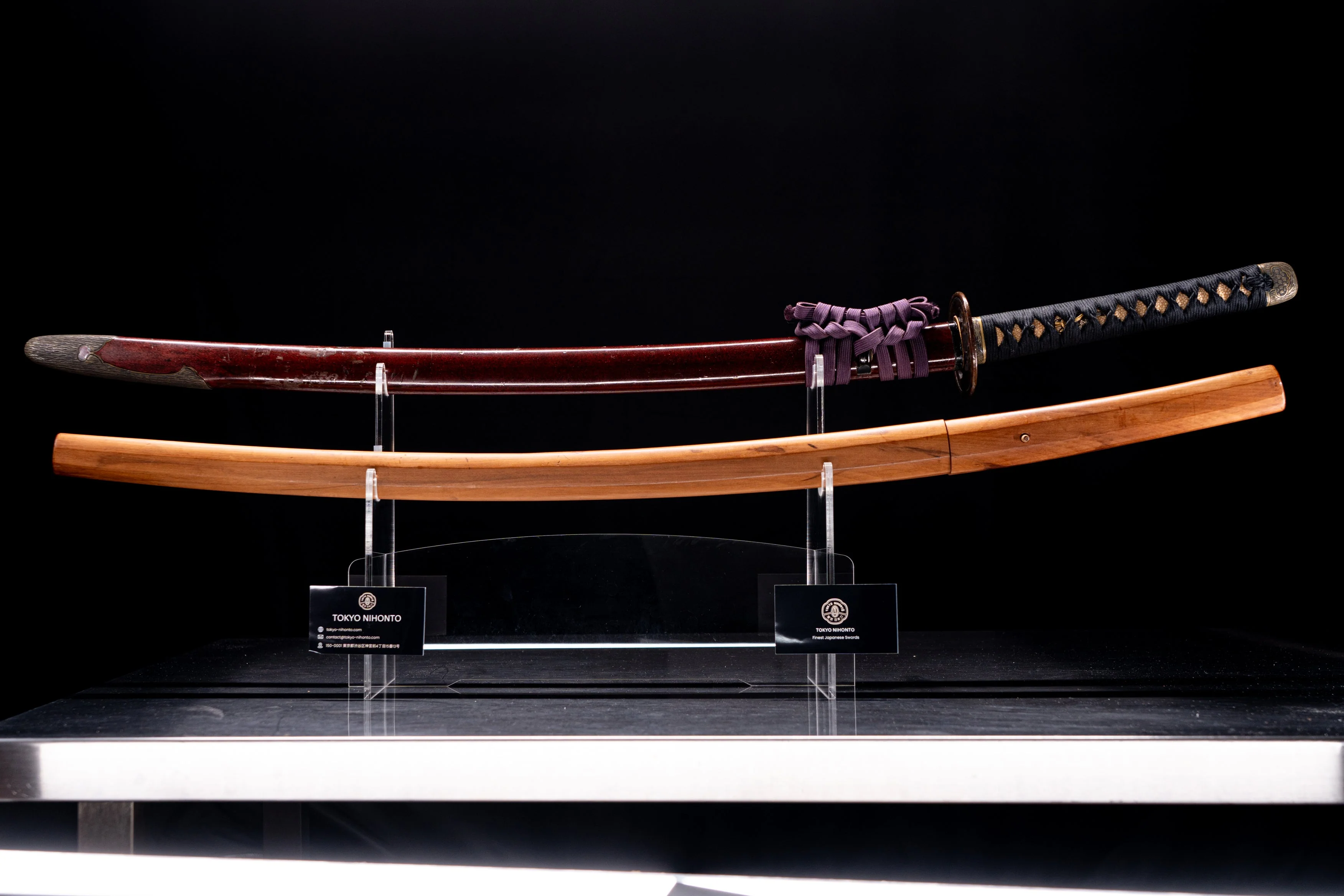
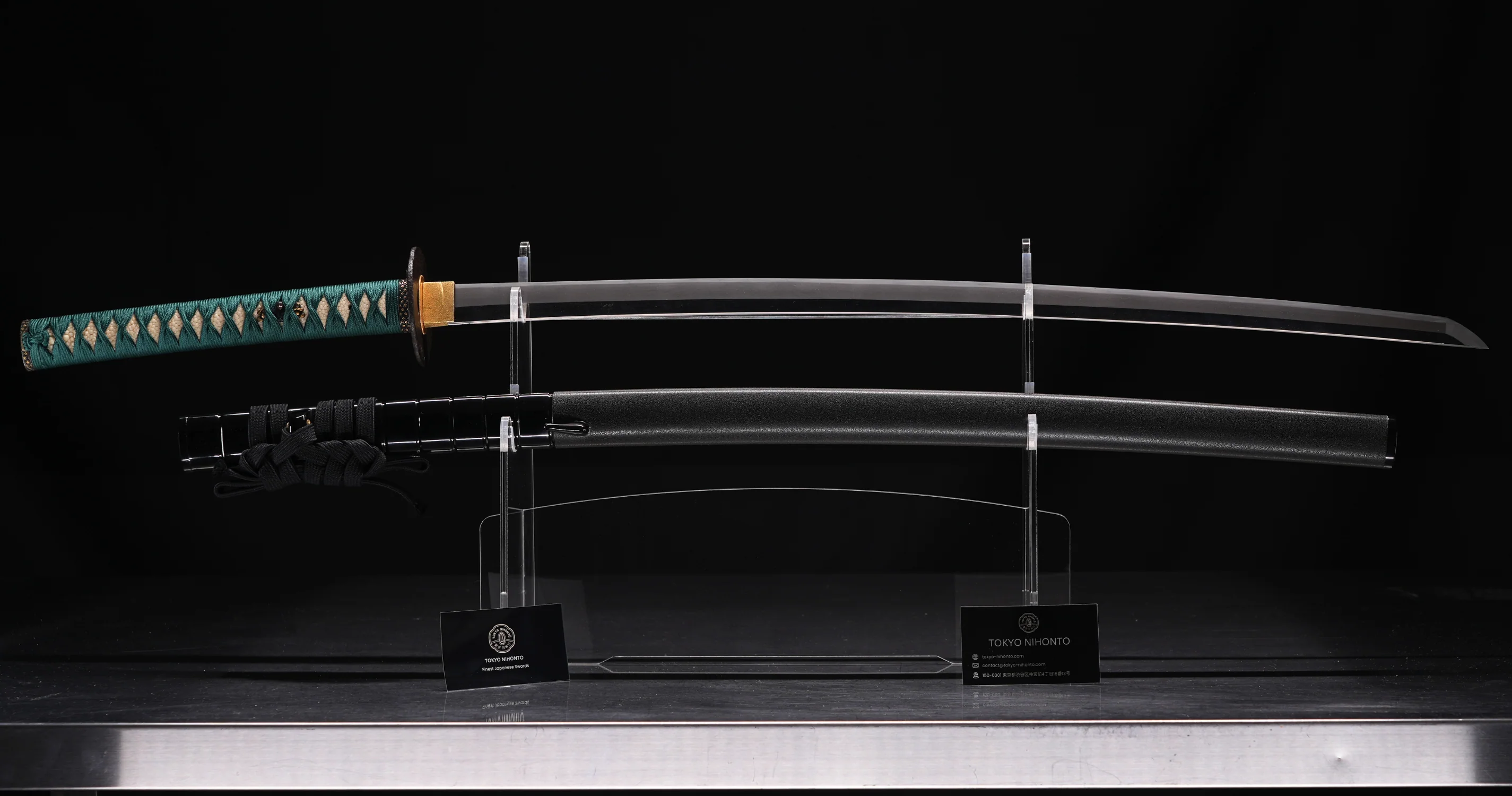
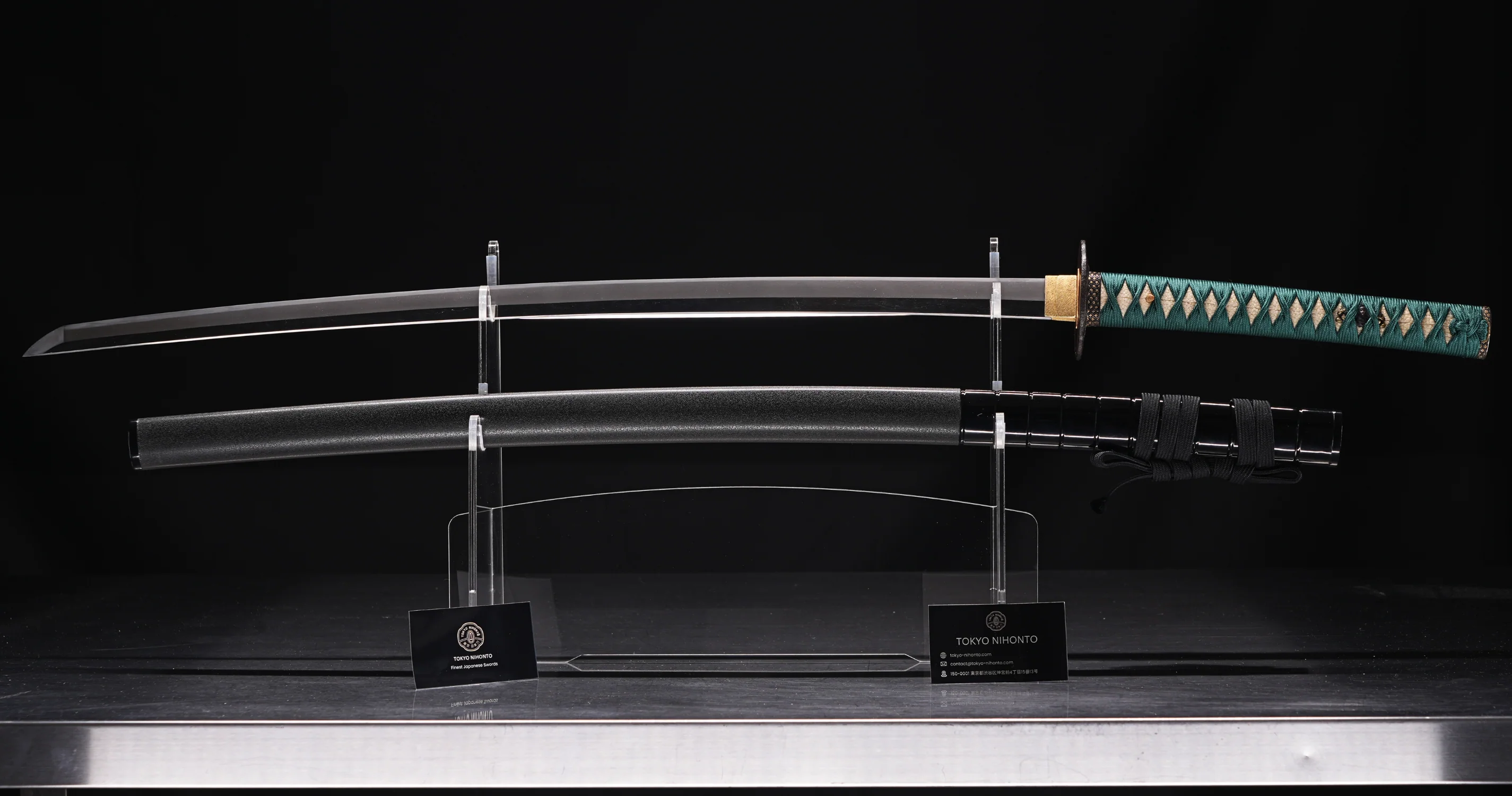
The koshirae is newly custom-made and finished in coordinated gold and black for a formal aesthetic:
- Tsuba: Radiating sunburst plate with fan-like openwork rim and a small sakura in relief; richly gilt for a bright, ceremonial impression.
- Fuchi: Gilt fuchi with raised landscape (mountain ridge) motif matching the tsuba’s tone.
- Kashira: Dark, woodgrain-textured cap with a tight, neat end-knot finish.
- Tsuka: Light gold-brown ito over white samegawa; diamonds show even, prominent nodes.
- Menuki: Gold-toned mon designs—a chrysanthemum, a cherry blossom, and an abstract crest—set low on the tsuka for grip and visual harmony.
- Saya: Glossy black lacquer saya paired with a golden sageo for a harmonious, formal presentation.
- Habaki: Gold-foil (kin-kise) habaki and uses approximately 6–10 g of thick gold with intrinsic precious-metal value.
A relatively recent shirasaya is also included for safe storage.
Swordsmith Background
Ryōkai Shigeyoshi is a representative master of the Tsukushi Ryōkai school, active in the mid–Muromachi period—especially the Chōroku era (1457–1460)—in Bungo (Ōita). His workmanship carries the refined Yamashiro-den taste of the Rai lineage, expressed in dignified shapes and tasteful jihada/hamon activity. Signed examples by Shigeyoshi are scarce and highly regarded among collectors.
School History
The Ryōkai line originates in Yamashiro (Kyoto) within the celebrated Rai group; Ryōkai is traditionally linked to Rai Kuniyuki and his younger brother Rai Kunitoshi. Amid the Nanbokuchō turmoil in the late 14th century, successors relocated to Kyūshū and established the Tsukushi Ryōkai. Smiths of this branch commonly adopted the character 「能」 (Yoshi) in their art-names (e.g., 重能, 秀能, 宣能), preserving the elegant Yamashiro-den aesthetic while developing a regional identity.
Original: $9,300.00
-65%$9,300.00
$3,255.00Product Information
Product Information
Shipping & Returns
Shipping & Returns
Description
- Signature (Mei): Ryōkai Shigeyoshi
- School / Tradition: Tsukushi Ryōkai / Yamashiro-den lineage (Rai group)
- Period / Province: Mid–Muromachi (Chōroku era, 1457–1460) / Bungo (Ōita)
- Certificate: NBTHK Hozon (保存刀剣)
- Mounting: Handachi-style koshirae; gold-foil (kin-kise) habaki
- Blade Length (Nagasa): 72.7 cm
- Curvature (Sori): 2.1 cm
- Width at Base (Motohaba): 30.9 mm
- Thickness at Base (Motokasane): 7.4 mm
- Width at Tip (Sakihaba): 19.8 mm
- Thickness at Tip (Sakikasane): 4.9 mm
- Mekugi-ana: 2
- Shape: Shinogi-zukuri
- Shirasaya: Not newly made, relatively recent
- Condition: Very good; minor scratches visible in raking light
A refined katana signed by Ryōkai Shigeyoshi, a notable master of the Tsukushi Ryōkai school. The blade presents an elegant shinogi-zukuri form with lively curvature and a soft utsuri rising across the ji—hallmarks of the Yamashiro-den taste inherited from the Rai lineage. It is accompanied by NBTHK Hozon papers attesting to authenticity, preservation, and artistic value.
Geometry is healthy and proportions are well-balanced for a dignified, classical look. The nakago bears a clear inscription, and overall the blade remains in very good condition.
The koshirae is newly custom-made and finished in coordinated gold and black for a formal aesthetic:
- Tsuba: Radiating sunburst plate with fan-like openwork rim and a small sakura in relief; richly gilt for a bright, ceremonial impression.
- Fuchi: Gilt fuchi with raised landscape (mountain ridge) motif matching the tsuba’s tone.
- Kashira: Dark, woodgrain-textured cap with a tight, neat end-knot finish.
- Tsuka: Light gold-brown ito over white samegawa; diamonds show even, prominent nodes.
- Menuki: Gold-toned mon designs—a chrysanthemum, a cherry blossom, and an abstract crest—set low on the tsuka for grip and visual harmony.
- Saya: Glossy black lacquer saya paired with a golden sageo for a harmonious, formal presentation.
- Habaki: Gold-foil (kin-kise) habaki and uses approximately 6–10 g of thick gold with intrinsic precious-metal value.
A relatively recent shirasaya is also included for safe storage.
Swordsmith Background
Ryōkai Shigeyoshi is a representative master of the Tsukushi Ryōkai school, active in the mid–Muromachi period—especially the Chōroku era (1457–1460)—in Bungo (Ōita). His workmanship carries the refined Yamashiro-den taste of the Rai lineage, expressed in dignified shapes and tasteful jihada/hamon activity. Signed examples by Shigeyoshi are scarce and highly regarded among collectors.
School History
The Ryōkai line originates in Yamashiro (Kyoto) within the celebrated Rai group; Ryōkai is traditionally linked to Rai Kuniyuki and his younger brother Rai Kunitoshi. Amid the Nanbokuchō turmoil in the late 14th century, successors relocated to Kyūshū and established the Tsukushi Ryōkai. Smiths of this branch commonly adopted the character 「能」 (Yoshi) in their art-names (e.g., 重能, 秀能, 宣能), preserving the elegant Yamashiro-den aesthetic while developing a regional identity.