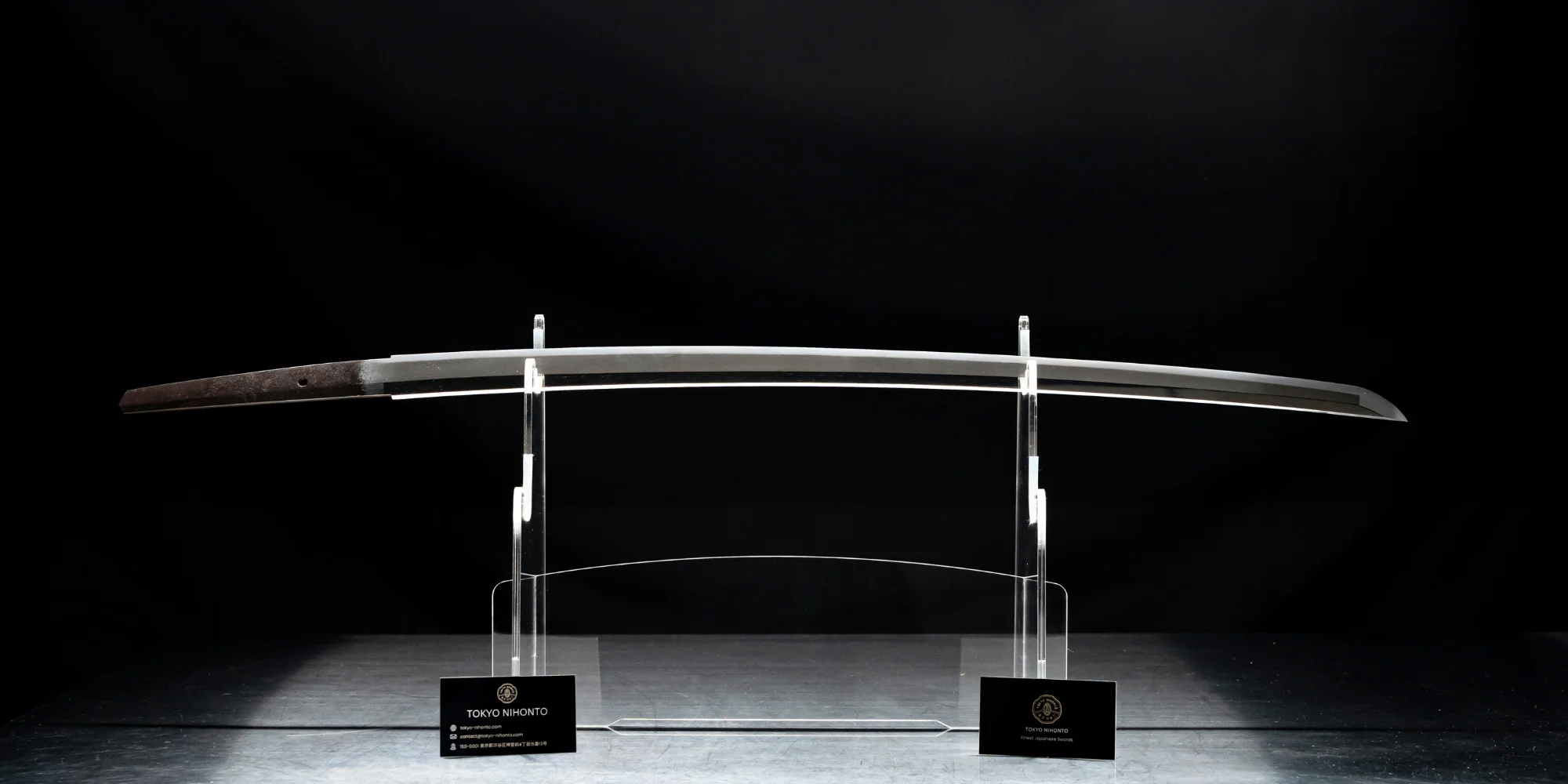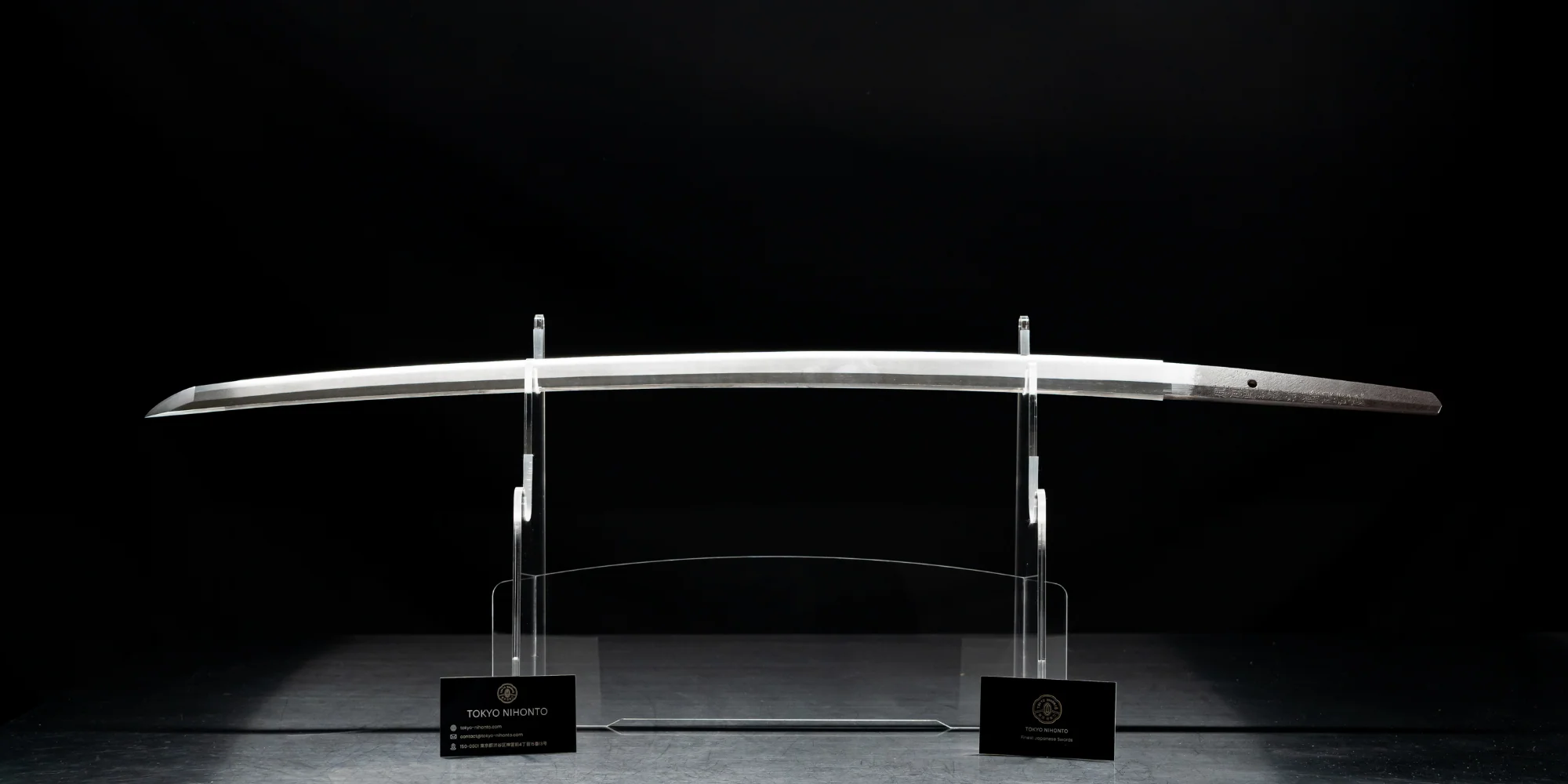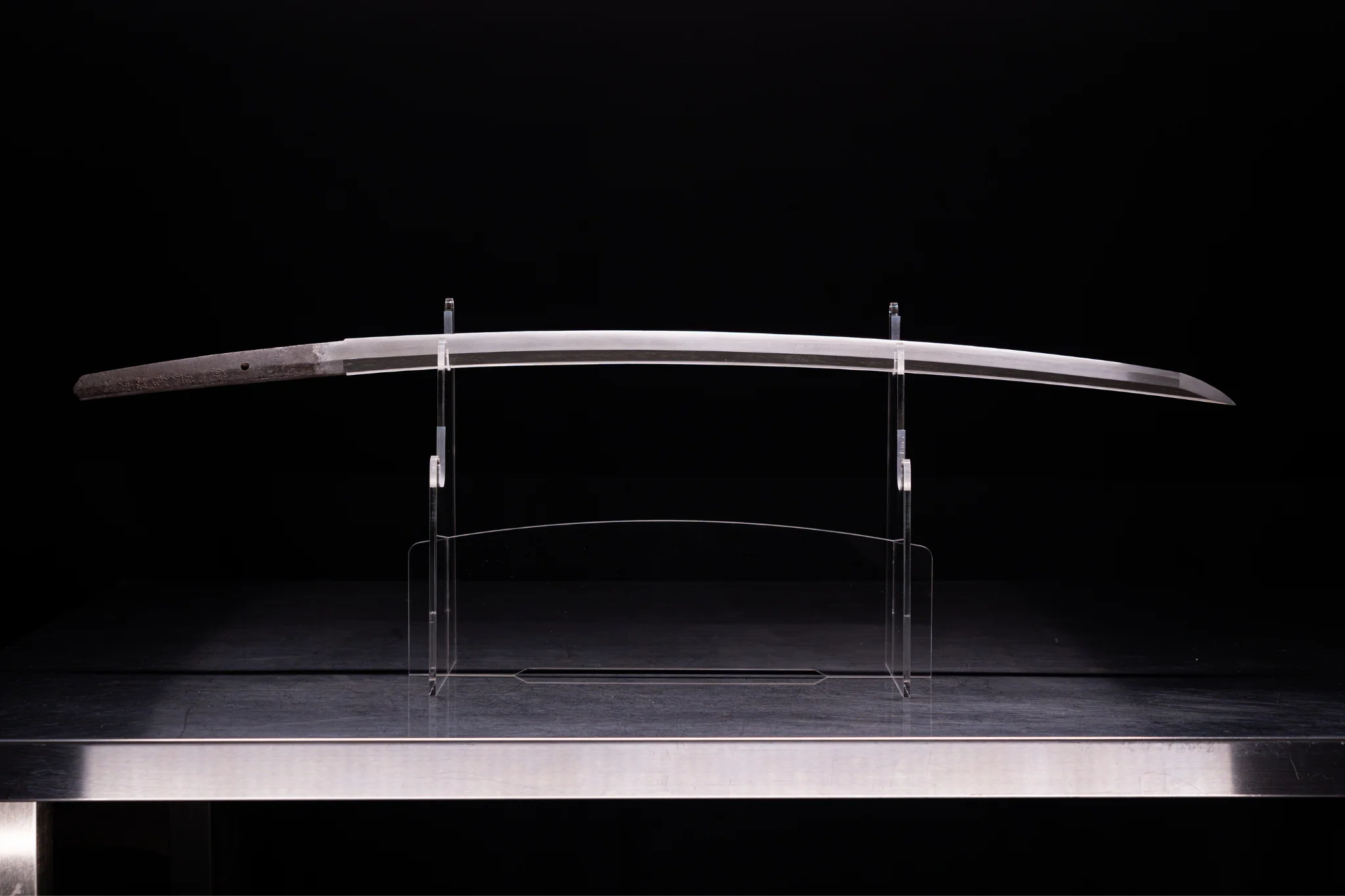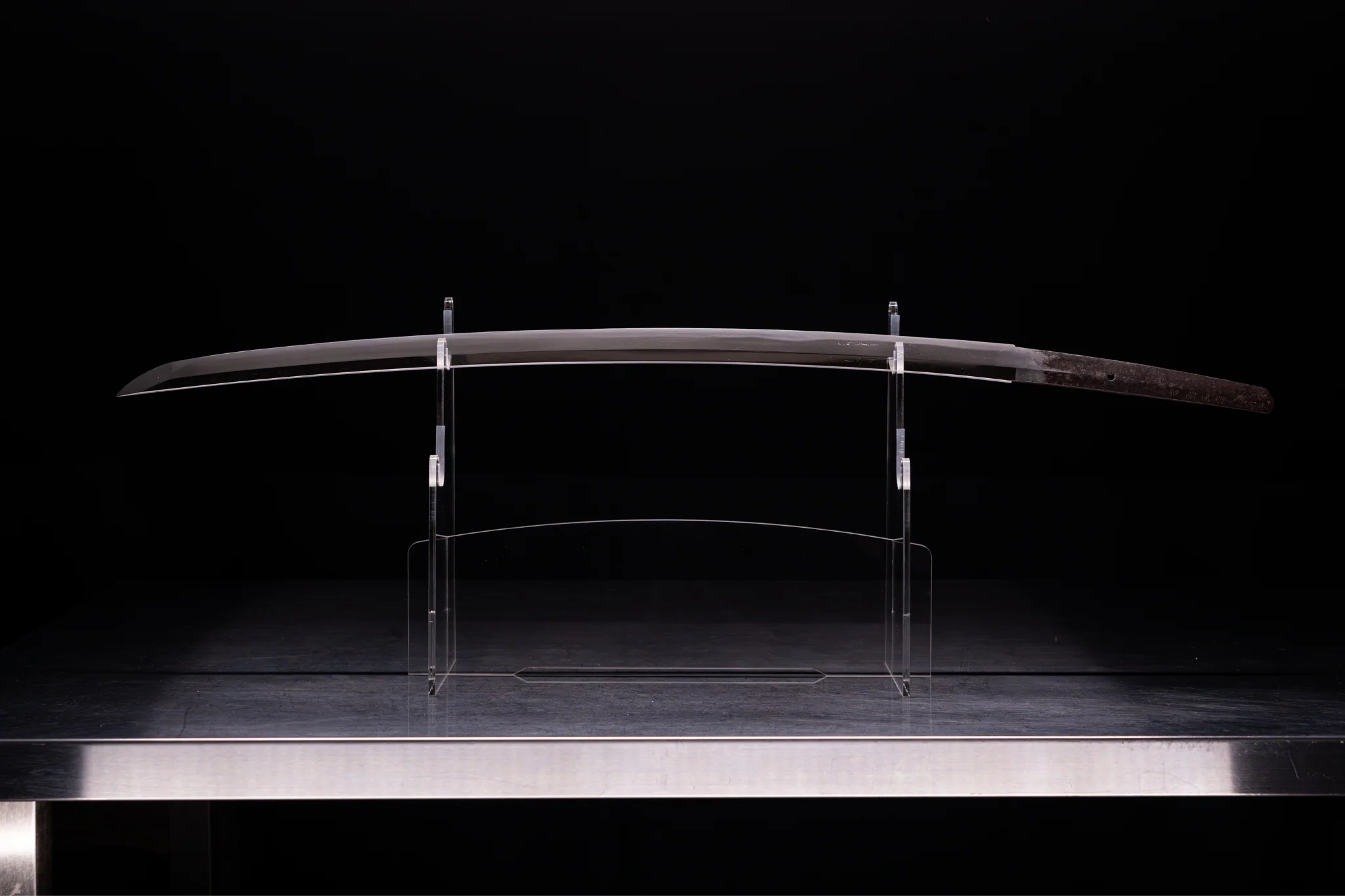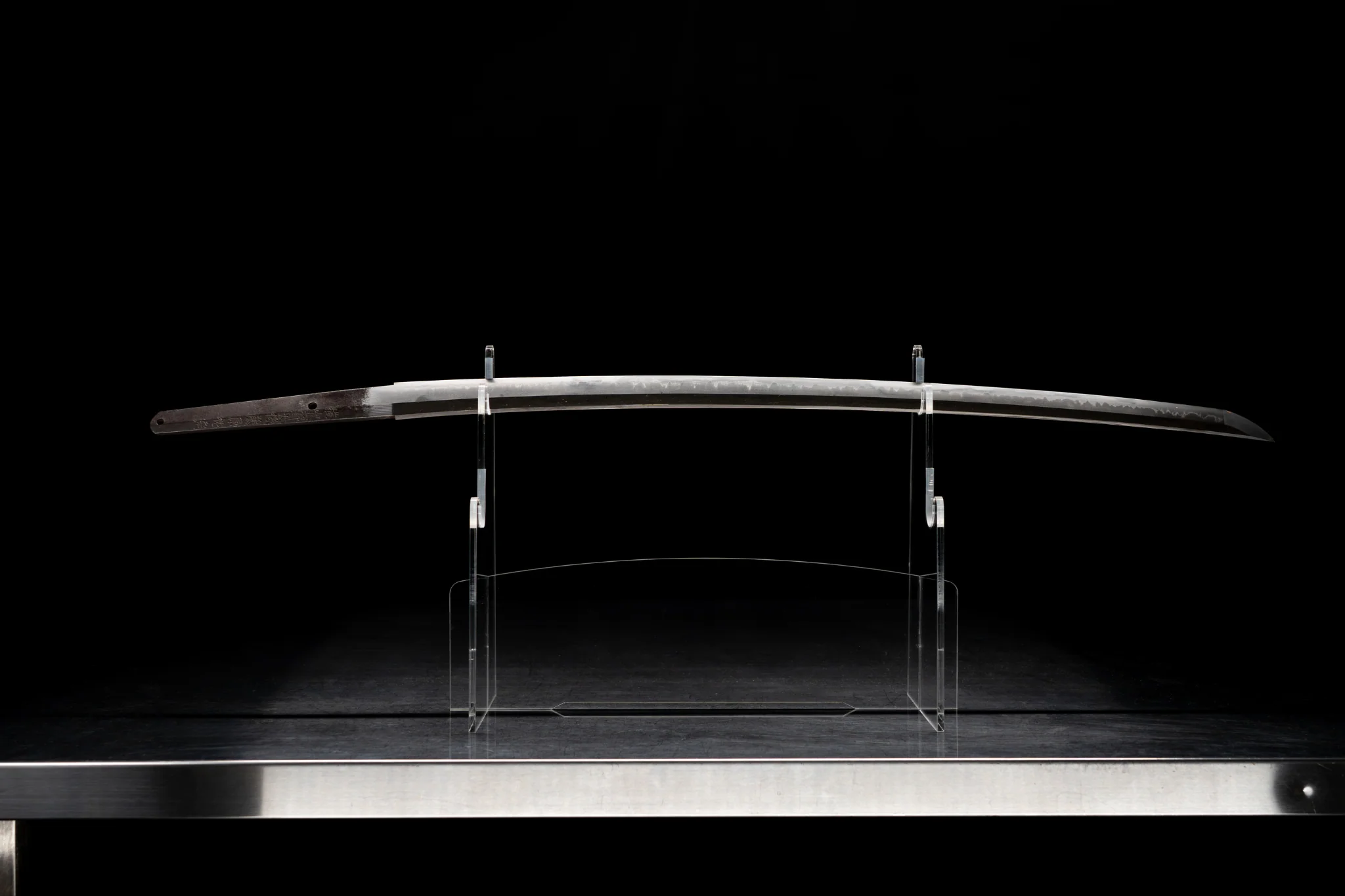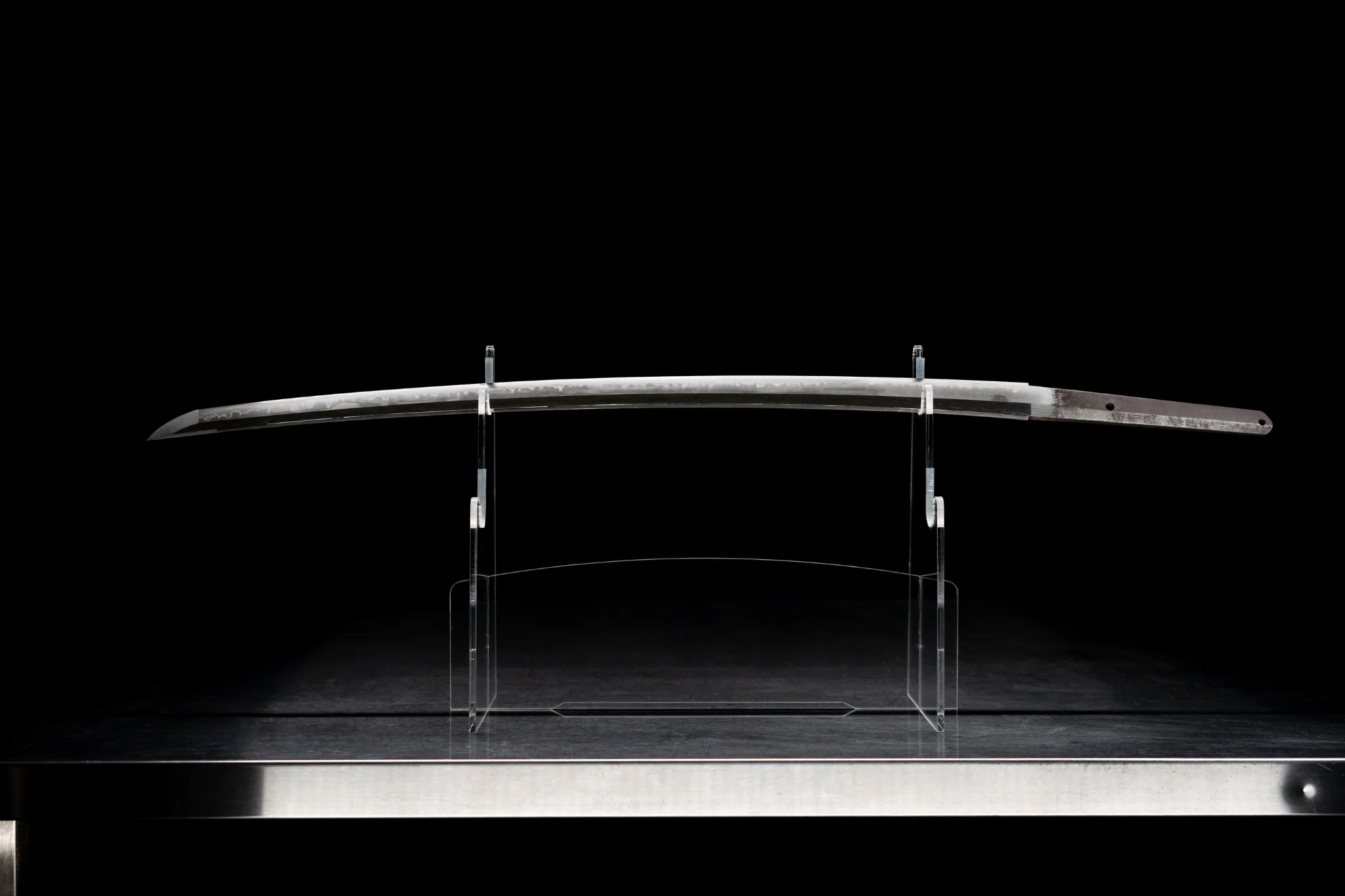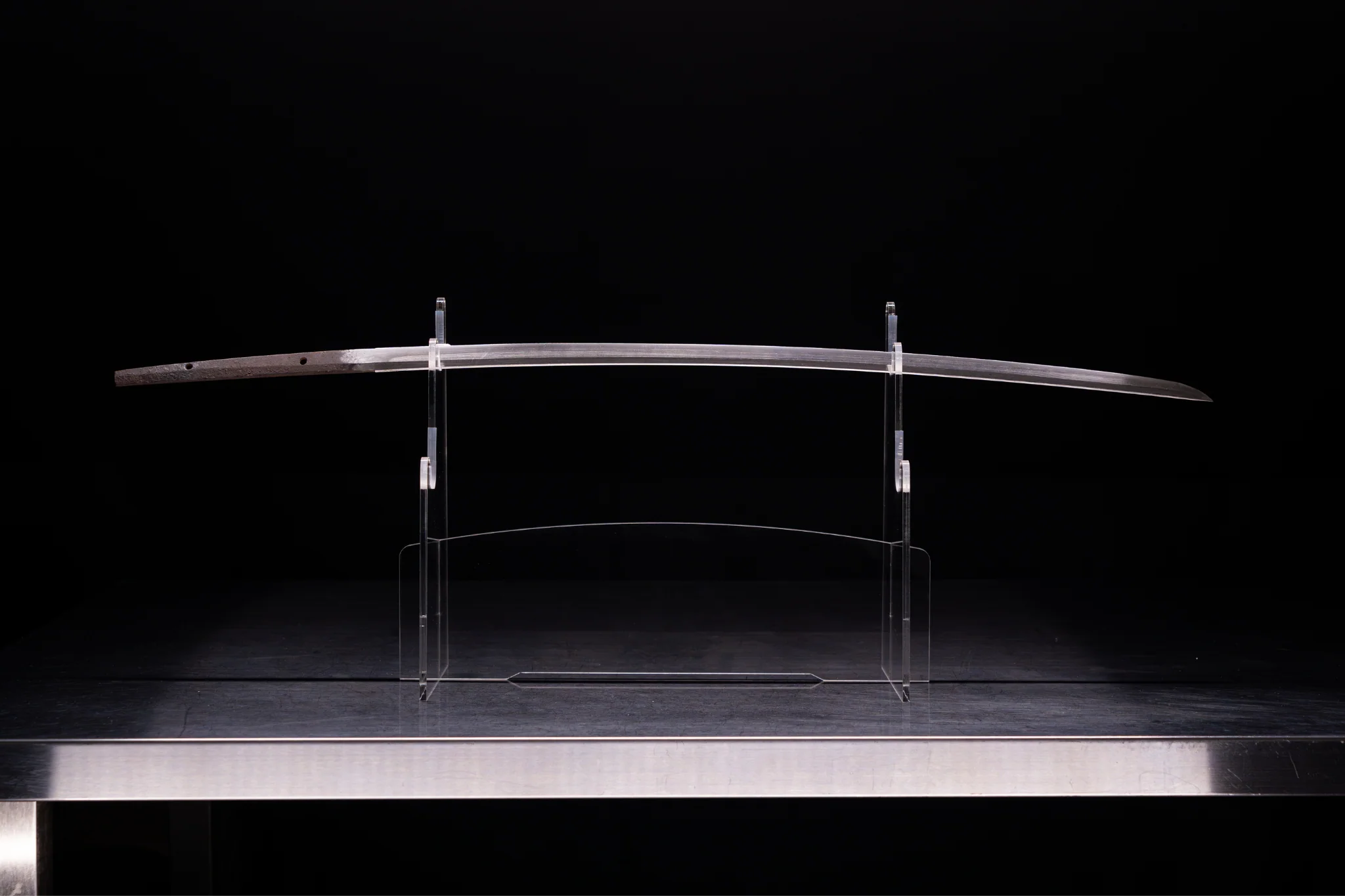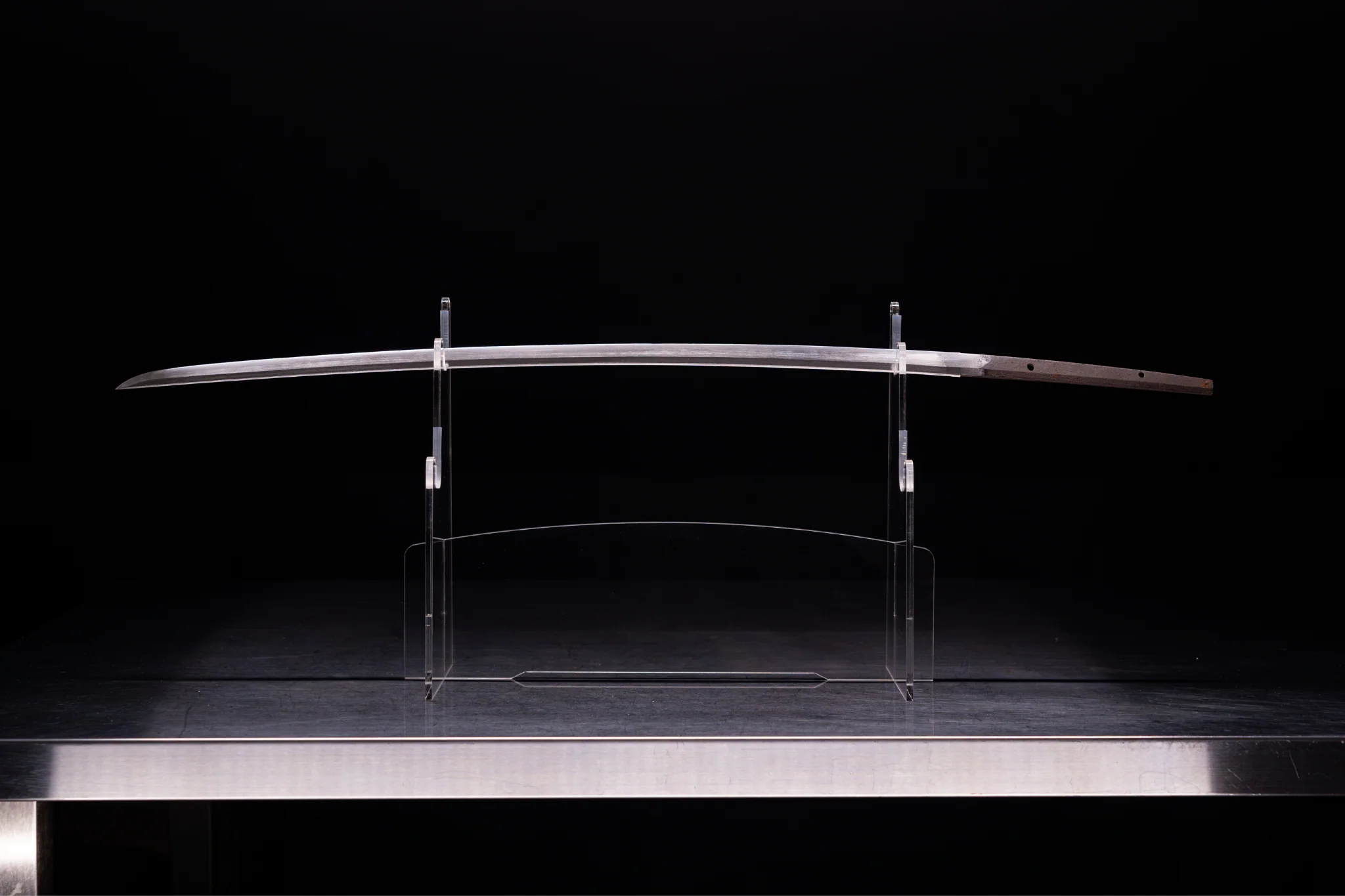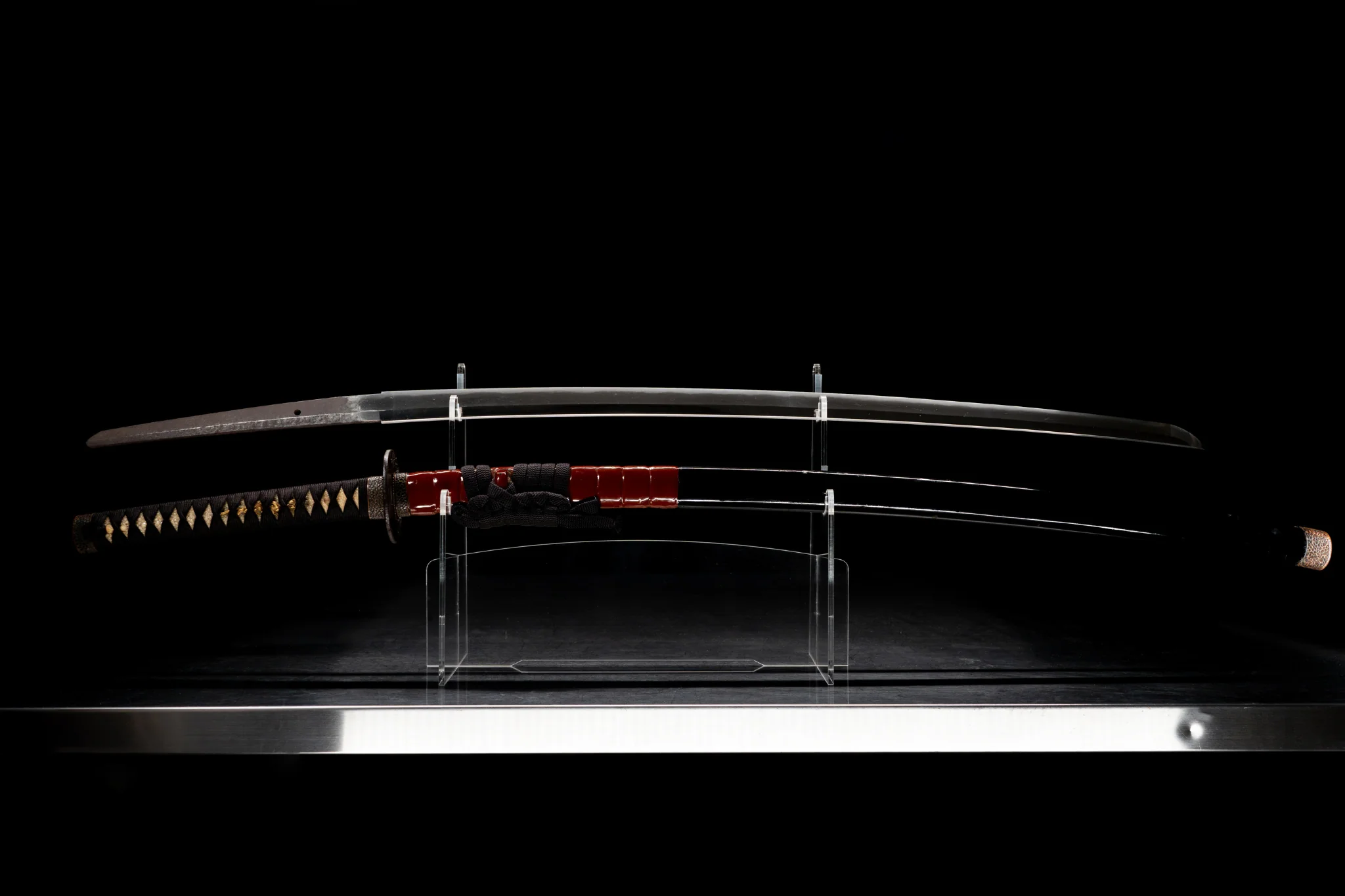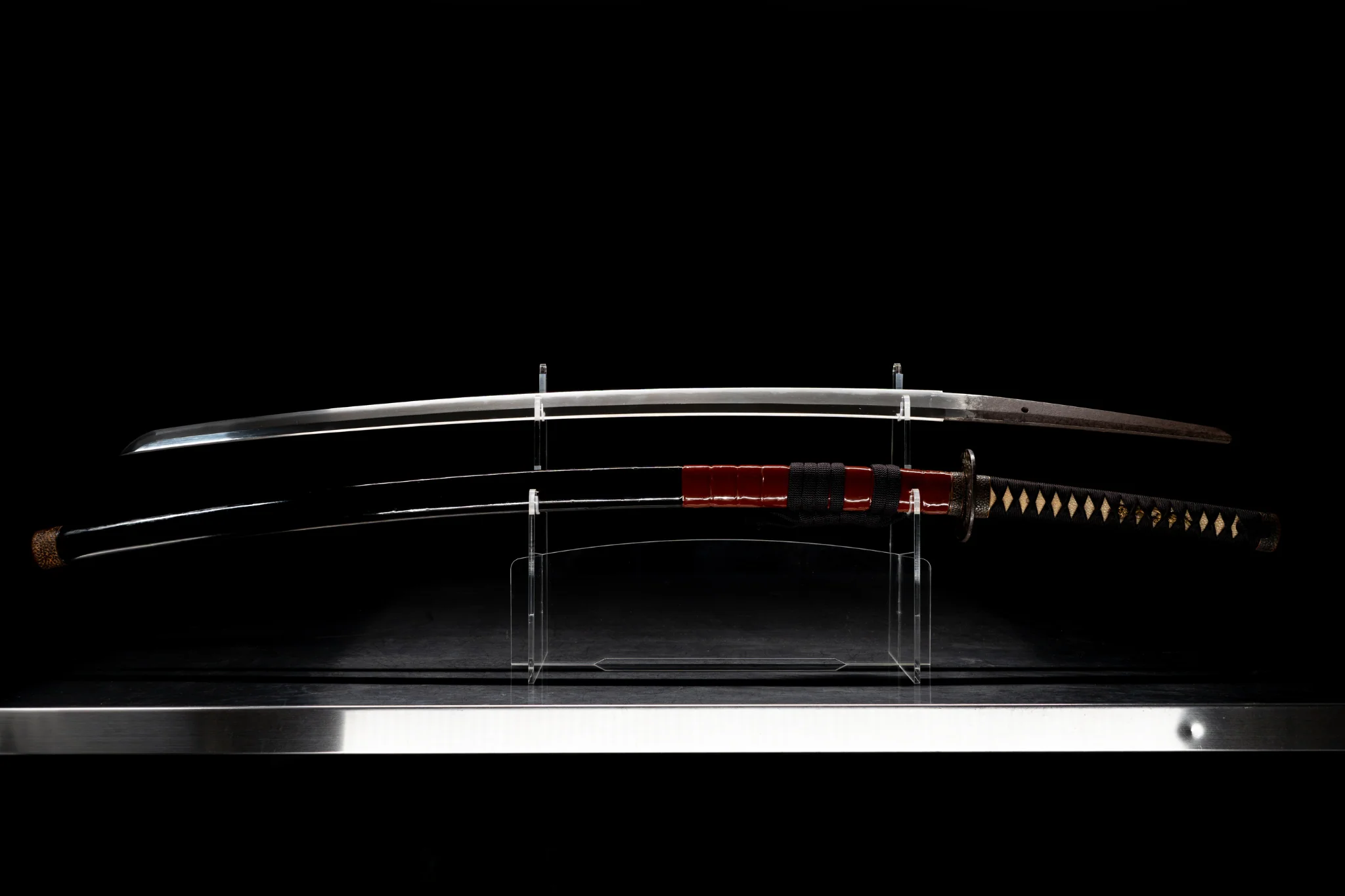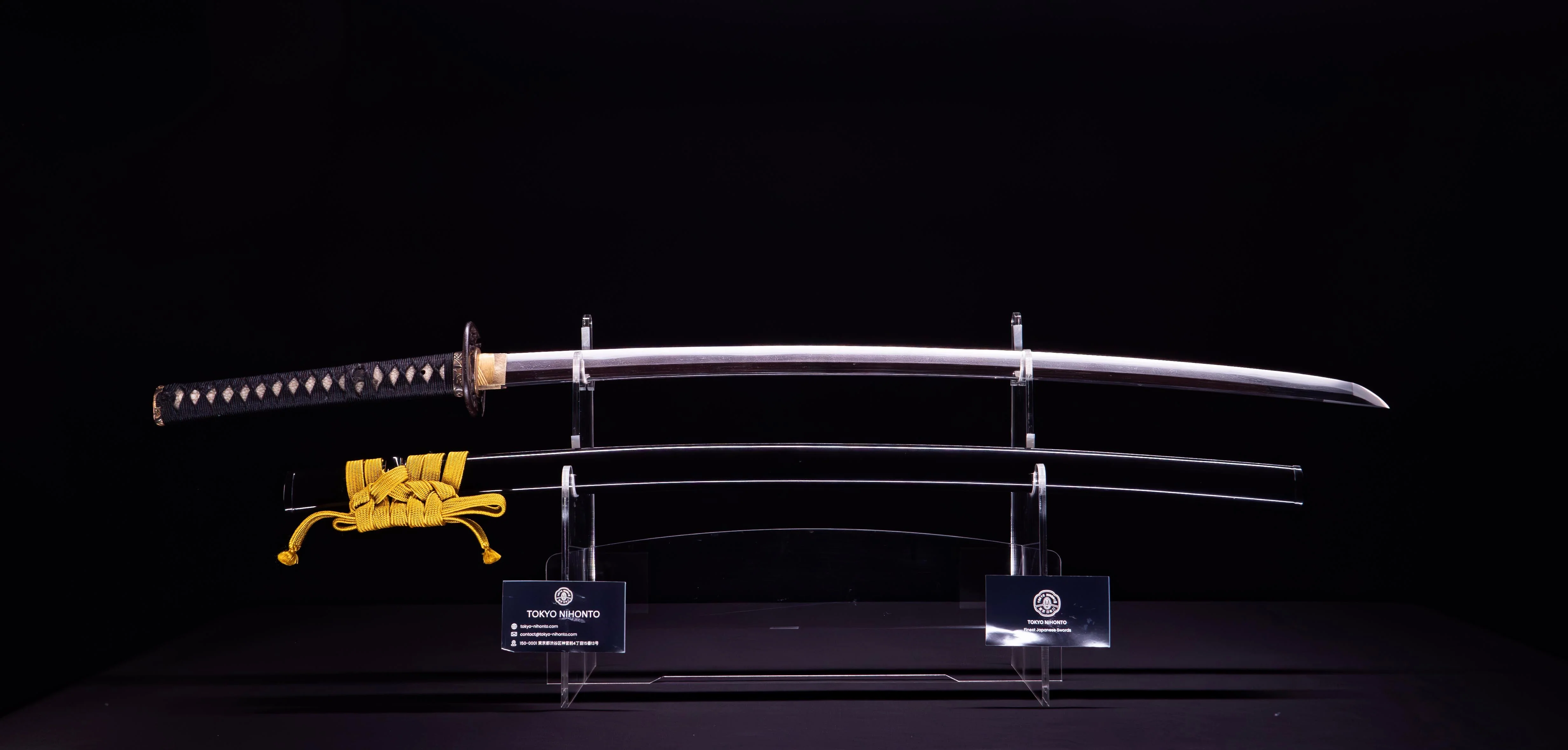
Antique Japanese Katana Sword signed Takada Jū Fujiwara Muneyuki - HOZON
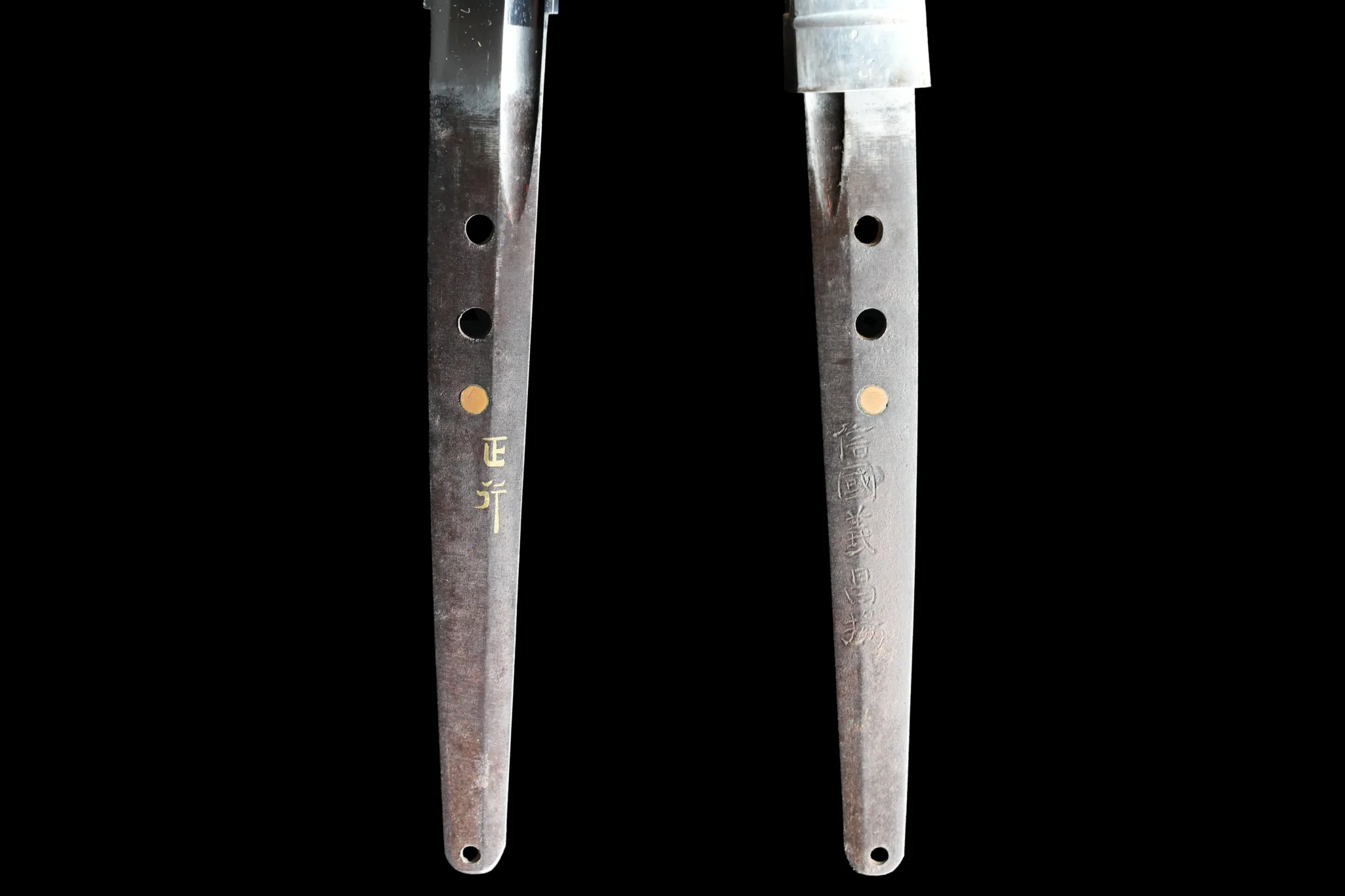
- Signature (Mei): Takada Jū Fujiwara Muneyuki
- Period / Province: Early Edo period (ca. 1600–1650) — Bungo Province (modern Ōita Prefecture
- School: Takada (高田) School — Kyūshū tradition
- Certification: NBTHK Hozon Token (日本美術刀剣保存協会保存刀剣)
- Blade Length (Nagasa): 69.4 cm
- Curvature (Sori): 1.4 cm
- Mekugi-ana: 3
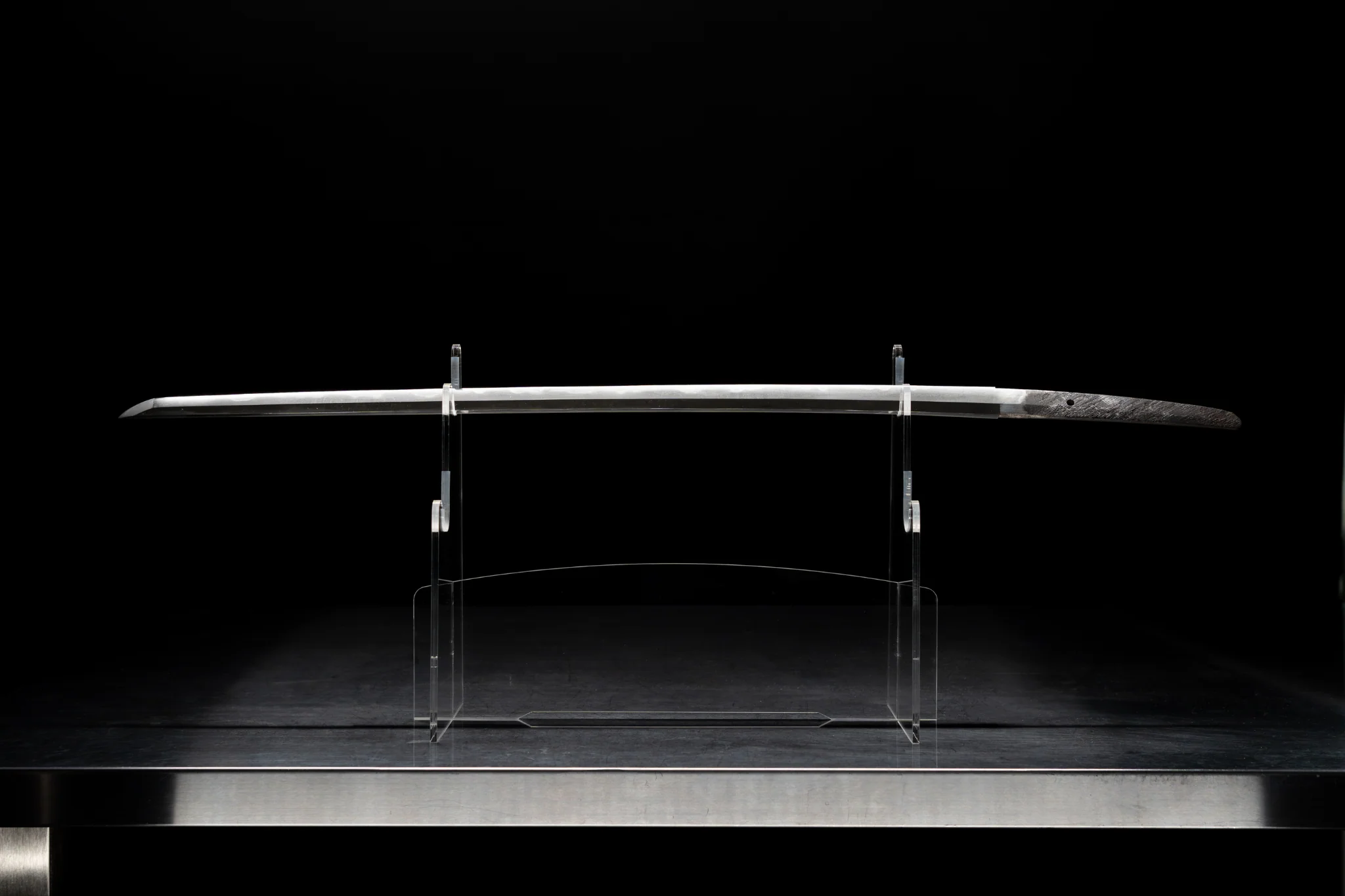
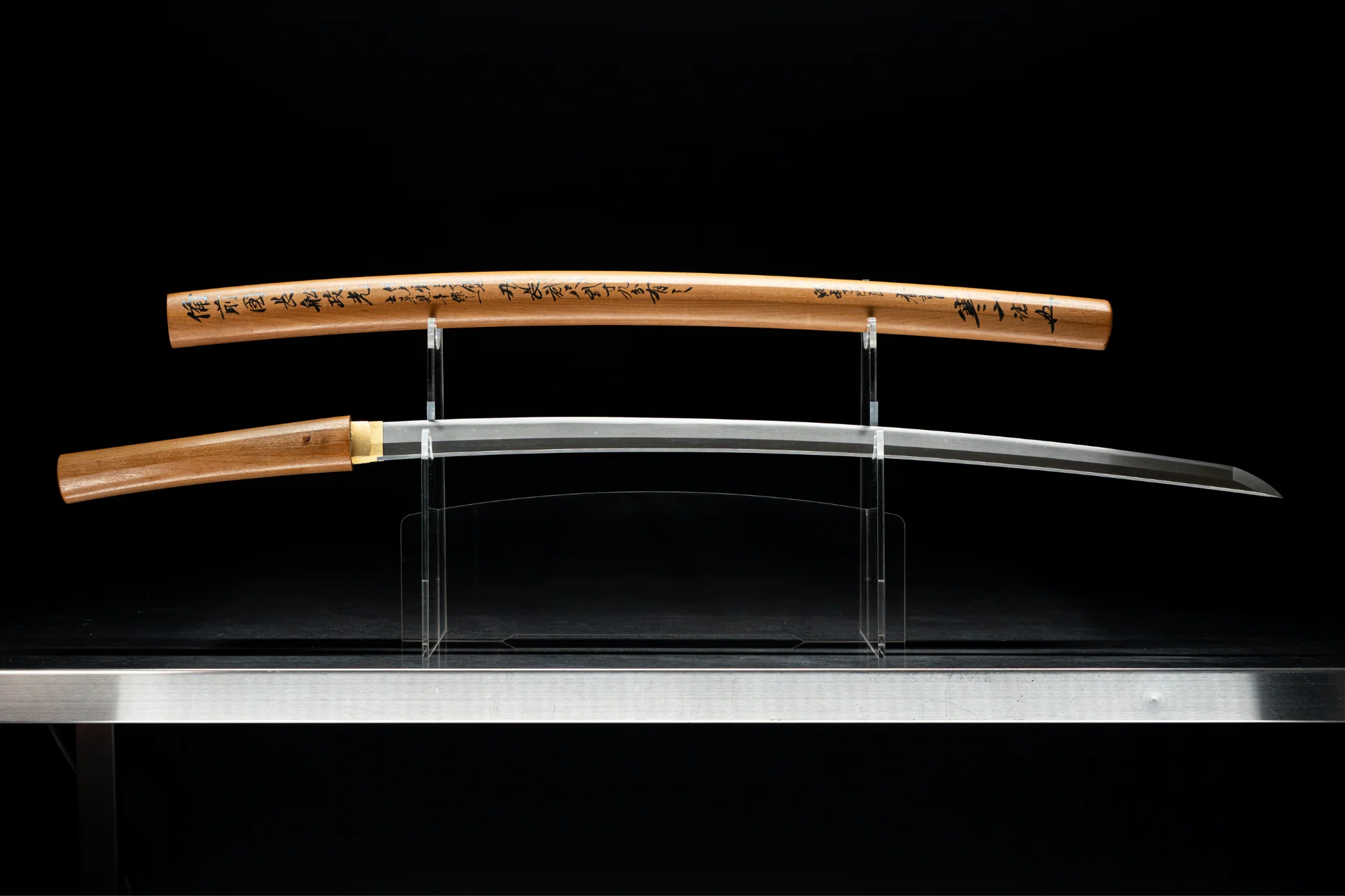
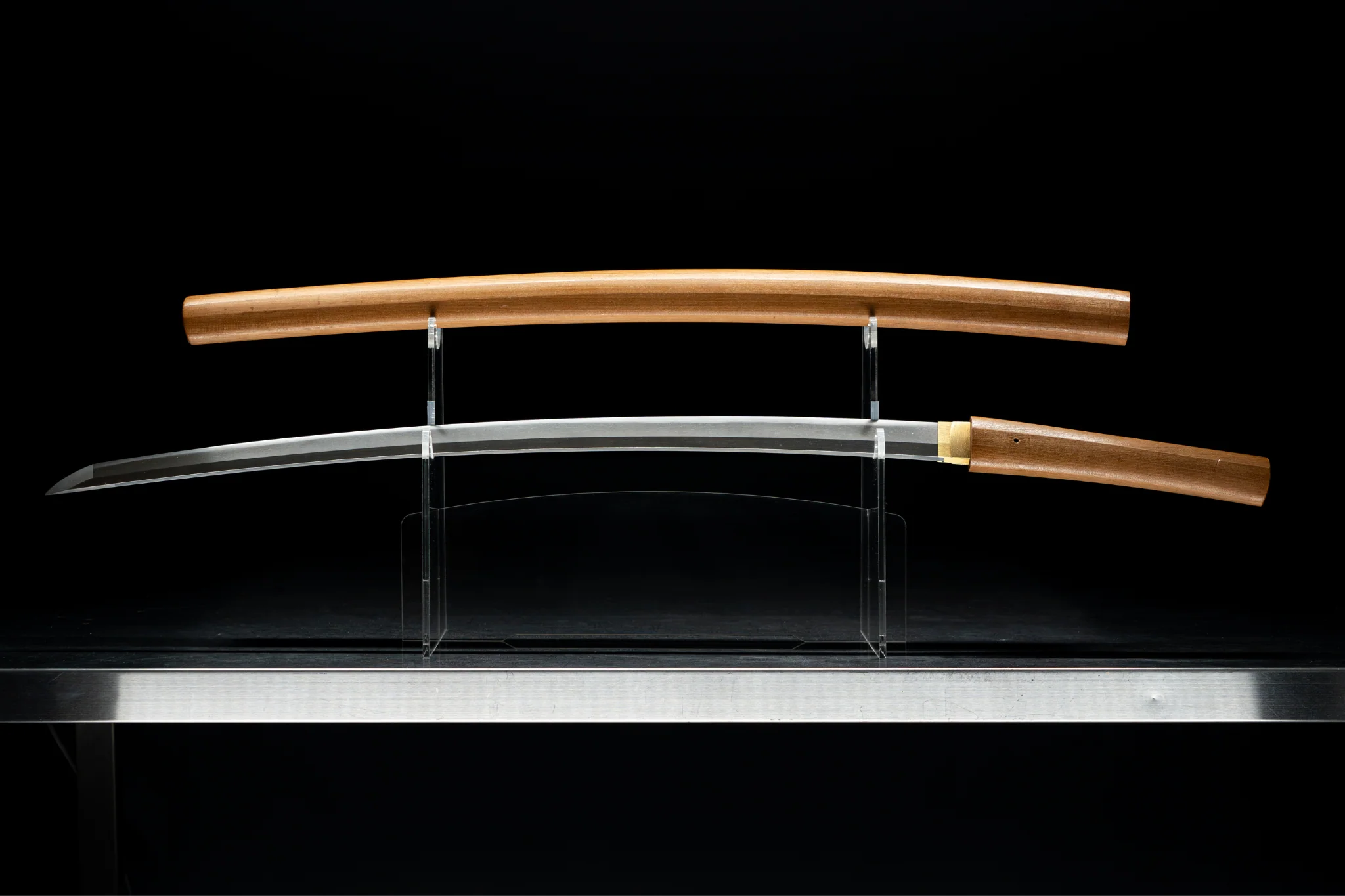
- Shape: Shinogi-zukuri with elegant tori-zori curvature
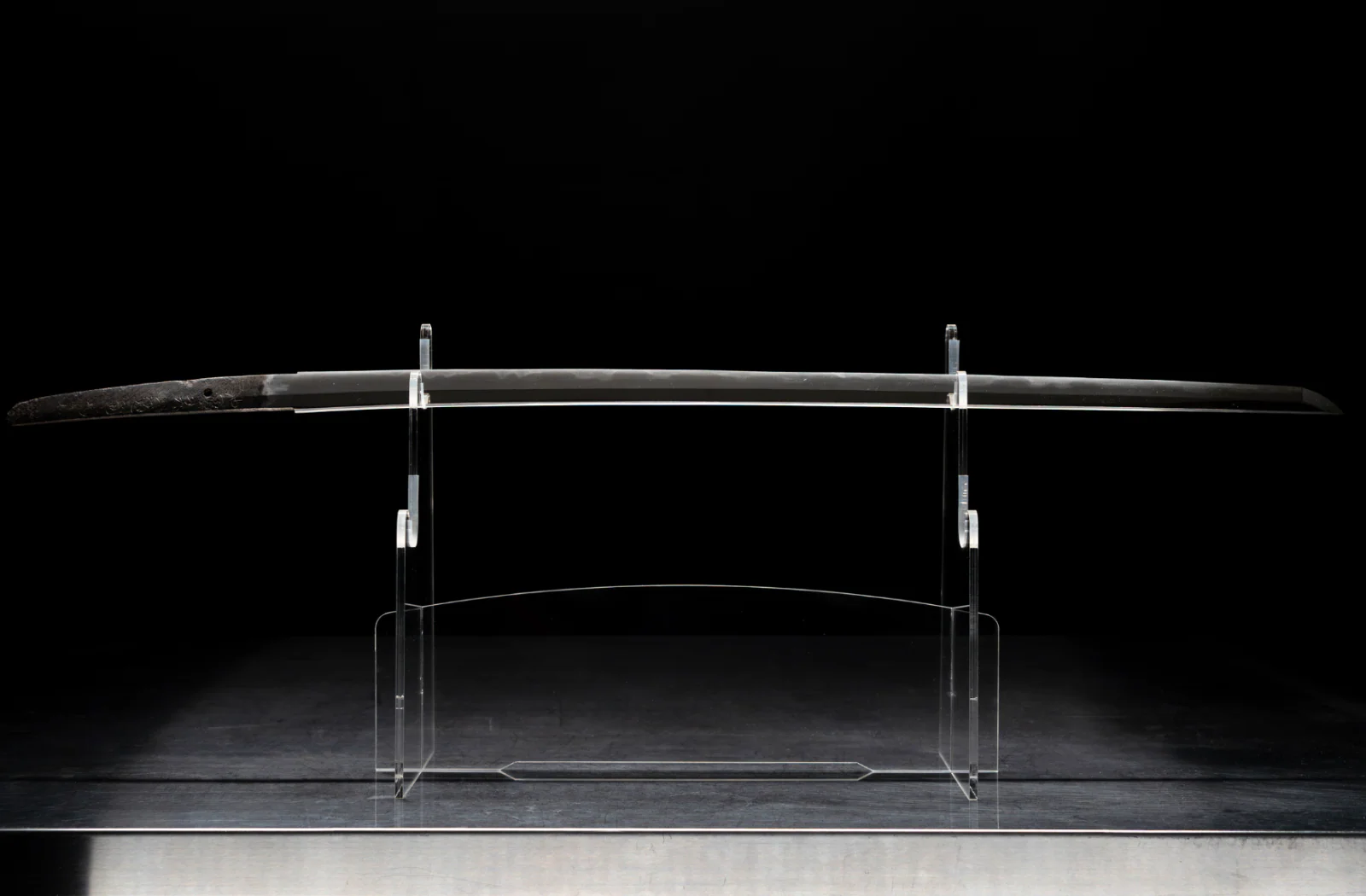
- Hamon: Suguha to mild notare, nioi-based, bright and consistent
- Jihada: Fine ko-itame hada, with visible surface activity under light
- Kissaki: Chū-kissaki (medium point)
- Polish: High-quality Japanese polish, showing refined grain and hamon
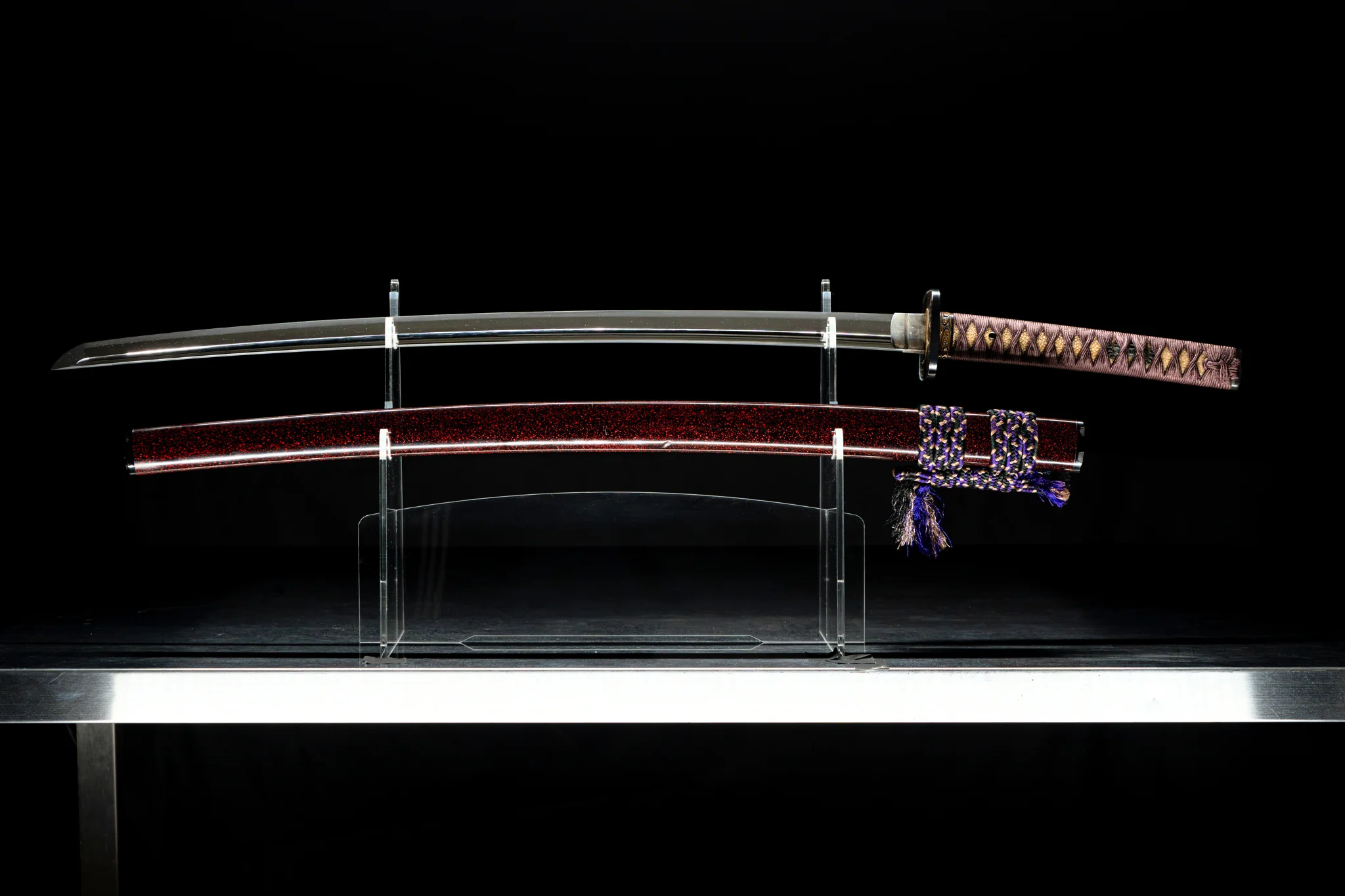
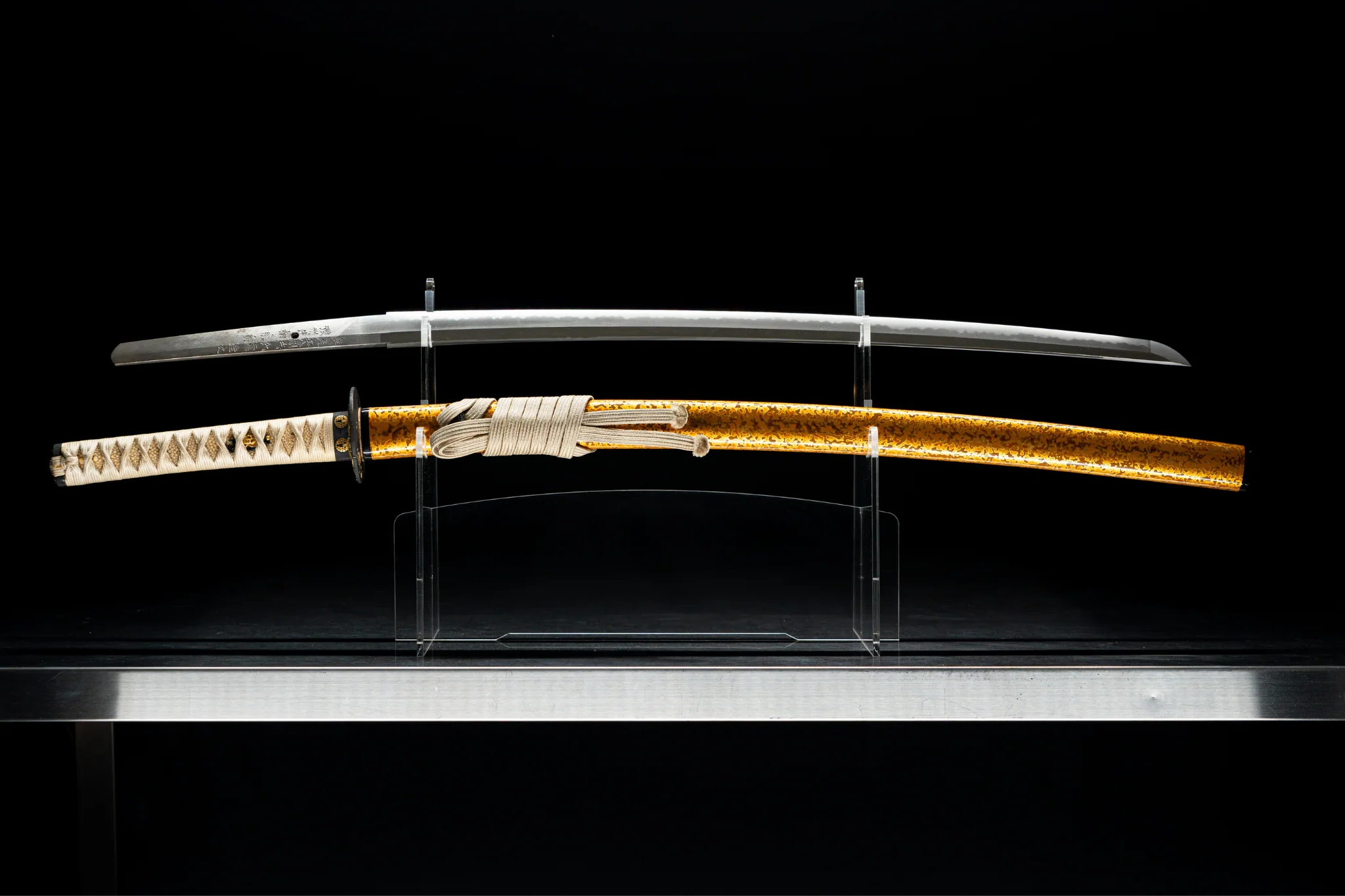
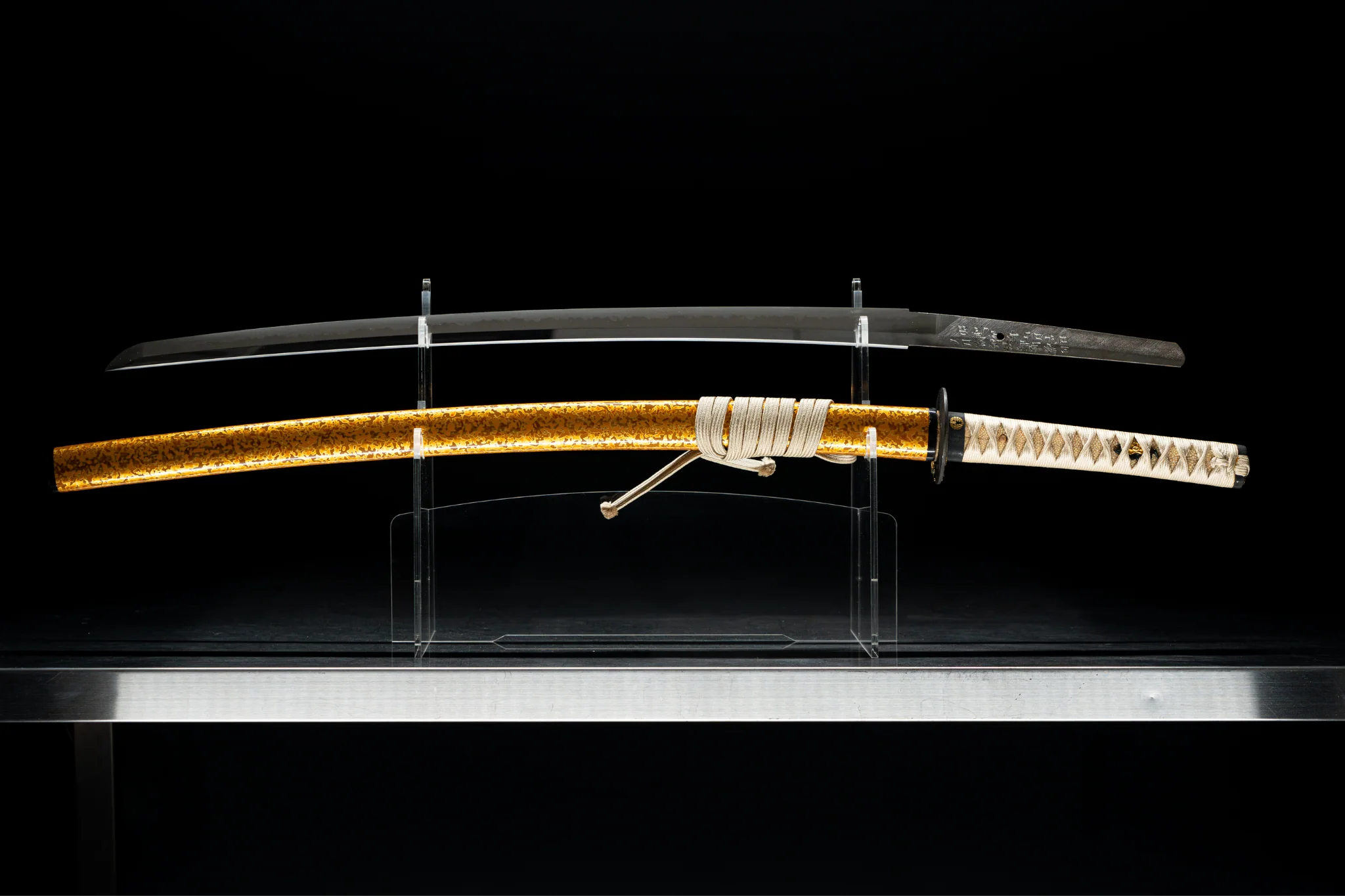
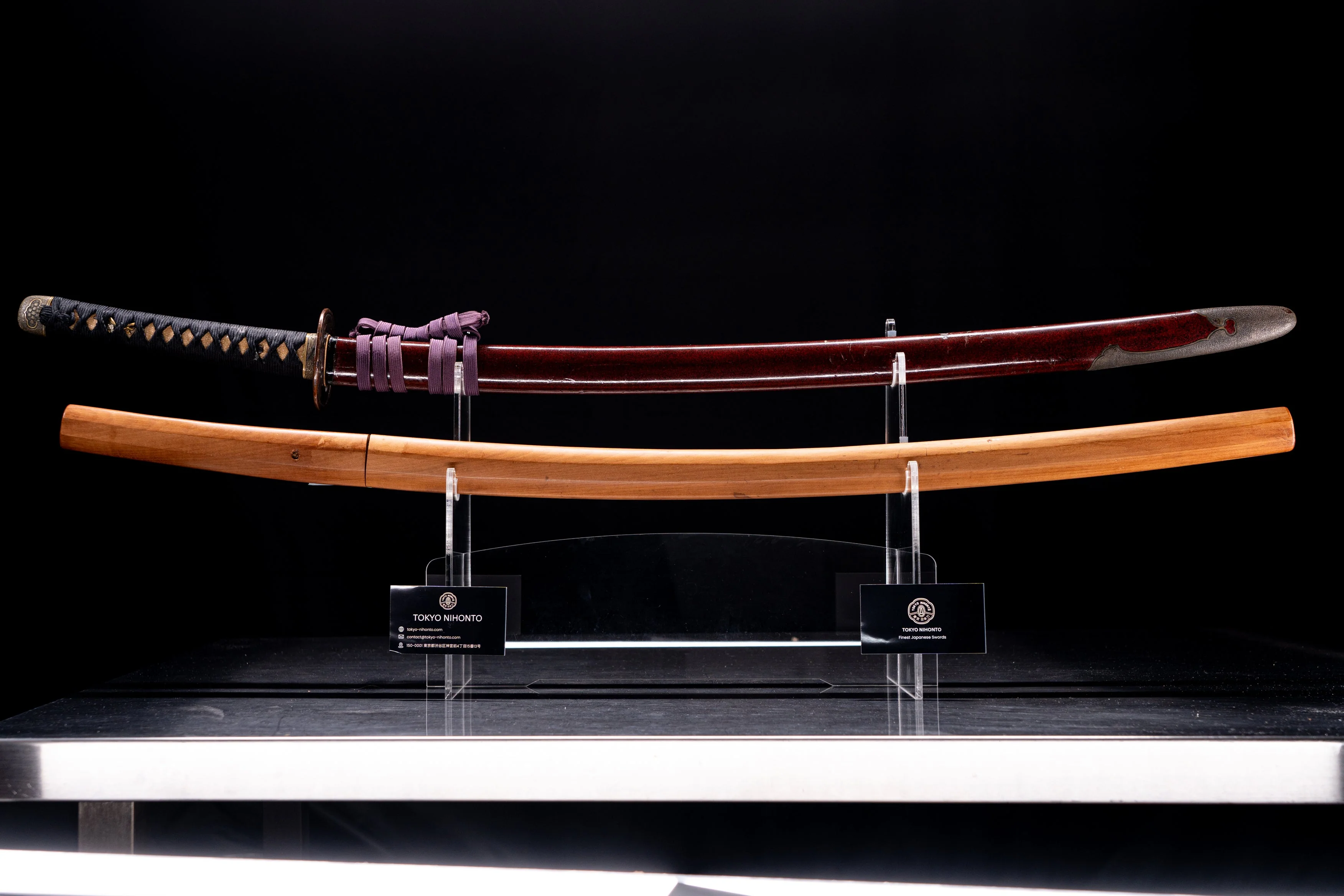
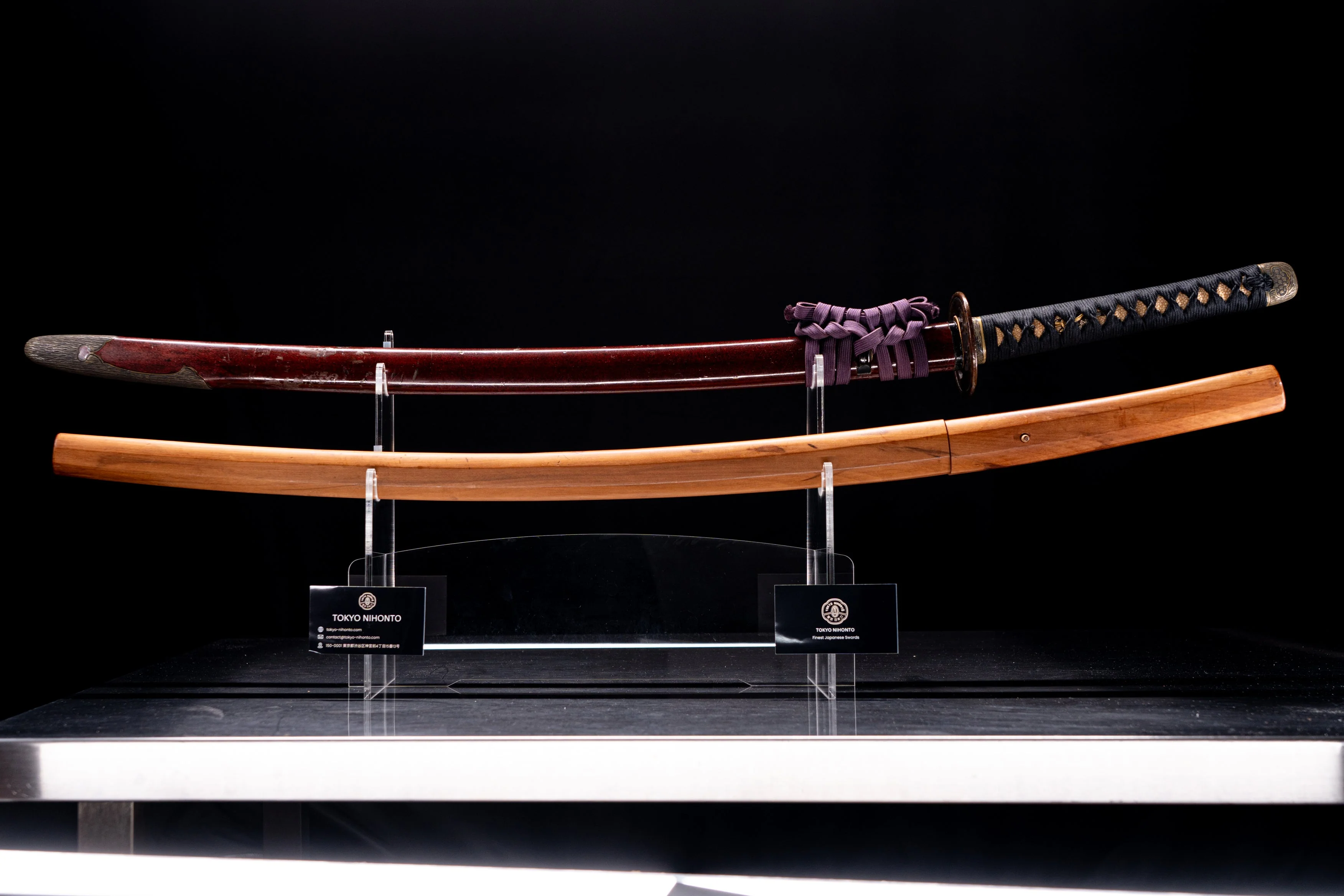
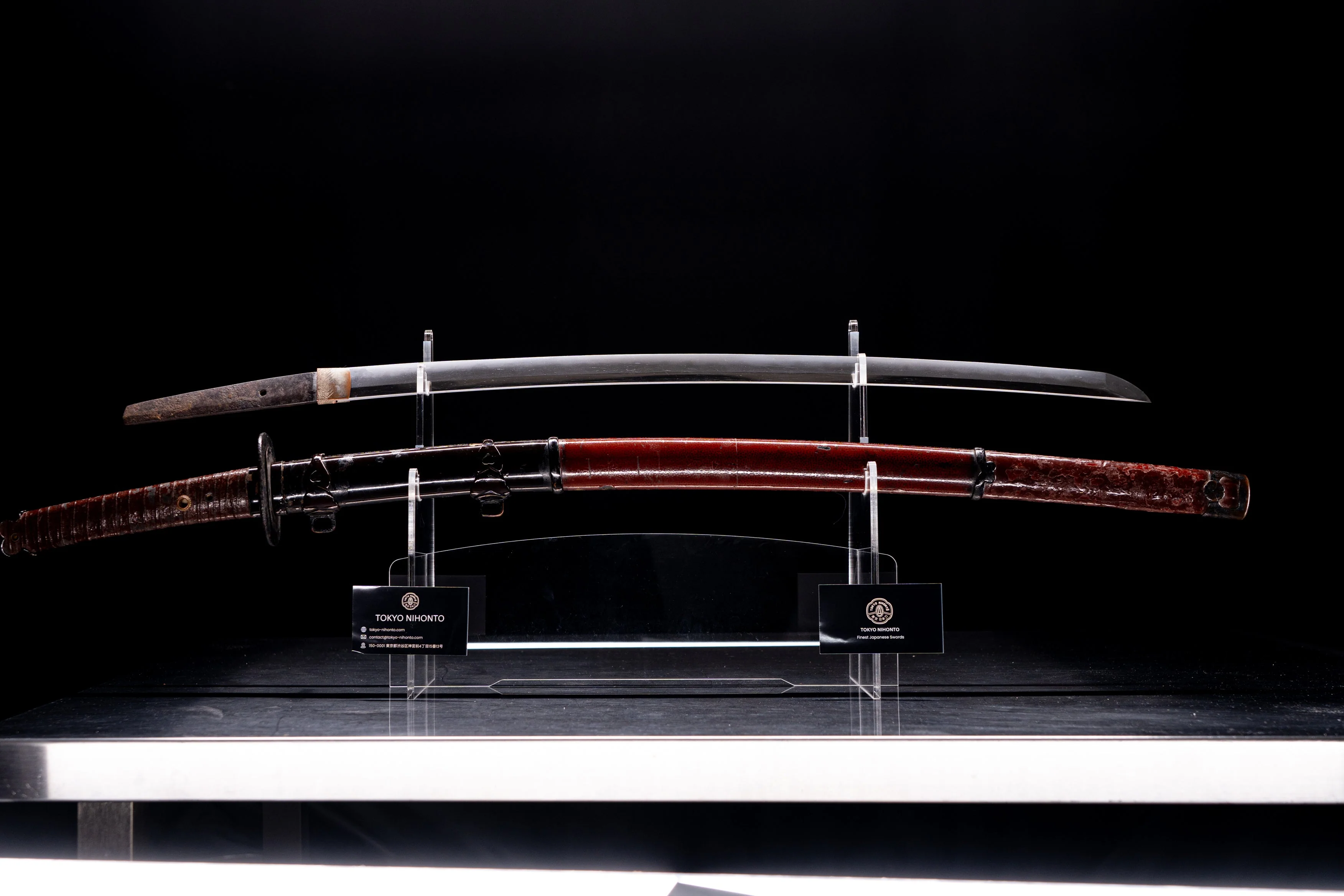
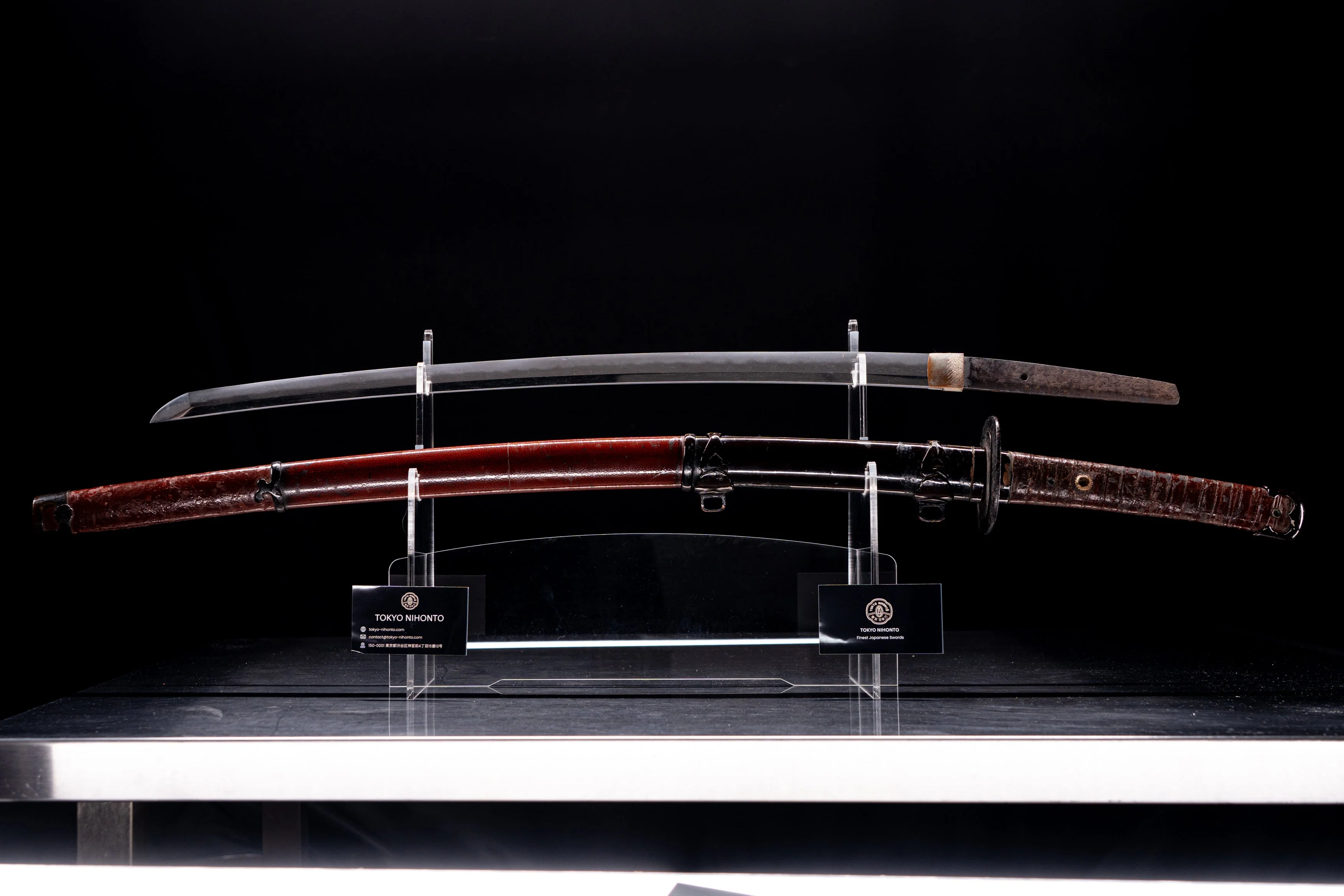
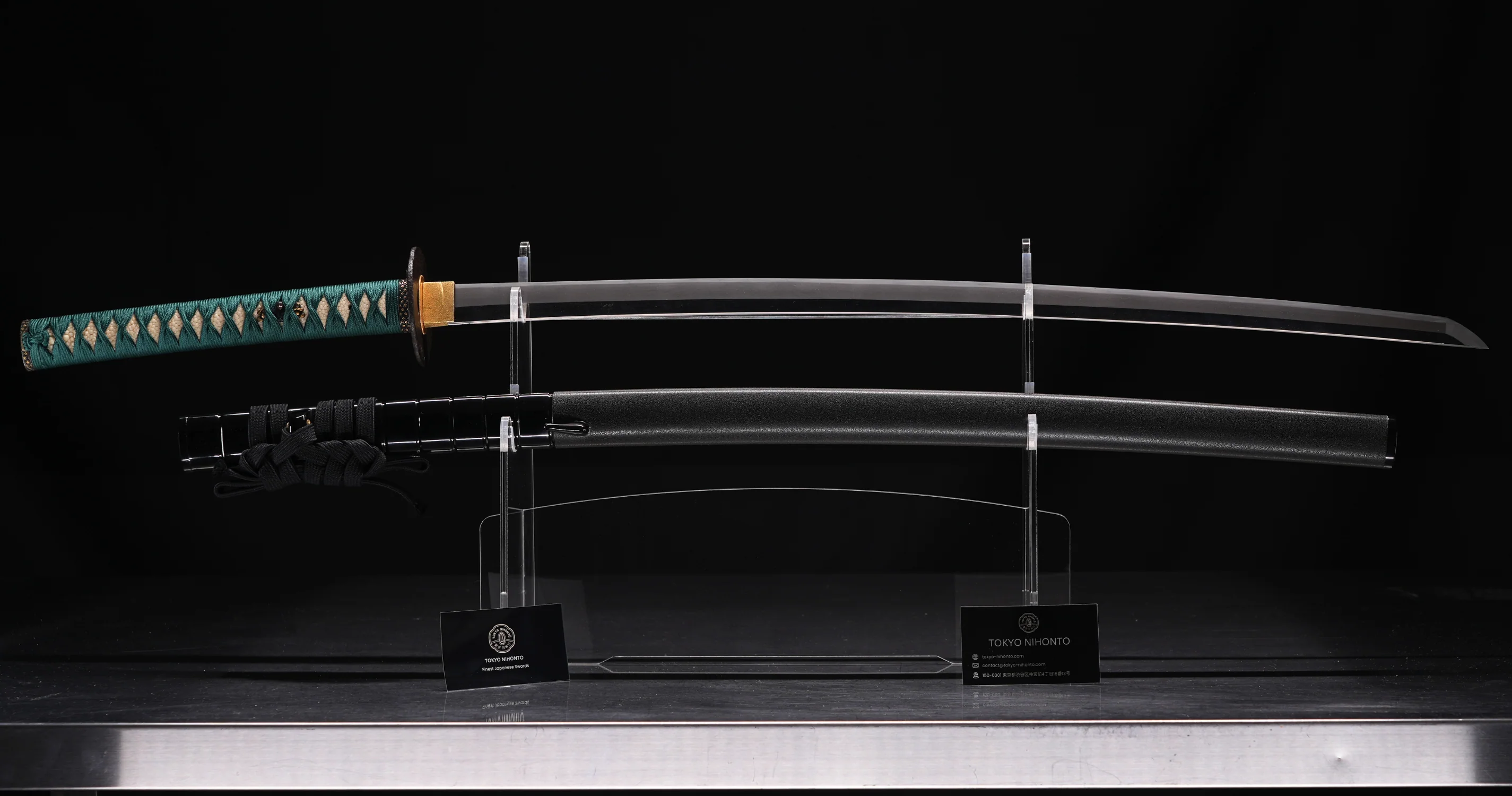
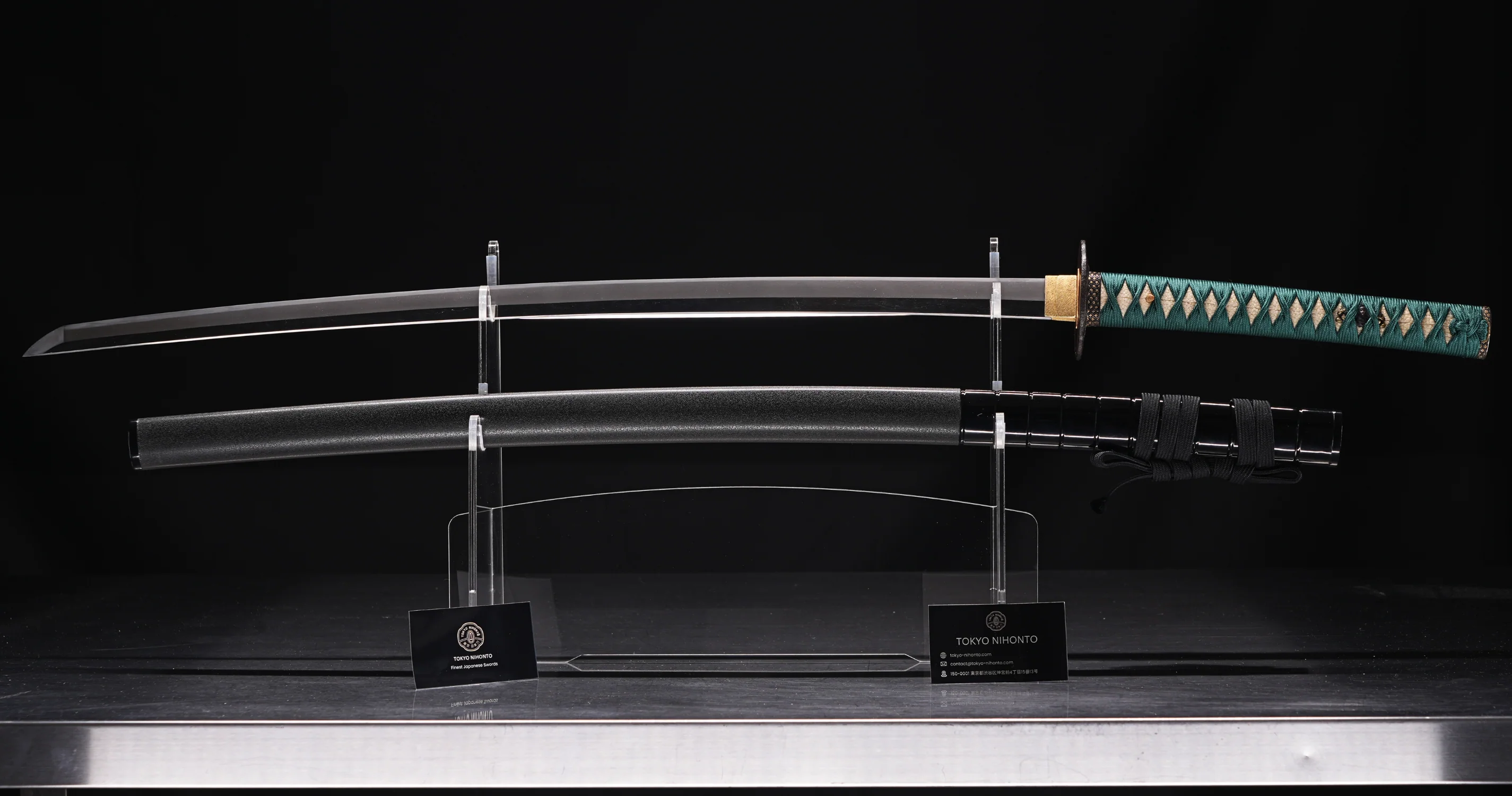
- Mounting (Koshirae): Complete koshirae — black lacquer saya with gold sageo, iron sukashi tsuba with plum blossom and branch motif, gilt floral fuchi-gashira, black silk ito over white samegawa
This exquisite Hozon-class katana is signed (Takada Jū Fujiwara Muneyuki), a master swordsmith of the Takada school in Bungo Province. The Takada lineage was among Kyūshū’s most respected, producing blades favored by samurai of the Ōtomo clan during the turbulent Sengoku and early Edo periods.
Muneyuki works are renowned for their balance between martial practicality and elegant simplicity. This blade exemplifies the school’s hallmark style — a refined suguha-to-notare hamon glowing with fine nioi, and a beautifully forged ko-itame hada that reveals tight, subtle grain under light. The shinogi-zukuri shape and moderate tori-zori curvature provide ideal cutting balance, while the chū-kissaki lends a commanding yet graceful presence.
Measuring 69.4 cm with a 1.4 cm sori, the sword’s proportions and polish showcase traditional craftsmanship rooted in both Bungo and Bizen influences. The two mekugi-ana suggest historical remounting, a sign of extended service life. The tang’s inscription reads Takada-jū Fujiwara Muneyuki, indicating residence in Takada and the prestigious Fujiwara lineage title.
The accompanying koshirae is complete and tastefully composed. The tsuba features an elegant sukashi (openwork) of plum blossoms and branches — a motif symbolizing perseverance and renewal. The fuchi-gashira are finely crafted with floral scroll designs in gilt copper, complementing the black silk tsukamaki wrapped over pristine white samegawa. The saya is lacquered deep black with a striking gold sageo, balancing austerity and refinement.
This sword embodies the spirit of the early Edo era: calm, poised, and masterfully executed. Certified as Hozon Token by the NBTHK, it is officially recognized as a blade of cultural and historical importance. The combination of robust forging, balanced proportions, and complete high-quality mountings make this an exceptional example of a Takada school katana — dignified in form and deeply rooted in Japan’s samurai heritage.
Product Information
Product Information
Shipping & Returns
Shipping & Returns
Description
- Signature (Mei): Takada Jū Fujiwara Muneyuki
- Period / Province: Early Edo period (ca. 1600–1650) — Bungo Province (modern Ōita Prefecture
- School: Takada (高田) School — Kyūshū tradition
- Certification: NBTHK Hozon Token (日本美術刀剣保存協会保存刀剣)
- Blade Length (Nagasa): 69.4 cm
- Curvature (Sori): 1.4 cm
- Mekugi-ana: 3
- Shape: Shinogi-zukuri with elegant tori-zori curvature
- Hamon: Suguha to mild notare, nioi-based, bright and consistent
- Jihada: Fine ko-itame hada, with visible surface activity under light
- Kissaki: Chū-kissaki (medium point)
- Polish: High-quality Japanese polish, showing refined grain and hamon
- Mounting (Koshirae): Complete koshirae — black lacquer saya with gold sageo, iron sukashi tsuba with plum blossom and branch motif, gilt floral fuchi-gashira, black silk ito over white samegawa
This exquisite Hozon-class katana is signed (Takada Jū Fujiwara Muneyuki), a master swordsmith of the Takada school in Bungo Province. The Takada lineage was among Kyūshū’s most respected, producing blades favored by samurai of the Ōtomo clan during the turbulent Sengoku and early Edo periods.
Muneyuki works are renowned for their balance between martial practicality and elegant simplicity. This blade exemplifies the school’s hallmark style — a refined suguha-to-notare hamon glowing with fine nioi, and a beautifully forged ko-itame hada that reveals tight, subtle grain under light. The shinogi-zukuri shape and moderate tori-zori curvature provide ideal cutting balance, while the chū-kissaki lends a commanding yet graceful presence.
Measuring 69.4 cm with a 1.4 cm sori, the sword’s proportions and polish showcase traditional craftsmanship rooted in both Bungo and Bizen influences. The two mekugi-ana suggest historical remounting, a sign of extended service life. The tang’s inscription reads Takada-jū Fujiwara Muneyuki, indicating residence in Takada and the prestigious Fujiwara lineage title.
The accompanying koshirae is complete and tastefully composed. The tsuba features an elegant sukashi (openwork) of plum blossoms and branches — a motif symbolizing perseverance and renewal. The fuchi-gashira are finely crafted with floral scroll designs in gilt copper, complementing the black silk tsukamaki wrapped over pristine white samegawa. The saya is lacquered deep black with a striking gold sageo, balancing austerity and refinement.
This sword embodies the spirit of the early Edo era: calm, poised, and masterfully executed. Certified as Hozon Token by the NBTHK, it is officially recognized as a blade of cultural and historical importance. The combination of robust forging, balanced proportions, and complete high-quality mountings make this an exceptional example of a Takada school katana — dignified in form and deeply rooted in Japan’s samurai heritage.