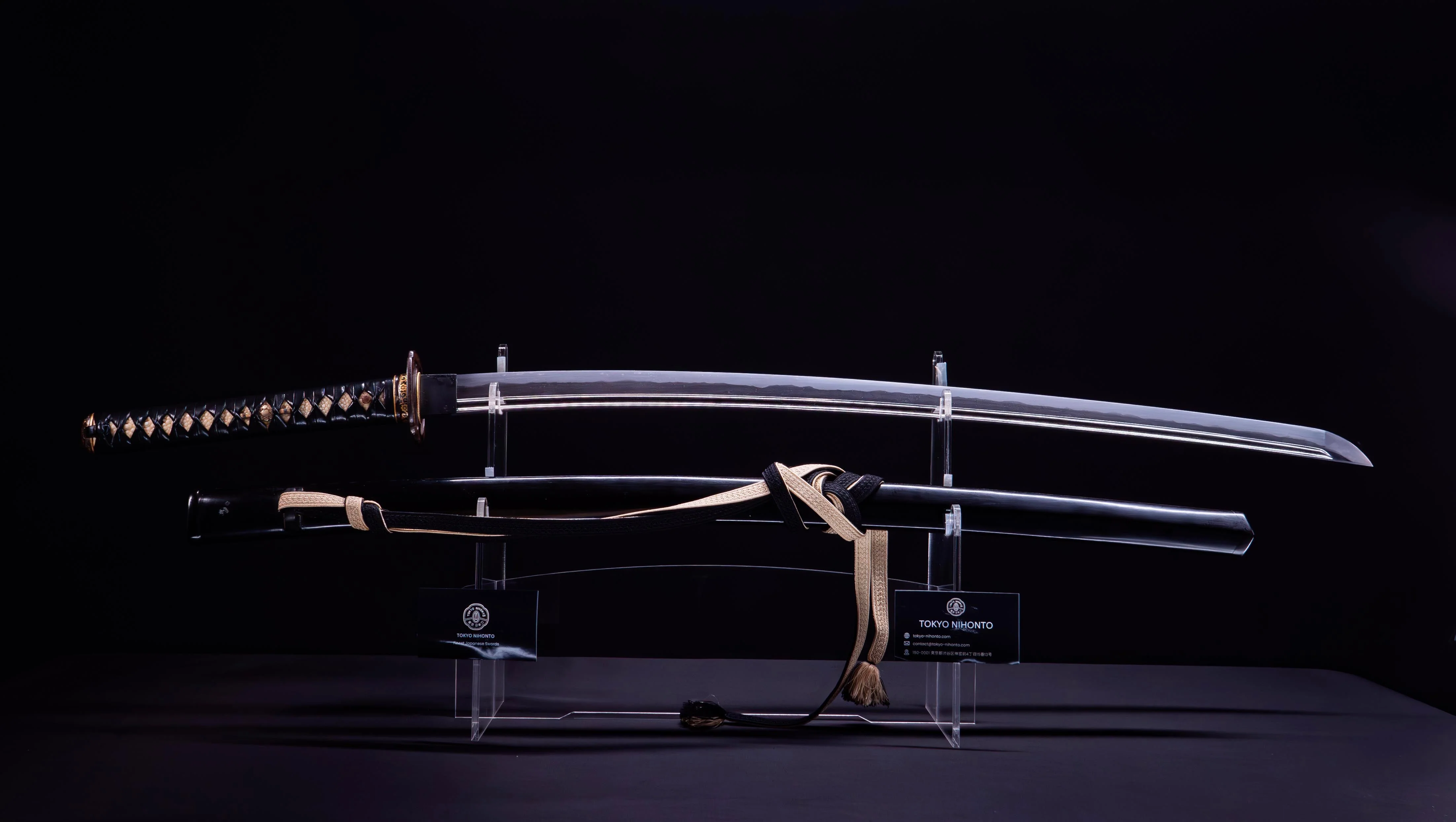
Antique Japanese Katana Sword signed Enomoto Tatsuyoshi
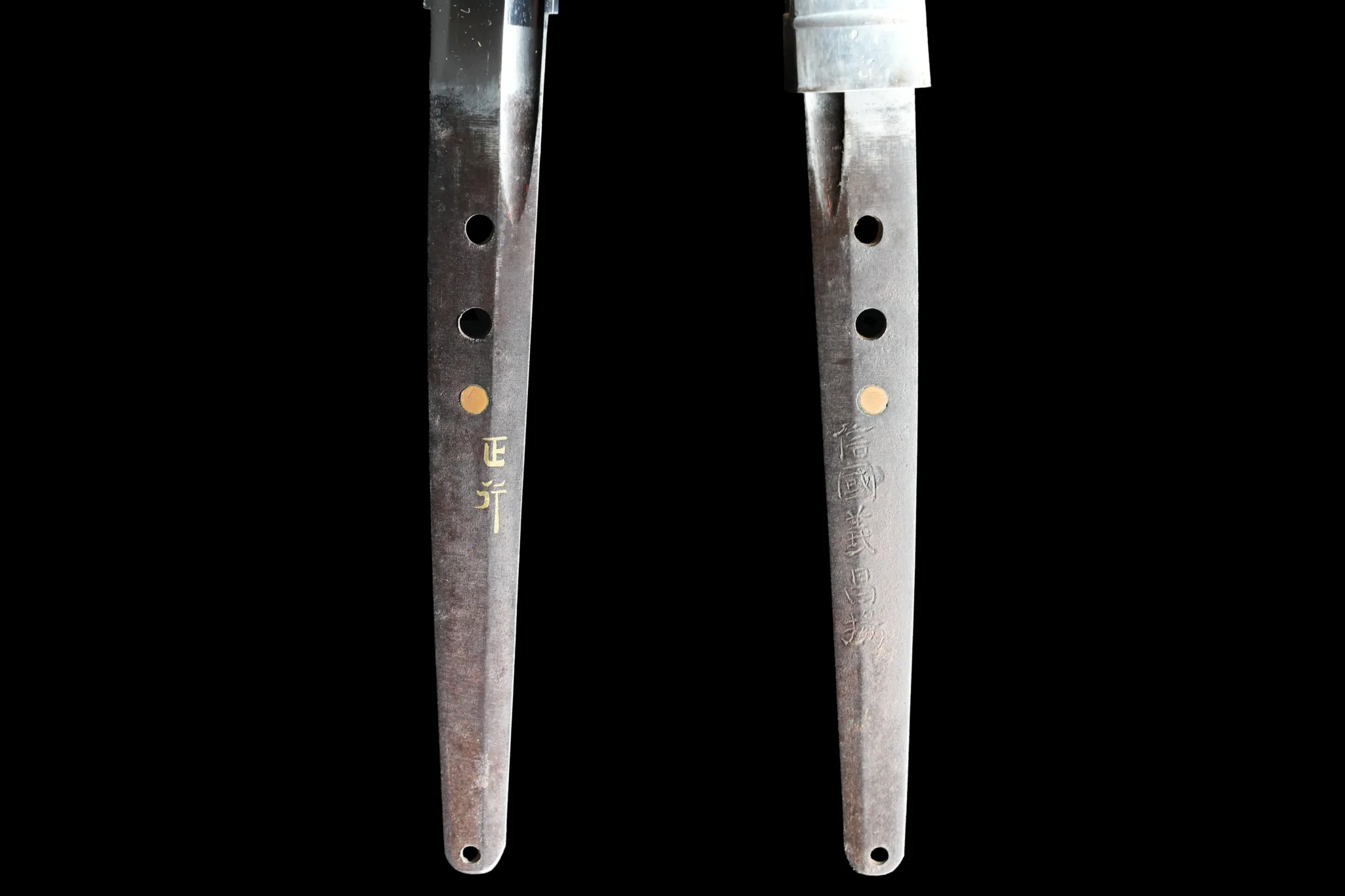
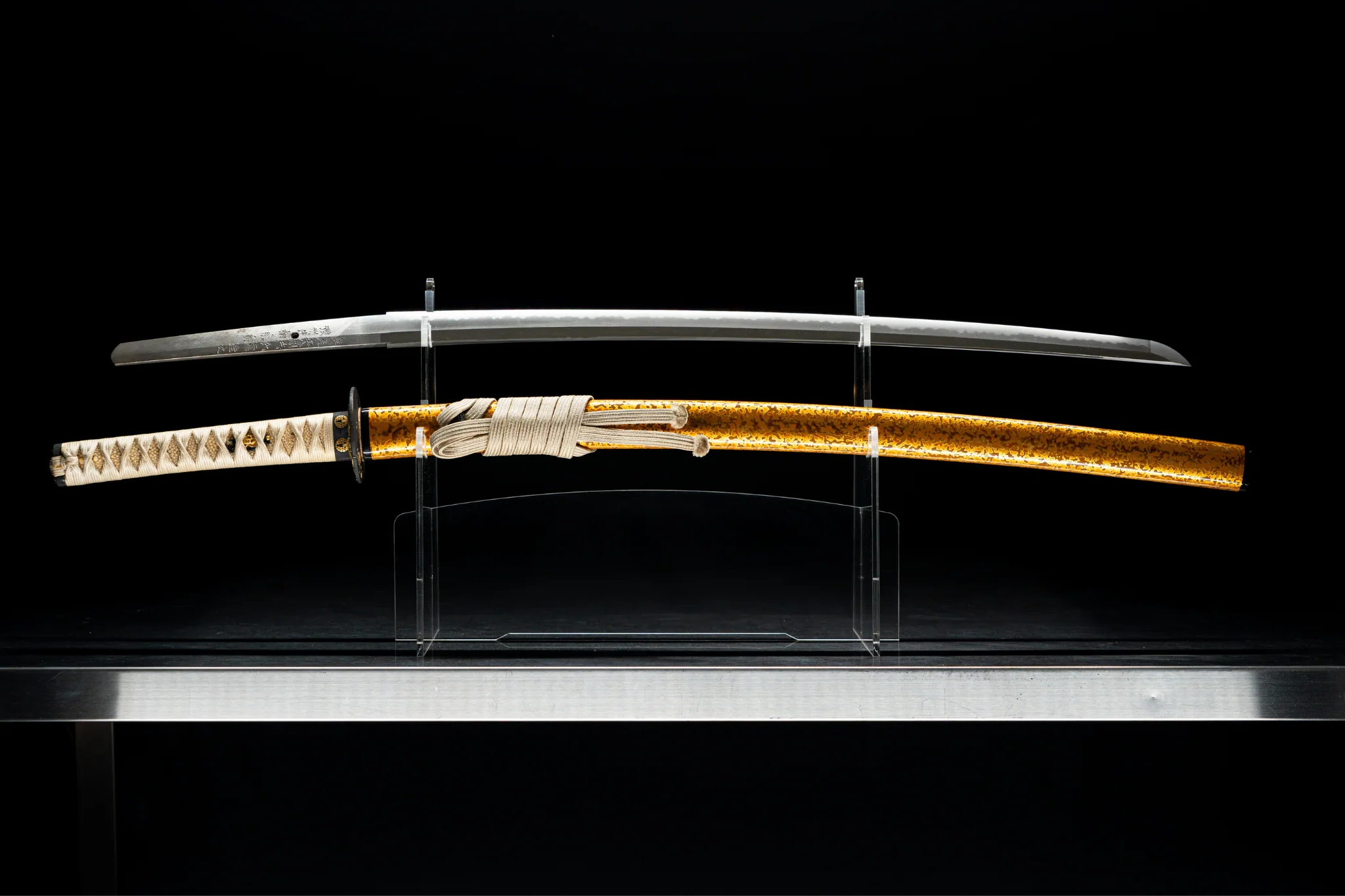
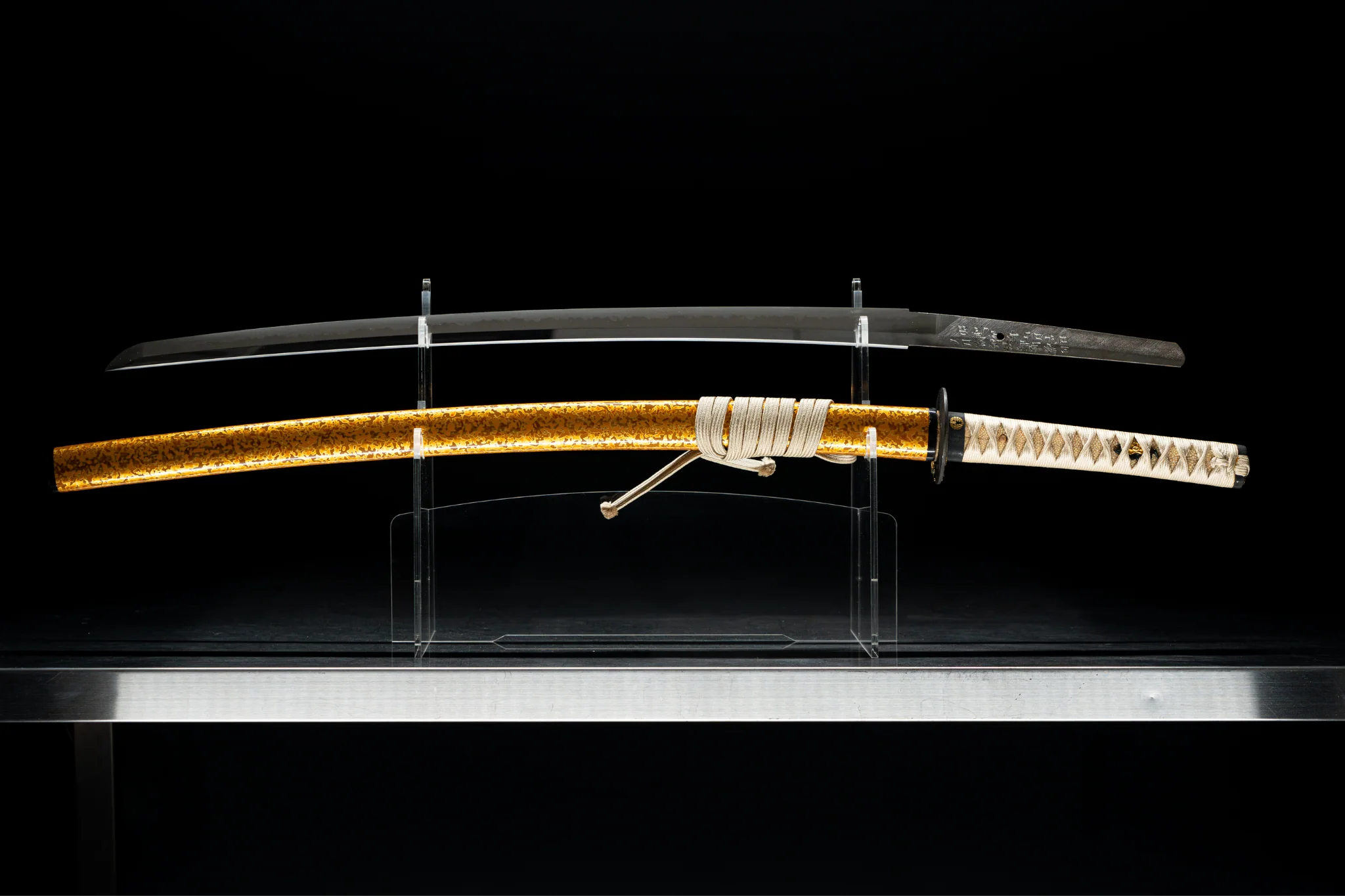
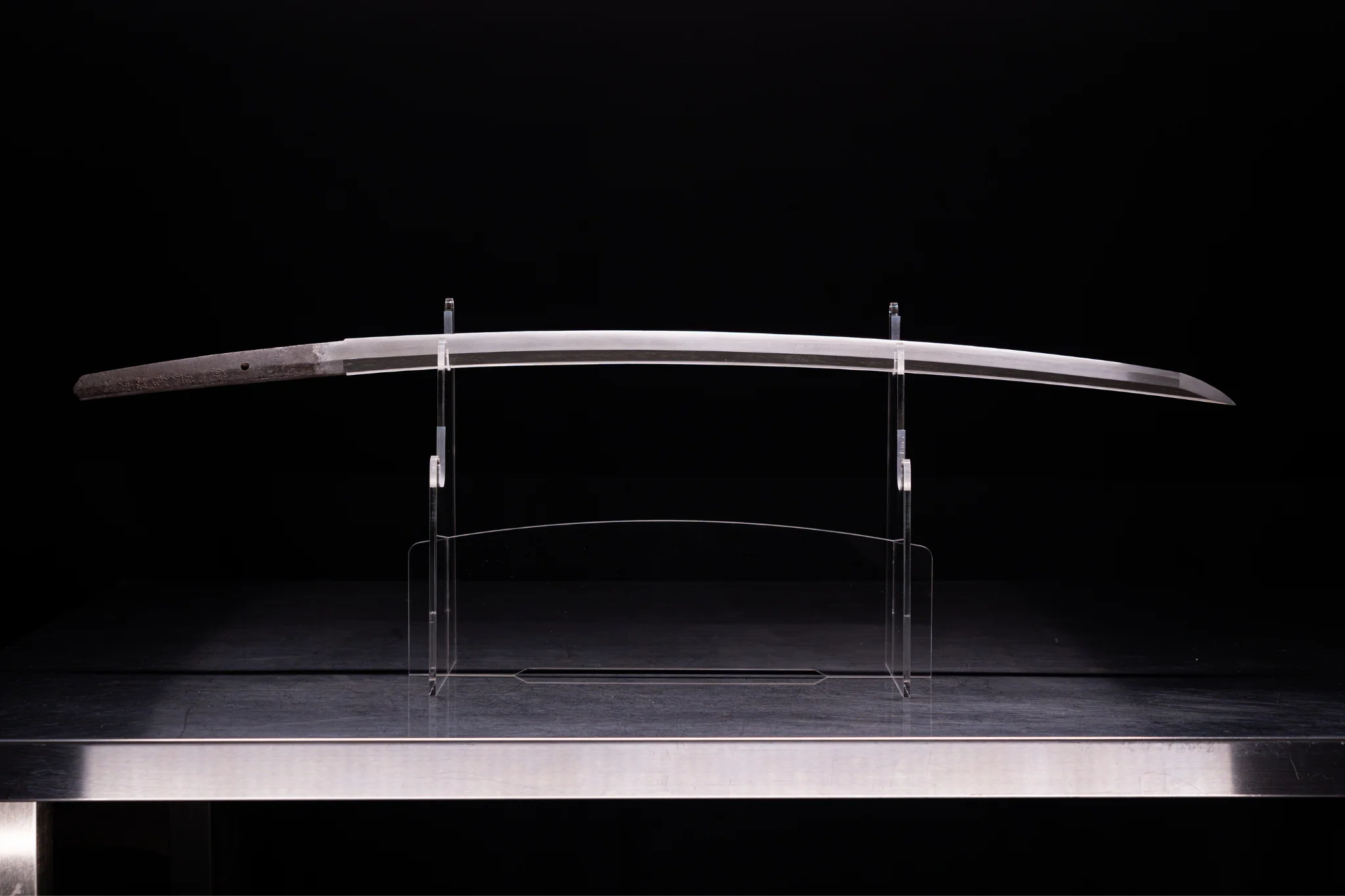
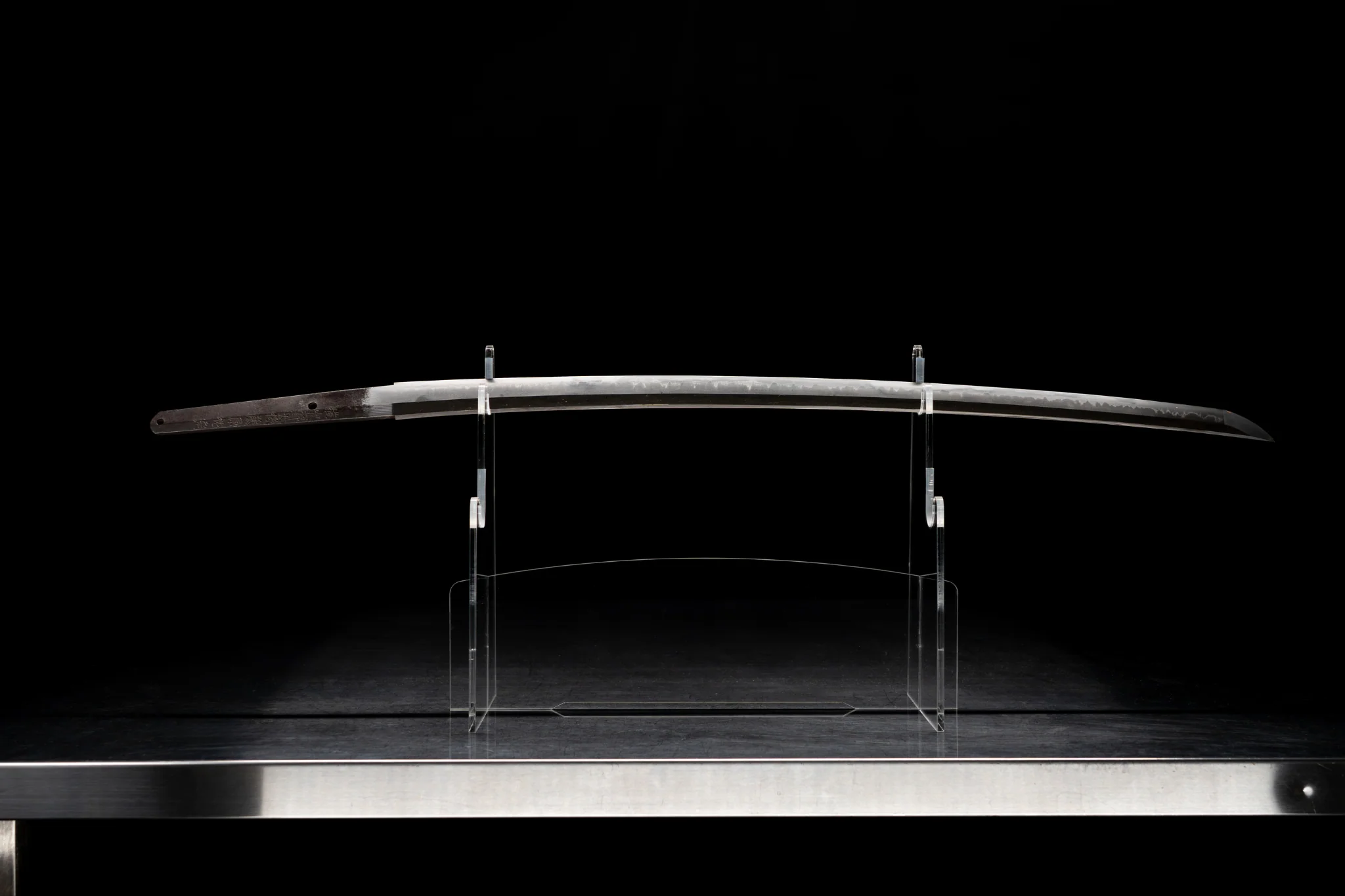
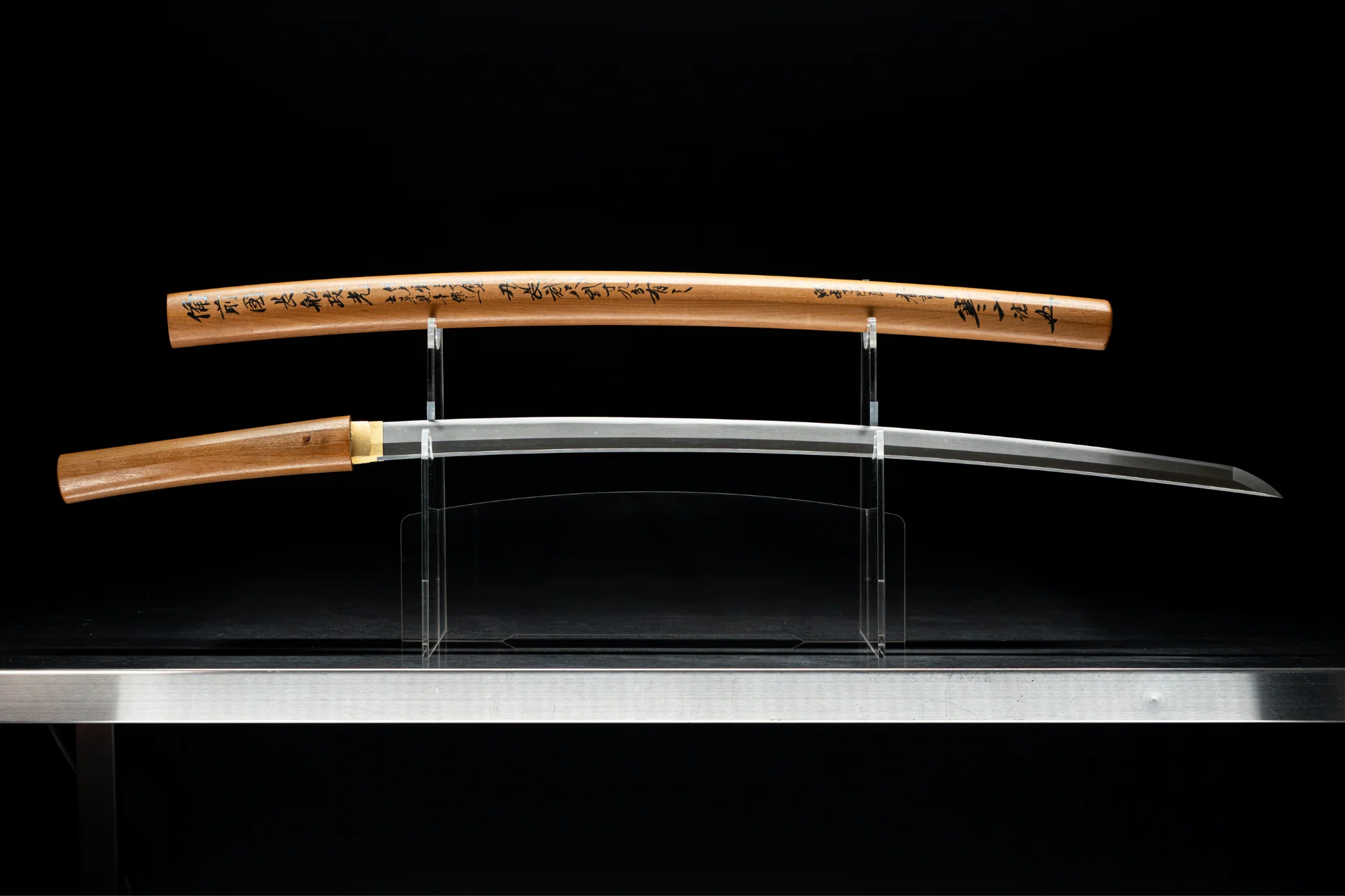
- Signature (Mei): 榎本伊豆住竜義作 Enomoto, Izu-jū Tatsuyoshi saku — "Made by Tatsuyoshi Enomoto, residing in Izu"
- Date (Nenki): 平成十五年十二月吉日 — Heisei 15, December, auspicious day (December 2003)
- Swordsmith: Enomoto Tatsuyoshi (榎本竜義) — highly regarded and sought-after gendaitō smith; specialist in ō-hada steel
- Classification: Gendaitō (modern sword) — highest rank
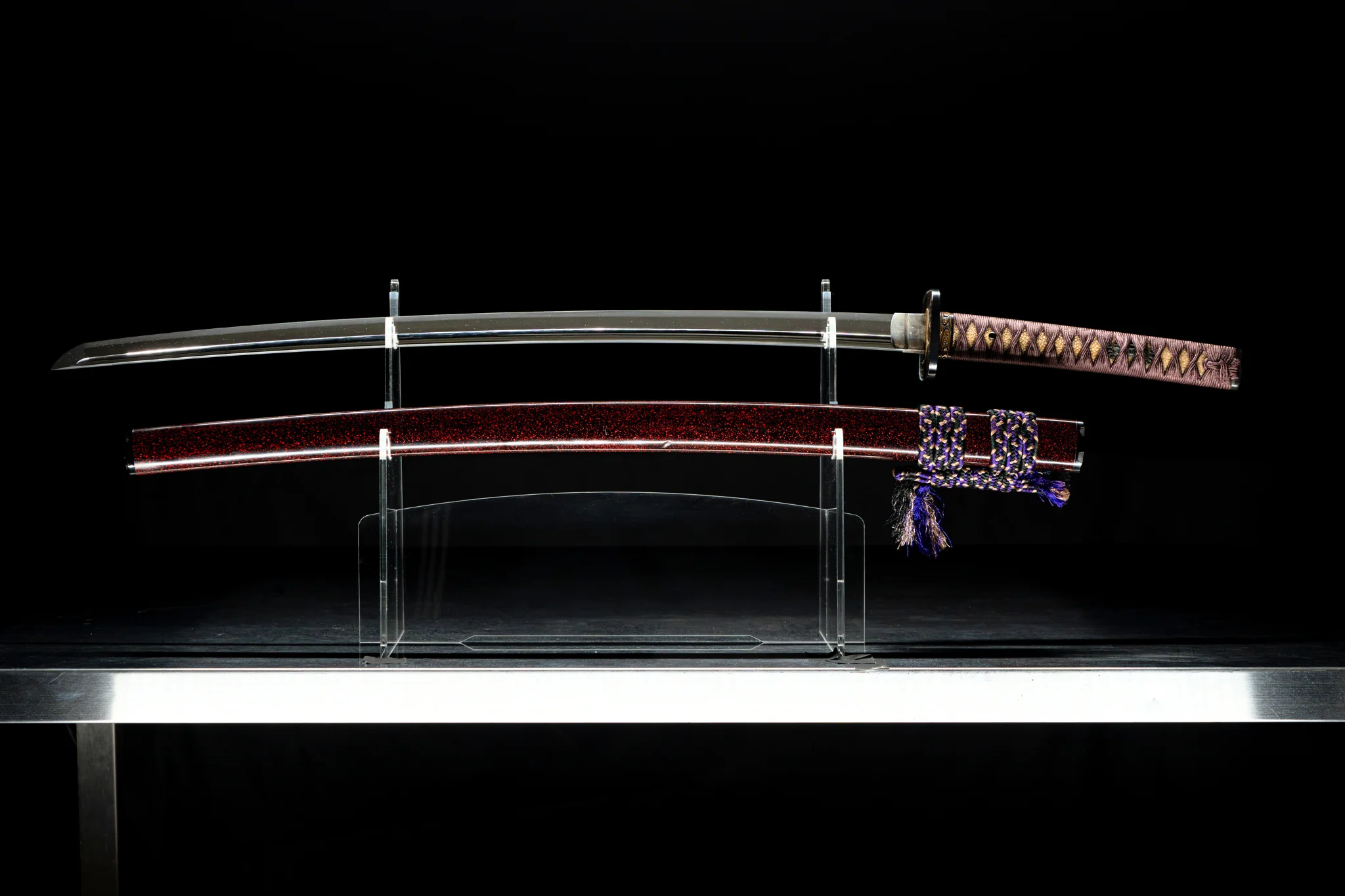
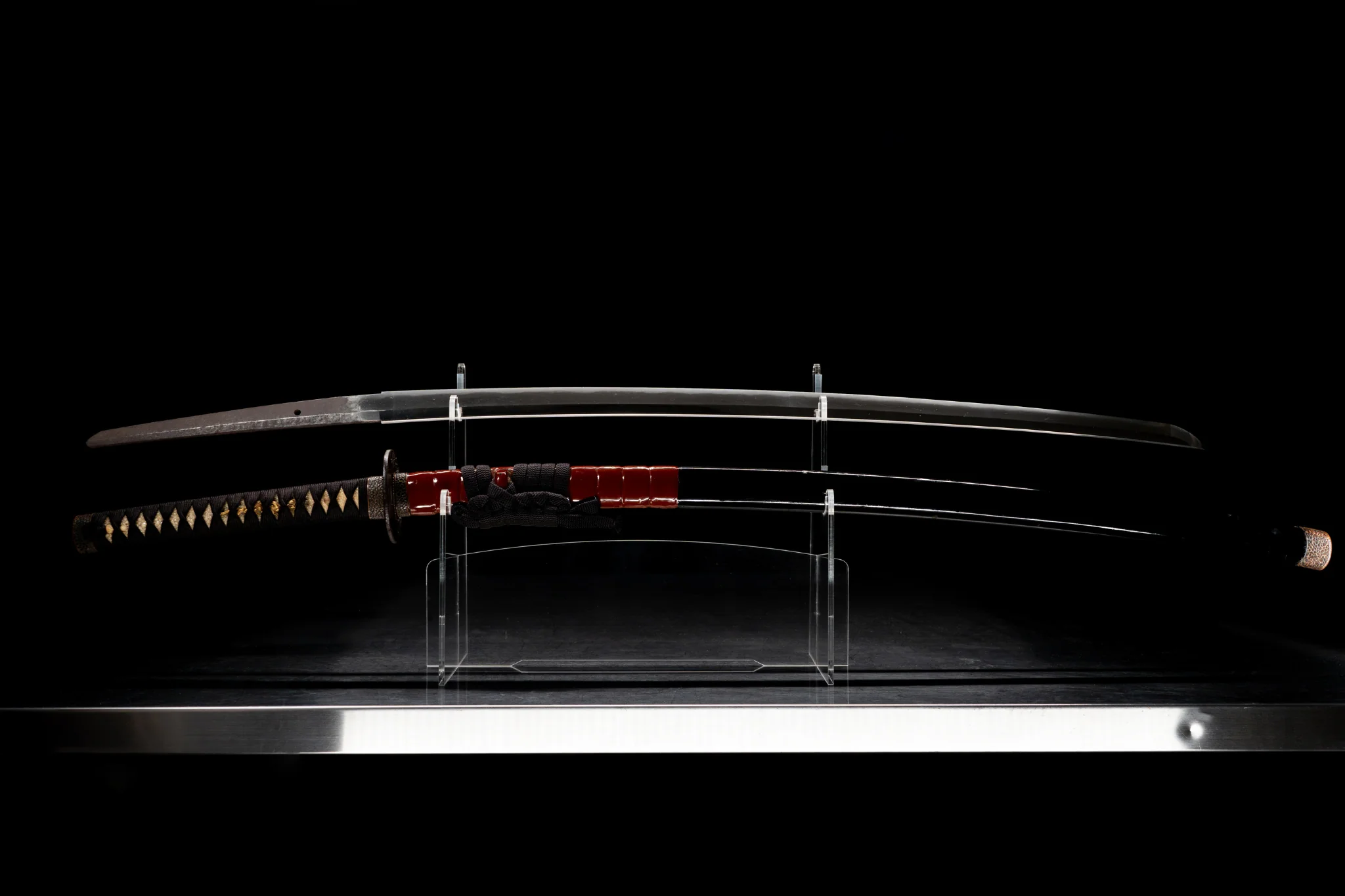
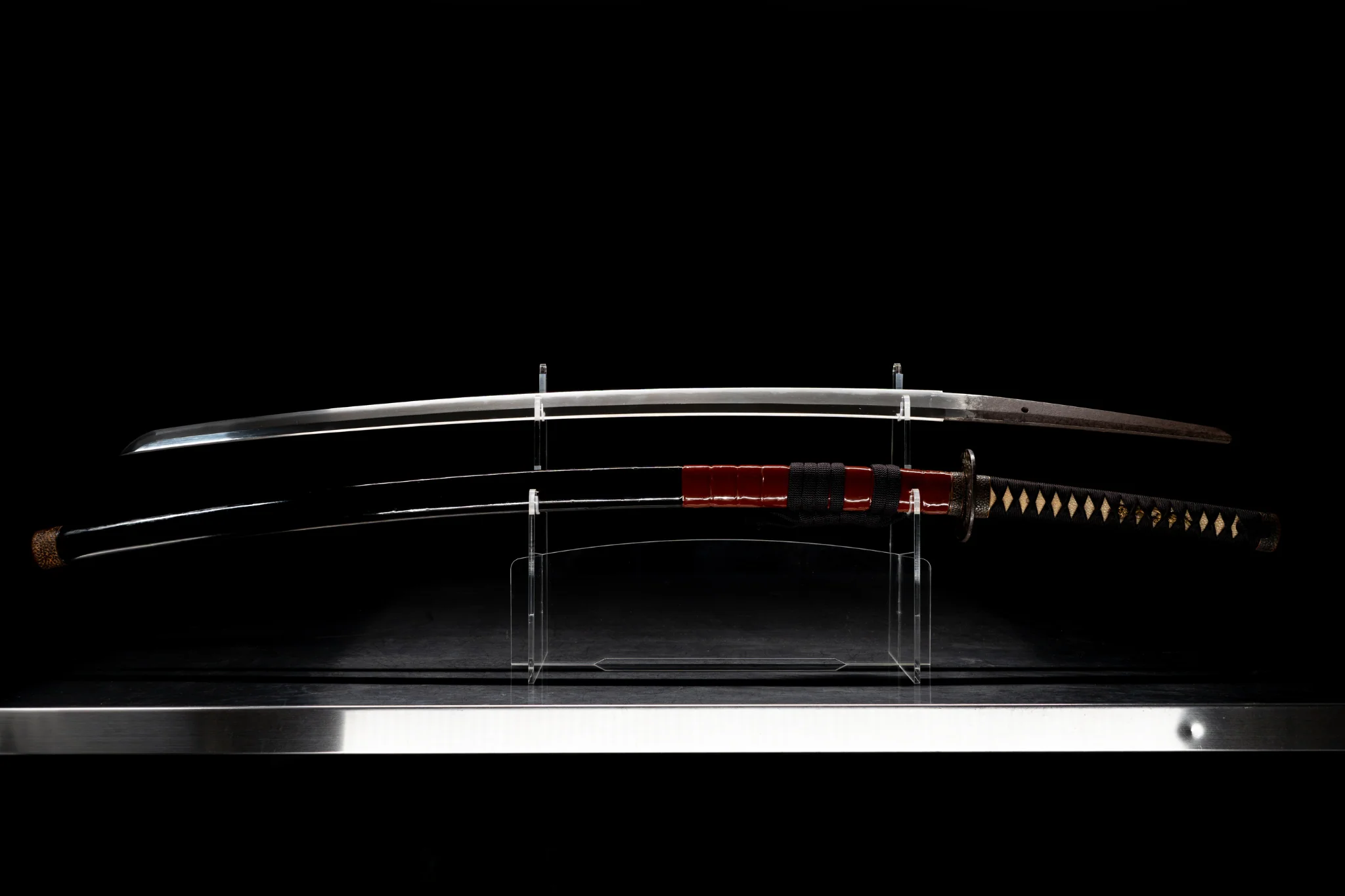
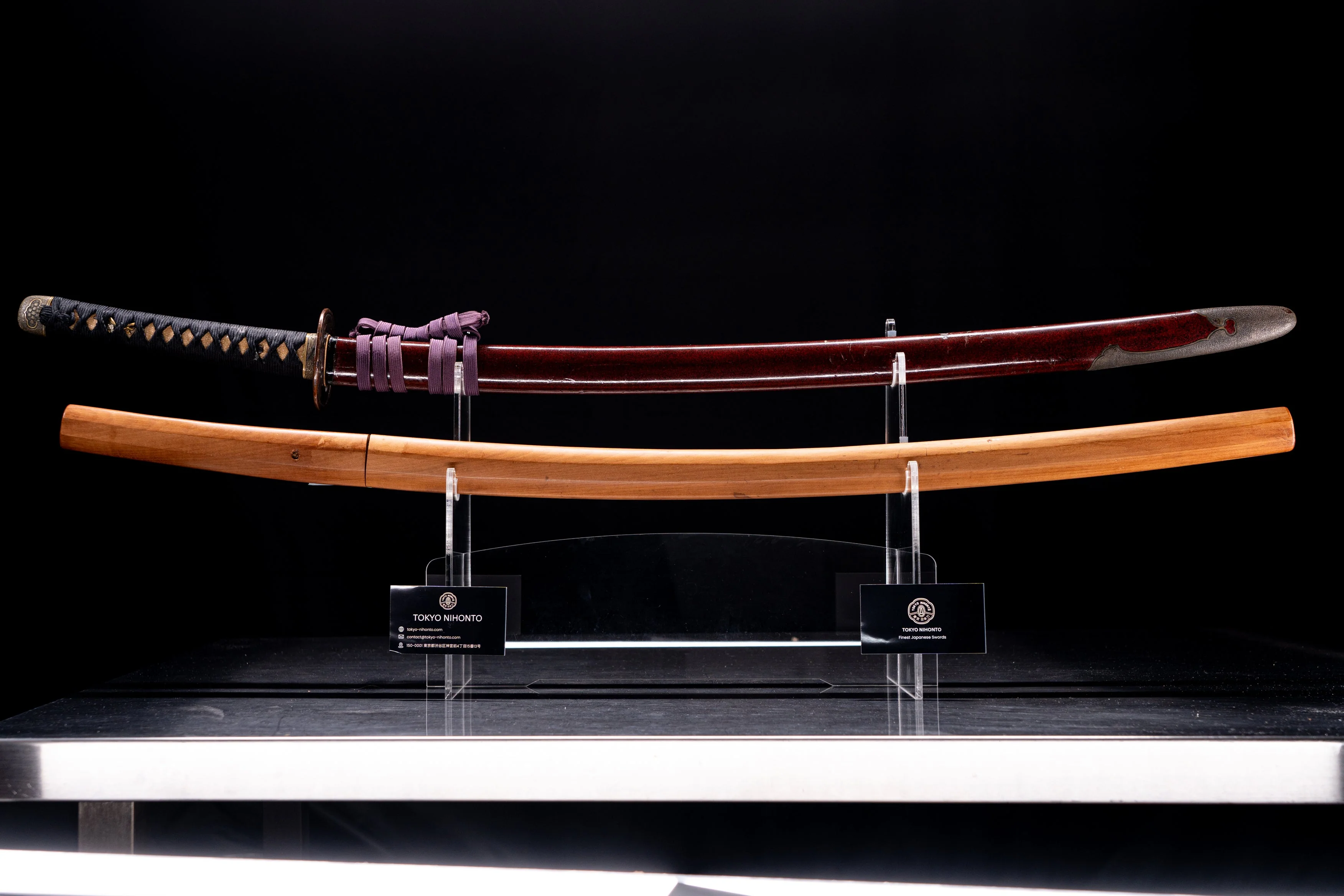
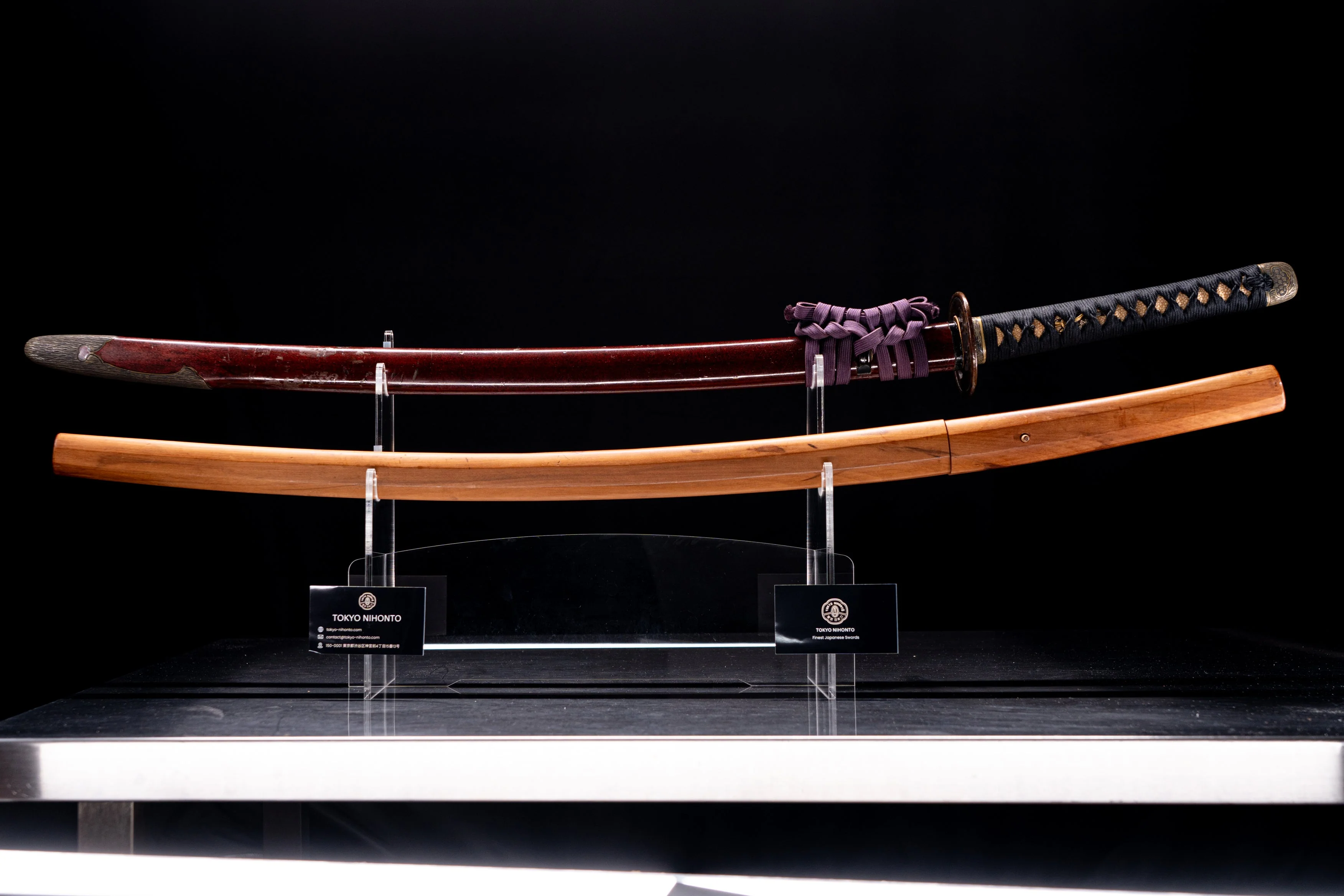
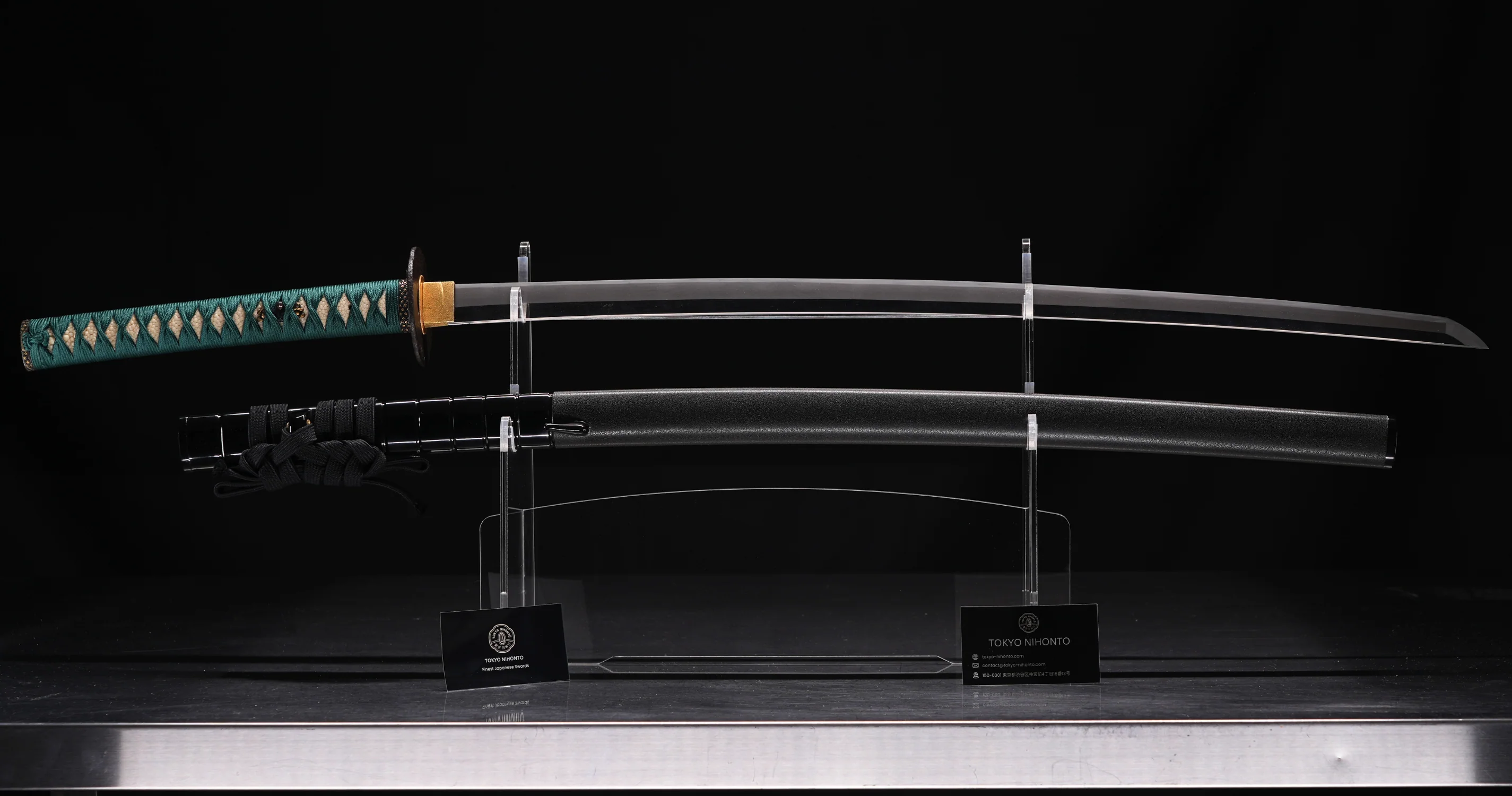
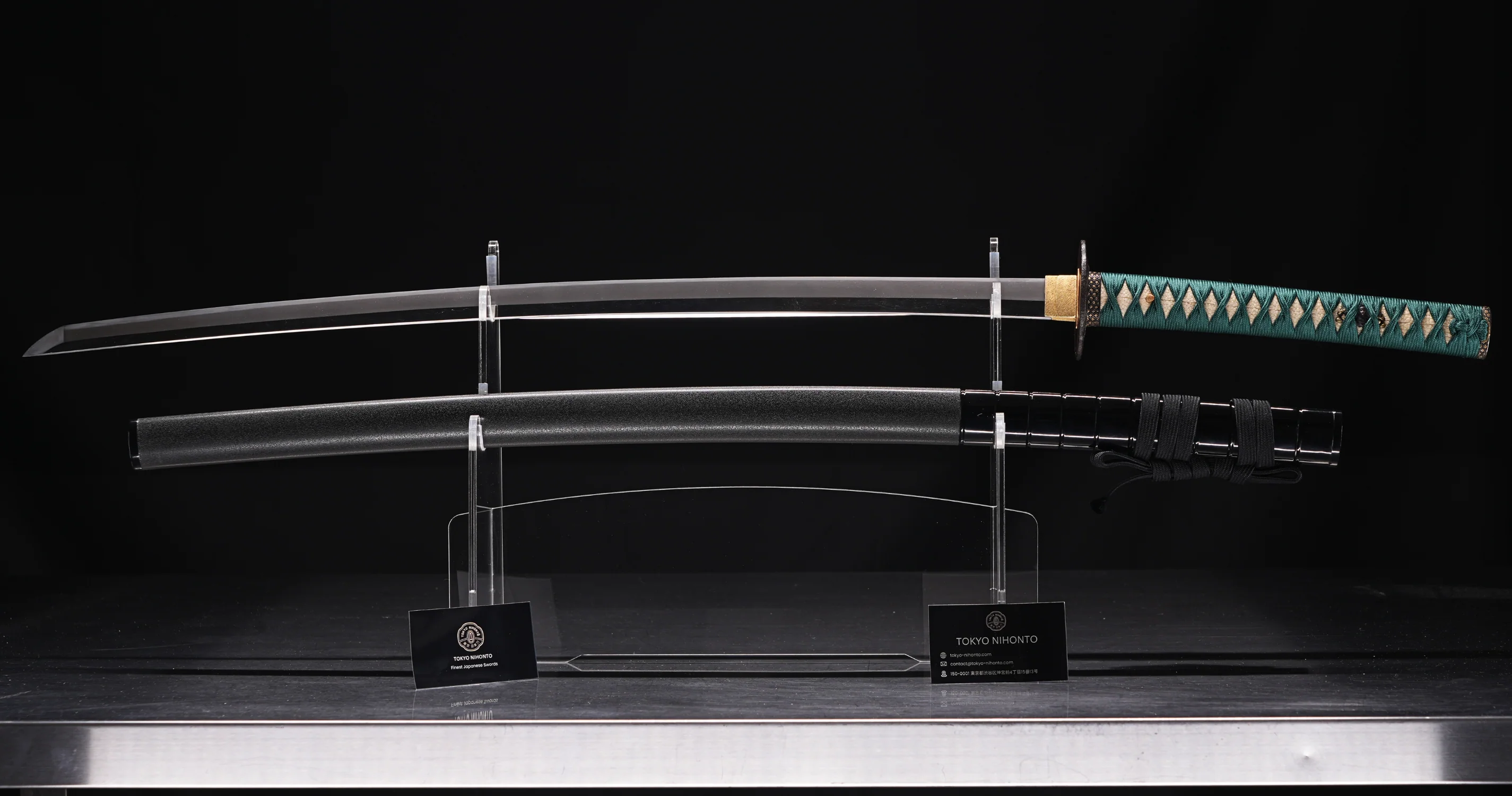
- Mounting: Higo Kuyō-mon koshirae — gold hirazogan karakusa iron tsuba with sukashi; matching gold inlay fuchi; Higo Kuyō-mon (九曜紋) menuki; copper habaki; black lacquer saya with cream-gold sageo
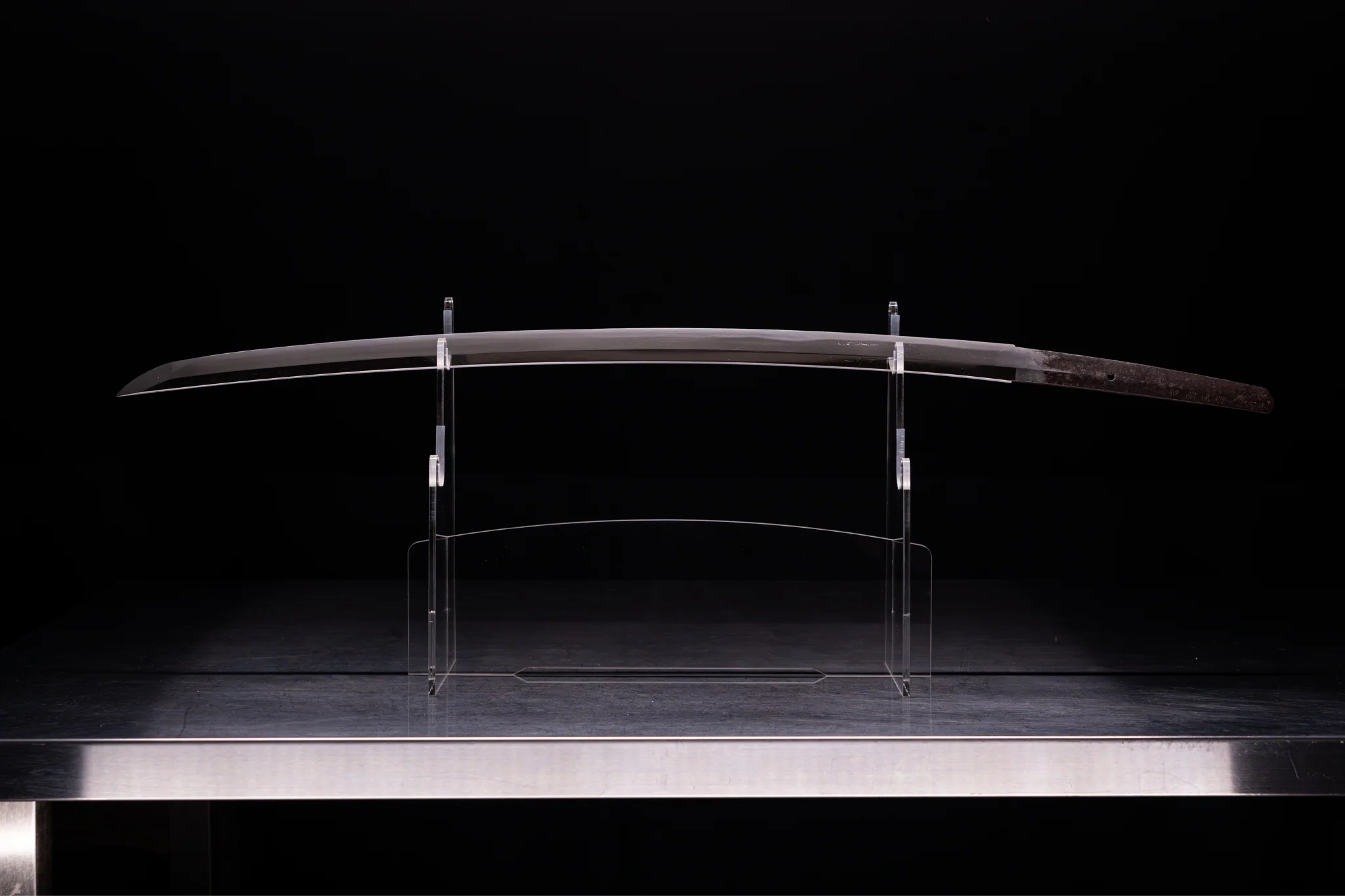
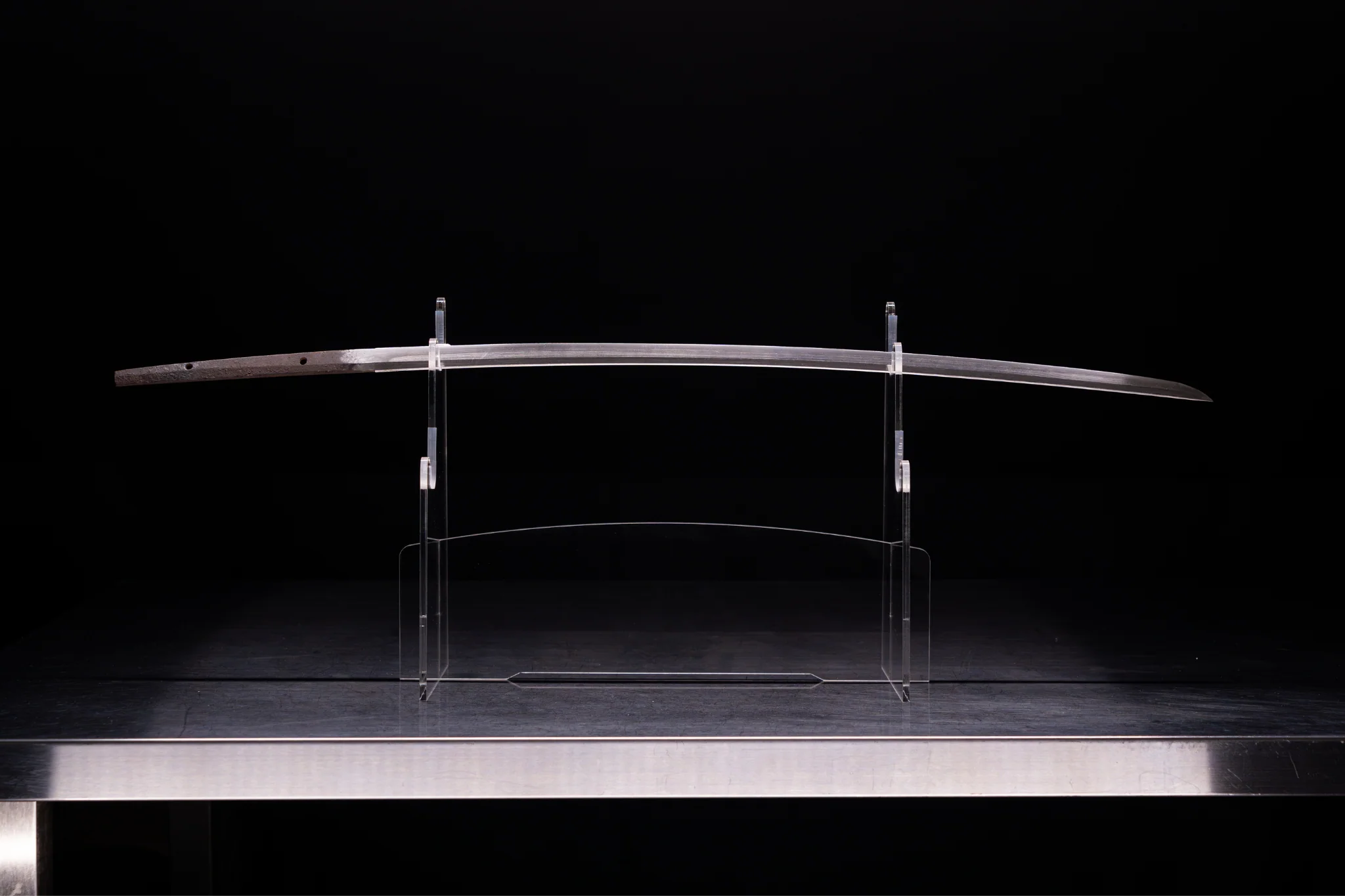
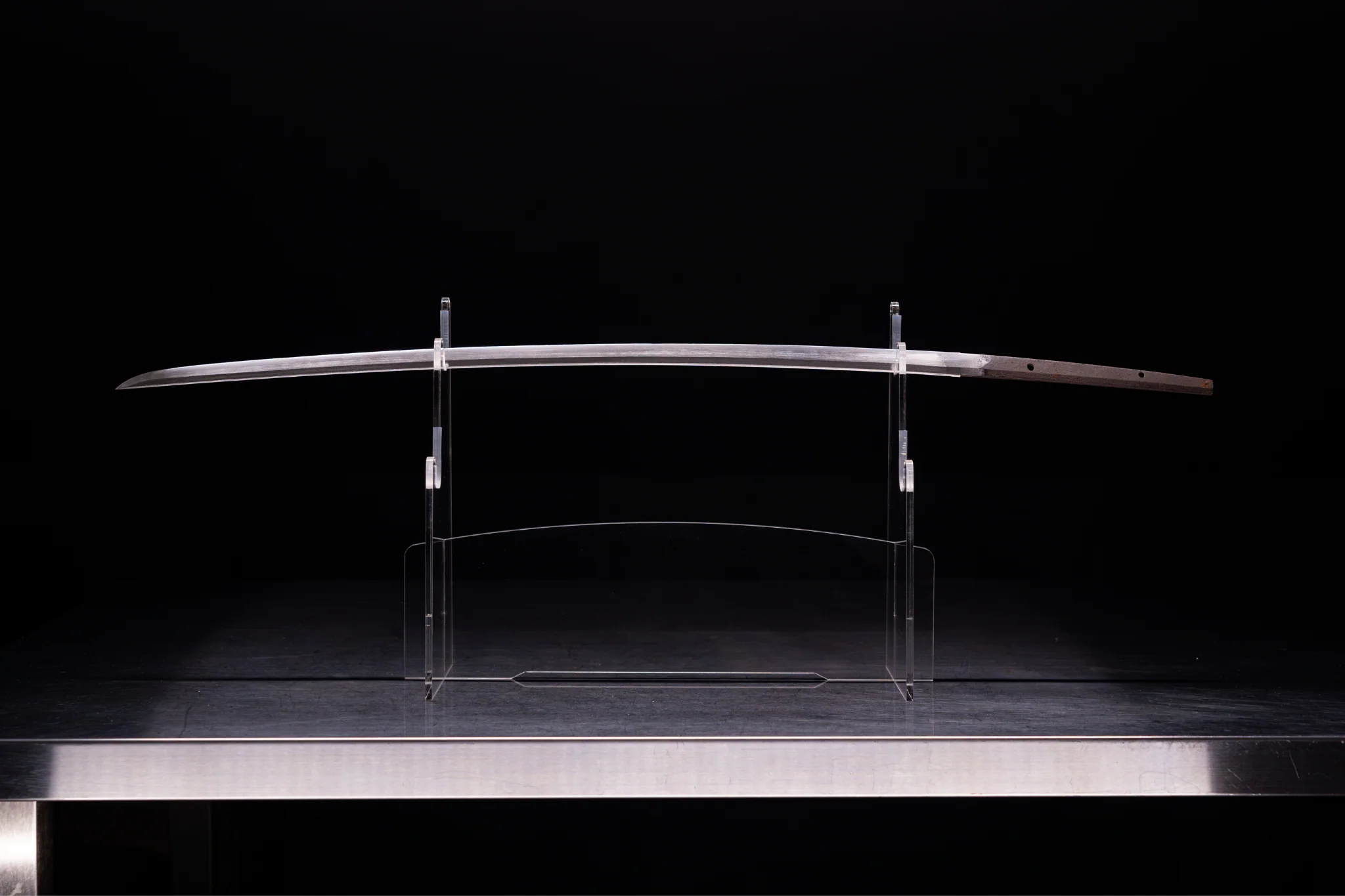
- Blade Length (Nagasa): 71.8 cm
- Curvature (Sori): 1.6 cm
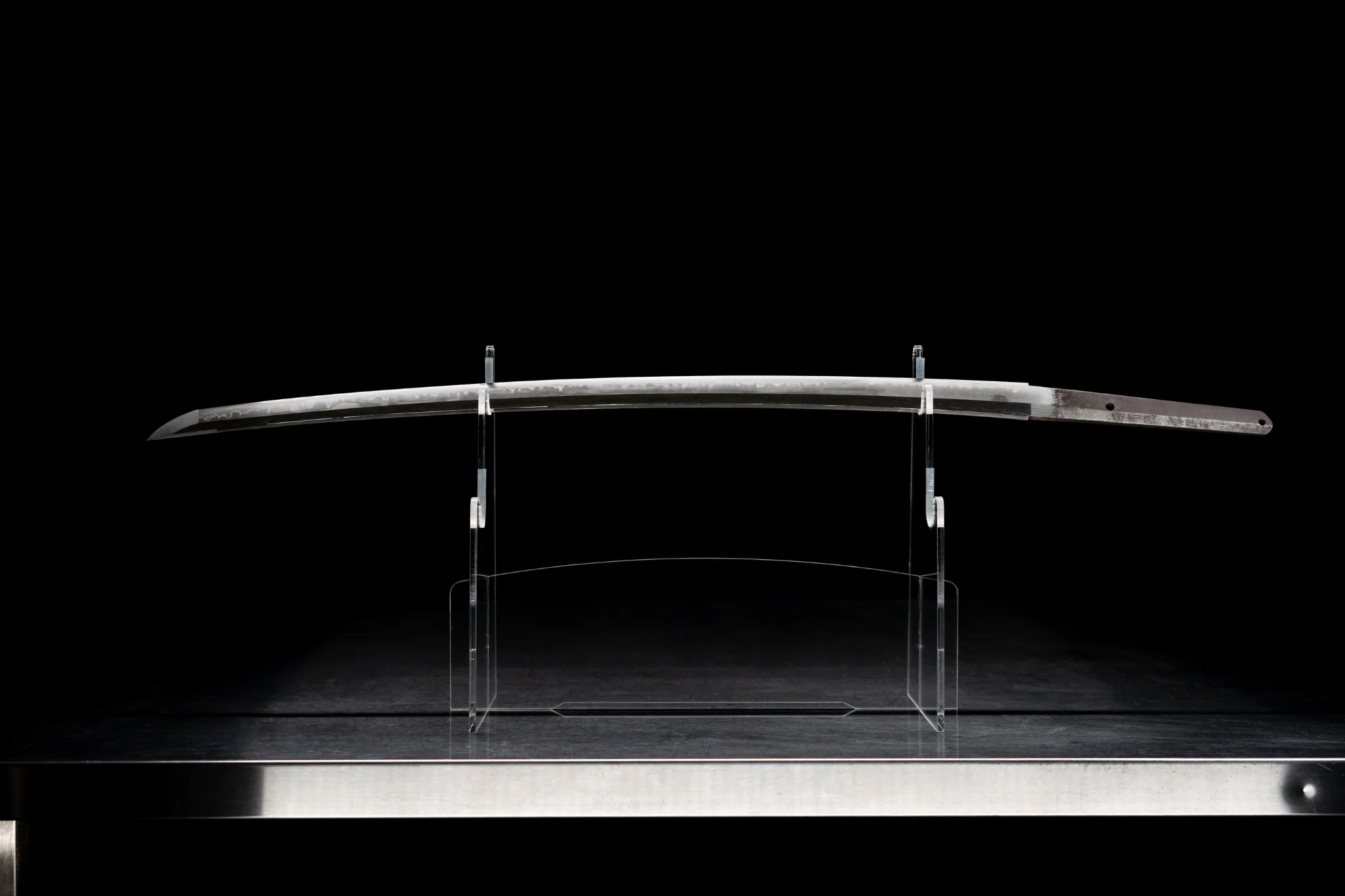
- Mekugi-ana: 2
- Shape: Shinogi-zukuri, ō-kissaki — broad, imposing proportions
- Motohaba: 32.2 mm / Sakihaba: 23.9 mm
- Motokasane: 6.9 mm / Sakikasane: 4.3 mm
- Blade Weight: 605 g / Total koshirae length: 104.5 cm
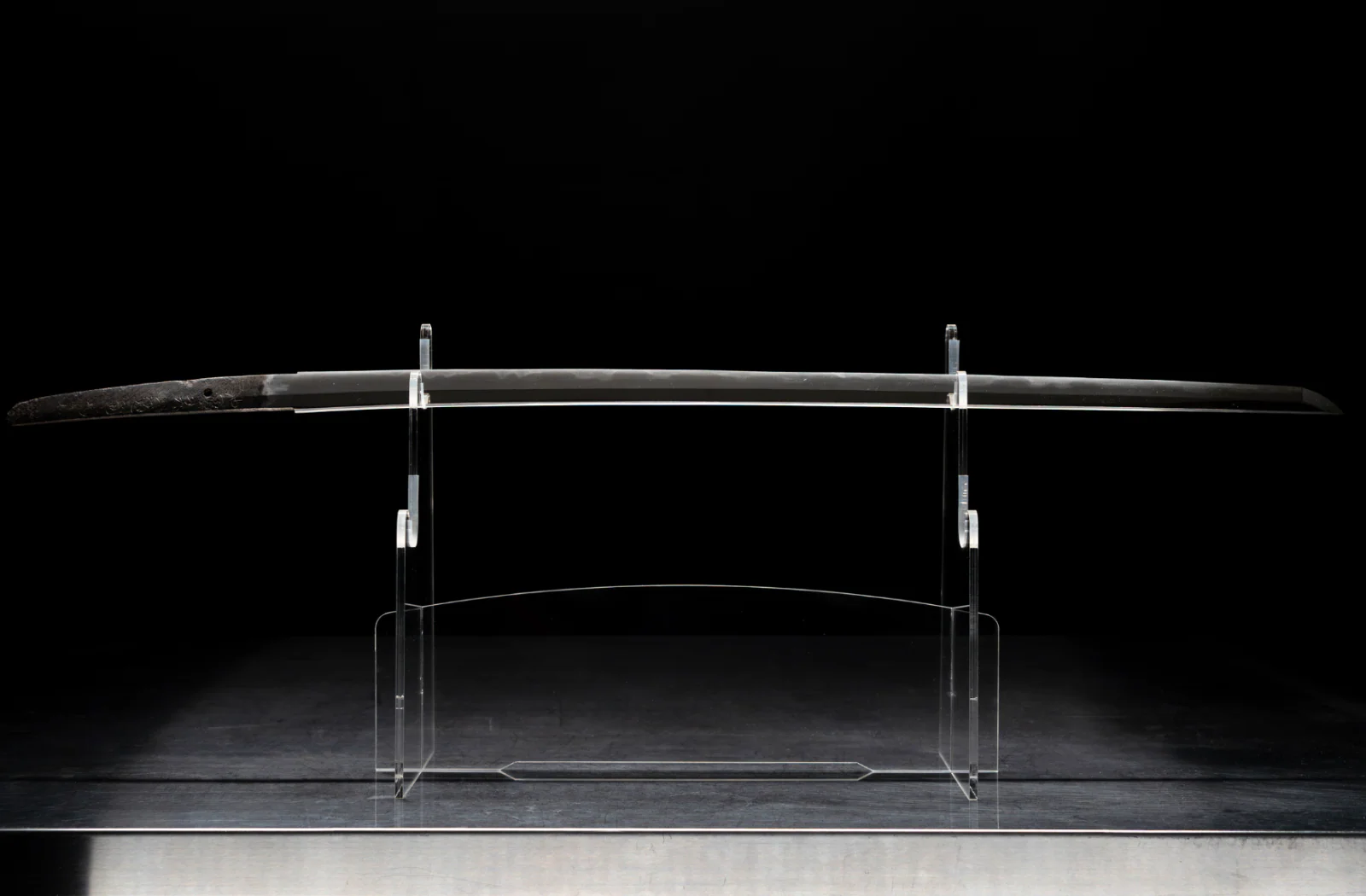
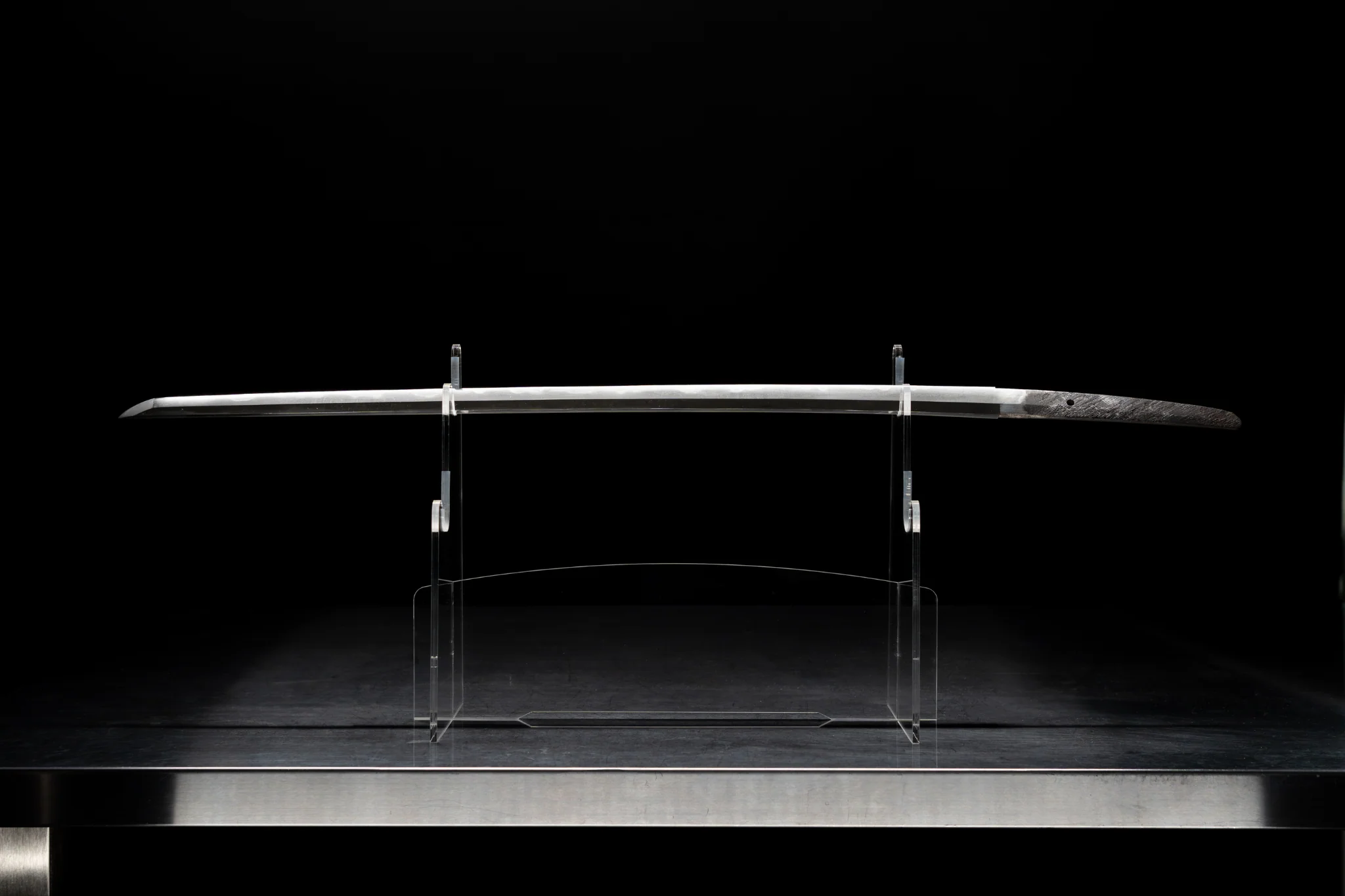
- Jihada: Intentional ō-hada (large wood-grain) — a distinctive artistic speciality of the smith
- Hamon: Bold gunome-midare / ō-midare with vigorous activity
- Habaki: Copper, single piece
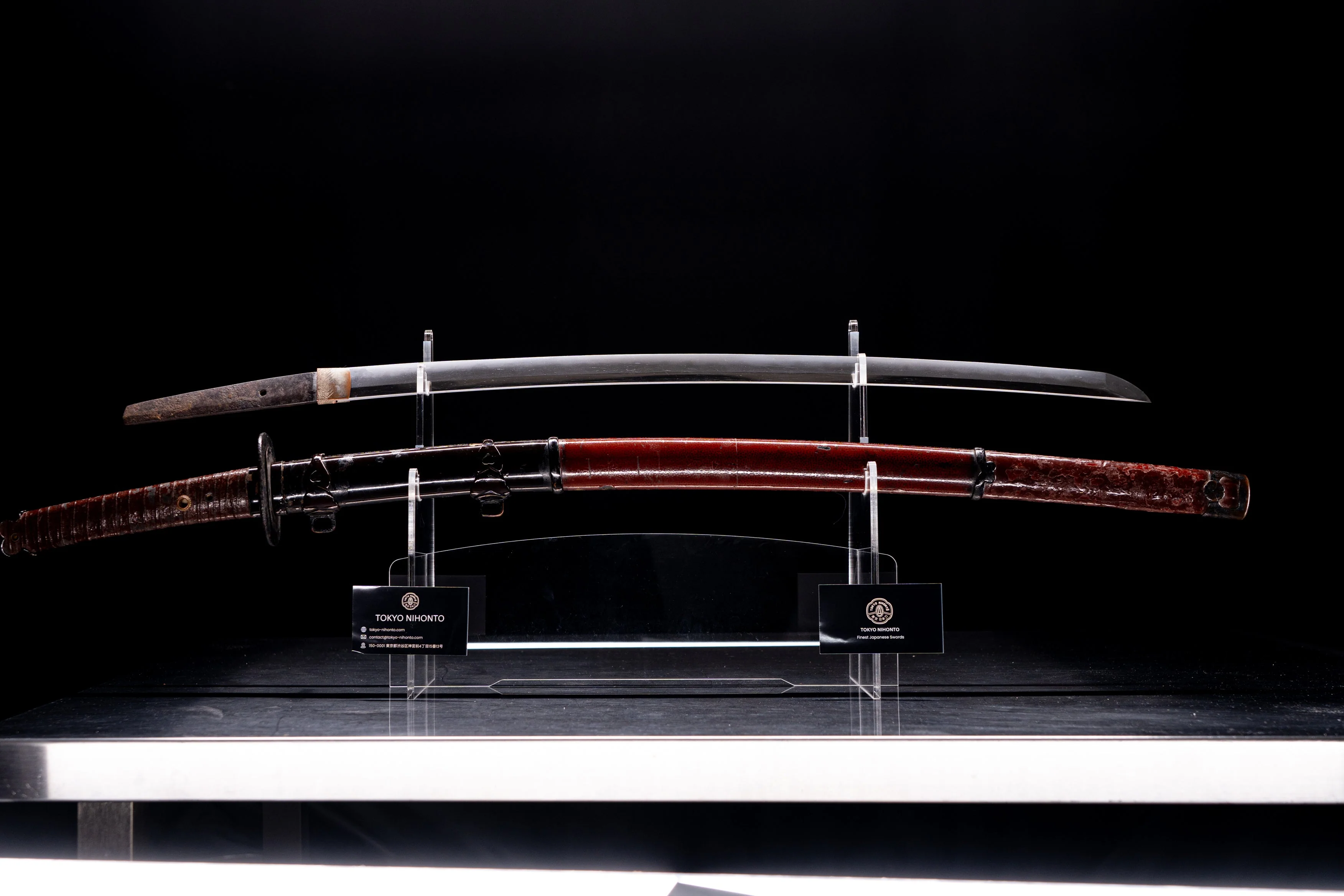
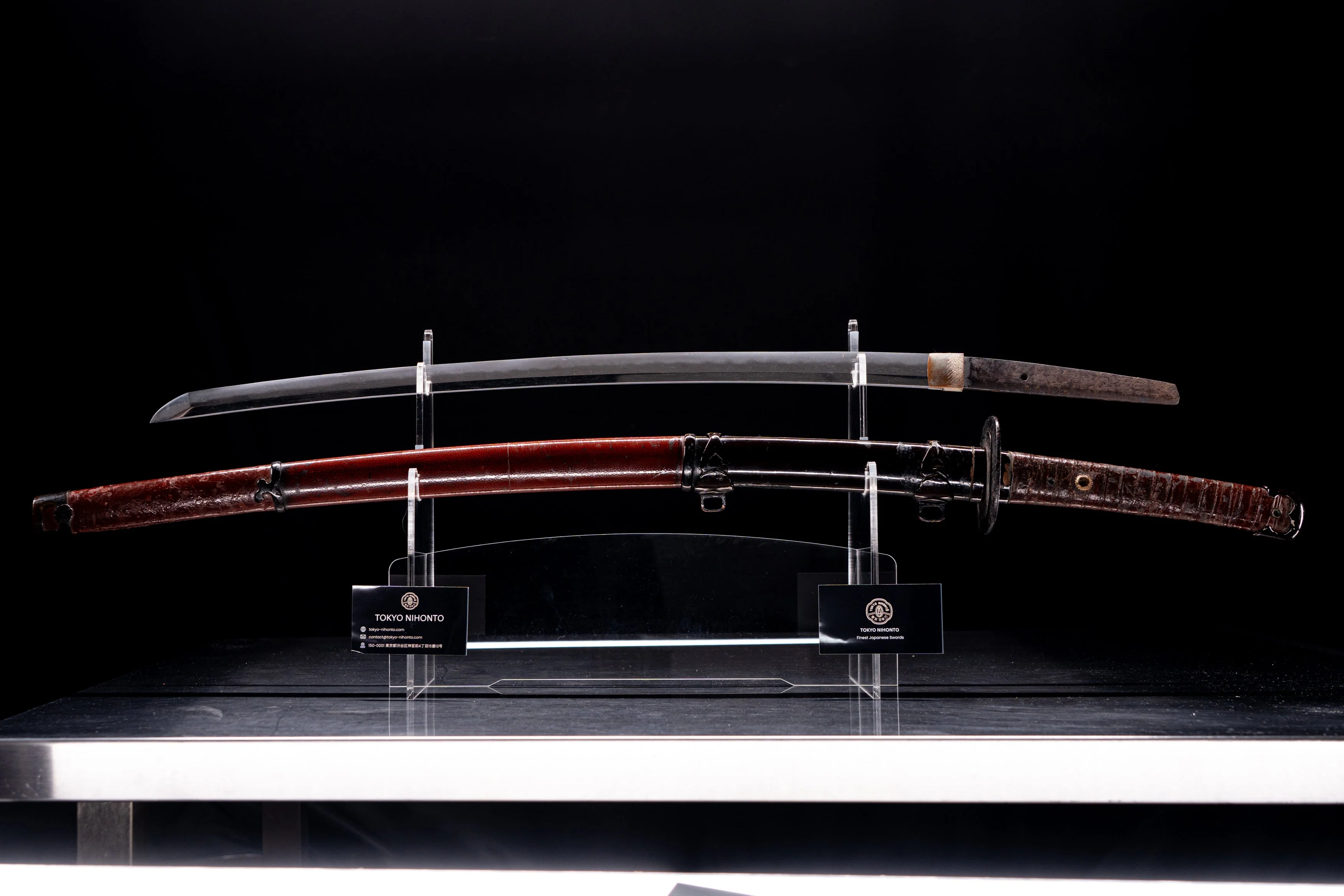
This exceptional Gendaitō Katana is a signed and dated work by Enomoto Tatsuyoshi (榎本竜義), one of the most highly regarded and sought-after modern swordsmiths of his generation — a craftsman whose mastery of ō-hada steel forging has earned him a devoted following among the most discerning collectors of contemporary Japanese swords. Dated December 2003 (Heisei 15), this is a blade from the mature peak of the smith's career, presented in a Higo Kuyō-mon koshirae of exceptional prestige — an ensemble whose aristocratic iconography matches the ambition and quality of the blade it dresses.
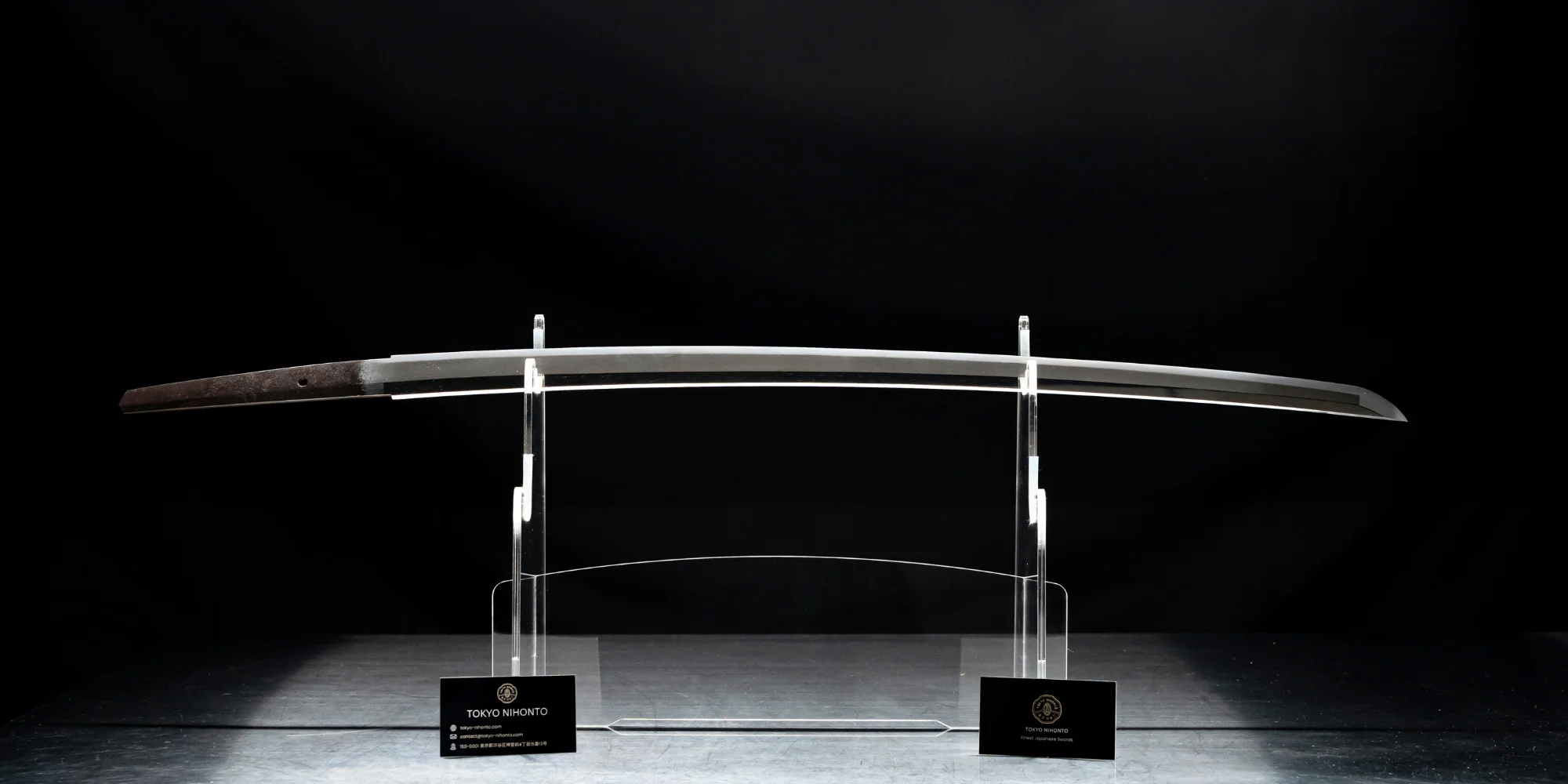
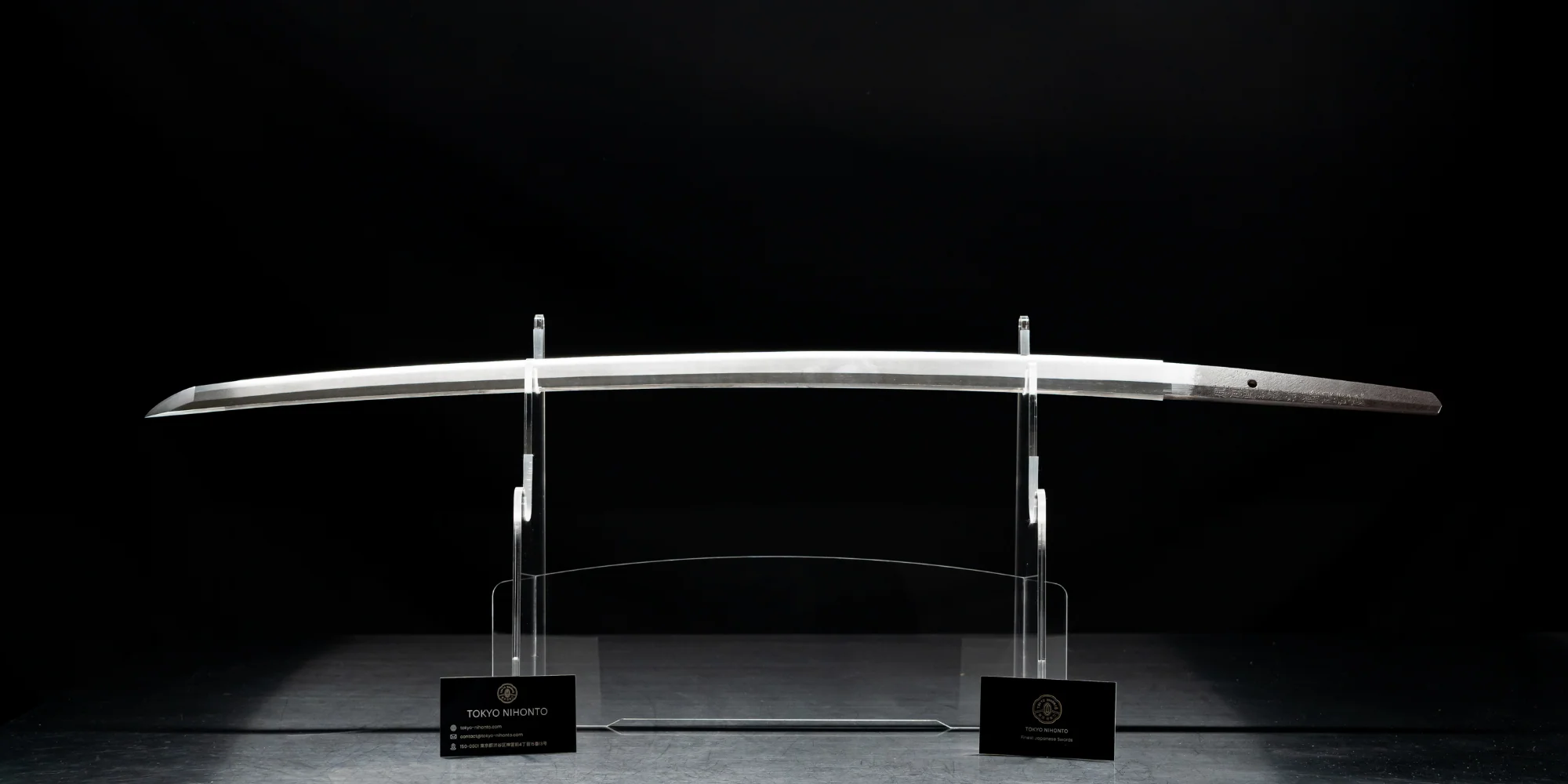
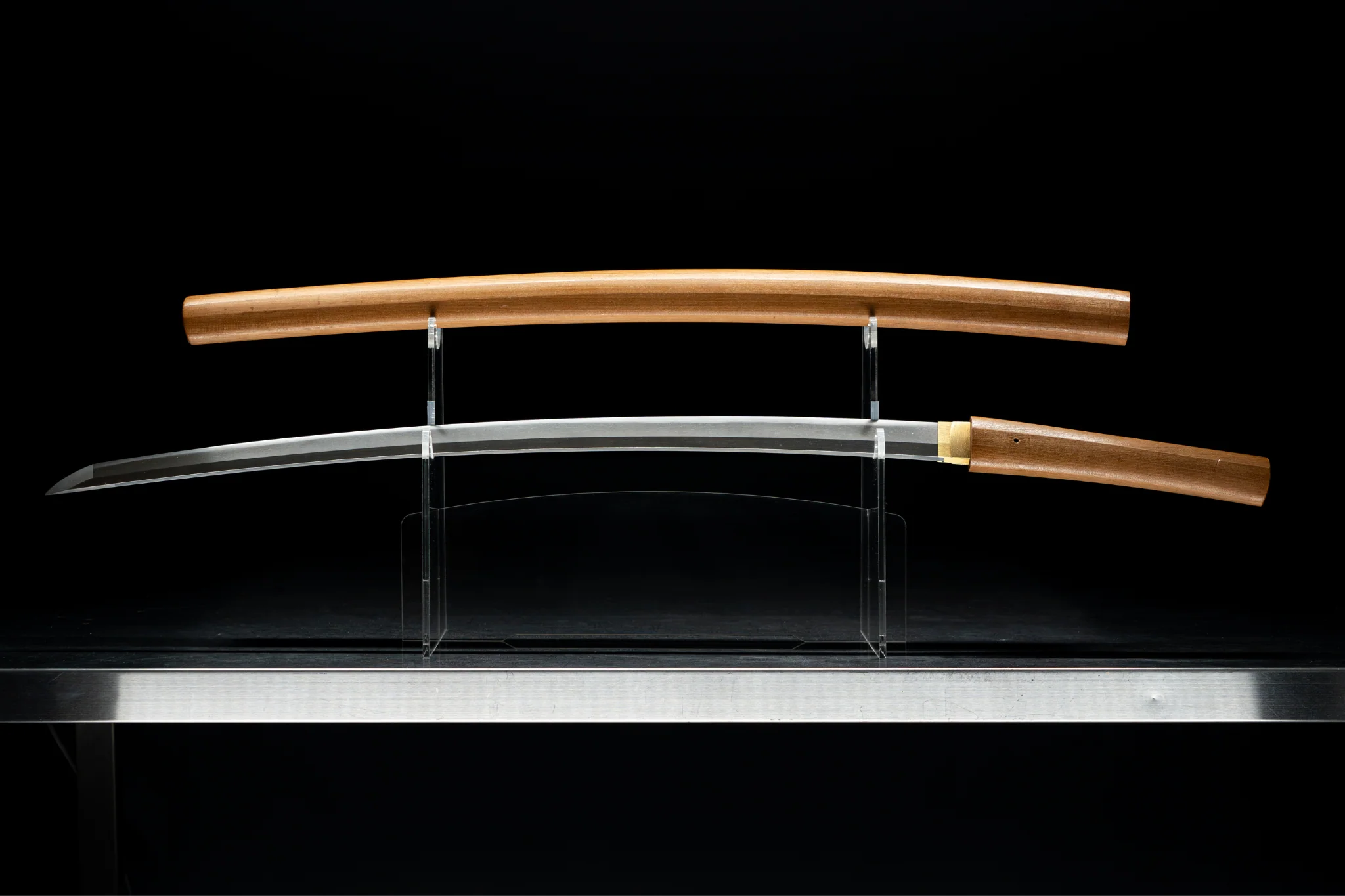
At 71.8 cm with a confident 1.6 cm sori, the blade's proportions are immediately commanding. The motohaba of 32.2 mm — broad even by the standards of generous modern work — tapers with authority to a sakihaba of 23.9 mm, the geometry carrying through a proud shinogi-zukuri profile to a sweeping ō-kissaki of generous fukura. This is a blade that asserts itself visually before a single other quality is examined — long, wide, powerfully curved, and crowned by a kissaki whose scale recalls the great ōdachi tradition of the Nanbokuchō period.
The defining quality of Enomoto Tatsuyoshi's work — and the characteristic that places him among a very small group of modern smiths with a truly distinctive artistic voice — is his deliberate cultivation of the ō-hada (large wood-grain) steel surface. Where most modern smiths aim for the fine, close-grained ko-itame or ko-mokume ji favored since the Shinshintō revival, Enomoto embraces the bold, flowing grain patterns of the ō-mokume tradition — a style that produces a jigane of extraordinary visual dynamism, its large, sweeping wood-grain lines visible across the entire body of the blade. The effect, seen in person, is of steel that appears to breathe — a living surface that rewards close examination with new detail at every angle of the light. This is not an accidental quality or a concession to lesser technique; it is a deliberate aesthetic statement, the product of a smith who has studied the classical tradition deeply enough to know when and why to depart from its conventions.
The hamon is bold and vigorous — a full gunome-midare with large, energetic peaks that traverse the cutting edge with martial confidence, the habuchi populated with active nie and the overall effect one of striking visual power. The ō-kissaki is resolved with a clean, composed boshi that turns back with authority, the hamon continuing into the point without hesitation. Two mekugi-ana punctuate the well-formed nakago, and the large copper habaki — its warm reddish tone an intentional contrast to the cold steel of the blade — anchors the sword within its magnificent koshirae.
Koshirae Details: Higo Kuyō-mon
The koshirae created for this blade is one of the most iconographically distinguished ensembles in the present collection, built around one of the most historically charged crests in Japanese samurai culture: the Higo Kuyō-mon (肥後九曜紋) — the nine-circle celestial crest of the Hosokawa clan, lords of Higo Province (modern Kumamoto) and one of the most powerful and culturally refined daimyō houses of the Edo period. To commission a sword koshirae bearing this crest is to invoke one of the great aristocratic traditions of Japanese sword culture — the Hosokawa were celebrated not merely as warriors but as supreme patrons of the arts, their Higo-mono school of metalwork producing some of the finest sword fittings in Japanese history.
The tsuba is the ensemble's most visually striking component. A large marugata (round) iron guard, its form is defined by bold sukashi openwork — two generous oval cuts creating a wheel-like silhouette of classical simplicity — while the entire rim is adorned with a continuous band of gold hirazogan (flat gold inlay): chrysanthemum blossoms alternating with sinuous karakusa scrollwork, the gold bright and warm against the deep aged iron ground. The precision of the inlay work and the elegance of the floral arrangement speak to a specialist kinko hand — this is decorative metalwork of genuine quality, not factory embellishment.
The fuchi continues the gold hirazogan program with absolute consistency — the same chrysanthemum-and-karakusa motif rendered at the smaller scale of the collar, creating a seamless visual bridge between tsuka and tsuba. The unity of conception between these two pieces confirms that the koshirae was designed as a coherent artistic commission from the outset, not assembled from disparate sources.
The menuki carry the ensemble's central iconographic statement: the Higo Kuyō-mon — nine circles arranged in the traditional configuration of the Hosokawa clan crest — rendered in gold/brass against a dark ground. These are not decorative abstractions but a specific, historically loaded heraldic device, one of the most recognizable aristocratic crests in Japanese cultural history.
The tsuka is wrapped in black leather (kawa) in tight hishi-maki diamond braid over white same (ray skin), the luminous same nodules visible through each aperture, the overall handle severe and elegant in its restraint — a perfect counterpoint to the ornate richness of the gold inlay fittings. The saya is finished in deep black lacquer with a cream and gold sageo — the warm cord providing the koshirae's only chromatic warmth against an otherwise composed palette of black, iron, and gold.
Swordsmith: Enomoto Tatsuyoshi
Enomoto Tatsuyoshi (榎本竜義), working from Izu Province (present-day Shizuoka Prefecture), is counted among the most talented and sought-after swordsmiths of the contemporary era. His reputation rests above all on his mastery of ō-hada mono — blades in which the steel's grain structure is deliberately cultivated to produce the large, flowing wood-grain patterns of the ō-mokume tradition. This is a demanding and relatively rare speciality among modern smiths: producing genuine, controlled ō-hada requires a deep understanding of the folding and forging variables that govern grain structure, and the ability to harness what less skilled hands would regard as a defect and transform it into an aesthetic signature of power and distinction.
His blades are described in Japanese collecting circles as 大変貴重 — "extremely precious" or "of exceptional rarity" — and as the work of a 人気刀工 (popular and esteemed swordsmith) whose output is eagerly sought by collectors at the highest level of the contemporary market. The present blade, dated to December 2003, represents the smith at full maturity — his technical mastery and artistic vision fully developed, the ō-hada surface and bold gunome-midare hamon combining to produce a work of individual character that stands apart from the more conventional beauties of modern Japanese swordsmanship.
Historical Context: Gendaitō and the Higo Tradition
Gendaitō — "modern swords" forged after the Meiji Restoration (1868) and particularly those made in strict accordance with traditional hand-forging methods using tamahagane steel — represent the living continuation of Japan's greatest craft tradition. The finest gendaitō smiths approach their work with the same scholarly seriousness as the great masters of the Kamakura and Muromachi periods, studying historical works, mastering classical techniques, and developing personal artistic voices within the inherited tradition. Enomoto Tatsuyoshi's ō-hada speciality situates him within a lineage reaching back to the bold, distinctive steel work of certain Sōshū and Yamato-den smiths who understood that the grain of the steel was itself an expressive medium.
The Higo-mono tradition of metalwork — associated with the Hosokawa domain of Higo Province and the workshops they patronized from the early Edo period — produced some of the most admired sword fittings in Japanese history, distinguished by their bold simplicity, high-quality iron, and restrained use of precious metal inlay. The koshirae of the present sword, with its gold hirazogan tsuba and fuchi and its Kuyō-mon menuki, consciously invokes this great tradition — connecting a blade forged in 2003 to one of the most distinguished streams in the entire history of Japanese sword culture.
Original: $4,400.00
-65%$4,400.00
$1,540.00Product Information
Product Information
Shipping & Returns
Shipping & Returns
Description
- Signature (Mei): 榎本伊豆住竜義作 Enomoto, Izu-jū Tatsuyoshi saku — "Made by Tatsuyoshi Enomoto, residing in Izu"
- Date (Nenki): 平成十五年十二月吉日 — Heisei 15, December, auspicious day (December 2003)
- Swordsmith: Enomoto Tatsuyoshi (榎本竜義) — highly regarded and sought-after gendaitō smith; specialist in ō-hada steel
- Classification: Gendaitō (modern sword) — highest rank
- Mounting: Higo Kuyō-mon koshirae — gold hirazogan karakusa iron tsuba with sukashi; matching gold inlay fuchi; Higo Kuyō-mon (九曜紋) menuki; copper habaki; black lacquer saya with cream-gold sageo
- Blade Length (Nagasa): 71.8 cm
- Curvature (Sori): 1.6 cm
- Mekugi-ana: 2
- Shape: Shinogi-zukuri, ō-kissaki — broad, imposing proportions
- Motohaba: 32.2 mm / Sakihaba: 23.9 mm
- Motokasane: 6.9 mm / Sakikasane: 4.3 mm
- Blade Weight: 605 g / Total koshirae length: 104.5 cm
- Jihada: Intentional ō-hada (large wood-grain) — a distinctive artistic speciality of the smith
- Hamon: Bold gunome-midare / ō-midare with vigorous activity
- Habaki: Copper, single piece
This exceptional Gendaitō Katana is a signed and dated work by Enomoto Tatsuyoshi (榎本竜義), one of the most highly regarded and sought-after modern swordsmiths of his generation — a craftsman whose mastery of ō-hada steel forging has earned him a devoted following among the most discerning collectors of contemporary Japanese swords. Dated December 2003 (Heisei 15), this is a blade from the mature peak of the smith's career, presented in a Higo Kuyō-mon koshirae of exceptional prestige — an ensemble whose aristocratic iconography matches the ambition and quality of the blade it dresses.
At 71.8 cm with a confident 1.6 cm sori, the blade's proportions are immediately commanding. The motohaba of 32.2 mm — broad even by the standards of generous modern work — tapers with authority to a sakihaba of 23.9 mm, the geometry carrying through a proud shinogi-zukuri profile to a sweeping ō-kissaki of generous fukura. This is a blade that asserts itself visually before a single other quality is examined — long, wide, powerfully curved, and crowned by a kissaki whose scale recalls the great ōdachi tradition of the Nanbokuchō period.
The defining quality of Enomoto Tatsuyoshi's work — and the characteristic that places him among a very small group of modern smiths with a truly distinctive artistic voice — is his deliberate cultivation of the ō-hada (large wood-grain) steel surface. Where most modern smiths aim for the fine, close-grained ko-itame or ko-mokume ji favored since the Shinshintō revival, Enomoto embraces the bold, flowing grain patterns of the ō-mokume tradition — a style that produces a jigane of extraordinary visual dynamism, its large, sweeping wood-grain lines visible across the entire body of the blade. The effect, seen in person, is of steel that appears to breathe — a living surface that rewards close examination with new detail at every angle of the light. This is not an accidental quality or a concession to lesser technique; it is a deliberate aesthetic statement, the product of a smith who has studied the classical tradition deeply enough to know when and why to depart from its conventions.
The hamon is bold and vigorous — a full gunome-midare with large, energetic peaks that traverse the cutting edge with martial confidence, the habuchi populated with active nie and the overall effect one of striking visual power. The ō-kissaki is resolved with a clean, composed boshi that turns back with authority, the hamon continuing into the point without hesitation. Two mekugi-ana punctuate the well-formed nakago, and the large copper habaki — its warm reddish tone an intentional contrast to the cold steel of the blade — anchors the sword within its magnificent koshirae.
Koshirae Details: Higo Kuyō-mon
The koshirae created for this blade is one of the most iconographically distinguished ensembles in the present collection, built around one of the most historically charged crests in Japanese samurai culture: the Higo Kuyō-mon (肥後九曜紋) — the nine-circle celestial crest of the Hosokawa clan, lords of Higo Province (modern Kumamoto) and one of the most powerful and culturally refined daimyō houses of the Edo period. To commission a sword koshirae bearing this crest is to invoke one of the great aristocratic traditions of Japanese sword culture — the Hosokawa were celebrated not merely as warriors but as supreme patrons of the arts, their Higo-mono school of metalwork producing some of the finest sword fittings in Japanese history.
The tsuba is the ensemble's most visually striking component. A large marugata (round) iron guard, its form is defined by bold sukashi openwork — two generous oval cuts creating a wheel-like silhouette of classical simplicity — while the entire rim is adorned with a continuous band of gold hirazogan (flat gold inlay): chrysanthemum blossoms alternating with sinuous karakusa scrollwork, the gold bright and warm against the deep aged iron ground. The precision of the inlay work and the elegance of the floral arrangement speak to a specialist kinko hand — this is decorative metalwork of genuine quality, not factory embellishment.
The fuchi continues the gold hirazogan program with absolute consistency — the same chrysanthemum-and-karakusa motif rendered at the smaller scale of the collar, creating a seamless visual bridge between tsuka and tsuba. The unity of conception between these two pieces confirms that the koshirae was designed as a coherent artistic commission from the outset, not assembled from disparate sources.
The menuki carry the ensemble's central iconographic statement: the Higo Kuyō-mon — nine circles arranged in the traditional configuration of the Hosokawa clan crest — rendered in gold/brass against a dark ground. These are not decorative abstractions but a specific, historically loaded heraldic device, one of the most recognizable aristocratic crests in Japanese cultural history.
The tsuka is wrapped in black leather (kawa) in tight hishi-maki diamond braid over white same (ray skin), the luminous same nodules visible through each aperture, the overall handle severe and elegant in its restraint — a perfect counterpoint to the ornate richness of the gold inlay fittings. The saya is finished in deep black lacquer with a cream and gold sageo — the warm cord providing the koshirae's only chromatic warmth against an otherwise composed palette of black, iron, and gold.
Swordsmith: Enomoto Tatsuyoshi
Enomoto Tatsuyoshi (榎本竜義), working from Izu Province (present-day Shizuoka Prefecture), is counted among the most talented and sought-after swordsmiths of the contemporary era. His reputation rests above all on his mastery of ō-hada mono — blades in which the steel's grain structure is deliberately cultivated to produce the large, flowing wood-grain patterns of the ō-mokume tradition. This is a demanding and relatively rare speciality among modern smiths: producing genuine, controlled ō-hada requires a deep understanding of the folding and forging variables that govern grain structure, and the ability to harness what less skilled hands would regard as a defect and transform it into an aesthetic signature of power and distinction.
His blades are described in Japanese collecting circles as 大変貴重 — "extremely precious" or "of exceptional rarity" — and as the work of a 人気刀工 (popular and esteemed swordsmith) whose output is eagerly sought by collectors at the highest level of the contemporary market. The present blade, dated to December 2003, represents the smith at full maturity — his technical mastery and artistic vision fully developed, the ō-hada surface and bold gunome-midare hamon combining to produce a work of individual character that stands apart from the more conventional beauties of modern Japanese swordsmanship.
Historical Context: Gendaitō and the Higo Tradition
Gendaitō — "modern swords" forged after the Meiji Restoration (1868) and particularly those made in strict accordance with traditional hand-forging methods using tamahagane steel — represent the living continuation of Japan's greatest craft tradition. The finest gendaitō smiths approach their work with the same scholarly seriousness as the great masters of the Kamakura and Muromachi periods, studying historical works, mastering classical techniques, and developing personal artistic voices within the inherited tradition. Enomoto Tatsuyoshi's ō-hada speciality situates him within a lineage reaching back to the bold, distinctive steel work of certain Sōshū and Yamato-den smiths who understood that the grain of the steel was itself an expressive medium.
The Higo-mono tradition of metalwork — associated with the Hosokawa domain of Higo Province and the workshops they patronized from the early Edo period — produced some of the most admired sword fittings in Japanese history, distinguished by their bold simplicity, high-quality iron, and restrained use of precious metal inlay. The koshirae of the present sword, with its gold hirazogan tsuba and fuchi and its Kuyō-mon menuki, consciously invokes this great tradition — connecting a blade forged in 2003 to one of the most distinguished streams in the entire history of Japanese sword culture.