Antique Japanese Sword Katana signed Chounsai Emura (Hozon)
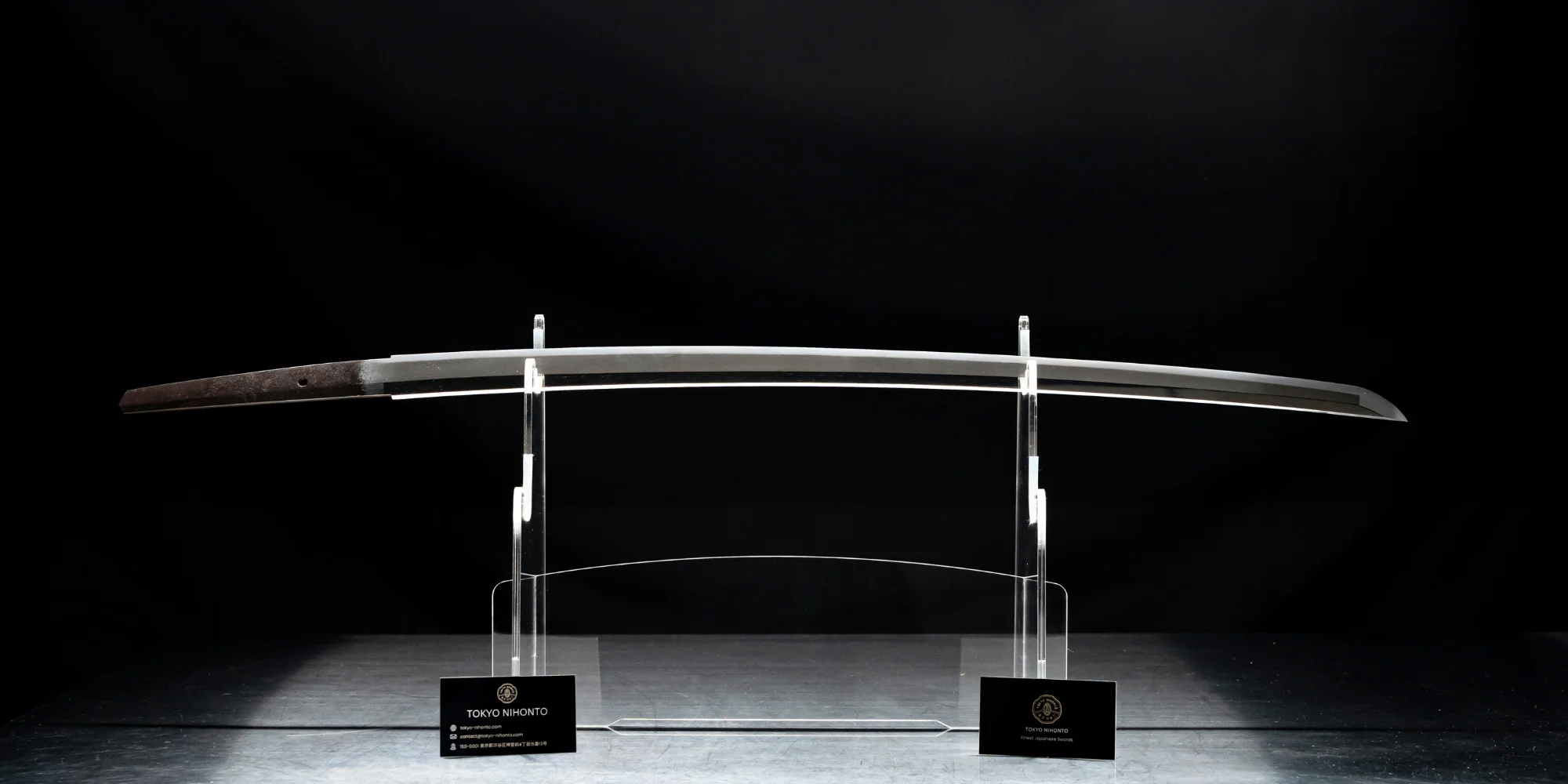
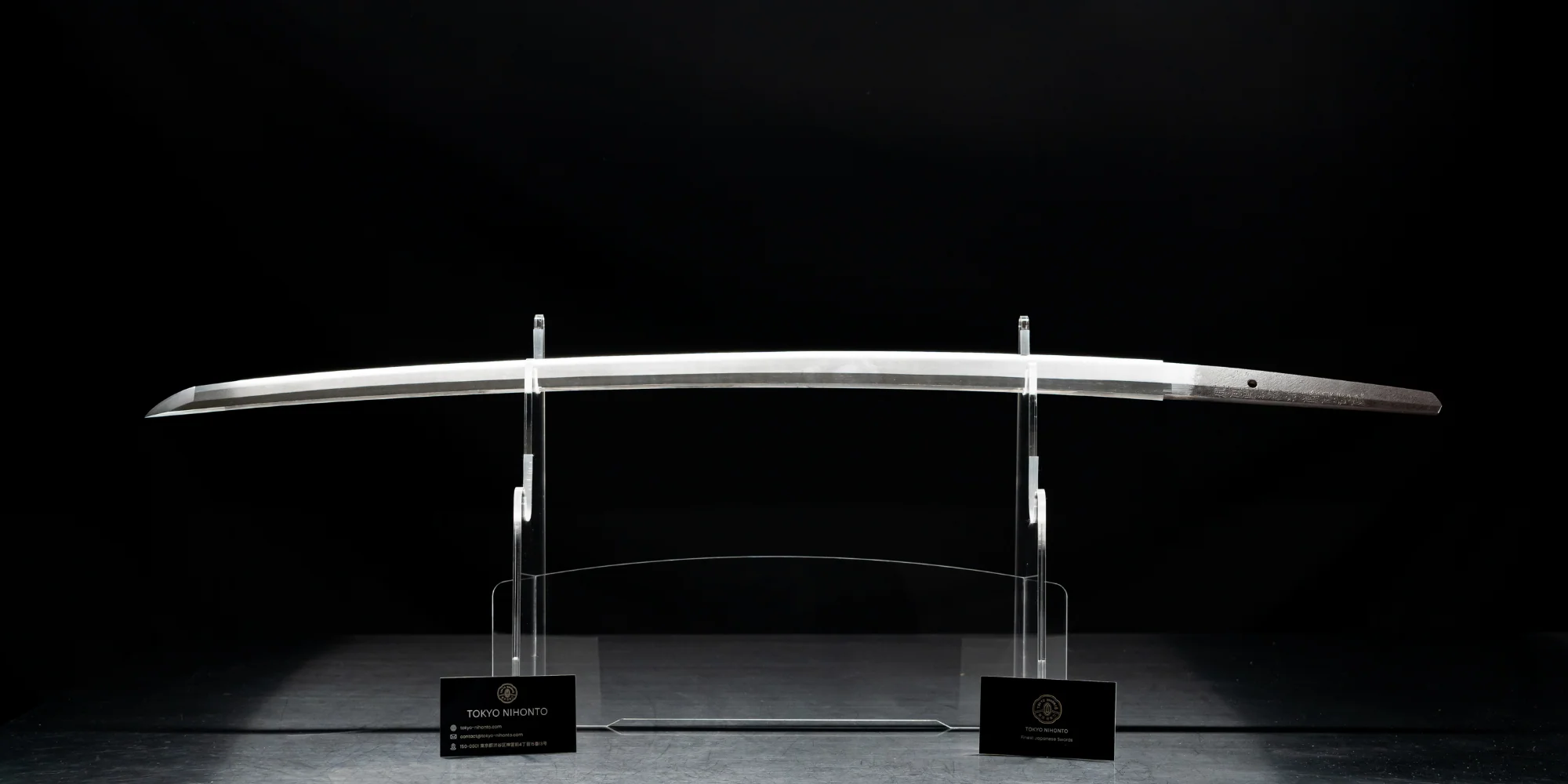
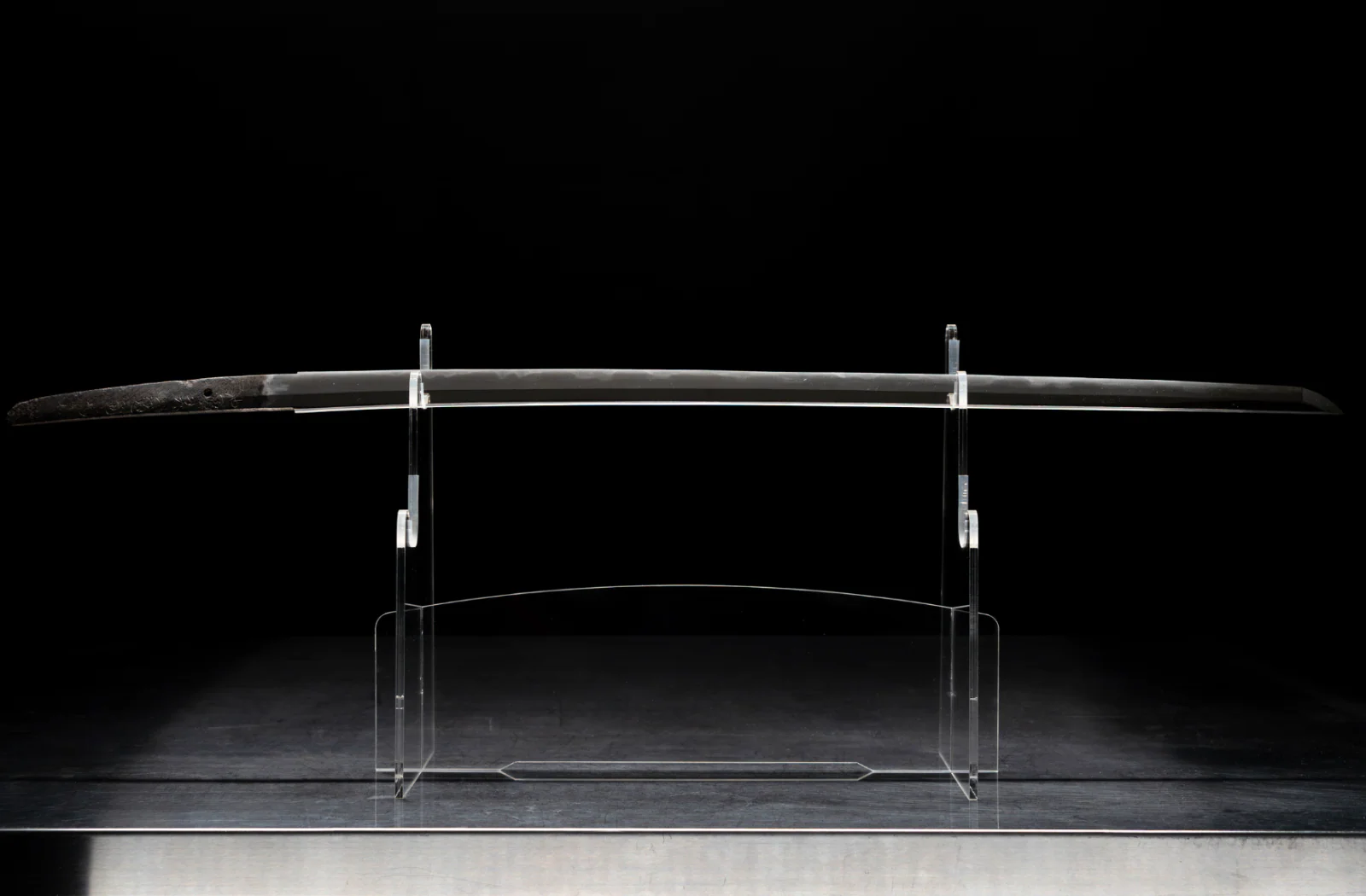
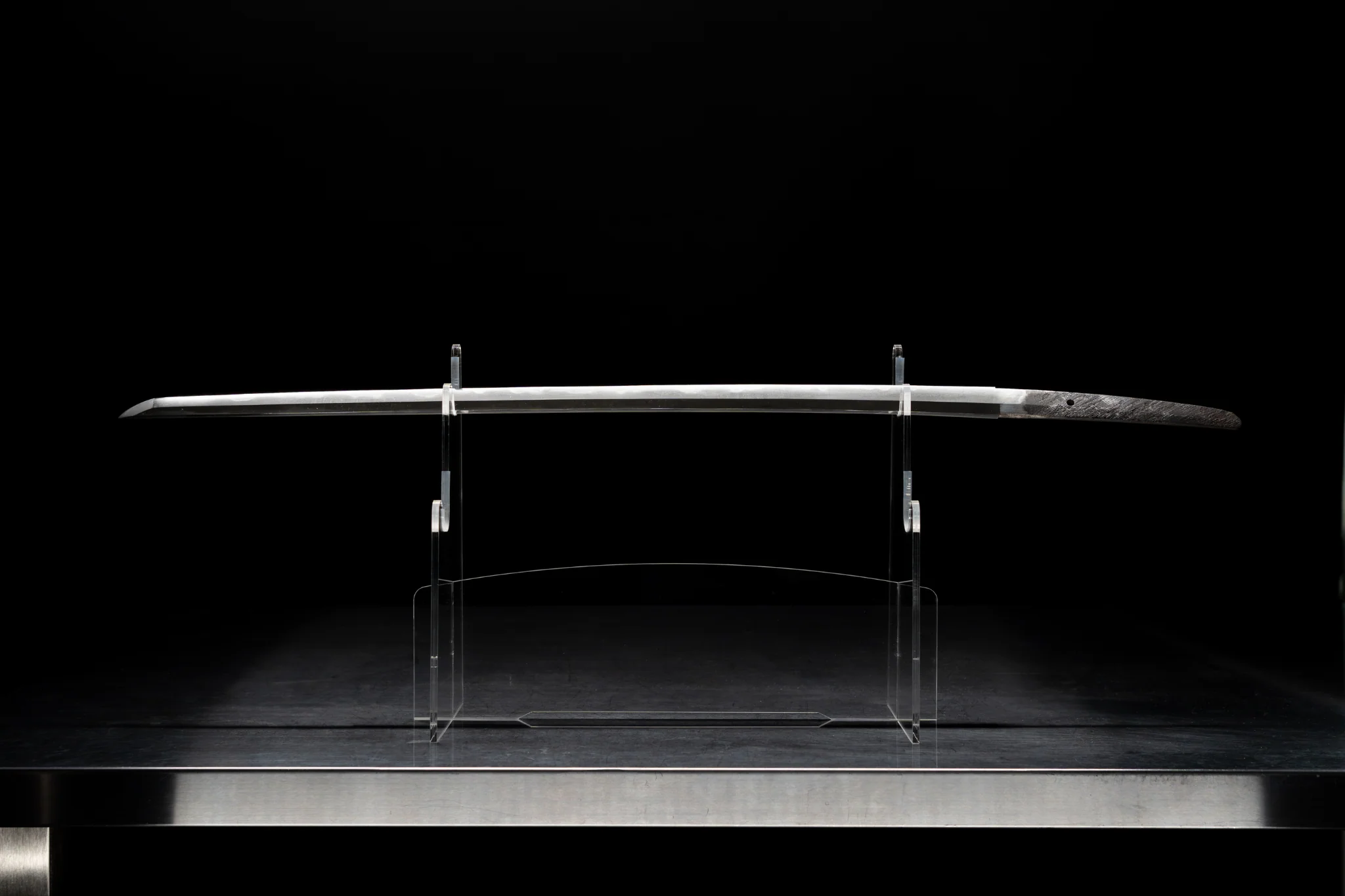
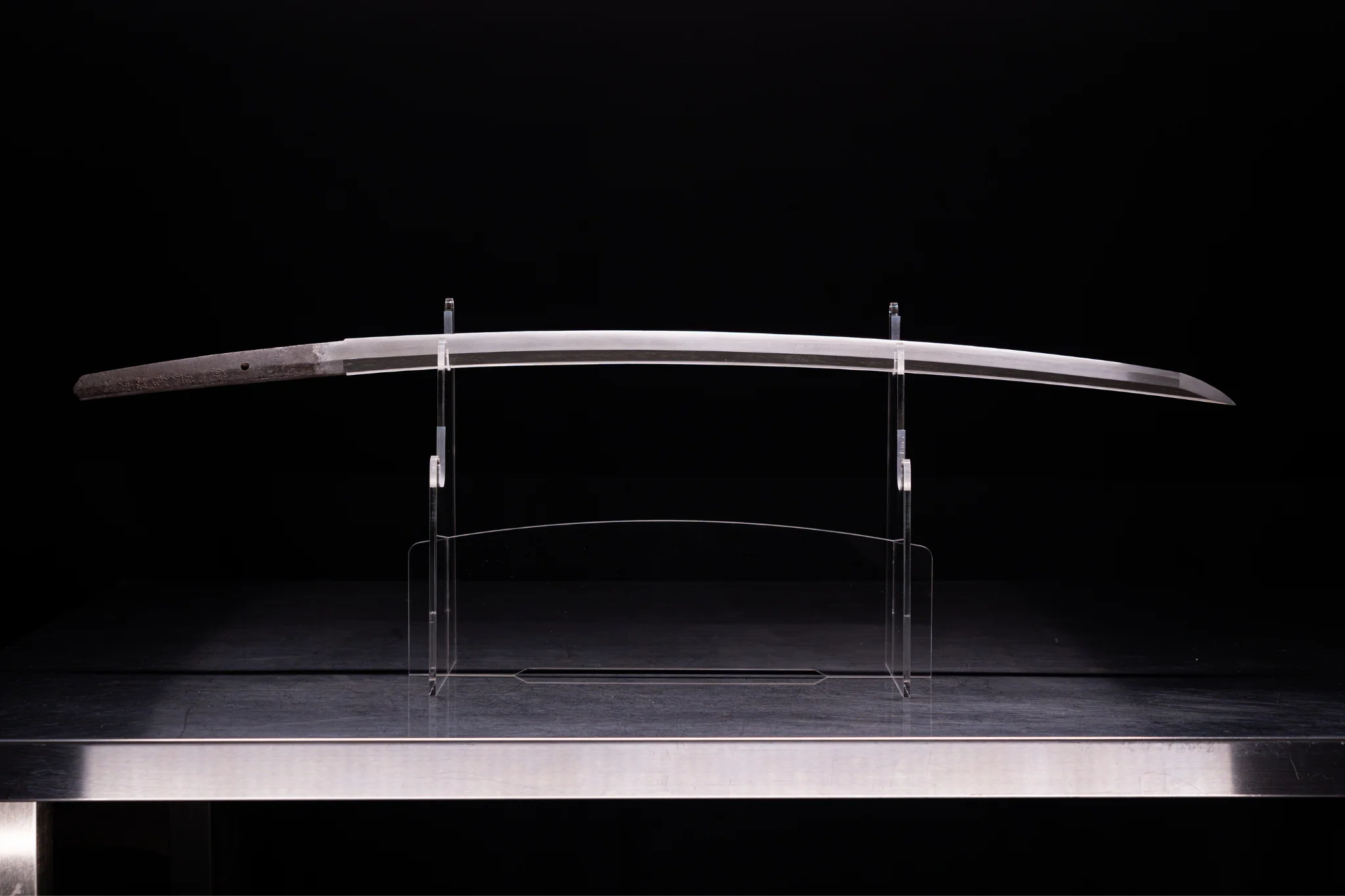
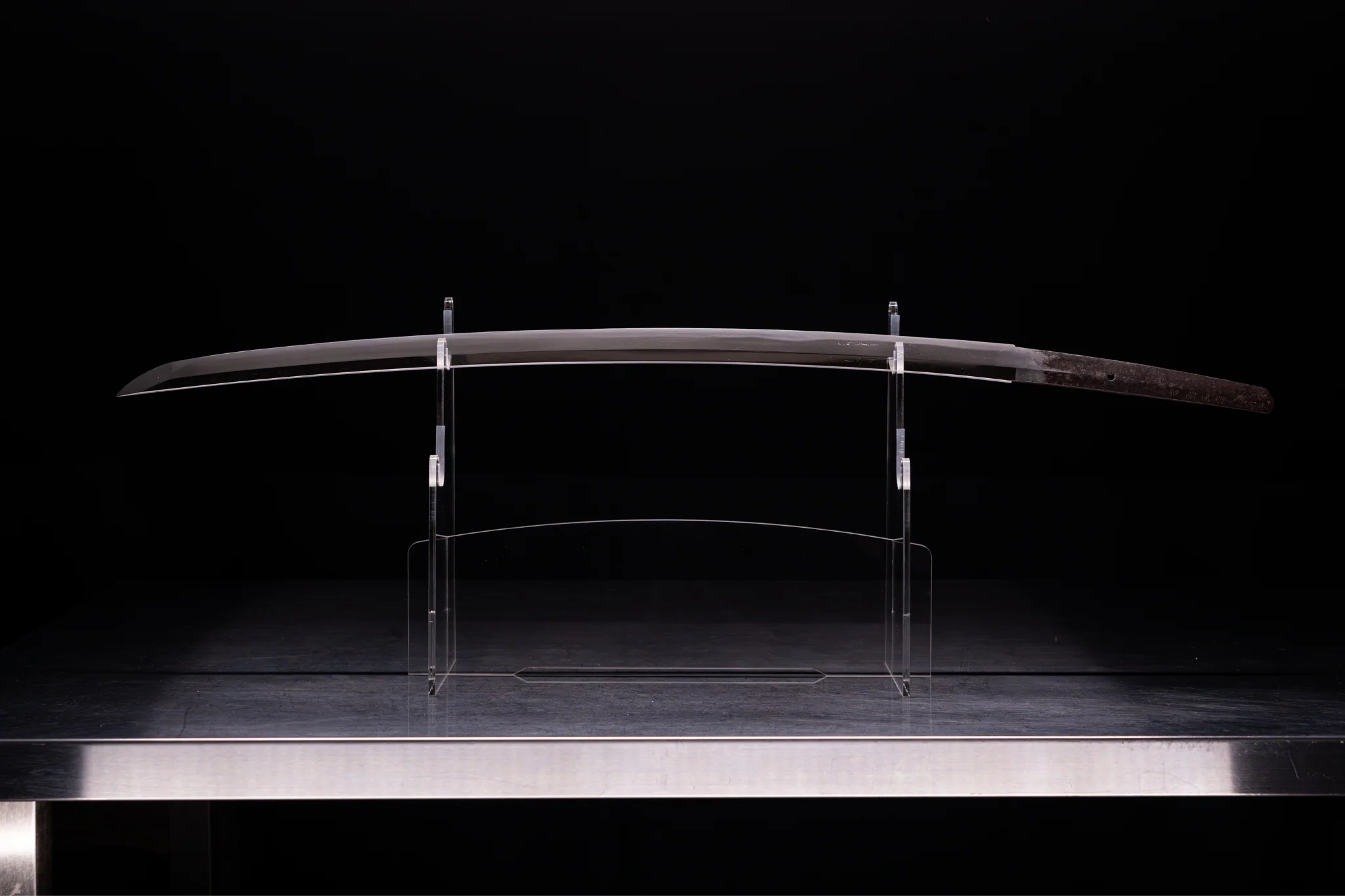
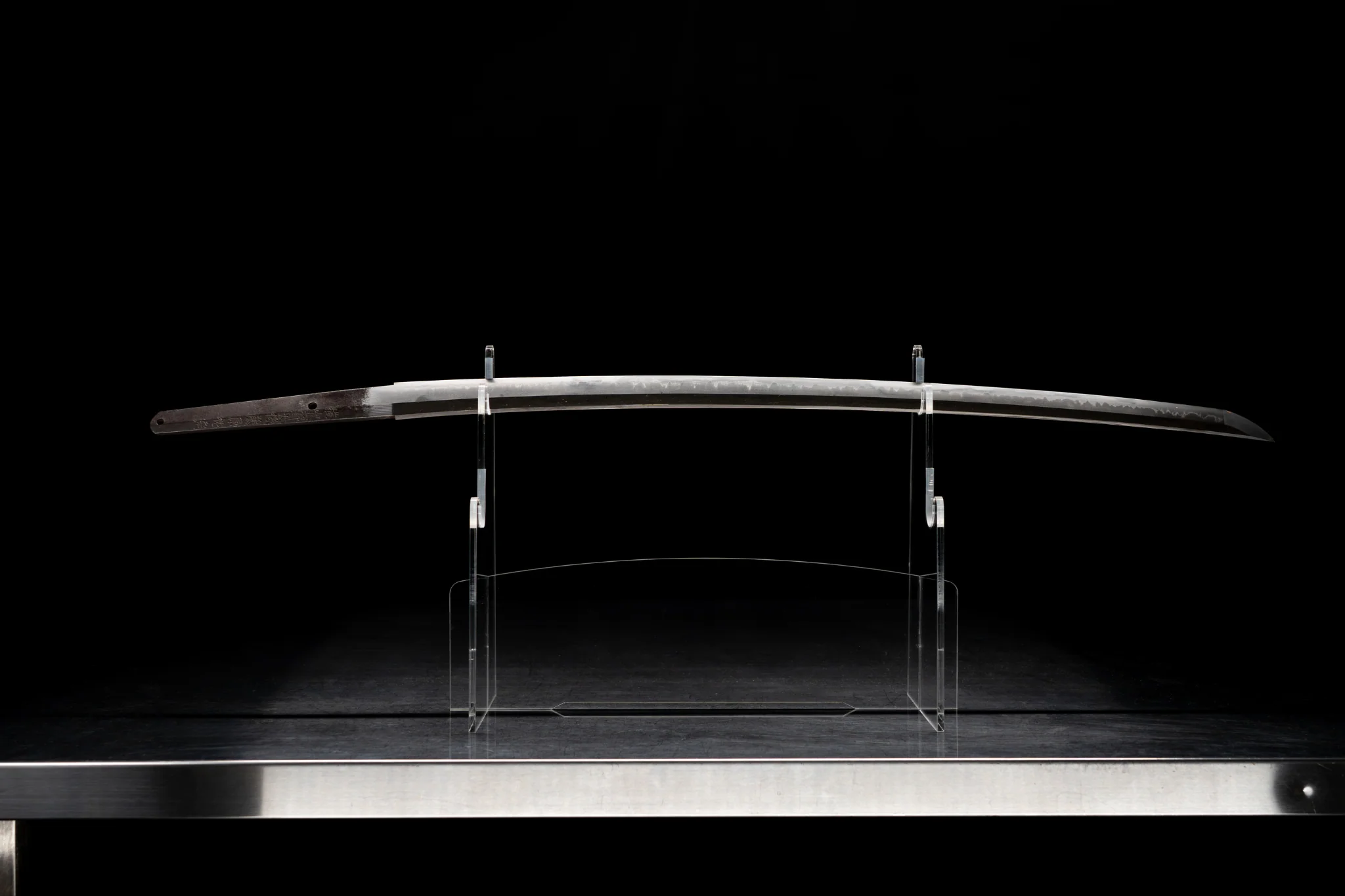
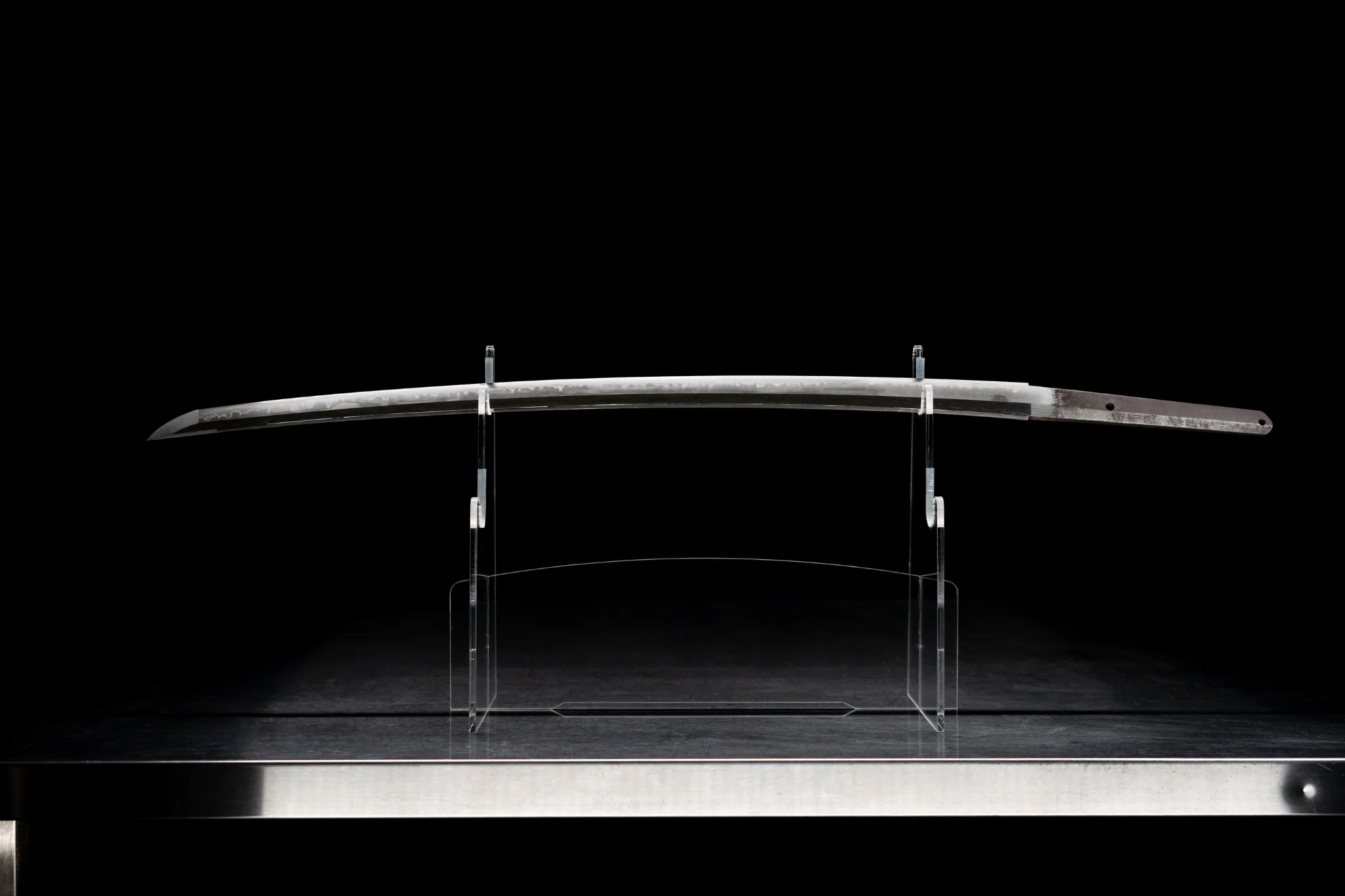
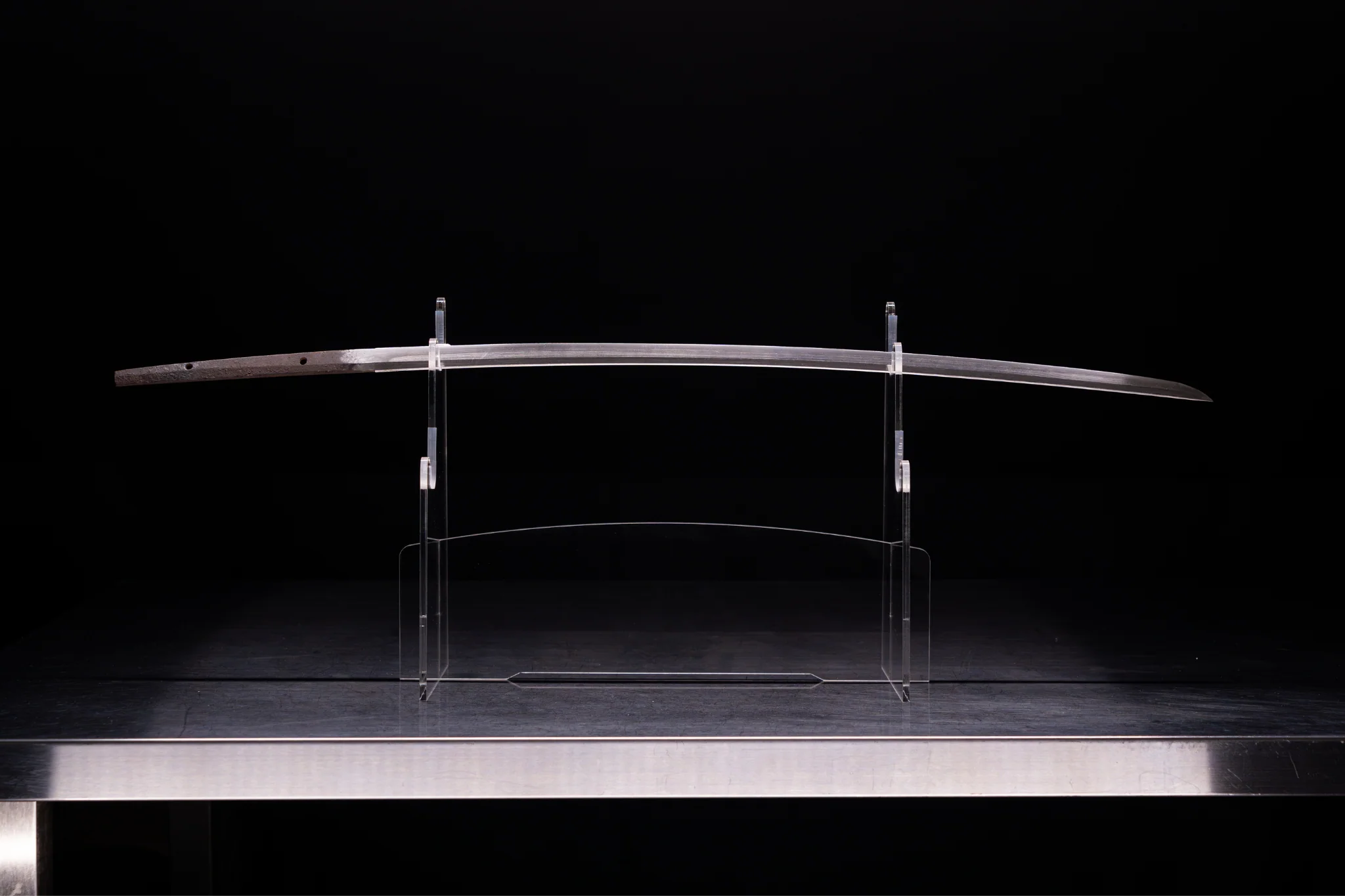
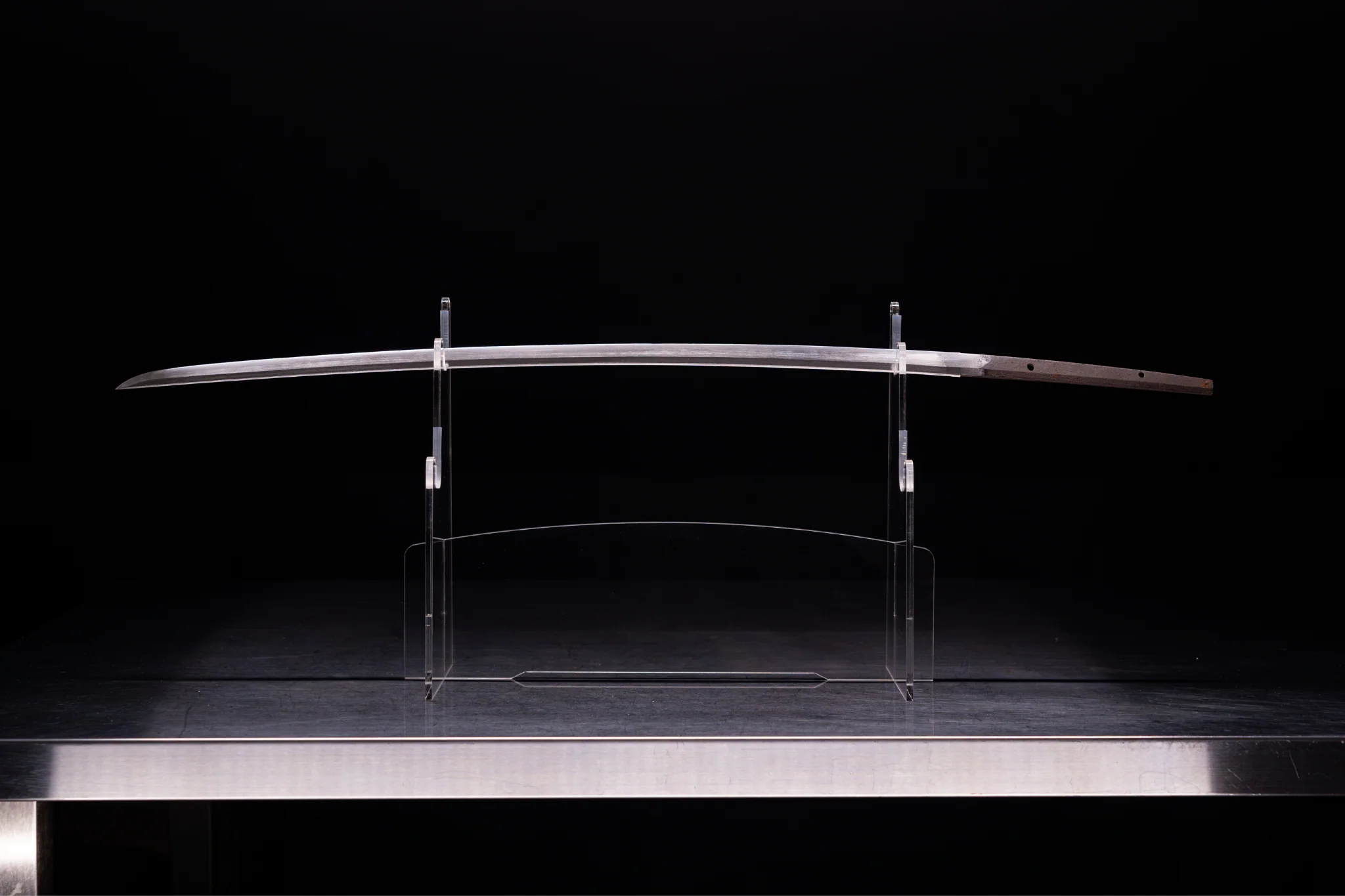
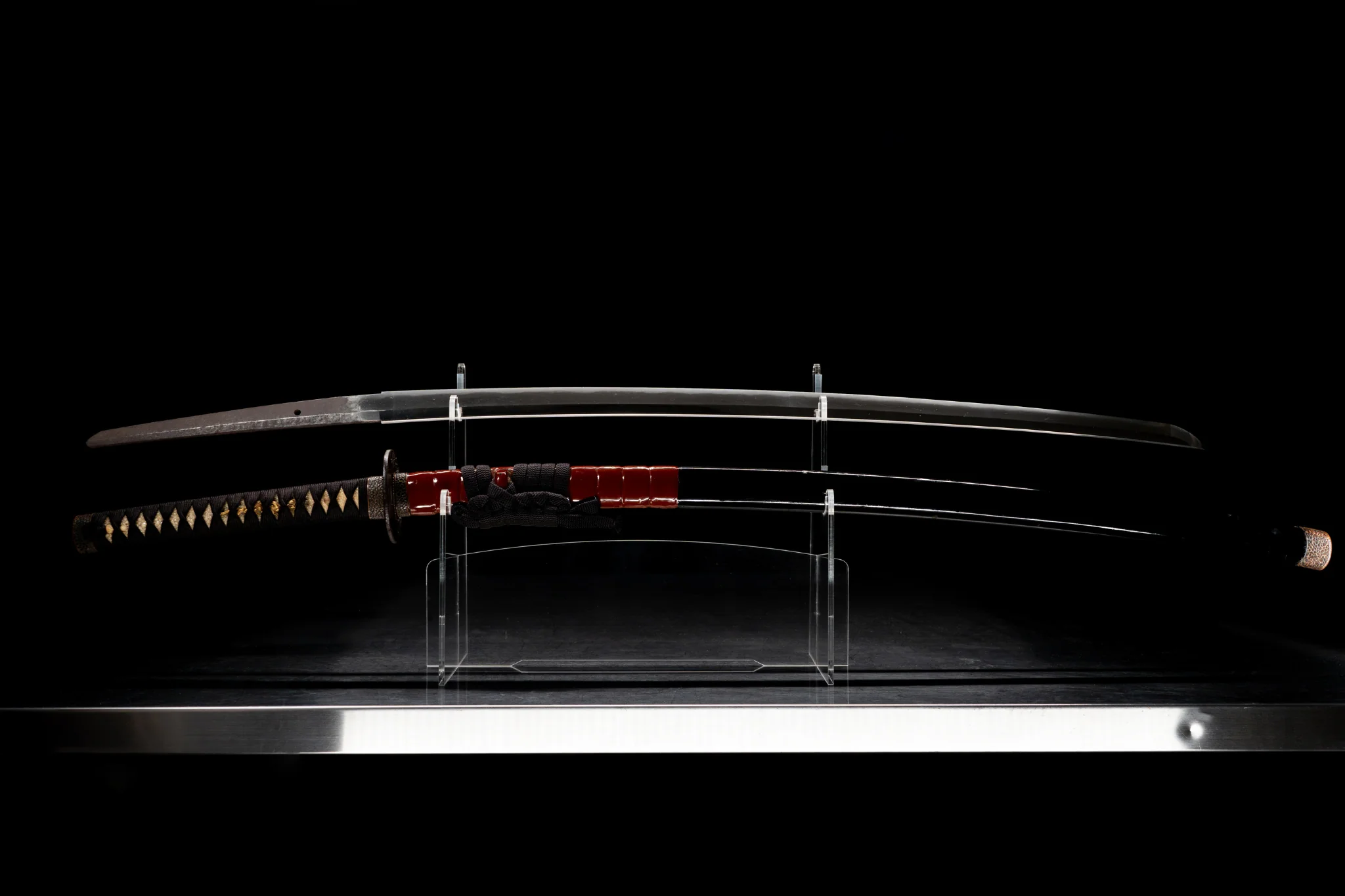
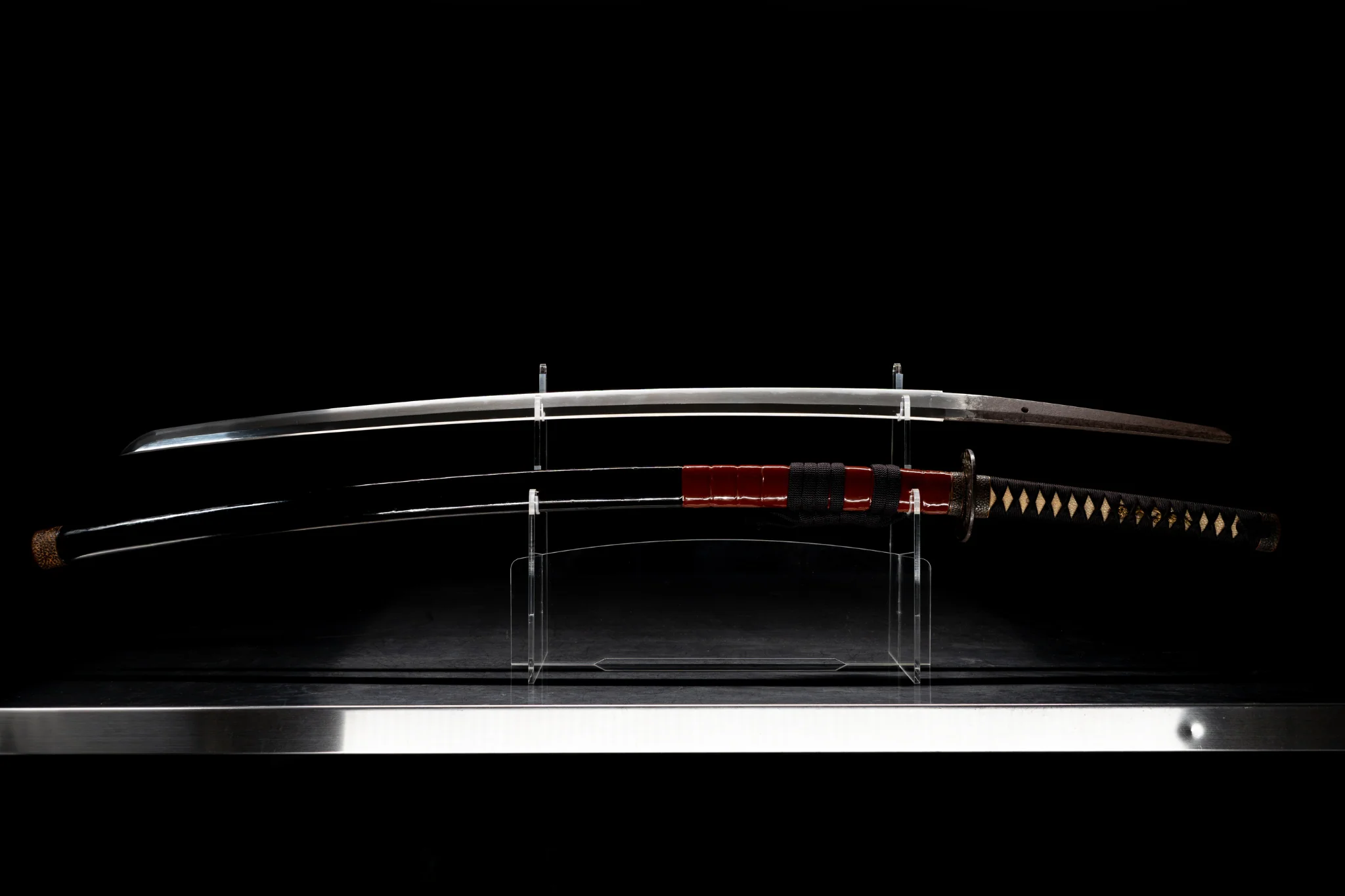
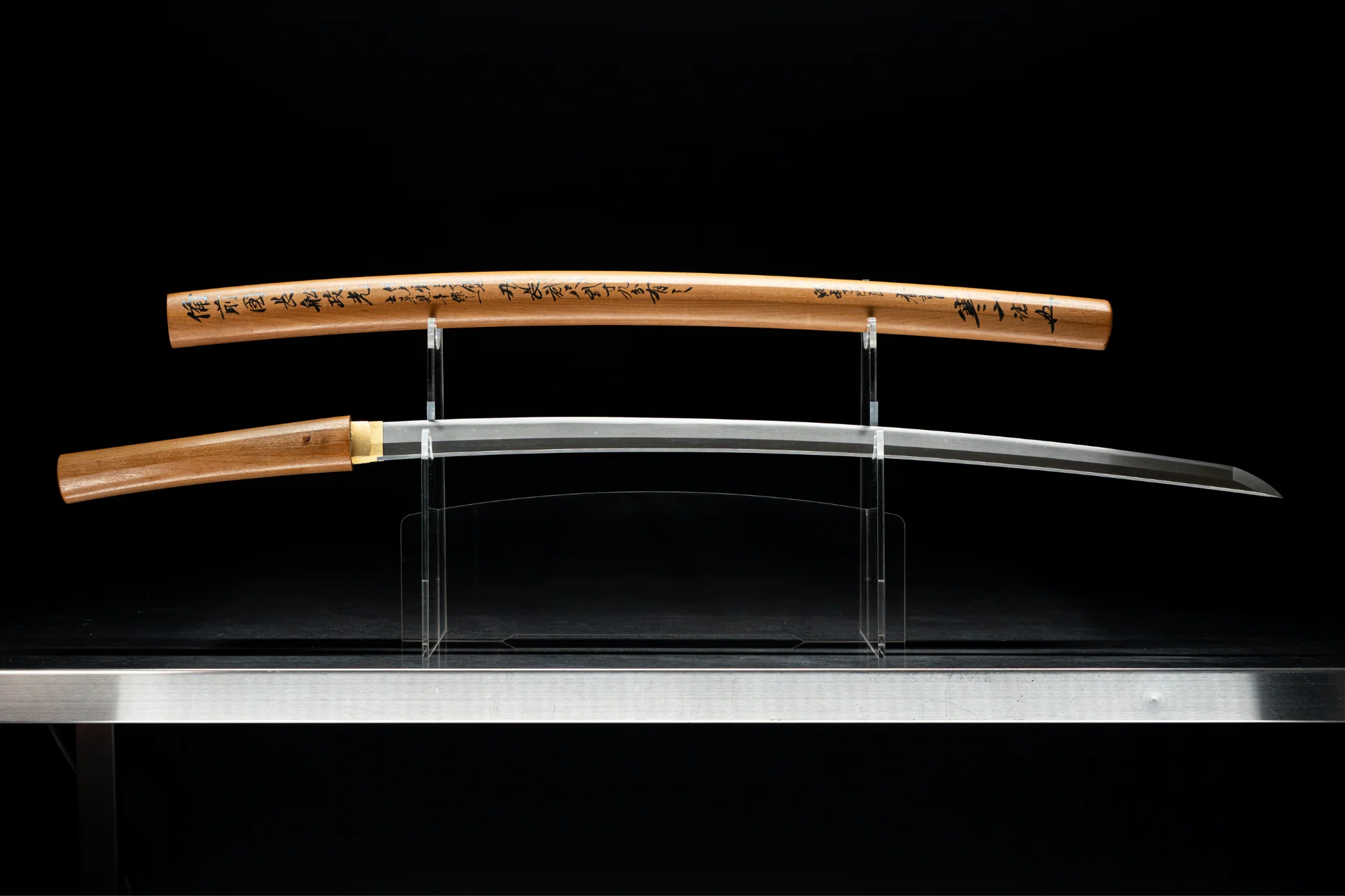
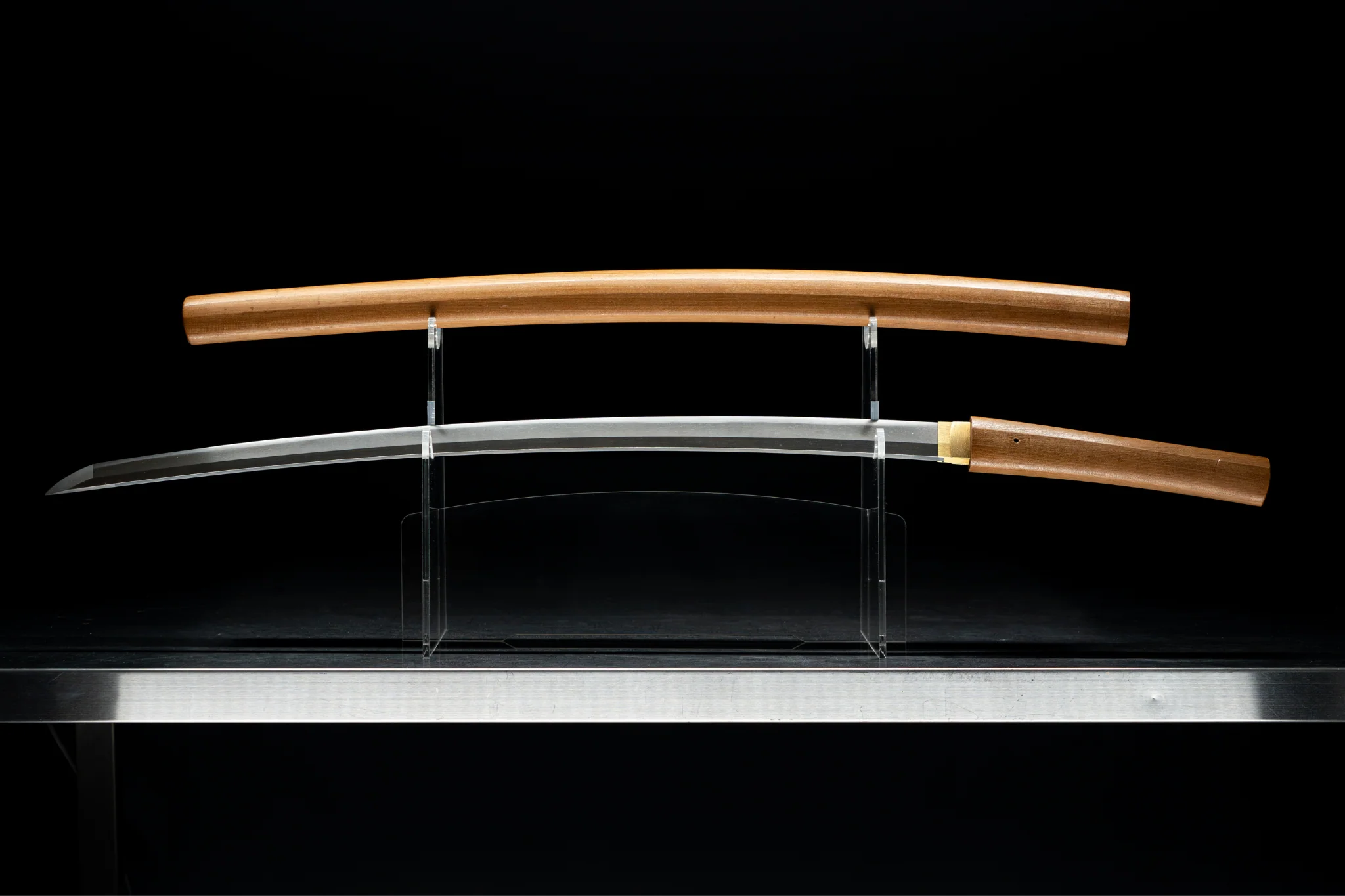
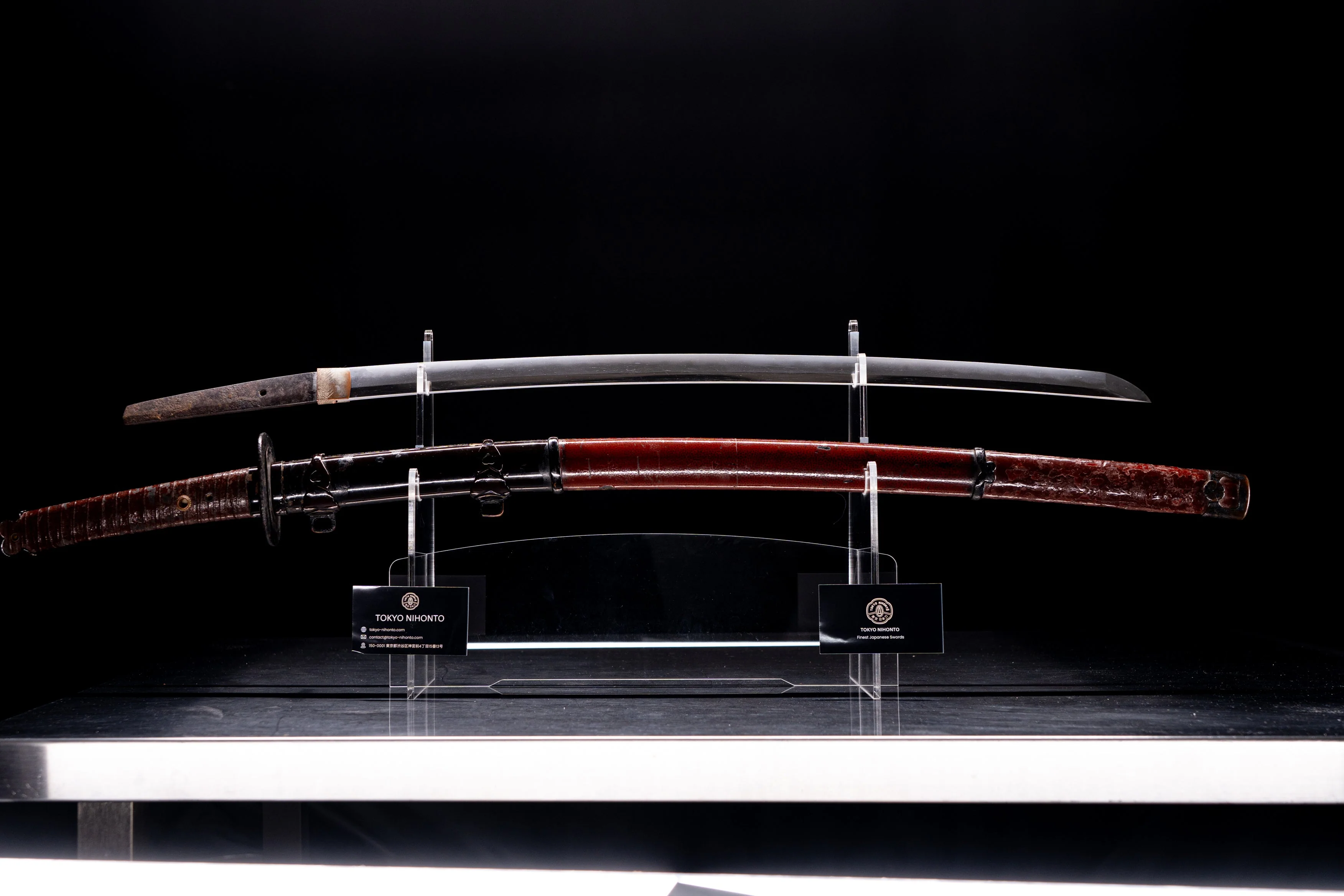
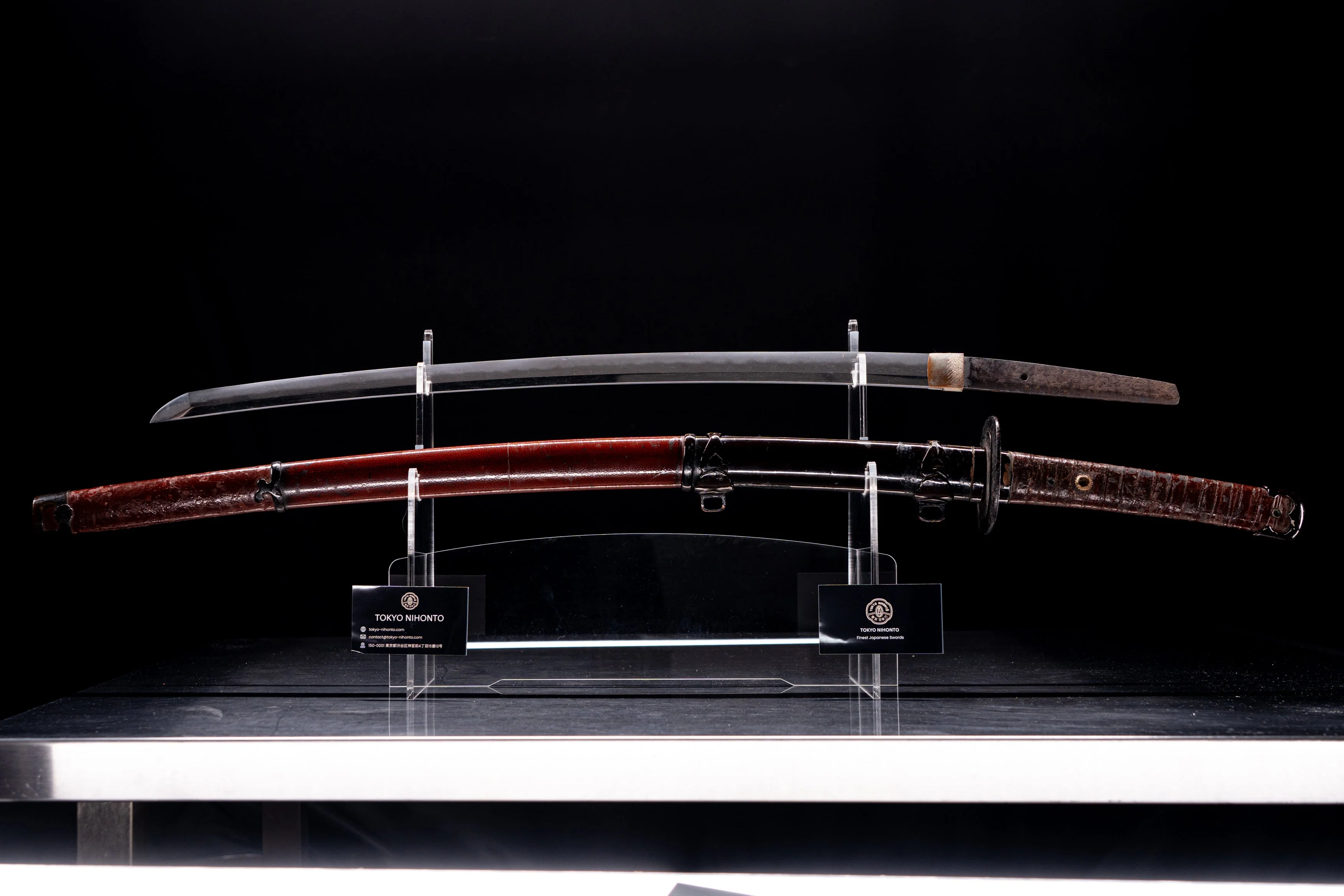
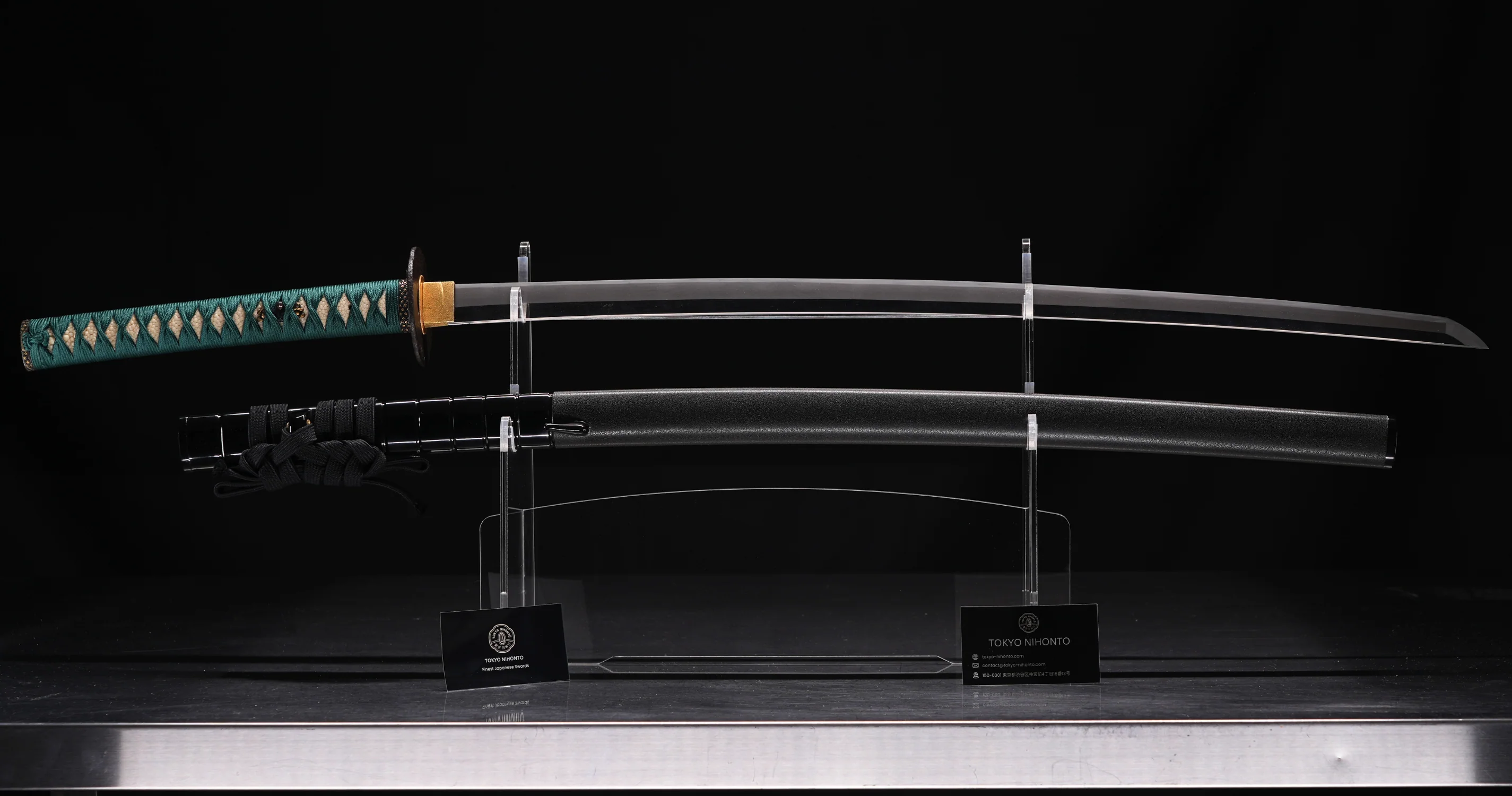
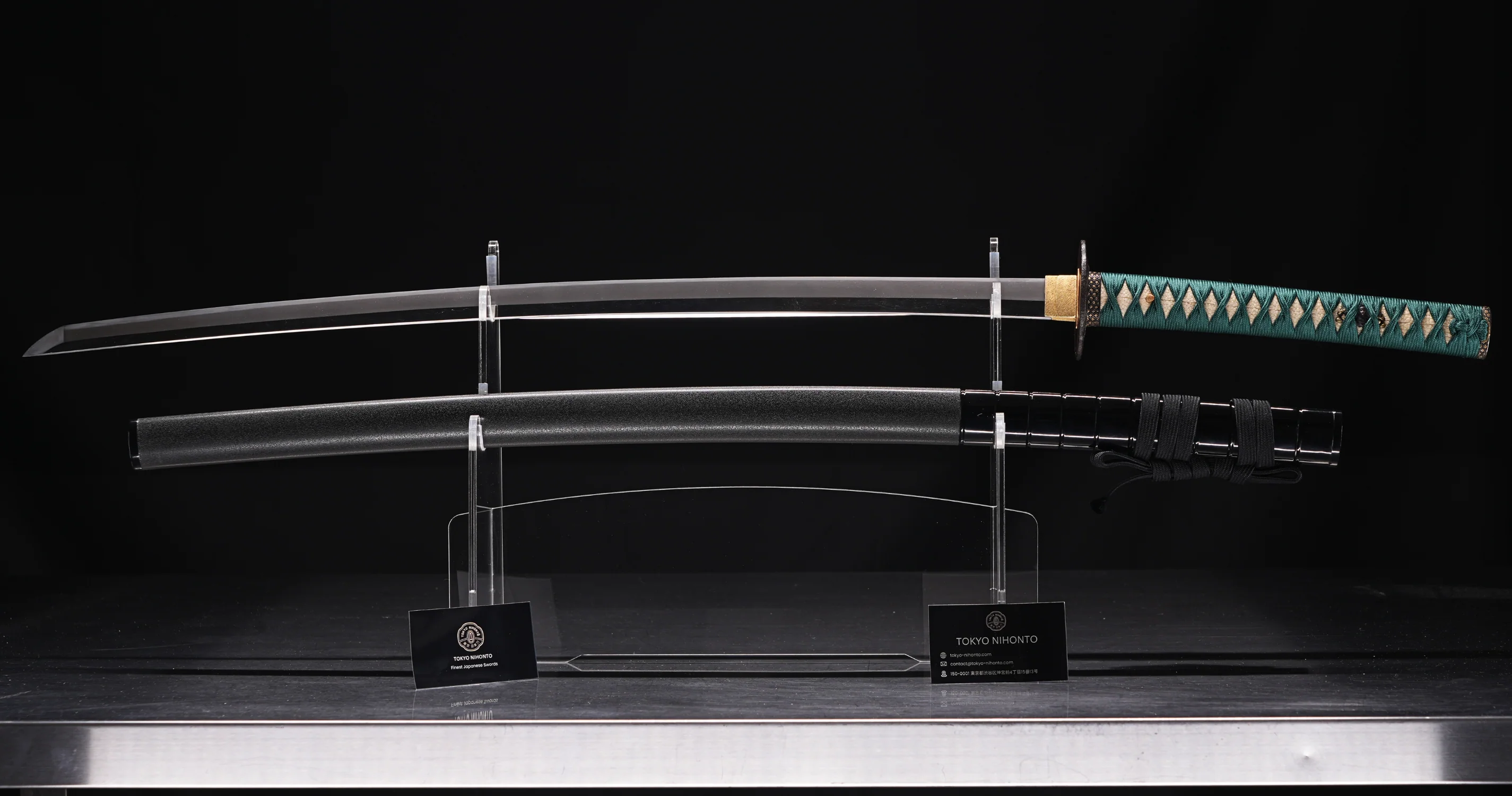
This katana, signed by Chounsai Emura, is a remarkable example of Shōwa-era craftsmanship, embodying both historical significance and exceptional artistry.
Specifications:
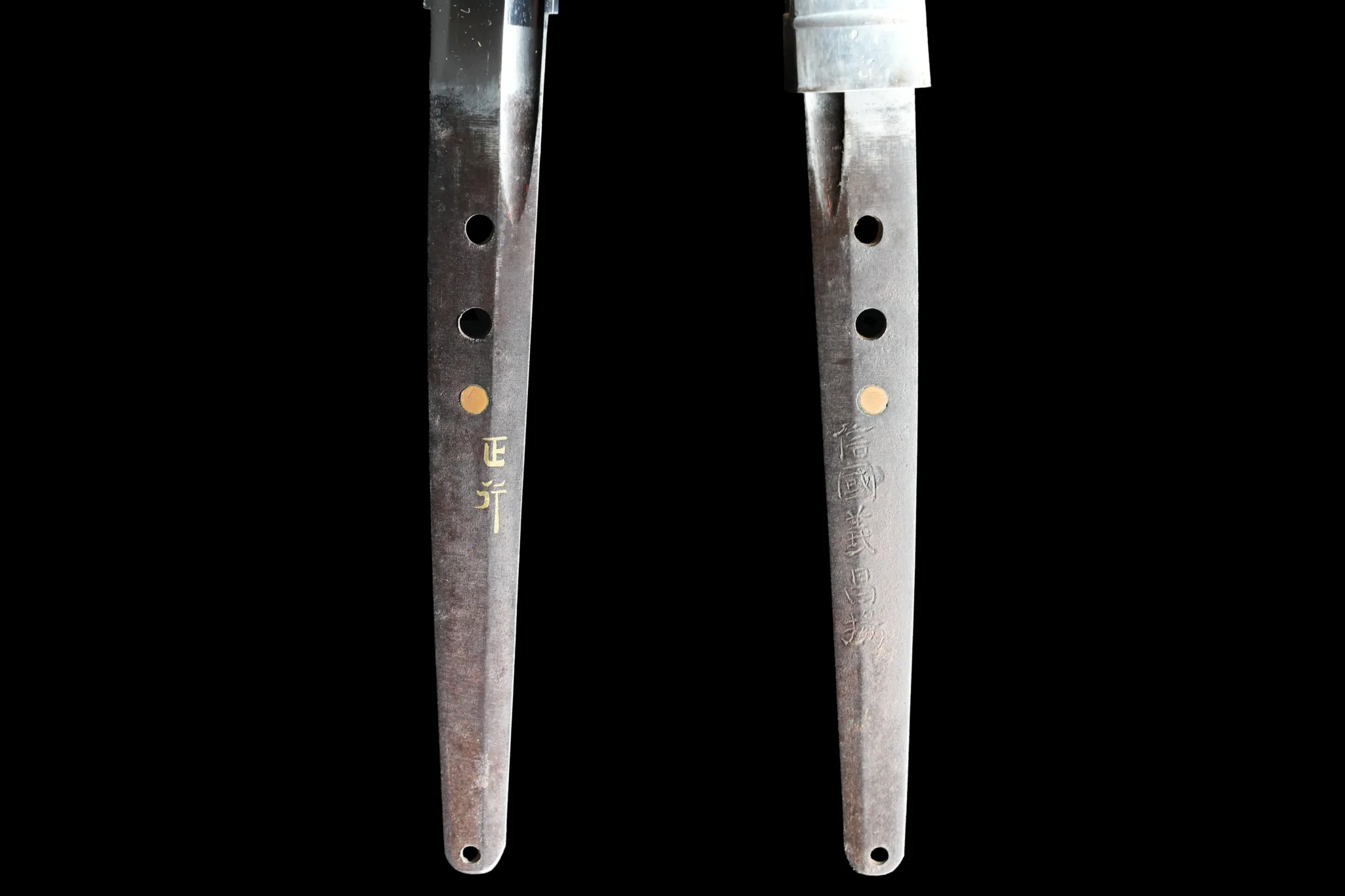
- Signature: Chounsai Emura Saku
- Period: Shōwa (1926–1989)
- Blade Length (刃長): Approximately 67 cm
- Curvature (反り): Approximately 1.85 cm
- Mekugi-ana (目釘穴): 1 peg hole
Blade Features:
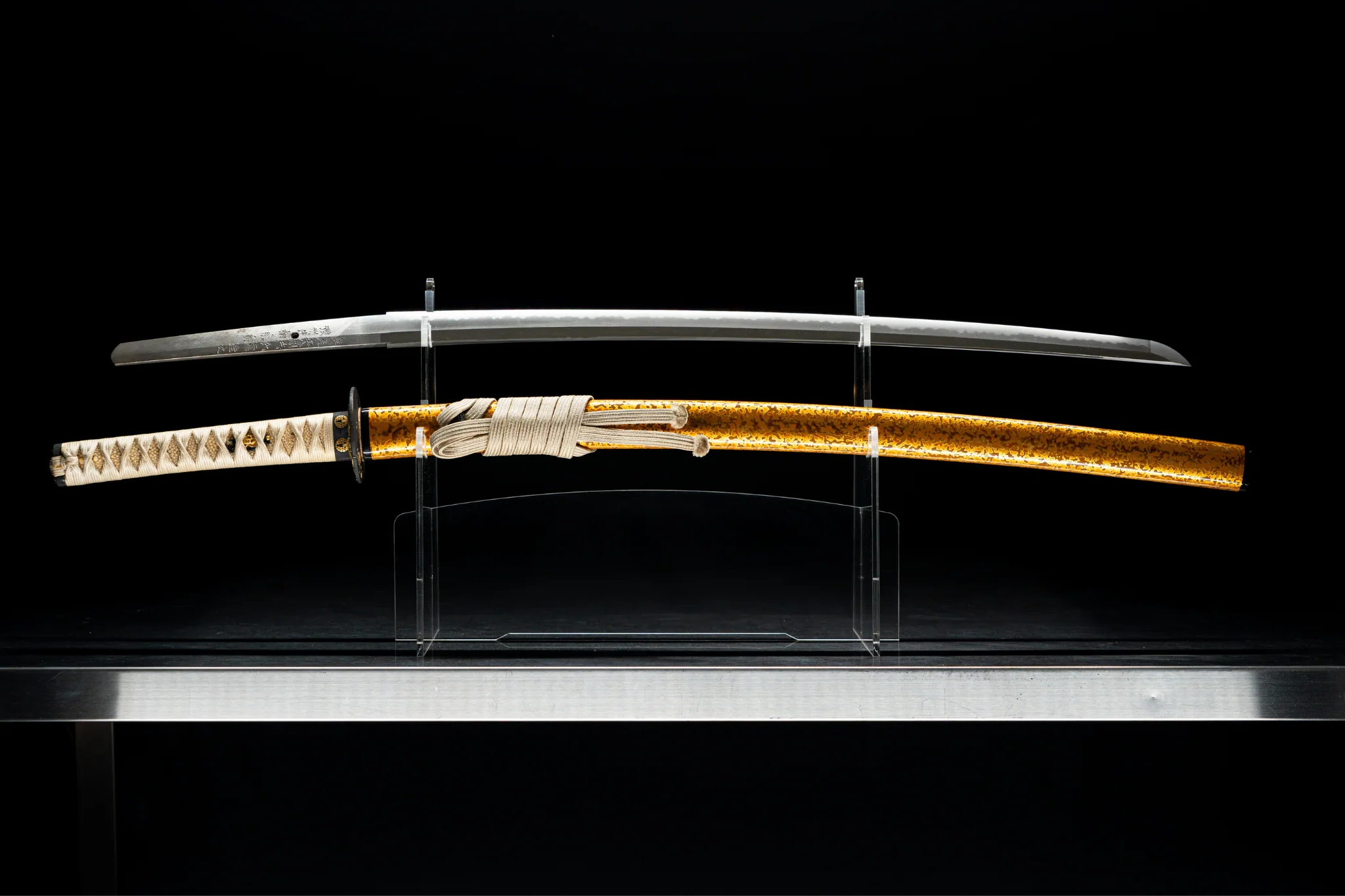
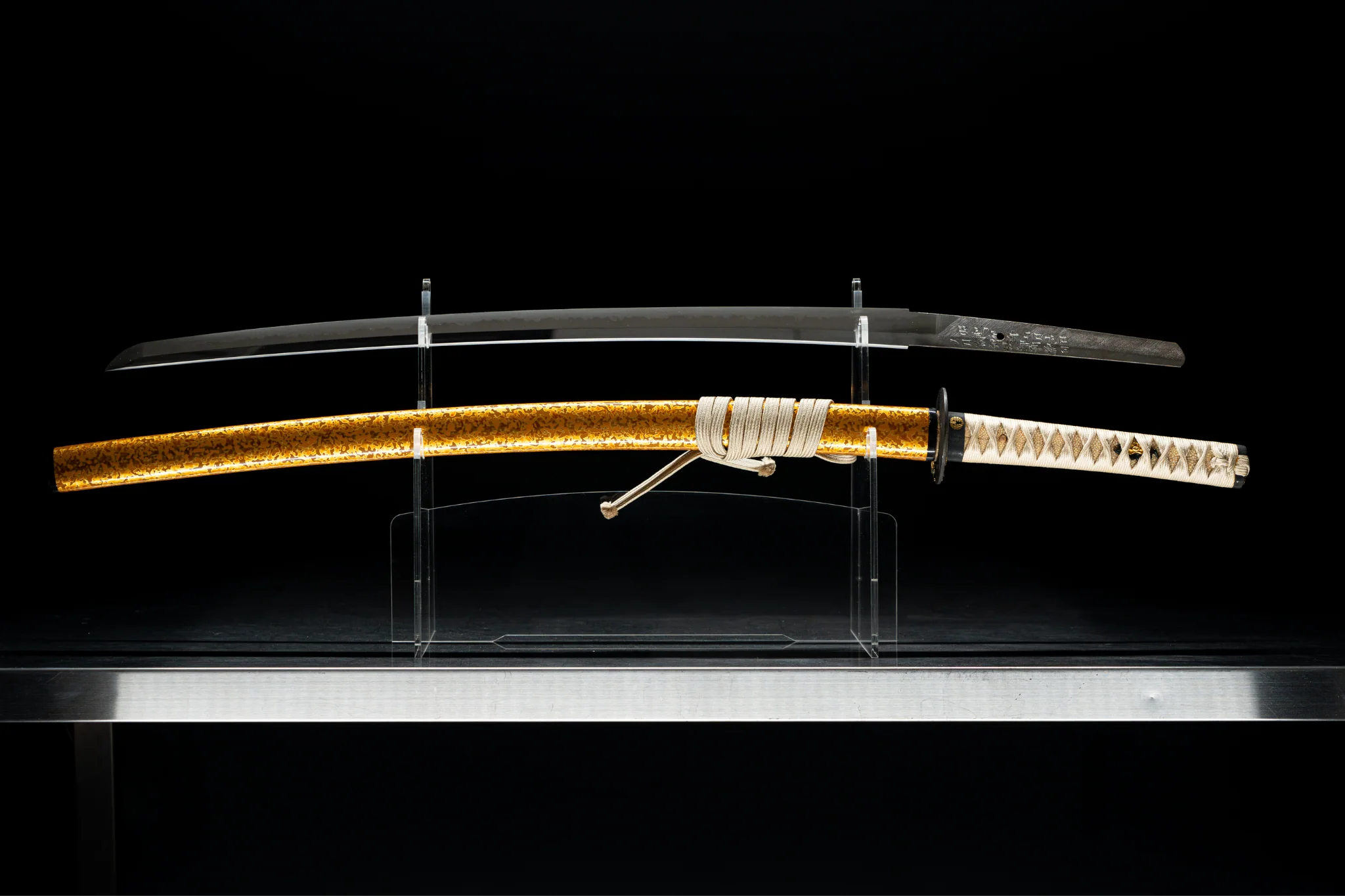
The blade is crafted in the shinogi-zukuri style, a traditional Japanese sword shape featuring a prominent ridge line and a flat back (iori-mune). The tempered edge (hamon) displays a wavy pattern (gunome-midare), blending aesthetic beauty with structural integrity. The blade’s balance and finish exemplify the Bizen tradition, renowned for its elegance and functionality.
Mountings (Koshirae):
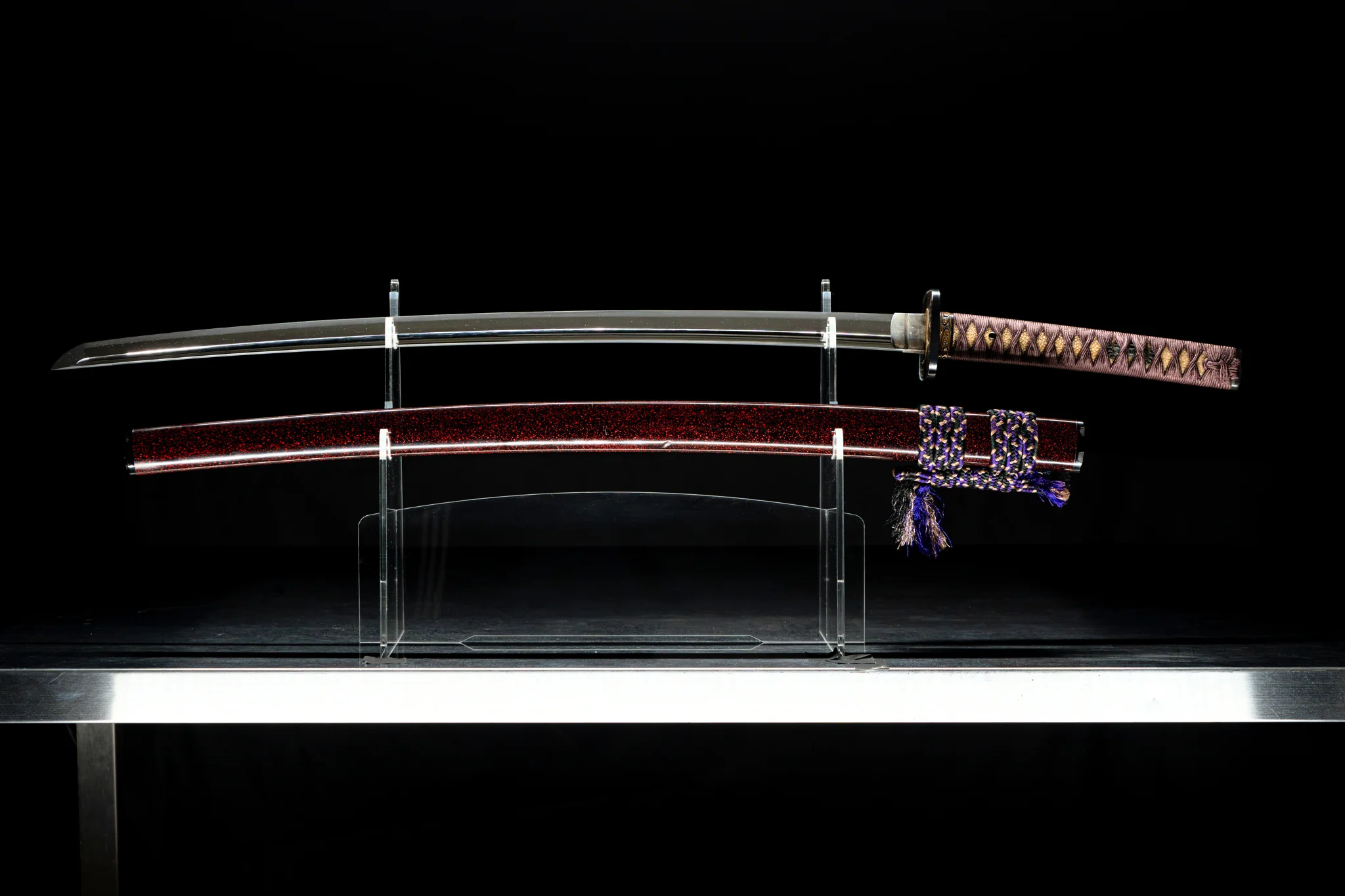
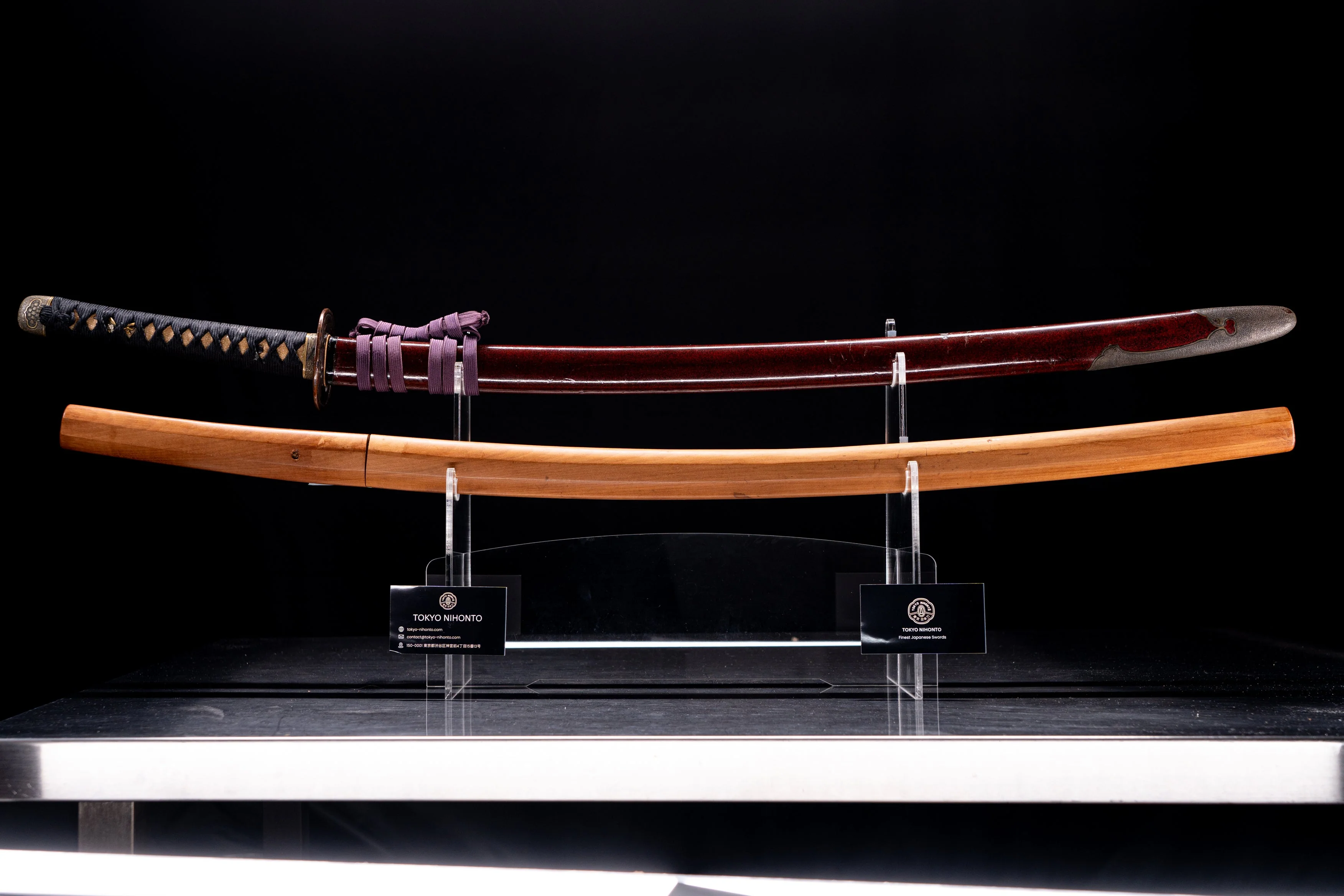
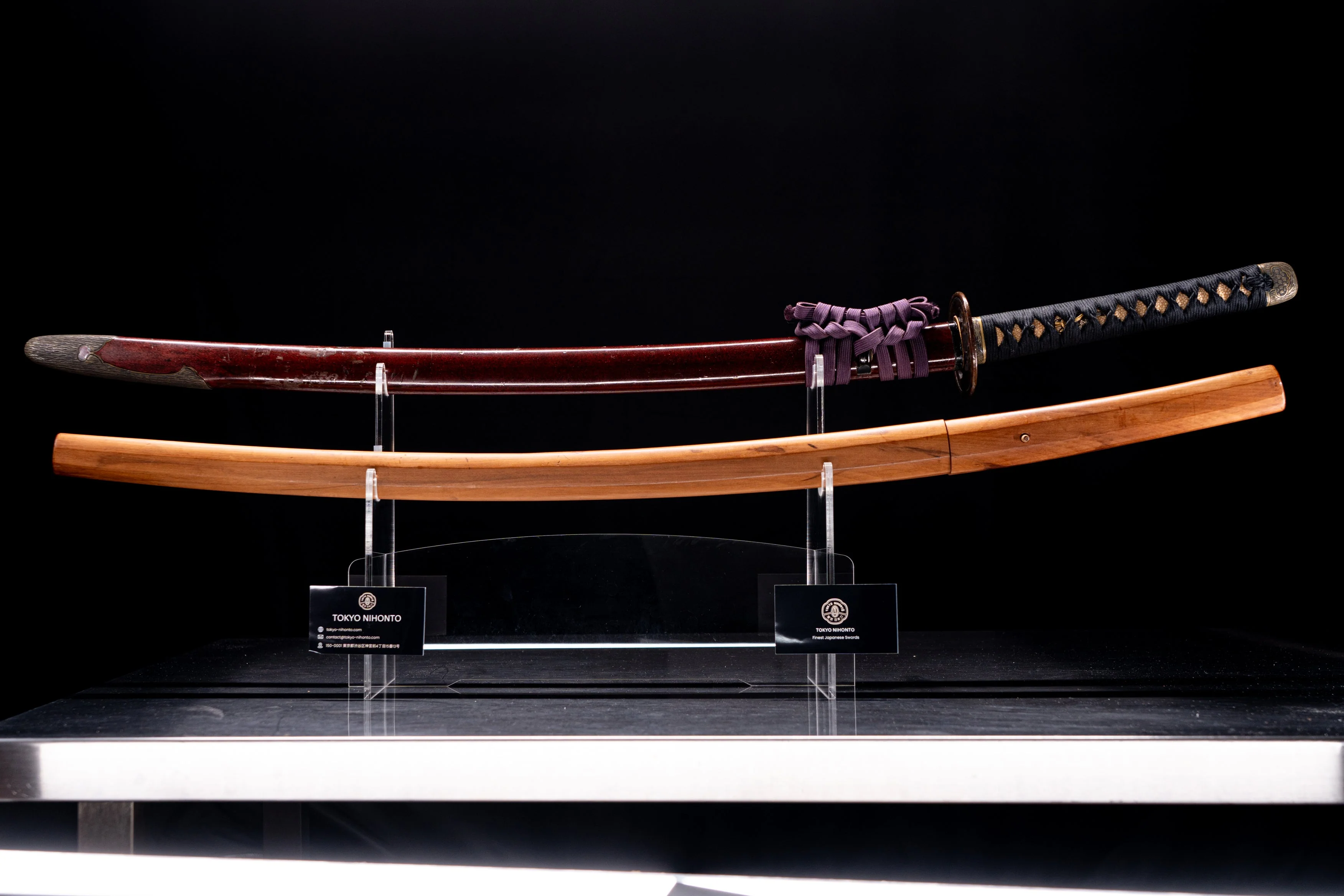
The koshirae is designed to complement the blade's aesthetic while ensuring functionality. The handle (tsuka) is wrapped in a dark blue silk, with gold-colored menuki (ornamental grips) adding a touch of refinement. The scabbard (saya) is finished with a high-gloss black lacquer, exuding a formal and understated elegance.
Historical Background
This katana, with its historical roots and masterful execution, is not only a functional weapon but also a treasured work of art. Crafted by Chounsai Emura, it stands as a rare and valuable piece of Japanese swordsmithing history, cherished by collectors and enthusiasts alike.
Chounsai Emura, also known as Emura Shigetato, was a prominent Japanese swordsmith active during the Shōwa era (1926–1989). Based in Okayama, he served as the head of a prison, where he established a unique sword-making school to support Japan’s wartime efforts during World War II. Operating under the Bizen tradition, Emura crafted blades of remarkable quality, training prisoners in the art of swordsmithing and producing swords for military use.
Despite being an amateur smith, his works are celebrated for their exceptional craftsmanship, featuring intricate hamon (tempered edge patterns) and tightly grained jigane (steel surfaces). Emura personally supervised the hardening of the blades until 1942, ensuring consistent quality. Today, his swords are highly sought after by collectors, valued for their historical significance, artistic beauty, and rarity, standing alongside the prestigious Yasukuni-to as enduring symbols of Japanese sword-making tradition.
Original: $3,700.00
-65%$3,700.00
$1,295.00Product Information
Product Information
Shipping & Returns
Shipping & Returns
Description
This katana, signed by Chounsai Emura, is a remarkable example of Shōwa-era craftsmanship, embodying both historical significance and exceptional artistry.
Specifications:
- Signature: Chounsai Emura Saku
- Period: Shōwa (1926–1989)
- Blade Length (刃長): Approximately 67 cm
- Curvature (反り): Approximately 1.85 cm
- Mekugi-ana (目釘穴): 1 peg hole
Blade Features:
The blade is crafted in the shinogi-zukuri style, a traditional Japanese sword shape featuring a prominent ridge line and a flat back (iori-mune). The tempered edge (hamon) displays a wavy pattern (gunome-midare), blending aesthetic beauty with structural integrity. The blade’s balance and finish exemplify the Bizen tradition, renowned for its elegance and functionality.
Mountings (Koshirae):
The koshirae is designed to complement the blade's aesthetic while ensuring functionality. The handle (tsuka) is wrapped in a dark blue silk, with gold-colored menuki (ornamental grips) adding a touch of refinement. The scabbard (saya) is finished with a high-gloss black lacquer, exuding a formal and understated elegance.
Historical Background
This katana, with its historical roots and masterful execution, is not only a functional weapon but also a treasured work of art. Crafted by Chounsai Emura, it stands as a rare and valuable piece of Japanese swordsmithing history, cherished by collectors and enthusiasts alike.
Chounsai Emura, also known as Emura Shigetato, was a prominent Japanese swordsmith active during the Shōwa era (1926–1989). Based in Okayama, he served as the head of a prison, where he established a unique sword-making school to support Japan’s wartime efforts during World War II. Operating under the Bizen tradition, Emura crafted blades of remarkable quality, training prisoners in the art of swordsmithing and producing swords for military use.
Despite being an amateur smith, his works are celebrated for their exceptional craftsmanship, featuring intricate hamon (tempered edge patterns) and tightly grained jigane (steel surfaces). Emura personally supervised the hardening of the blades until 1942, ensuring consistent quality. Today, his swords are highly sought after by collectors, valued for their historical significance, artistic beauty, and rarity, standing alongside the prestigious Yasukuni-to as enduring symbols of Japanese sword-making tradition.